The “hangover effect” of traditional sleep medications is precisely why many people hesitate to use them, even when struggling with severe sleep issues. Naturally, when learning about lemborexant, many are faced with a major question: with a half-life as long as 17–19 hours—much longer than zolpidem (2–3 hours) or zopiclone (approx. 6 hours)—will it leave users feeling groggy all through the next day?
Clinical studies offer a strikingly different answer:
A 2020 randomized controlled trial by Murphy et al., published in the Journal of Clinical Sleep Medicine, serves as a landmark study evaluating the nighttime and morning safety of sleep aids. The study specifically assessed the effects of lemborexant on middle-of-the-night awakening, auditory awakening thresholds, postural stability, and cognitive function upon morning awakening in healthy older adults.
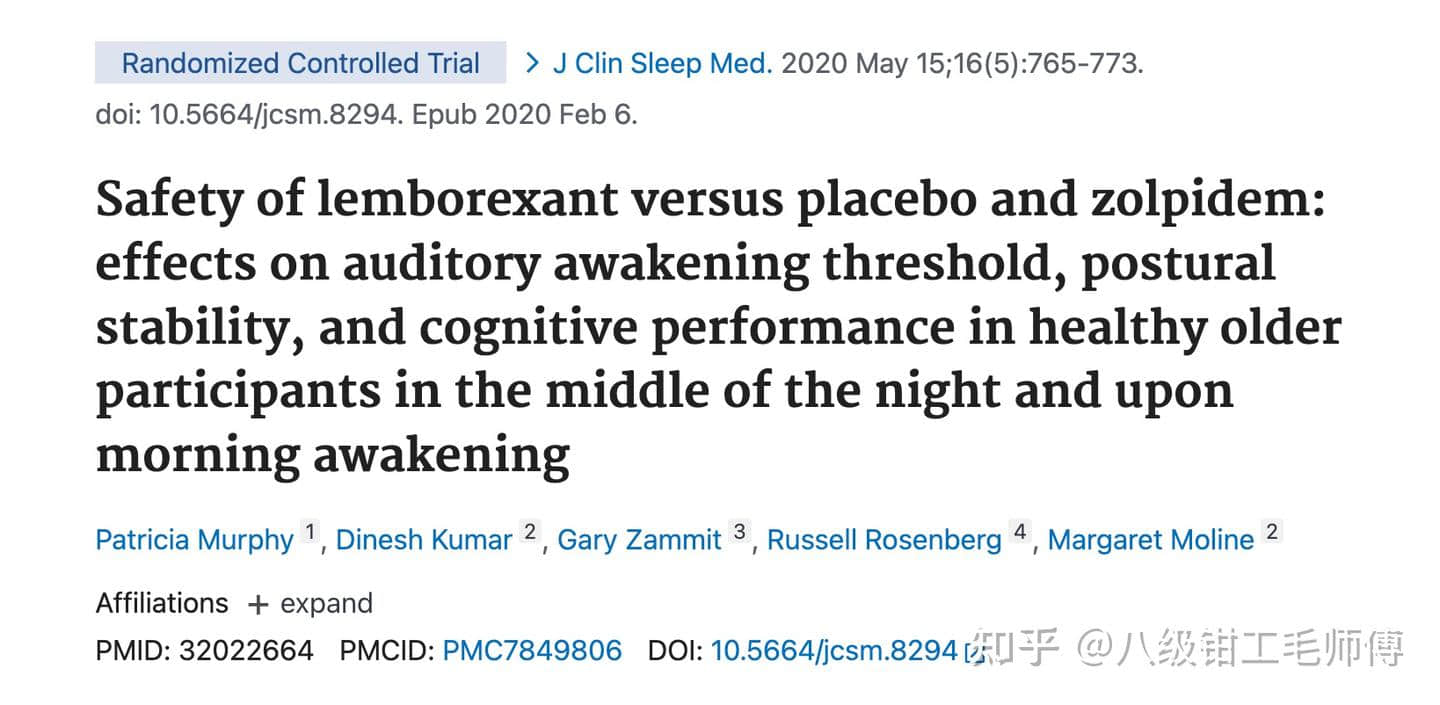
The results demonstrated that, compared to placebo, the lemborexant 5 mg and 10 mg groups showed no changes in auditory awakening thresholds. Their morning body sway, as well as their performance on attention and memory tests, showed no statistically significant differences from the placebo group. In contrast, zolpidem extended-release (the active comparator) not only significantly increased body sway but also markedly impaired cognitive performance and awakenability. This study directly confirmed that, for the vast majority of individuals—even when awakened in the middle of the night—lemborexant causes virtually no suppression of consciousness or motor function, nor does it noticeably affect morning alertness.
Whether a sleep medication impairs driving ability after administration is another primary concern for the general public. In 2019, Vermeeren et al. published a randomized, double-blind, placebo-controlled on-the-road driving study in Sleep, conducted on healthy adult and elderly volunteers.
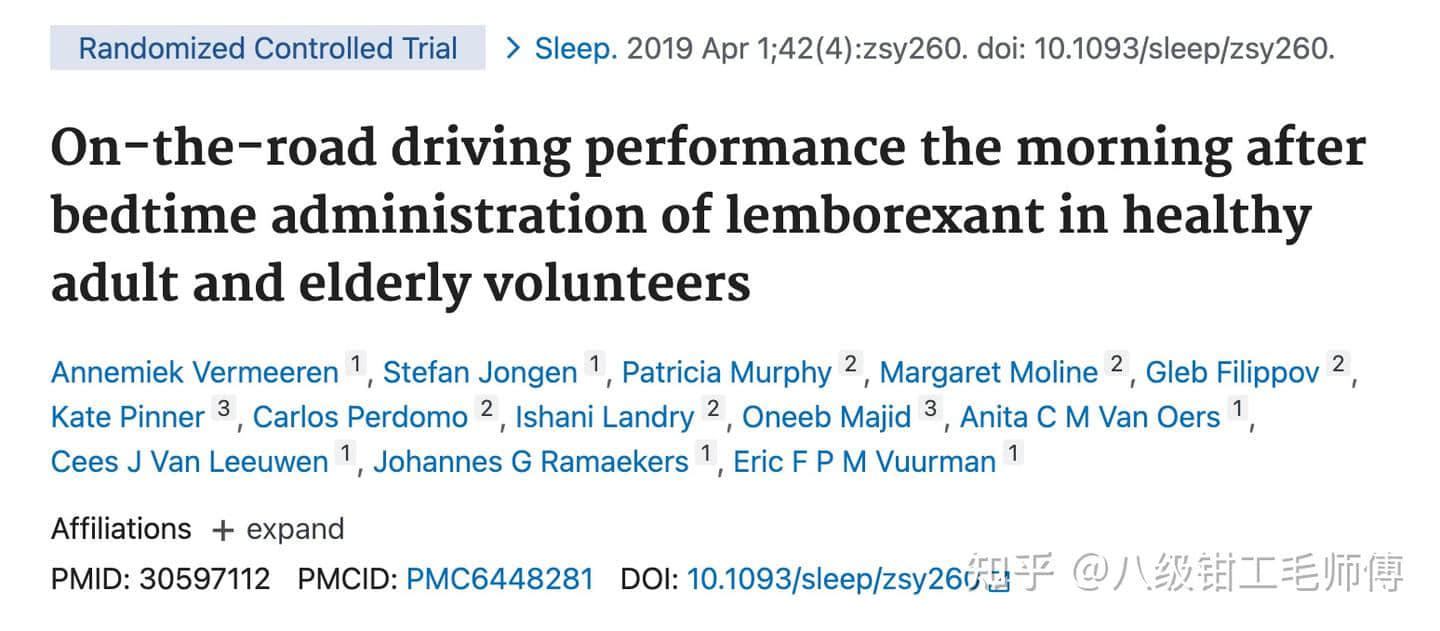
The findings showed that approximately 9 hours after bedtime administration of lemborexant 5 mg or 10 mg, subjects’ lane position deviations and driving error rates during a highway driving test were completely identical to those of the placebo group, showing zero impairment in driving performance. By contrast, nearly 50% of subjects in the zopiclone positive control group experienced significant driving impairment, with a substantial increase in lane drift.
Logically, if a drug remains in the body longer, it should cause greater grogginess the next day. Why do clinical studies consistently prove that lemborexant causes almost no residual next-day somnolence and doesn’t even impair morning driving?
The answer lies in a common misconception regarding the concept of “half-life.” Many believe that a long half-life means the drug remains continuously active in the body, leading to morning grogginess. In reality, lemborexant possesses a unique pharmacokinetic profile: fast receptor association and fast dissociation. An in vitro receptor study by Beuckmann et al. published in the Journal of Pharmacology and Experimental Therapeutics in 2017 first demonstrated that lemborexant binds to and dissociates from orexin receptors significantly faster than other contemporary dual orexin receptor antagonists (DORAs).
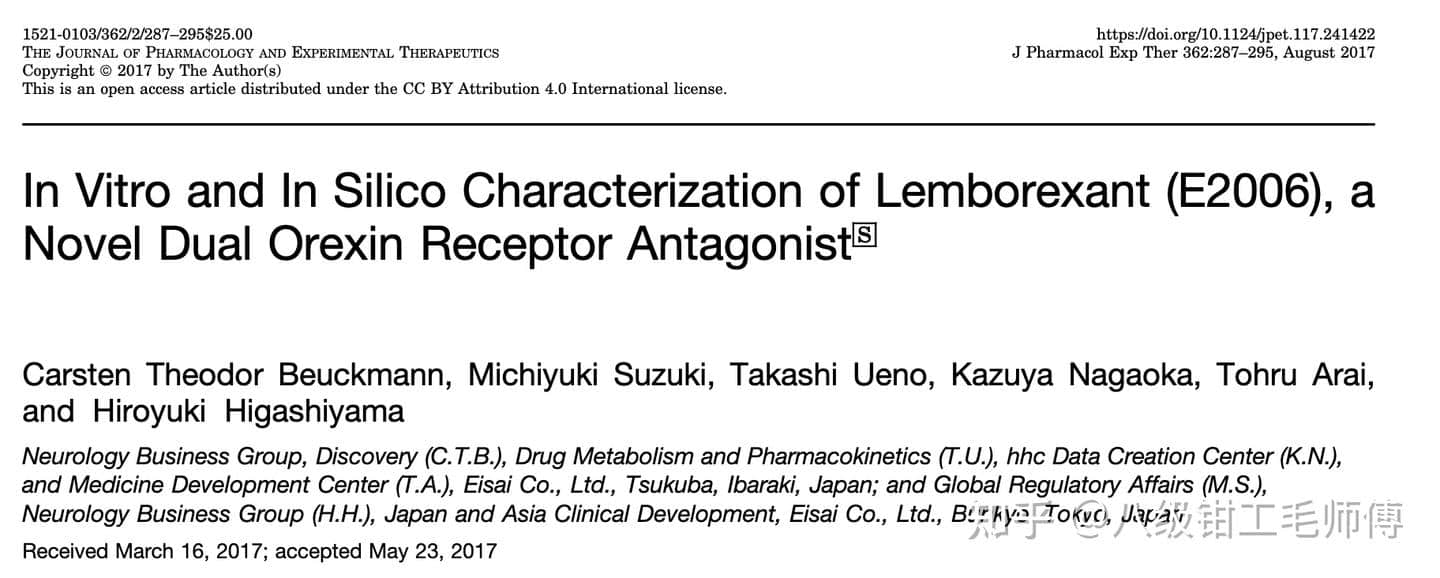
Consequently, after nighttime administration, lemborexant rapidly binds to orexin receptors, blocking wakefulness signals to promote fast sleep onset and sleep maintenance throughout the night. By the next morning, it rapidly dissociates from the receptors. Even if trace amounts of the drug remain in the bloodstream, they no longer exert a significant sleep-promoting effect, naturally avoiding morning somnolence. This mechanism is further consistent with the Phase III clinical trial results of lemborexant in China.