Cocoa is good for copper as well. Alcohol and B5 are bad for copper.
I just learned of the connection of copper to iron overload. This might be interesting.
“ this may not be the whole story, as was recently suggested by longtime copper researcher, Dr. Joseph R. Prohaska (Univ. of Minnesota, Duluth) (22). Copper depletion also reduces CP activity in humans, leading to hepatic iron overload and thus increasing risk for oxidative damage and liver cirrhosis (14).”
1 Like
I think the depletion of copper is an issue when it comes to the creation of new RBCs. One of my issues has been a high MCV. This arose in part from me drinking quite a bit which caused copper depletion.
1 Like
Dumping iron today. (Donating blood).
4 Likes
Ok, my boron is arriving today  Any experiences around how it impacts sleep positively or negatively?
Trying to decide on whether to take at dinner/before bed or rather in the morning/around lunch?
Bryan Johnson has a high SHBG and seems quite happy with it.
Alex - see also chain above.
Anyone else have thoughts?
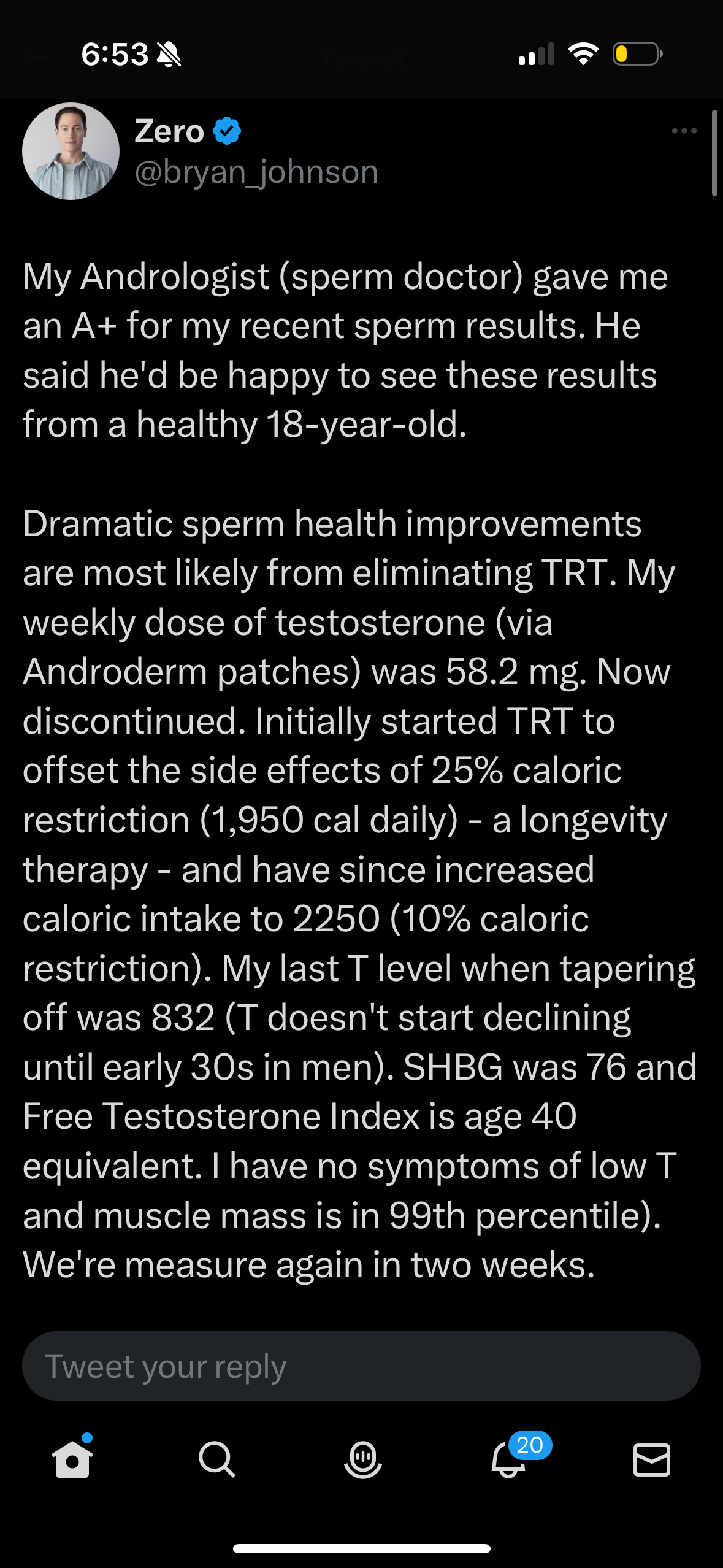
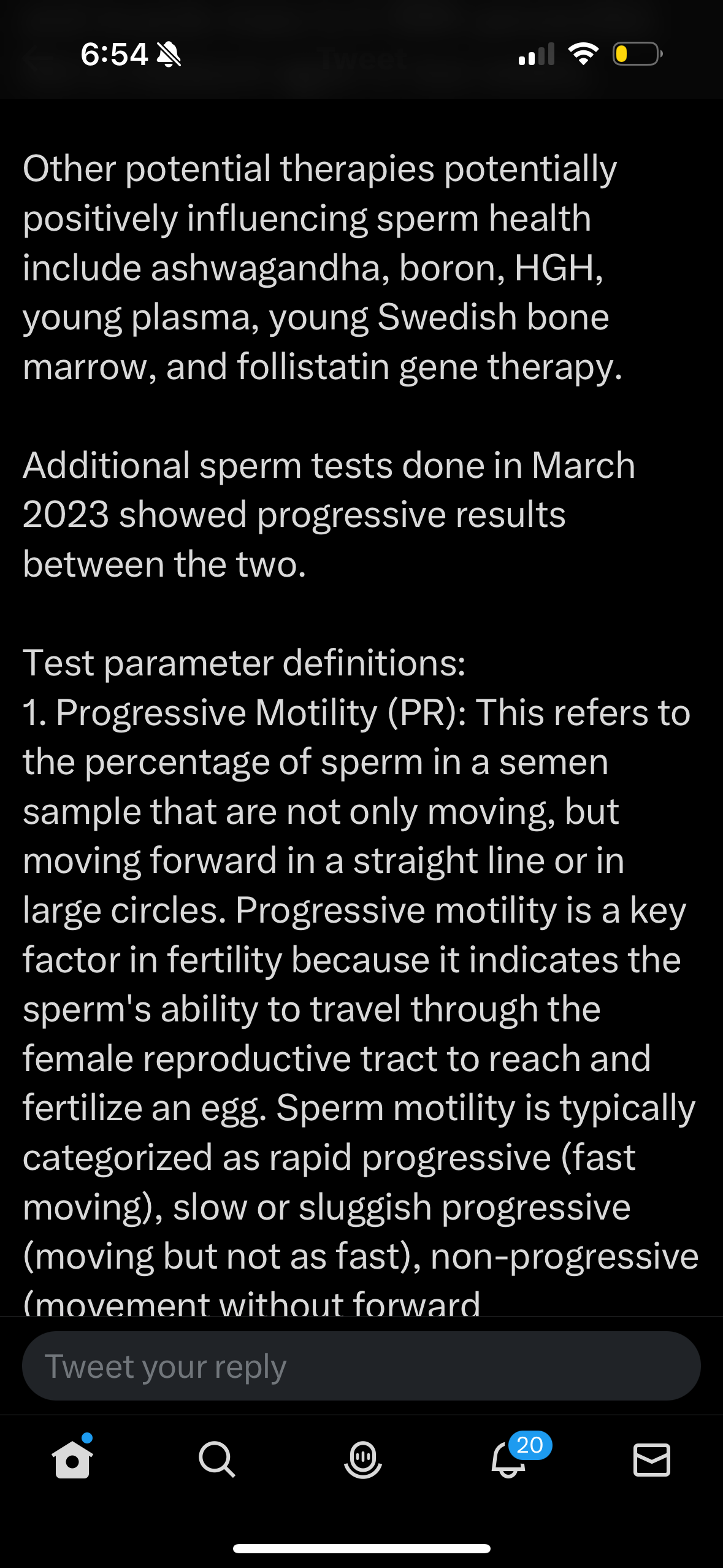
https://twitter.com/bryan_johnson/status/1732484916619997503?s=46&t=zJMJ1xVdRJYEDYz-DHipTw
1 Like
What has this got to do with iron?
I think it started with the above, but then there were something like 35 entries above about SHBG on this thread (in a rich way):
(After skimming above entries, if you can/hadn’t before), do you have any thoughts on optimal SHBG levels?
I have quite a high SHBG level and I think that is probably a good thing. Ferritin is interesting and I have had a gradual reduction in ferritin. I am also not that sure about this, but I think a gradual reduction in ferritin is a good thing.
1 Like
According to that plot from that recent paper you want more iron especially after 60 but ferritin seems somewhat neutral.
Thanks for you answer John. Can you speak to this a bit more? Mine is similarly high to Bryan Johnson’s (almost identical, and I’m almost his age), which both are above the “normal range”, but he seems happy with his level and I wonder if it might be a phenotype of fasting / CR…
Sorry but i dont know enough about this to say more.
1 Like
For reduction, the data seems most solid for tea and coffee to block absorption (probably via tannins). Curcumin is another option, but the data seems less solid and there are other hassles with that.
Blood donation is another option, but there may be theoretical side effects to chronically increasing the rate of hematopoiesis re: CHIP, blood cancers… there’s some weak/conflicting signal there.
1 Like
What’s a good source for testosterone percentiles by age?
Don’t know, but bet you can find if you search relatively easily
Yes, well, many can be found. That’s the problem. 
I’d be a little cautious about chasing percentiles in terms of testosterone. Levels are highly variable between individuals and if you are in the normal range it is probably the right level for your body. Losing weight (fat mass) can increase testosterone but assuming you are a healthy body weight and eating a good diet your testosterone level is probably right (if in normal range).
As you can see there is a remarkable stability in testosterone levels after age 40 (on average). If you have a large decrease after that I would take it as a sign that some issue needs to be addressed.
Yeah, I think that’s the right approach. Would want to see pretty significant symptoms to justify tinkering with the endocrine system.
1 Like
Around 30 years ago, I read a book called Iron And Your Heart. It was about the harmful effects of excess iron. Even now, decades later, the evidence is largely ignored. I was friendly with the late Bill Sardi. He was bit of an eccentric genius who was a proponent of using IP6 to chelate iron. Bill wrote a book called The Iron Time Bomb. I even had to explain to my cardiologist why I wanted to track my iron level. Btw, Medicare wont cover routine iron testing which I find incredible.
5 Likes