Iron: an underrated factor in aging

Mine are also all over the place, between 25 and 100.

I should I should put in this topic the fact that rapamycin is known to reduce both WBC and RBC. WBC tends to be more immediately affected because the half life of Neutrophils is quite short. This may not be obvious for people who don’t do frequent blood tests and take rapamycin frequently, but I can see the effects in my RBC because I do weekly tests and don’t take rapamycin more frequently than every 6 weeks.

Hence although it may not be obvious there will be a small amount of anaemia from weekly rapamycin (or fortnightly

1 Like

I came across this the other day… I don’t think its been posted,

A historical cohort study of the effect of lowering body iron through blood donation on incident cardiac events

A historical cohort study published in the journal TRANSFUSION by researchers from the University of Kansas School of Medicine and the Community Blood Center of Greater Kansas City investigates the “iron hypothesis”. This framework suggests that lowering body iron through blood donation may protect against atherosclerotic cardiovascular disease by limiting the oxidation of low-density lipoprotein (LDL) cholesterol.

The researchers designed a retrospective analysis tracking 1,508 frequent blood donors (individuals who donated more than one unit of whole blood annually from 1988 to 1990) and compared them against a control group of 1,508 casual donors (individuals who donated only a single unit during that same three-year period). By surveying the participants a median of 10 years later, the researchers evaluated the incidence of acute myocardial infarction, coronary angioplasty, bypass surgery, and death.

The data indicate that frequent whole blood donation is robustly associated with cardiovascular protection. Cardiac events occurred in 6.3 percent of the frequent donors compared to 10.5 percent of the casual donors. After adjusting for demographic and lifestyle differences, frequent blood donation yielded a 40 percent reduction in cardiovascular event risk (Odds Ratio 0.60). Notably, the protective effects were more pronounced in post-menopausal women than in men, providing compelling circumstantial evidence that offsetting the cessation of menstruation-induced iron loss is highly cardioprotective.

The impact score of this journal is 3.3, evaluated against a typical high-end range of 0–60+ for top general science, therefore this is a Medium impact journal.

Paper: https://onlinelibrary.wiley.com/doi/abs/10.1046/j.1537-2995.2002.00186.x

It always worries me as to how much " After adjusting for demographic and lifestyle differences," has an effect on the figures.

I would be interested in such a study which looks at the iron load directly. It is like vitamin D studies that don’t report 25OHD levels.

What argument would that be?

We need to be told what the adjustment was, how it was calculated and what the results would have been had the adjustment not been made. Also the basis of the assumptions in the adjustment and a sensitivity analysis.

The process of adjusting for confounders is a matter of judgment and to have a purely objective approach is hard. Hence in understanding the reliability of the conclusions we need to understand how the statistics were changed.

1 Like

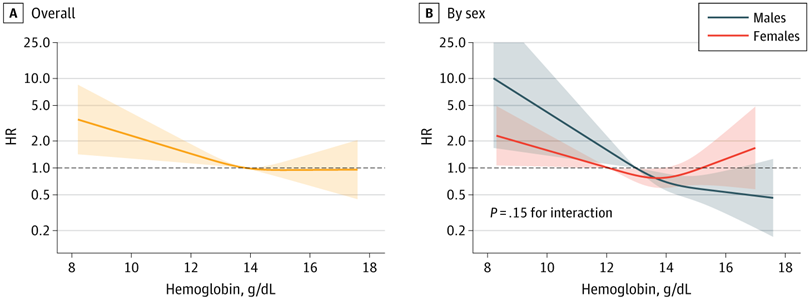
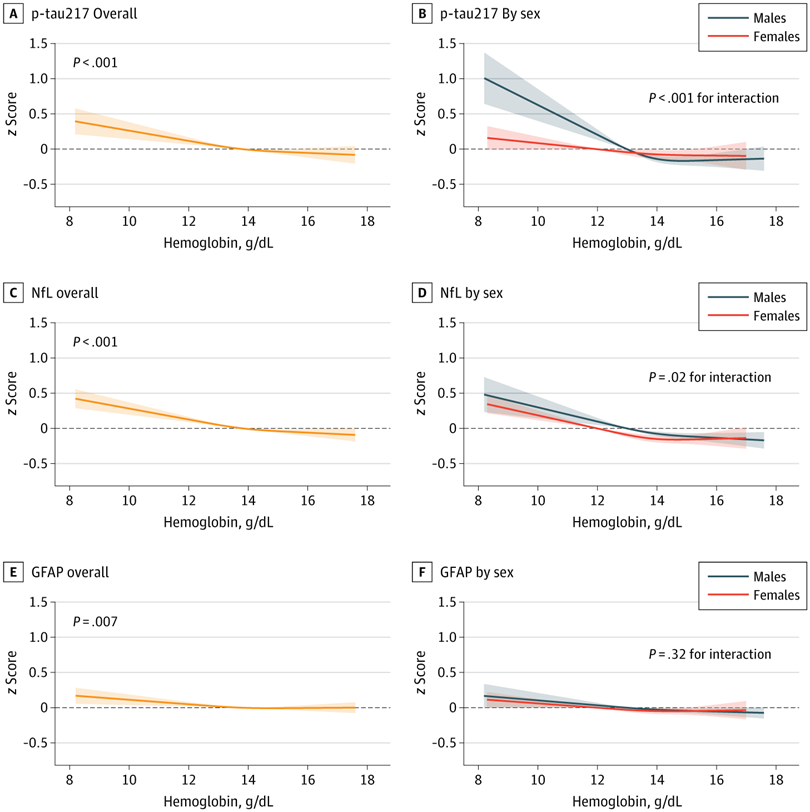
Just published: Anemia and Blood Biomarkers of Alzheimer Disease in Dementia Development 2026

JAMA Netw Open, Karolinska + Sapienza + KTH

They found that anemia was associated with:

  • Higher levels of AD-related blood biomarkers (p-tau217, NfL, GFAP)
  • A higher risk of developing dementia

They conclude:

These findings suggest that anemia may interact with neuropathologic processes, potentially accelerating dementia development.

@John_Hemming @DrFraser @CronosTempi

3 Likes

Recent lab results

Ferritin: 40
Iron: 77 (38-169)
TIBC: 412 (250-450)
UIBC: 335 (111-345)
Sat %: 19 (15-55)

For whatever reason, my body seems to be depleting iron slowly. I began a course of 100mg iron bisglycinate daily to improve my iron stores just a smidge to optimize them.

I absolutely do not believe in having an iron deficiency being a good thing like some people have suggested in here. I am not exactly iron deficient, but I am close. Improving the numbers slightly is in my best interest.

3 Likes

OK. But I’m having a slightly anemic reaction to this study (ahem! apologies, couldn’t resist). To me the most relevant quote from the study was this:

“Anemia was defined according to World Health Organization criteria.”

And what is that? It’s hemoglobin below 12.0 g/dL for women and 13.0 for men.

If someone has such numbers, this is notable. Hardly anyone does (on this list).

Meanwhile, the relationship between iron status and anemia is a huuuuuge can of worms, as seen in this thread. Many of us have what might be seen as below range iron levels, but absolutely don’t have anemia according to WHO criteria.

As an example my numbers from my most recent LabCorp test:

TIBC - 405 ug/dL (ref. 250-450)

UIBC - 330 ug/dL (ref. 111-343)

Iron - 75 ug/dL (ref. 38-169)

Iron Saturation - 19% (ref. 15-55)

Ferritin - 20 ng/mL (ref. 30-400) flagged as Low by LabCorp.

And in the same test, my hemoglobin was 15.4 g/dL (ref. 13.0-17.7).

So, I certainly seem to be on the low side of iron status, but pretty robust hemoglobin number far from WHO anemia. As I’ve reported I don’t experience any of the typical anemia symptoms and my energy levels are fine.

How useful is this connection (anemia/AD) to most of those of us on this list who struggle with their iron status? I don’t know.

Also, if you dig into this study, it becomes ever more equivocal, with a variety of factors (BMI included, nutrition status etc.) and after adjustments barely on the border of significance. Like I said: anemic.

The signal may be there, but we need much stronger results, especially those which might allow us to define optimal iron biomarkers (which was not even the focus of this study).
1 Like

Even though they used a low cut off to define anemia, higher hemoglobin might still be better for those AD biomarkers. It’s a pity they didn’t report ferritin and other iron biomarkers.

As you said, it’s a big can of worms…

2 Likes

There is an interesting question as to how the body prioritises Iron usage when iron stores are low. We have identified two key requirements - Haemoglobin and Dopamine although Iron is needed for other reasons. Hb is easy to measure. Neurologists say ferritin should be 70 for Dopamine adequacy. I don’t know what the studies are on this.

There are many other uses for Iron, but we also know higher iron levels (possibly over ferritin 100 without inflammation) are detrimental.

Very similar to my latest numbers. Your ferritin is slightly lower though.

“A study in Sweden found that older people with anemia (i.e., hemoglobin less than 12 g/dL in women and 13 g/dL in men) were 66% more likely to develop Alzheimer’s disease and have higher levels of biomarkers for Alzheimer’s than those who were not anemic (Valletta, JAMA 2026). However, this association does not prove cause-and-effect and there appeared to be little or no additional benefit to having much higher than adequate hemoglobin levels.”

https://jamanetwork.com/journals/jamanetworkopen/fullarticle/2847873

Iron deficiency and dementia risk: evidence from the Swedish population-based cohort study AMORIS

Discussed just above:

Two exposure groups were defined: absolute iron deficiency (serum ferritin < 30 ug/L) and functional iron deficiency (transferrin saturation < 20% and serum ferritin ≥ 30 ug/L).
Compared with the reference group, absolute and functional ID was associated with increased dementia diagnosis (adjusted hazard ratio (HR) = 1.24, 95% confidence interval (CI): 1.18–1.42; HR = 1.21, 95% CI: 1.05–1.39, respectively), after adjusting for age, sex, education, and comorbidities.

That’s an interesting one @John_Hemming. So should one target transferrin saturation > 20% and serum ferritin ≥ 30 ug/L?

This is where the neural dopamine pathway comes in. I think that needs higher ferritin. 50-70 territory.

Do you use topical or subq? Wouldn’t you expect the former to have a lesser effect on iron stores?

No question. And it explains why extreme athletes like Lance Armstrong juice with EPO. Higher EPO equals higher HGB and a corresponding increase in performance.

1 Like

I’ve switched to topical compounded T cream, which is more expensive but should have a much less significant effect on hematocrit and iron stores (ferritin). In the mean time I’m also supplementing with heme iron and just playing the waiting game for ferritin to increase and hematocrit to gradually come down over the next couple of months.

2 Likes