Melatonin promotes brown adipose tissue (BAT) activity, leading to body mass reduction and energy expenditure. However, the mechanisms governing these beneficial effects are not well-established. This study aimed to assess the effects of (1) melatonin on BAT and energy metabolism, and (2) fibroblast growth factor 21 (FGF21) in BAT-mediated thermogenesis.
Methods
Male C57BL/6 J mice received a high-fat diet (HFD) or normal chow, accompanied by intraperitoneal injection of 20 mg/kg melatonin for 12 weeks. FGF21−/− mice consumed an HFD with or without melatonin for 8 weeks.
Results
Melatonin attenuated weight gain, insulin resistance, adipocyte hypertrophy, inflammation, and hepatic steatosis induced by the HFD and increased energy expenditure. Furthermore, melatonin improved cold tolerance by increasing BAT uncoupling protein 1 (UCP1) expression and producing heat. Notably, melatonin resulted in a shift in energy metabolism favouring the utilization of fat, and it increased FGF21 in circulating and metabolic tissues and skeletal muscle phosphorylation of AMP-activated protein kinase. However, melatonin did not protect against obesity, insulin resistance, and energy expenditure in HFD-fed FGF21−/− mice.
Conclusions
Melatonin suppressed obesity and insulin resistance resulting from the HFD by enhancing BAT activity and energy expenditure, and these effects were dependent on FGF21.
John_Hemming, which doses have you used for weight-loss purposes? If translating the Nature article mice dosages to humans by the usual FDA multiplication factor (1/12.3), the result would be some serious megadosing…
When I was losing weight I was not taking a lot of melatonin perhaps 35-40mg per night.
I do megadose now with melatonin, but I am not losing weight mainly because I am not trying that hard. I am about 85-86 kilos where I ended up in 2021.
phase 3, 240-week, double-blinded trial in 1,200 adults with metabolic dysfunction-associated steatohepatitis (MASH) and moderate to advanced liver fibrosis (stage 2 or 3)
37.0% of people treated with semaglutide 2.4 mg achieved improvement in liver fibrosis with no worsening of steatohepatitis compared to 22.5% on placebo2. 62.9% of people treated with semaglutide 2.4 mg achieved resolution of steatohepatitis3 with no worsening of liver fibrosis compared to 34.1% on placebo
MASH = non-alcoholic fatty liver disease (NAFLD)
One more indication for GLP-1RAs after T2D and obesity (and soon CKD and HF?).
Ok I’ll take the placebo LOL. How on earth can 35% of people be cured on H2O/placebo? If it were 5%, I would say oh well could happen but 34%? I am always leary of studies that show placebo at 50-70% as good/effective as the medicine being studied.
Just something to be aware of… how / where you are buying your semaglutide:
At least ten deaths and 100 hospitalisations have been linked to off-brand versions Ozempic and Wegovy in the US, the manufacturer of the weight-loss drugs warned on Wednesday.
Novo Nordisk cited data from the US Food and Drug Administration (FDA) on adverse reactions to compounded versions of semaglutide — the generic name for the drug marketed as Ozempic and Wegovy — since 2023. The reports have not been verified, according to the FDA’s website.
Yes, but of course it’s Novo Nordisk saying this so they can get off-brand semaglutide banned, and this data comes from self-reported complaints and “hasn’t been verified”, so we don’t even know if semaglutide was causally related to the hospitalizations/deaths. Even if causally related, I’d speculate that many of the hospitalizations were from dosing errors by the patient (because using vials rather than pens) and/or known side effects such bowel impaction due to insufficient fiber and fluid intake. I haven’t seen any reports of medical issues from compounded versions of semaglutide/tirzepatide resulting from contamination, lack of sterility, etc (has anyone else?)
In addition, how many hospitalizations/deaths have been “linked” to branded Ozempic/Wegovy? I’m guessing they conveniently left out that data…
Higher GLP-1Ra genetic scores associated with a lower risk of CAD (OR [95% CI] per 1-standard deviation [SD]: 0.97 [0.95-0.99]; P=0.004), HF (OR [95% CI] per 1-SD: 0.95 [0.93-0.98]; P<0.001) and CKD (OR [95% CI] per 1-SD: 0.95 [0.93-0.97]; P<0.001). The associations between the GLP-1Ra genetic score and HF and CKD were not modified by the SGLT2 inhibitor genetic score.
Lifelong exposure to genetic variants mimicking the pharmacologic effects of GLP1-Ra is associated with a lower risk of CAD, HF, and CKD. GLP-1Ra may provide cardio-kidney protection beyond SGLT2i alone. These results also suggest that GLP-1Ra may prevent new-onset CAD, HF and CKD in the general population.
At the population level, that’s massive if tomorrow everyone is on GLP-1RA we eradicate CA, HF, and CKD. At the individual level if you’re already “optimized”: I don’t know.
All-cause mortality for the combination group was 6.8% versus 10.6% within the SGLT2i-alone group (HR 0.52 [0.47-0.56], P<0.001)).
In this propensity-matched cohort, patients with HFpEF receiving GLP1RA and SGLT2i had lower rates of hospitalizations and all-cause mortality compared with those receiving SGLT2i alone. Large randomized controlled trials are warranted to corroborate these findings.
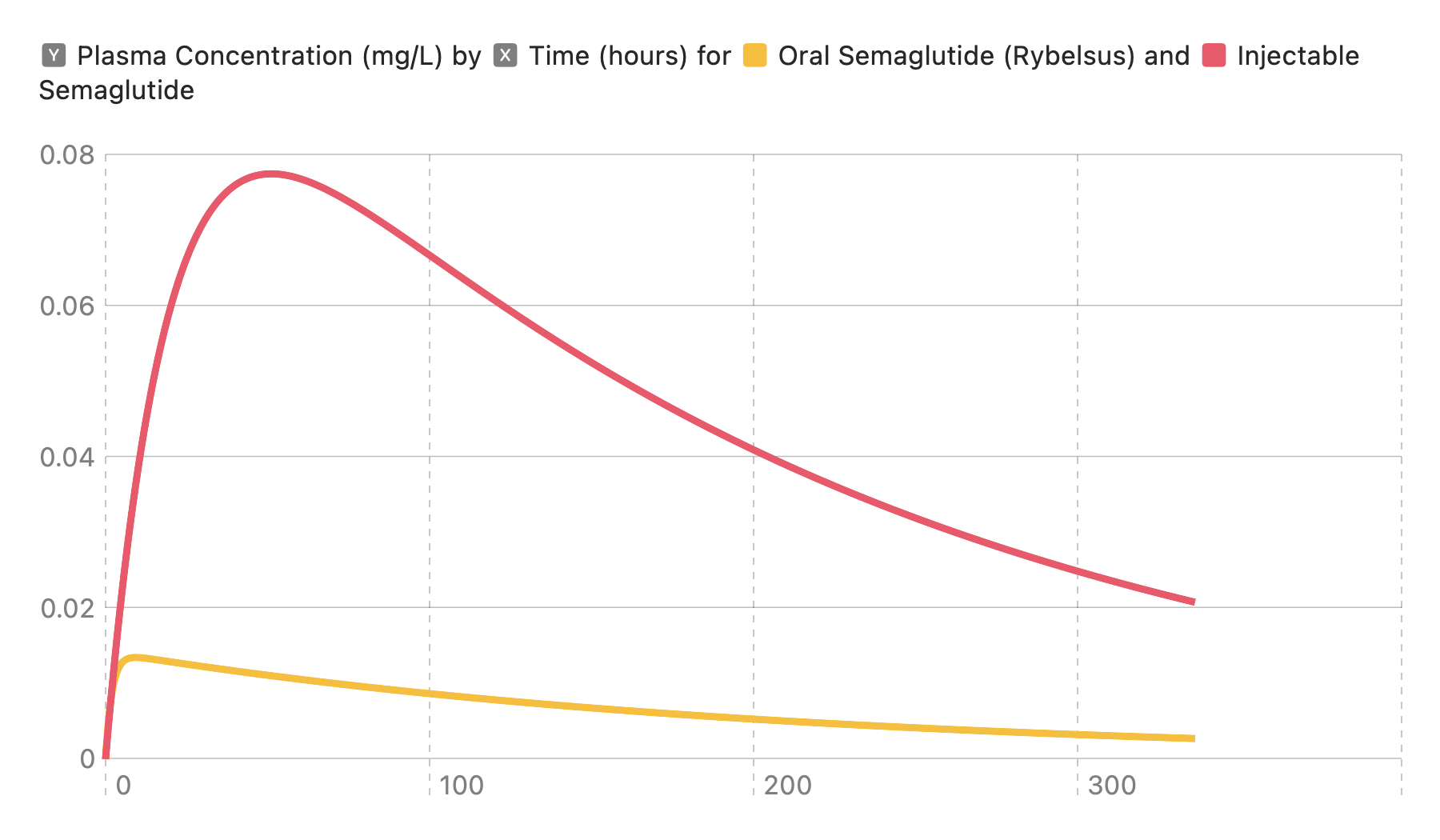
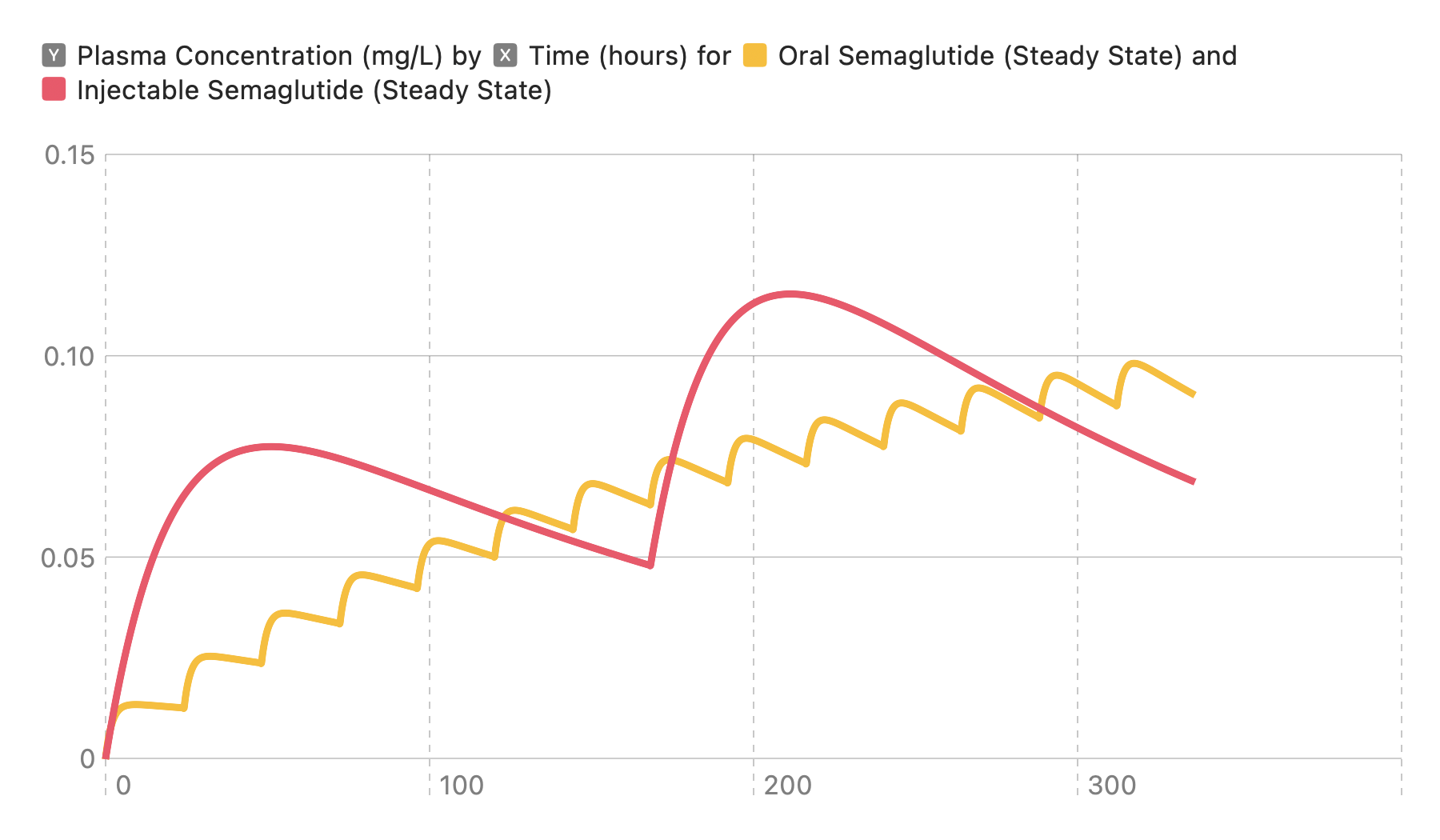
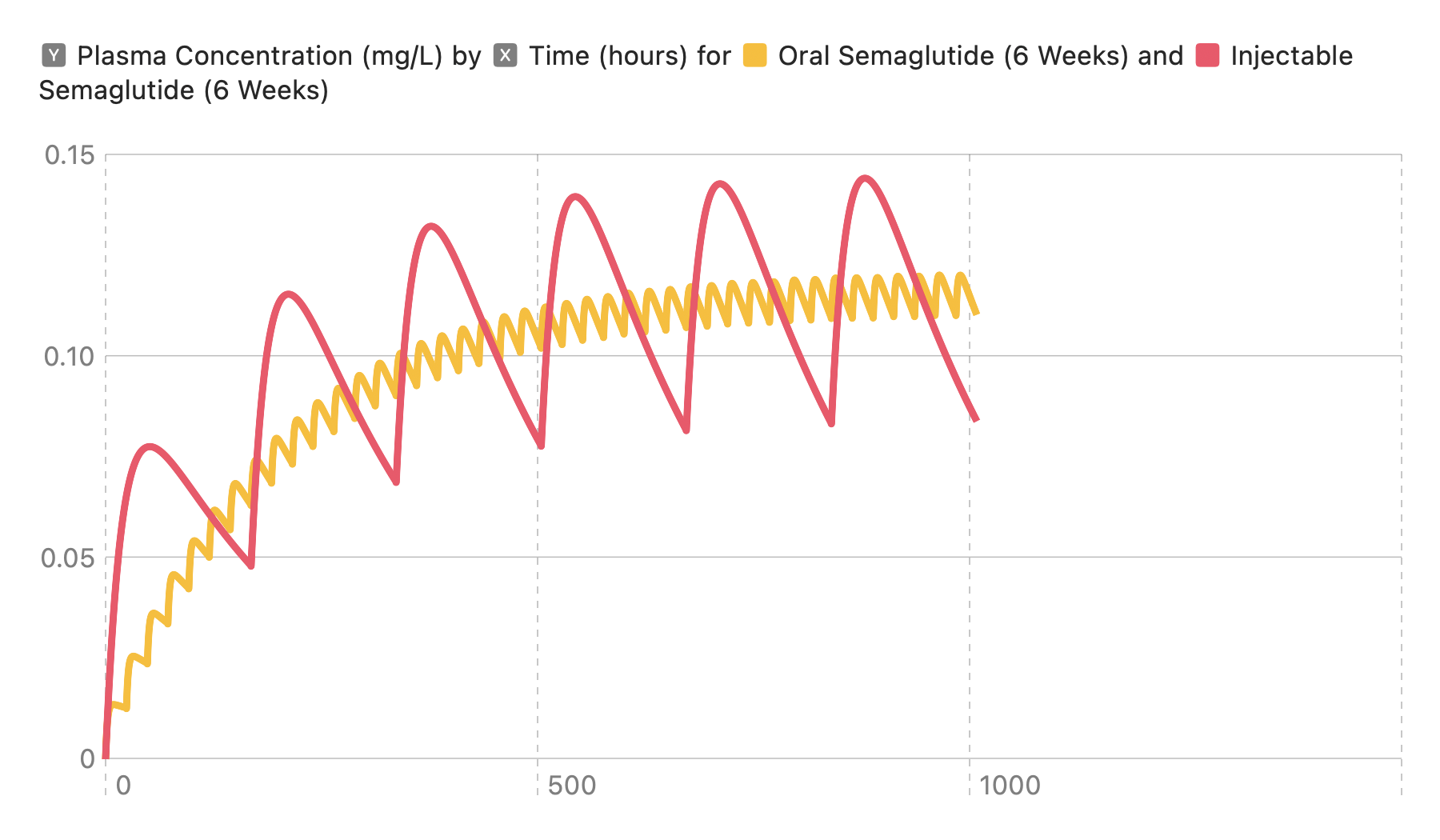
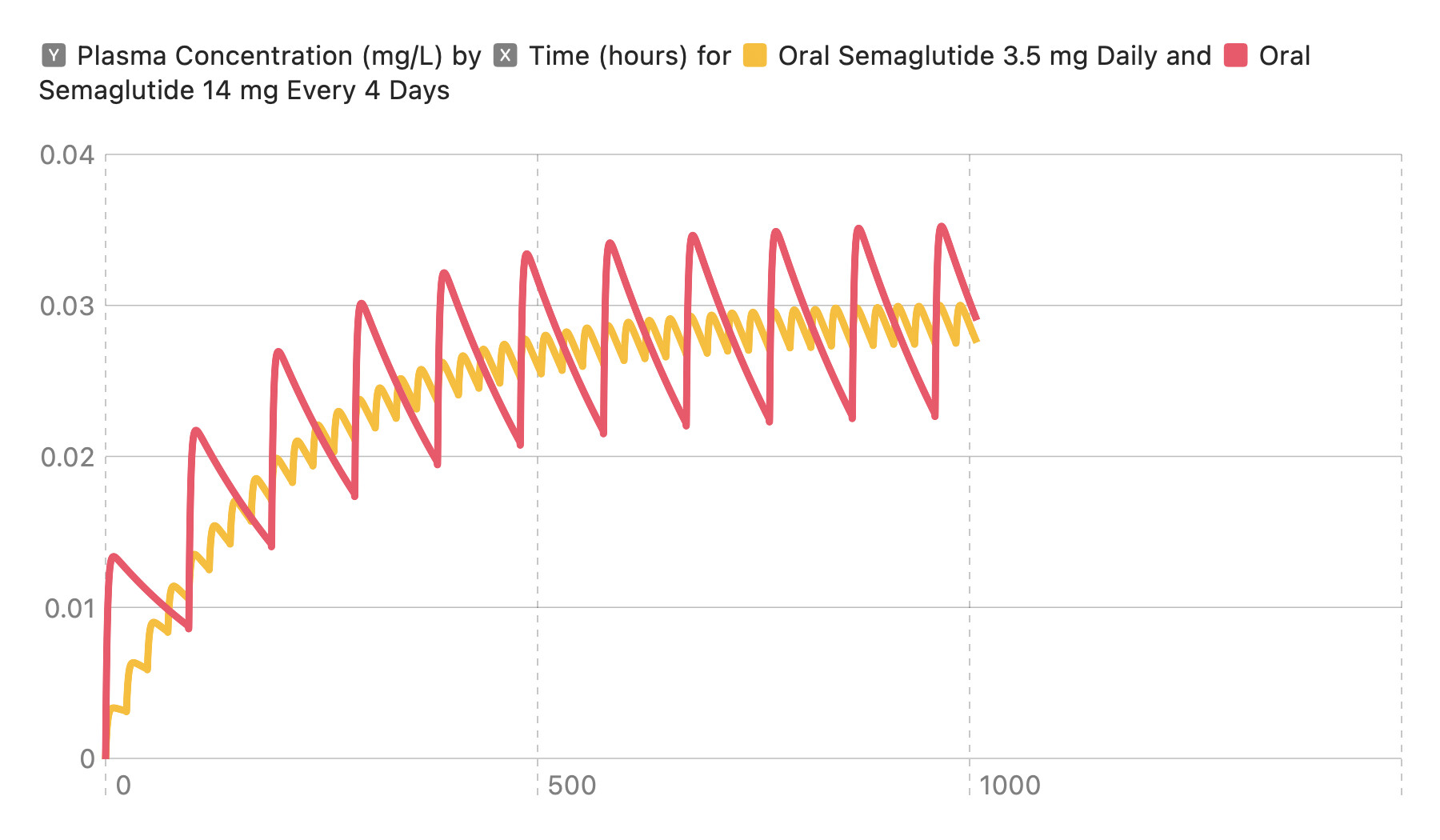
What are the detailed pharmacokinetics of rybelsus compared to injectable semaglutide, including the differential equations ?
=> The PK equations and parameters
[…]
Could you give me an estimation of the parameters as well as simulations?
Yes, this makes sense based on the long half-life of semaglutide, but the higher peaks (with larger but less frequent doses) will potentially cause more side effects.
Yeah that’s true. If you try it, I’ll be interested to hear what you think. I don’t know if I’ve yet seen any glowing reviews of Rybelsus. The side effects were too much for me, unfortunately. My wife threw up both times she took a 3mg Rybelsus tablet and wouldn’t touch it after that, but she’s had smooth sailing with no nausea on compounded injectable tirzepatide.
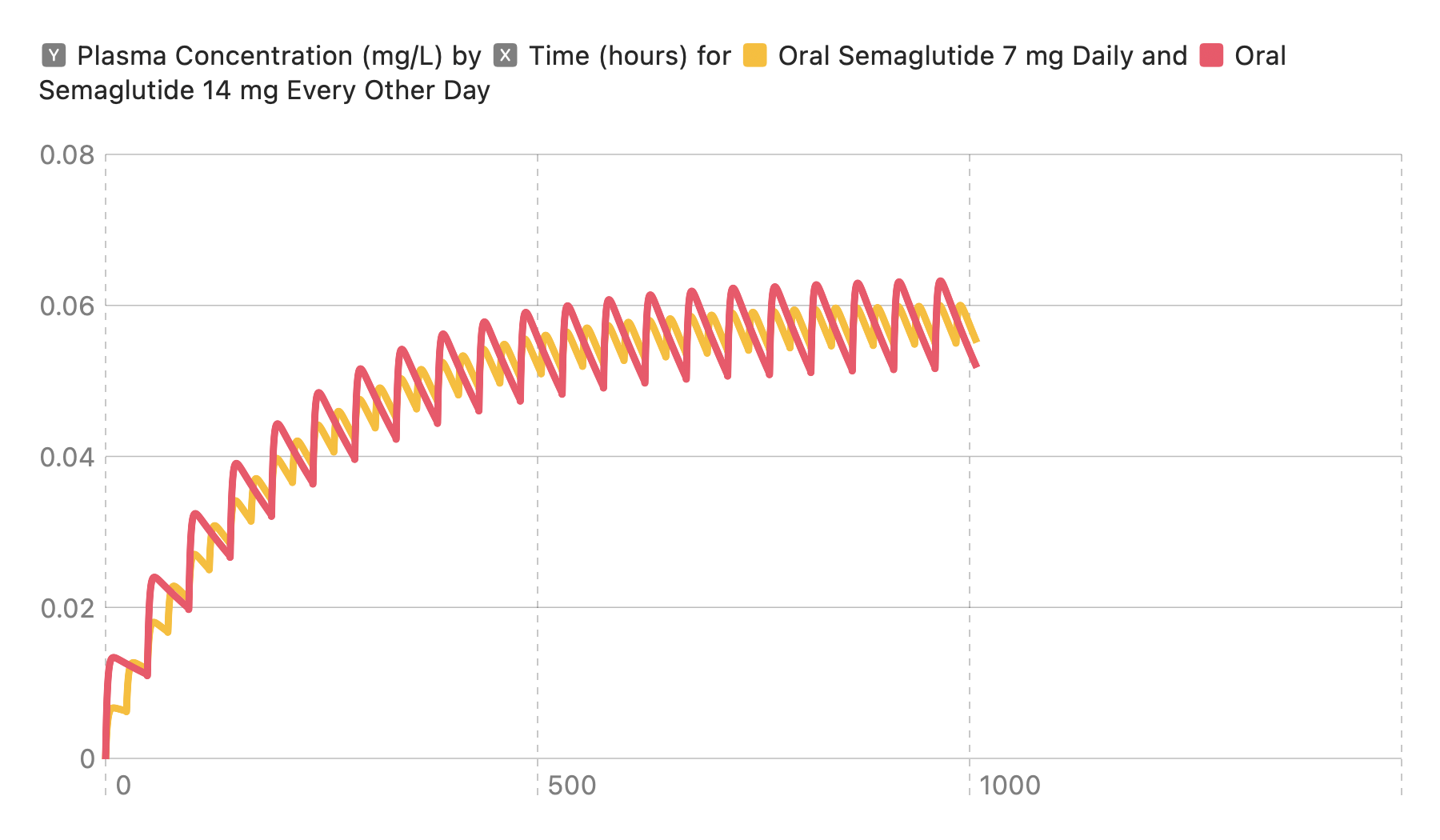
I’m ramping up on my second week, splitting 14 mg pills which is bothersome. That’s why I wanted to look at taking the whole 14 mg pill but every 4 days, then 3 and 2 to end up with the 7 mg daily dose equivalent.
I don’t have weight to loose but I’m desperately trying to lower my own blood glucose production and I want to take the minimum effective dose for that. Today I had my first 2 consecutive days in years with a fasting morning glucose below 100 mg/dl so that’s encouraging.
No side effects so far.
No side effects so far but I’m still at low dose: 7 mg every other day (eq 3.5 mg dally) for 2 weeks. I will switch to 14 mg every 3 days (eq 4.6 mg daily) next week.