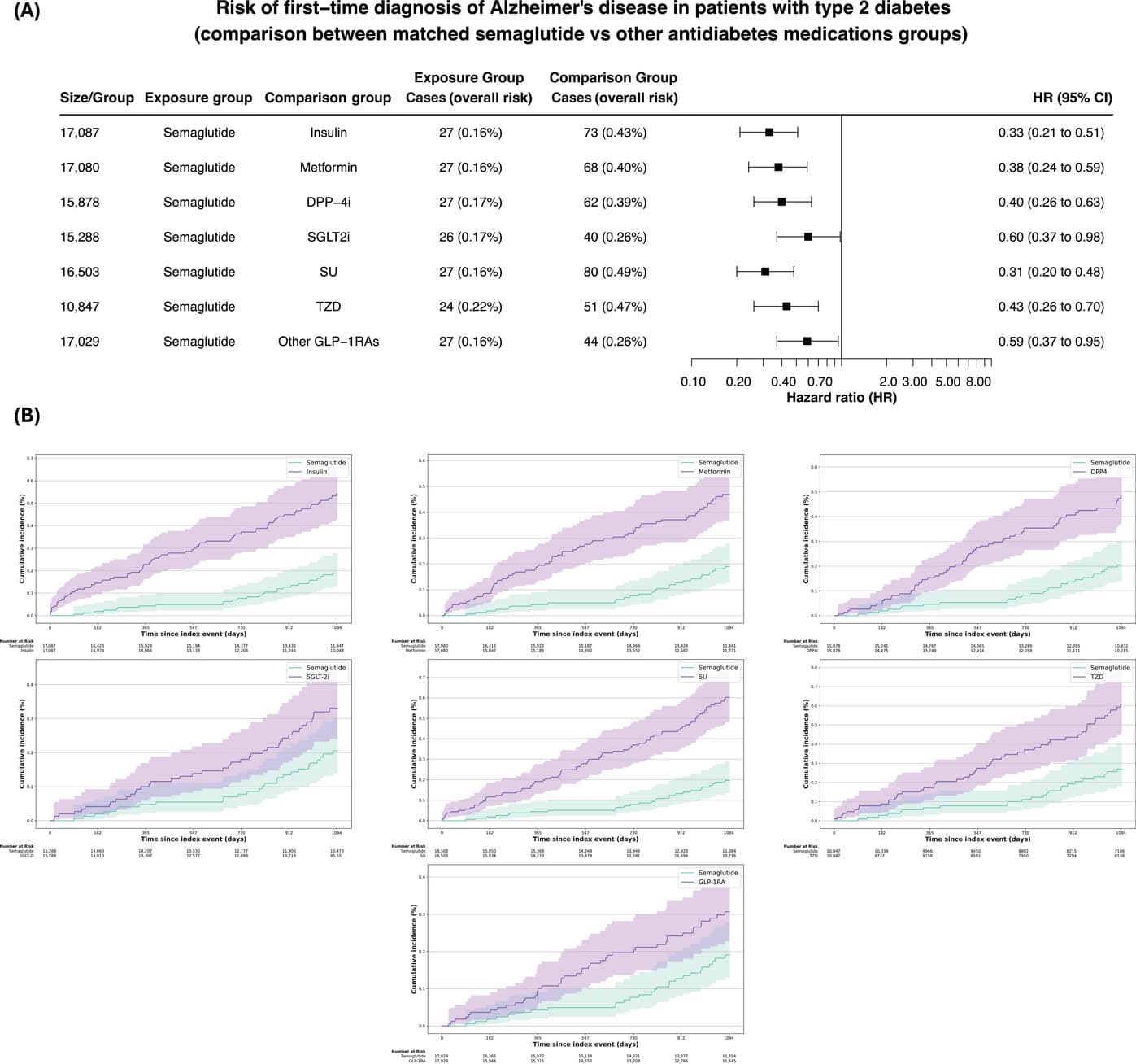
Semaglutide was associated with significantly reduced risk for first-time AD diagnosis, most strongly compared with insulin (hazard ratio [HR], 0.33 [95% CI: 0.21 to 0.51]) and most weakly compared with other GLP-1RAs (HR, 0.59 [95% CI: 0.37 to 0.95]). Similar results were seen across obesity status, gender, and age groups.
Our study population comprised patients with T2DM prescribed semaglutide between December 2017 and May 2021, before its approval for weight loss. Due to sample size limitations and a shorter follow-up time, we did not include patients prescribed semaglutide as Wegovy for obesity. However, we conducted stratified analyses by obesity status among T2DM patients and found a consistent decrease in first-time AD diagnosis regardless of obesity status. These findings suggest that semaglutide may have beneficial effects on delaying the onset of AD through mechanisms beyond weight loss.
Our study shows that semaglutide significantly reduces first-time AD diagnoses compared to other antidiabetic medications, suggesting potential benefits beyond insulin resistance improvement. This is further supported by the data comparing semaglutide with SGLT2i. Indeed, SGLT2i reduces blood glucose independent of insulin sensitivity and secretion. SGLT2i crosses the blood–brain barrier and has neuroprotective effects by reducing neuroinflammation, oxidative stress, mitochondrial dysfunction, and increasing brain-derived neurotrophic factor. A recent large population-based cohort study showed that SGLT2i was associated with a lower risk of dementia compared with DPP-4i. Our study shows that semaglutide was associated with significantly lower AD first-time diagnosis compared with SGLT2i, with an effect more profound than that of DPP4i. These findings align with prior research suggesting semaglutide may offer neuroprotective effects via pathways like neuroinflammation and mitochondrial function beyond insulin resistance improvement.
So, it looks like semaglutide is best for neuroprotection? (@DrFraser) Similar finding in PD: Parkinson's disease - #236 by adssx Could tirzepatide be even better? And what about semaglutide + SGLT2i combination?