We need high intensity exercise to maximize brain health… "Not only for exercise interventions to enhance neuroplasticity but “to maximize the therapeutic potential of non-invasive brain stimulation.”
A single bout of cardiovascular exercise can enhance plasticity in human cortex; however, the intensity required for optimal enhancement is debated. We investigated the effect of exercise intensity on motor cortex synaptic plasticity, using transcranial magnetic stimulation. Twenty healthy adults (M age = 35.10 ± 13.25 years) completed three sessions. Measures of cortico-motor excitability (CME) and inhibition were obtained before and after a 20-min bout of either high-intensity interval exercise, moderate-intensity continuous exercise, or rest, and again after intermittent theta burst stimulation (iTBS). Results showed that high-intensity interval exercise enhanced iTBS plasticity more than rest, evidenced by increased CME and intracortical facilitation, and reduced intracortical inhibition. In comparison, the effect of moderate-intensity exercise was intermediate between high-intensity exercise and rest. Importantly, analysis of each participant’s plasticity response profile indicated that high-intensity exercise increased the likelihood of a facilitatory response to iTBS. We also established that the brain-derived neurotrophic factor Val66Met polymorphism attenuated plasticity responses following high-intensity exercise. These findings suggest that high-intensity interval exercise should be considered not only when planning exercise interventions designed to enhance neuroplasticity, but also to maximize the therapeutic potential of non-invasive brain stimulation. Additionally, genetic profiling may enhance efficacy of exercise interventions for brain health.
My personal experience aligns with these findings. An interesting problem emerged in my 70’s and in close friends of a similar age. Whereas cardiopulmonary capacity can be a limiting factor in HIIT activities when younger, at some point, muscle innervation becomes the limiting factor as the muscle nerve/muscle cell ratio continues to decline.
I experience this situation when climbing very steep hills even on a relatively smooth path (eliminating balance and other factors). I have difficulty climbing fast enough to get out of breath and reach and sustain Zone 5. I can sense that muscle innervation is the limiting factor.
Ironically, one of the best ways to slow or even partially reverse that declining ratio is HIIT.
Now, a year later and (ahem) a year older, I can still attest to the applicability of what @RapAdmin reported above. All forms and intensities of exercise benefit me but short high intensity bursts have special effects that I don’t have good metrics for other than to note my subjective sense of well being, better balance (a small but real issue as I get older), and more energy. I get some HIIT working in our yard. Moving plants around, repairing drip lines, pruning, etc. is generally low intensity Zone 1 work but digging holes with my 7-foot 35 pound steel bar in our extremely rocky soil (eastern edge of greater Phoenix area) is excellent HIIT. The professionals in this area use electric jackhammers in this particular area. It can take 20 minutes or longer to dig a single hole which I break up into a half dozen or more HIIT bursts with the steel bar, each burst sending my HR well into Zone 5 and soon leaving me out of breath. Overall, I try to get some HIIT at home, some in bursts on hills, and occasionally on a stairstep machine or treadmill, which I find mostly unsatisfactory.
I can identify with your observation on common tasks. I was introduced to the bar you mentioned when I was 13 and helped out my uncle and father in a landscape business they had. I have had one in my shed for many decades and it still gives me a workout in the yard occasionally. It is called a San Angelo bar (not many people know that). A very useful tool.
I have been trying high-intensity interval training for the past 2 weeks for about 10 to 15 minutes each day (4x4 – warm-up phase of a few minutes + 4 sessions for about 40 seconds at about 90% to 95% maximum heart-rate as measured by 220-age, interleaved with 4 sessions for recovery + a few more seconds delay in getting treadmill up to speed each session), and can definitely feel a lasting effect hours after completing it. The most obvious seems to be taut muscles in my abdominal area (e.g. obliques) and legs. Walking also seems to be easier even a few hours after – muscles seem stronger, seemingly requiring less effort to walk.
Supposedly (according to a Google search), HIIT can boost nitric oxide levels in the body long after each session, and regular HIIT can raise one’s baseline level of nitric oxide production. It also raises growth hormone levels up to an hour or two after finishing, and may also raise baseline levels.
All-out sprints have at least two advantages over a slow, lazy jog. One is that they generate endorphins, which creates euphoria. The faster you go, the more euphoric you feel. The second is that intervals provide a full-body fortification that protects against future illness. For example, I once had a case of septic shock that sent me to the hospital. While sepsis has a mortality rate of about 60% for those in their 70s, I was out of the hospital in five days. I attribute my rapid recovery–indeed, that I recovered at all–to a lifelong habit of high-intensity exercise.
I find cardio to be the limiting factor and weaker cardio makes it hard to reach muscular failure. Now that I’m training cardio consistently I’m finding myself reaching closer to muscular failure in more exercises, it is great.
I’m curious to see if there are things other than exercise that can increase the concentration of oxygenation haemoglobin in the prefrontal cortex:
“The high concentration of oxygenated haemoglobin (O2Hb) in the prefrontal cortex (PFC) during exercise improves cognitive performance. In this study, we aimed to elucidate the relationship of cognitive function with the O2Hb concentration difference between the left and right PFC (L-PFC and R-PFC, respectively) during sustained exercise. We enrolled 12 healthy adult males who, after a 4-min rest and warm-up, performed a 40-min exercise regime at a workload corresponding to 50% maximal oxygen consumption. A 2-back task was performed, and the reaction times (RTs) were recorded before exercise, immediately after exercise, and 20 min after exercise. Near-infrared spectroscopy was used to monitor L-PFC and R-PFC. RT was shortened immediately and 20 min after exercise, and O2Hb concentration difference between L-PFC and R-PFC positively correlated with RT 20 min after exercise. These findings suggest that 40-min exercise induced a phenomenon of neural compensation.”
Finger tapping and verbal fluency tasks:
“This study aimed to examine the extent to which age and MCI affect cerebral blood flow, which was measured using NIR spectroscopy during category, finger-tapping, and dual tasks. Additionally, the effectiveness of cerebral oxyhemoglobin signal measurements in categorizing elderly participants with and without MCI was examined. Our results show that the oxyhemoglobin levels during these tasks were not able to distinguish between elderly participants with and without MCI. However, in participants both with and without MCI, the results suggest that finger-tapping, as well as verbal fluency tasks, can also be effective in activating the prefrontal cortex.”
Mouth breathing increased oxygen load in prefrontal cortex:
“The hypothesis that mouth and nasal breathing give rise to different cerebral hemodynamic responses in the prefrontal cortex was corroborated in this study. We found that mouth breathing caused an increased oxygen load in the prefrontal cortex. This is the first study to compare the effect of breathing routes on hemodynamic responses in healthy individuals during the waking hours. It is possible that a few minutes’ detection of phase responses using vector-based NIRS could become an effective way to quantitatively diagnose differences in breathing routes on the basis of this increased oxygen load.”
Hey Travis – nice going old man! Running with the young gym bros!
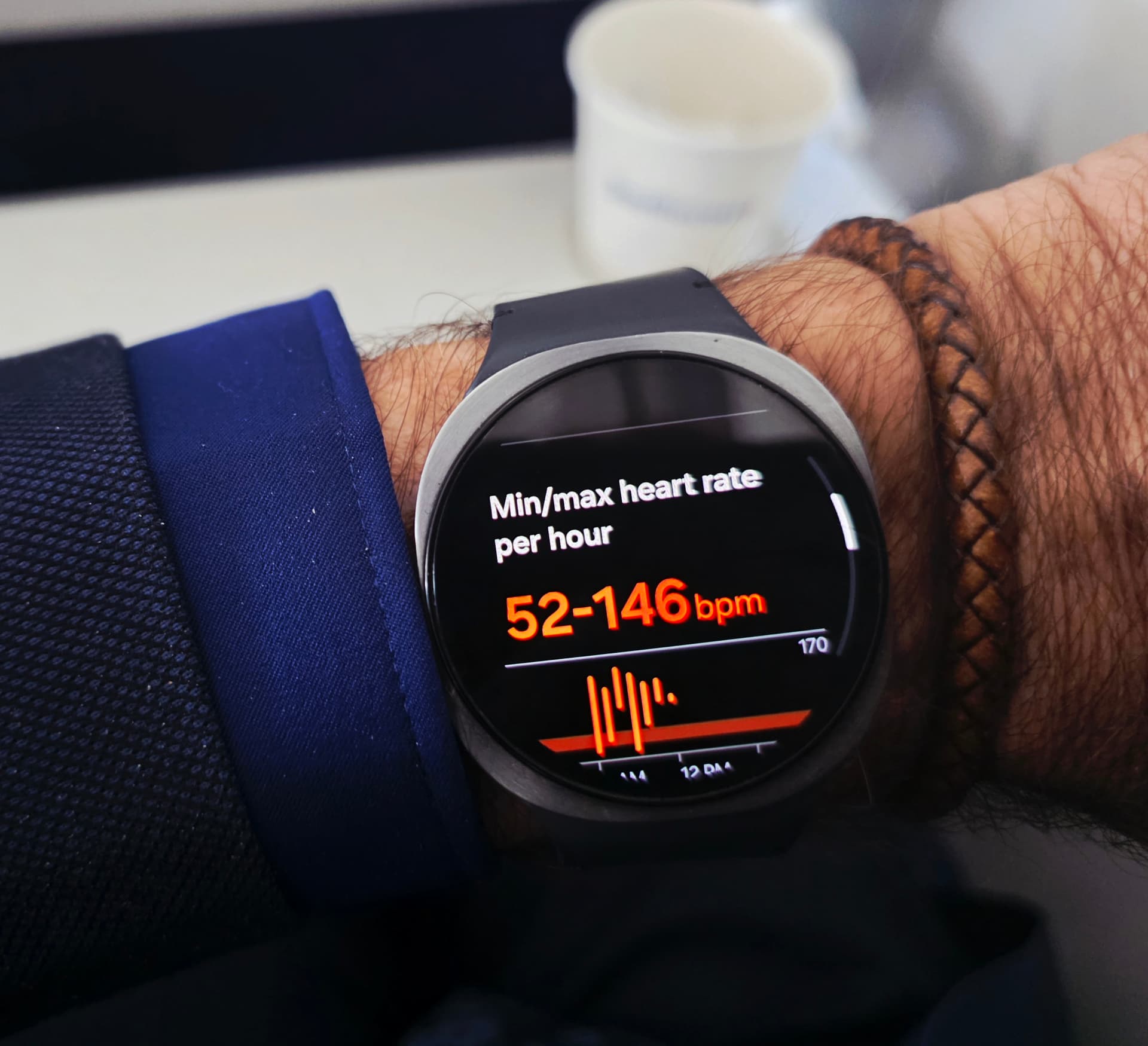
Exercise: For a 20-year-old, (170\text{ bpm}) is a normal max during intense exercise, but for someone over 50, it is likely overexertion. Hahaha! Guess I will stick to my 146-149. I do hit the lower 150’s when I am going longer and harder. It quickly drops to 80’s.
Currently, I am doing circuit training for two particular reasons.
Spend less time at the gym because there is no time wasted waiting for recovery between sets on the same machine.
It adds an aerobic element to the exercise routine. When these are matched, “research on other adults shows that circuit training can produce similar muscle growth to traditional resistance training.”
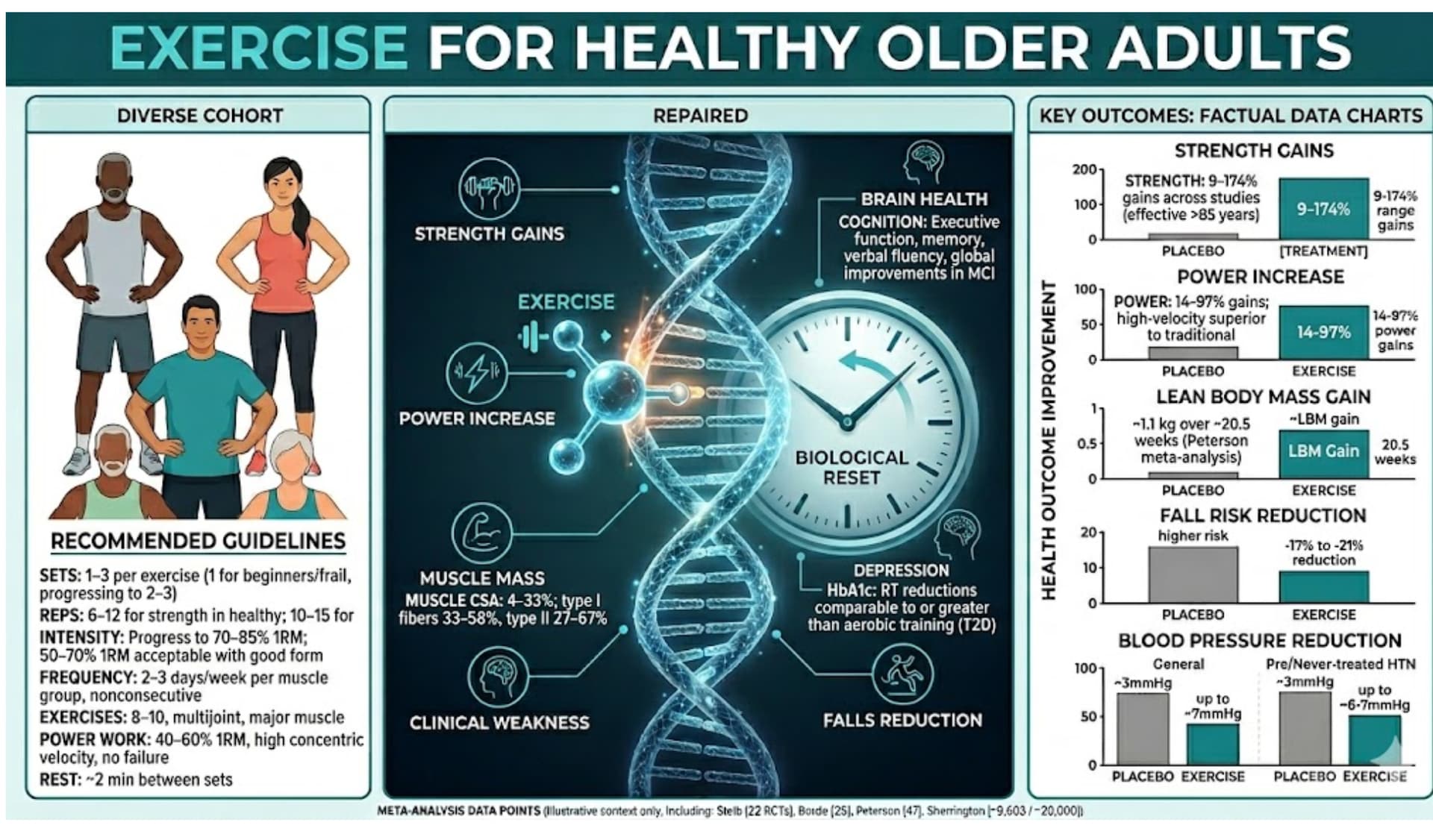
Also, I am doing “Explonic: Designed for building power and speed strength”; this mode requires you to accelerate the weight as quickly as possible during the concentric (pushing/pulling) phase on some machines. This is a recommended type of exercise for senior adults in helping with fall prevention.
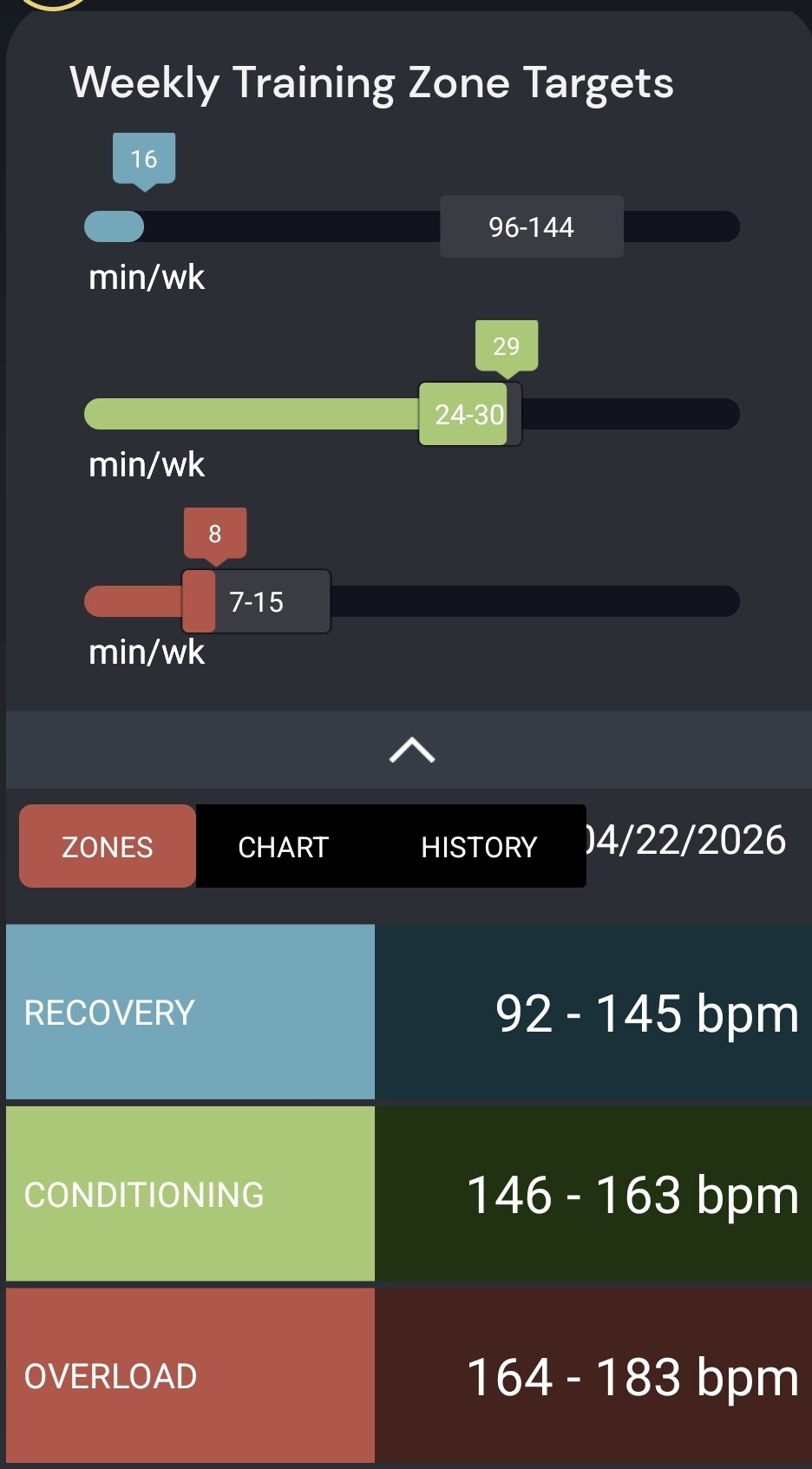
I finally found a cardio program/regimen that gives me intensities I need to improve vo2max. I’m given a range of minutes at each intensity for the week that I must hit, and that’s it. I just make sure I hit them.
Would love to hear more about how much Morpheus has improved your vo2 max. I just got mine a couple weeks ago. I had done Norwegian 4x4s in the Garmin orange zone previously (about 80% of max). Doing 4x4s in the Morpheus red zone (90%) was taking it to a whole nother level.
For me, it has simply stopped the slow decline I was experiencing. This was mainly due to not knowing what intensities and durations to hit on a weekly basis. Went from 37 to 45 on 3 months.
“This was mainly due to not knowing what intensities and durations to hit on a weekly basis”. I have reviewed the literature on this and I cannot say that I found out what works beyond the Norwegian 4x4 and even with that neither intensities nor durations seem to be uniform. Did you just complete all the red, green, and blue zone Morpheus recomendations each week?
“High-intensity Interval Exercise Enhances Motor Cortex Plasticity More Than Moderate Exercise”
Meh, too little to matter IMO.
A little bragging today because I recently joined a new gym and they took body measurements. AIs say their methods are accurate to within 3-5%. This is the result of genes, resistance training, diet, polypharmacy, and rapamycin. I think that everything is more of an indication of healthspan. My pyramid is genes, exercise, and diet (I have used many different diets over the decades, including keto). The most important thing about diets is “calories count.”
Polypharmacy can’t be ruled out. Apparently they haven’t done me much harm and may have contributed to my healthspan.
Genes: Top of my list because many of my ancestors, on both my father’s and mother’s sides, lived beyond 90.
Resistance training: Exercise in general, when maintained for decades.
Diet: The most important thing is not to consume too many calories. An optimal diet is up for debate.
Rapamycin: I have been taking “high-dose” rapamycin for 5 years and have experienced many benefits and few side effects, as I have posted many times earlier.
Bottom line (IMO): Exercise, diet, and rapamycin have contributed greatly to my healthspan. It remains to be seen if they increase my lifespan. This is going to be difficult to prove because if I should be so fortunate as to live to 100, it only indicates that I didn’t do anything to off myself prematurely.
IMO: Some proof of evidence that exercise and rapamycin delay sarcopenia. Also, while I have done more exercise during my life than most, I am not a “gym rat” and have always exercised moderately.
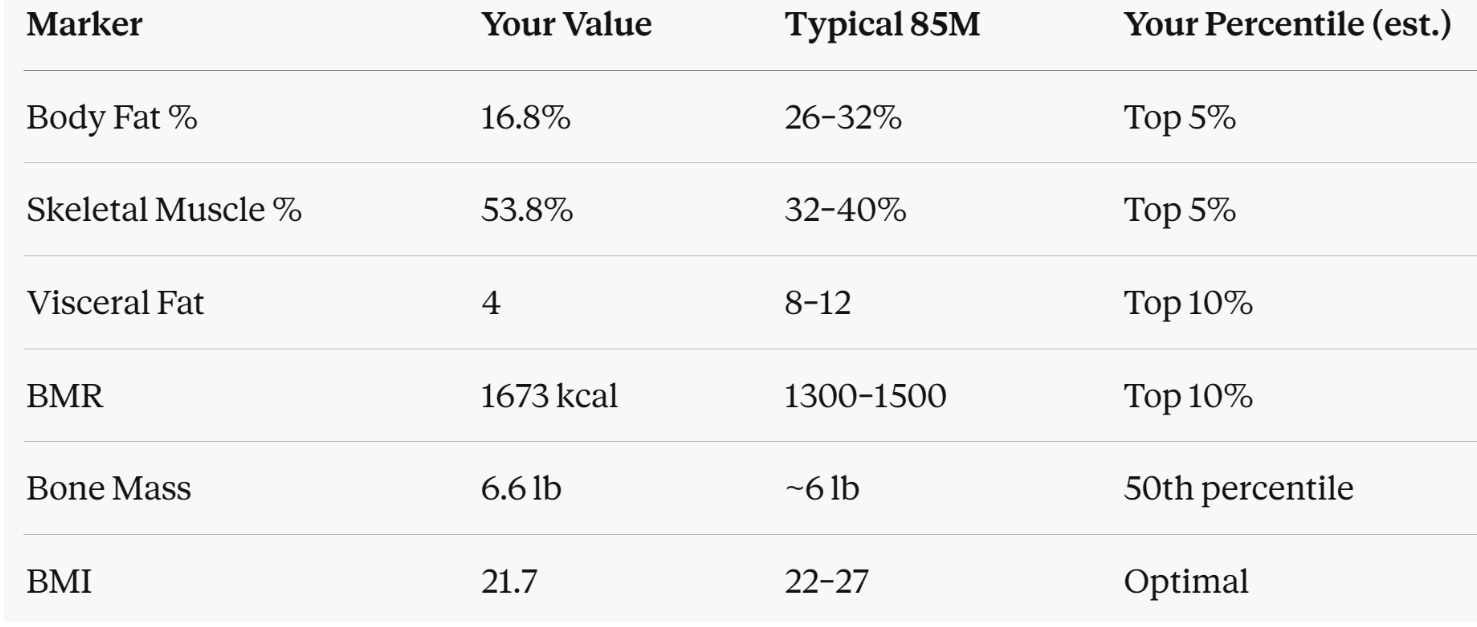
Claude Sonnet 4.6 interpretation for an 85-year-old male:
Metabolic Age: 58 The device estimates your metabolic profile matches that of a 58-year-old. That’s a 27-year gap from your chronological age — a meaningful signal.
This is probably your most impressive number. Skeletal muscle percentage in men aged 80+ typically averages 30–40%, and muscle mass loss (sarcopenia) is nearly universal, with most men your age losing 30–40% of their peak muscle. Maintaining 126 lb of lean mass at 85 is extraordinary. Your muscle storage ability rating of 5 (High) suggests your muscle is metabolically active, not just structurally retained.
BMR: 1673 kcal — Reflects Your Muscle Mass
The average BMR for men aged 80+ is typically 1,300–1,500 kcal. Yours is higher because BMR tracks lean mass closely. This is a metabolic advantage — higher BMR means more caloric buffer and better metabolic resilience.
Visceral Fat: 4 — Excellent
Scale typically runs 1–12 (sometimes to 20). A score of 4 is low-risk. Most sedentary men in their 80s score 8–12+. Visceral fat is the metabolically dangerous depot linked to insulin resistance, inflammation, and cardiovascular risk — keeping this low post-CABG is meaningful.
Body Water: 60.1% — Normal to High-Normal
The average for older men is around 50–55%, declining with age as muscle (which holds water) is lost. Your 60.1% directly reflects your high muscle mass and is associated with better cellular health and kidney function.
……but when you are still going strong at 120 then now we are talking!!
That said if you still have those superb metrics and your current cognitive abilities at 100 then that also speaks volumes about what you are doing for healthy longevity.