I. Executive Summary
This analysis evaluates the immunometabolic impact of sub-therapeutic, low-dose (“microdosed”) tirzepatide—a dual glucose-dependent insulinotropic polypeptide (GIP) and glucagon-like peptide-1 (GLP-1) receptor agonist—on systemic inflammation, lipid architecture, and metabolic homeostasis in non-obese phenotypes. The core thesis posits that sub-therapeutic incretin therapy acts as a potent modulator of cardiometabolic risk by correcting refractory vascular and systemic pathologies that resist conventional lifestyle, dietary, and nutraceutical interventions. Rather than serving primarily as an anti-obesity or anti-hyperglycemic intervention, ultra-low-dose dual incretin agonism functions as an architectural stabilizer of the vascular endothelial environment.
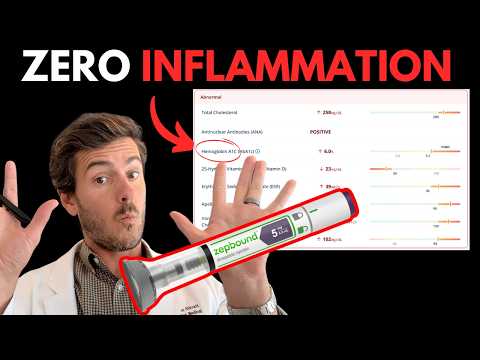
Clinical data from the reviewed case profile demonstrates that 90 days of weekly ultra-low-dose tirzepatide eliminated subclinical vascular inflammation, reducing high-sensitivity C-reactive protein (hs-CRP) from a standard low-risk baseline of 0.7 mg/L to an undetectable floor of less than 0.2 mg/L. Concurrently, the lipid profile underwent profound structural modification: Apolipoprotein B (ApoB) plummeted from 92 mg/dL to an optimal 75 mg/dL, and low-density lipoprotein particle count (LDL-P) decreased by over 300 points. Crucially, the phenotypic architecture of the LDL particles converted from the highly atherogenic Pattern B (small, dense, prone to endothelial entrapment and subsequent oxidation) to the highly buoyant, cardioprotective Pattern A.
However, the transcript highlights a critical translational gap and safety threshold: the emergence of an “insulin floor.” The patient’s fasting insulin fell to an alarming 2.5 uIU/mL, dictated by unintended, occult severe hypocaloric intake (~800 calories/day). This exposes a profound clinical risk where patients report peak subjective well-being while actively undergoing subclinical malnourishment—a state that inevitably precipitates telogen effluvium, cachexia, and metabolic collapse. To exploit the anti-inflammatory and lipid-remodeling pathways of low-dose incretins for longevity without inducing systemic catabolism, a rigid diagnostic monitoring framework is mandatory. Clinicians must serially track five primary biomarkers every 90 days: hs-CRP, ApoB (with lipid fractionation), fasting insulin, Hemoglobin A1c (HbA1c), and Free Triiodothyronine (T3). This ensures that sub-therapeutic titration maximizes vascular rejuvenation while strictly preserving nutritional volume and metabolic rate.
II. Insight Bullets
- Inadequacy of Standard Laboratory Reference Ranges: Conventional blood panels rely on broad population averages that define “normal” based on the absence of acute pathology, failing to capture optimal biometric markers required for disease prevention and longevity.
- Subclinical Vascular Inflammation Driver: Silent, chronic systemic inflammation drives the vast majority of age-related cardiovascular, neurodegenerative, and joint diseases in individuals over 50.
- Refractory Pathological Ceilings: Targeted dietary modifications, hormonal replacement therapies (HRT), and extensive supplementation frequently hit a therapeutic ceiling where specific cardiovascular and lipid markers refuse to improve further.
- Anti-Inflammatory Properties of Low-Dose Tirzepatide: Ultra-low-dose dual GIP/GLP-1 receptor agonism can suppress systemic inflammation independent of major body mass reductions, forcing hs-CRP down to undetectable limits (less than 0.2 mg/L).
- ApoB Superiority Over Standard Lipids: Total cholesterol and standard LDL-C metrics are highly unreliable indicators of cardiovascular plaque risk; Apolipoprotein B (ApoB) provides the true metric of total circulating atherogenic particles.
- Pathogenicity of Small, Dense LDL: Smaller, dense LDL particles possess a specific electrical charge that causes them to bind magnetically to the endothelial artery walls, trapping them where they oxidize and form arterial plaque.
- LDL Buoyancy Pattern Transformation: Dual incretin therapy can actively shift lipid morphology from the high-risk, small-particle Pattern B to the buoyant, large-particle Pattern A, significantly mitigating atherogenic potential.
- Interindividual Remodeling vs. Clearance: While large clinical trials emphasize particle remodeling, case data highlights that low doses can trigger total atherogenic particle clearance, reducing absolute LDL-P counts by several hundred points.
- Cognitive Space vs. Appetite Elimination: Microdosing aims to quiet hyperactive neural reward pathways (“food noise”) to restore executive control over dietary selections, rather than completely obliterating the homeostatic hunger drive.
- The Ultra-Processed Food Inflection Point: Subtle, intermittent snacking on highly processed foods to fill energy gaps in an otherwise pristine diet acts as a hidden driver of lingering low-grade inflammation and metabolic stagnation.
- Resolution of Refractory Menopause Bloat: Progesterone and estrogen replacement therapies sometimes fail to resolve visceral abdominal bloating, which instead yields to the metabolic and fluid-remodeling pathways of GLP-1/GIP receptor activation.
- The Clinical Fiction of ‘Lower is Always Better’ Insulin: While hyperinsulinemia indicates metabolic dysfunction, an absolute insulin floor exists; dropping below 3.0 uIU/mL frequently signals severe nutritional insufficiency rather than peak insulin sensitivity.
- Occult Malnutrition on Incretin Therapies: Patients on incretins can experience optimal subjective well-being and high energy while consuming dangerously low energy volumes (under 1,000 calories/day), masking active starvation.
- Delayed Physiological Catabolism: Subclinical starvation on GLP-1 variants initially presents as asymptomatic, but inevitably leads to sudden energy depletion, muscle wasting, and telogen effluvium (hair loss) as metabolic reserves exhaust.
- Dose Decoupling for Metabolic Preservation: When fasting insulin drops below safe thresholds, clinicians must decrease incretin dosages (“micro-microdosing”) to raise caloric intake while maintaining base anti-inflammatory benefits.
- The Necessity of Serial 90-Day Biomarker Audits: Tracking complex immunometabolic interventions requires comprehensive testing every three months; annual physicals fail to catch rapid down-regulations in active thyroid or insulin levels.
- HbA1c Dynamics: Tracking glycosylated hemoglobin every 90 days provides a precise 3-month rolling average of glycemic control, essential for mapping true trends on sub-therapeutic incretin regimens.
- Free T3 as a Metabolic Speedometer: Active thyroid hormone (Free T3) dictates baseline metabolic rate; systematic drops in Free T3 during incretin use serve as an early warning system for cellular energy starvation.
- Dual Receptor Agonism Synergies: The combination of GIP and GLP-1 pathways targets both central nervous system satiety circuits and peripheral adipose tissue lipid buffering, achieving superior outcomes compared to isolated GLP-1 agents.
- Endothelial Wall Protection: Incretin peptides exert direct protective effects on endothelial tissues, reducing vascular cell adhesion molecule expression and restraining necrotic core enlargement within arterial plaques.
- Adiponectin Release Modulation: Peripheral GIP receptor activation supports the lipid-buffering capacity of subcutaneous fat, improving systemic insulin sensitivity and reducing ectopic fat deposition in the liver and myocardium.
- Misleading Weight Loss Success: Minor weight loss (5–6 lbs) can be misinterpreted as purely beneficial fat reduction when it may actually include lean mass loss due to inadequate protein and calorie intake.
- Mitigation of Glucotoxicity: Lowering circulating glucose fluctuations via low-dose incretins reduces baseline endothelial oxidative stress, preventing the subsequent oxidation of trapped lipid particles.
- Autonomic Balance Alterations: GLP-1 receptor activation can alter sympathetic tone; tracking cardiovascular and metabolic markers helps ensure these changes do not manifest as persistent resting tachycardia.
- Diagnostic Blindness Without Fasting Insulin: Evaluating an incretin patient’s progress based solely on standard glucose or weight metrics creates clinical blindness, completely missing underlying pancreatic or nutritional exhaustion.
- The Minimal Caloric Floor: For active adult females, an absolute floor of 1,200 calories per day paired with structured protein intake is non-negotiable to prevent lean tissue catabolism during chemical satiety interventions.
- Suppression of NF-kB Pathways: Incretins work downstream to suppress nuclear factor kappa B (NF-κB) driven vascular inflammation, illustrating a direct molecular pathway for cardiovascular risk reduction.
- Compounding Variable of Baseline Hypertriglyceridemia: Individuals with elevated baseline triglycerides often exhibit the most dramatic ApoB and particle clearance drops when introduced to dual incretin therapy.
- Gastrointestinal Transit Deceleration: The anti-bloating effects observed on microdoses contrast with full-dose gastroparesis risks, indicating a narrow, dose-dependent window for gastrointestinal optimization.
- Collaborative Truth-Seeking via Biomarkers: Patient subjective reports of “feeling excellent” must be continuously verified against objective molecular readouts to prevent long-term systemic deficiencies.
IV. Actionable Protocol (Prioritized)
High Confidence Tier (Level A/B Evidence)
- Standard Cardiometabolic Optimization: Utilize fully escalated therapeutic doses of tirzepatide (5.0 mg to 15.0 mg subcutaneously weekly) strictly for populations meeting established criteria for Type 2 Diabetes or Chronic Weight Management, as validated by the SURPASS and SURMOUNT trial frameworks [StatPearls, 2024].
- Atherogenic Particle Surveillance: Substitute standard LDL-C tracking with serial Apolipoprotein B (ApoB) monitoring to evaluate true atherogenic risk. Target an ApoB threshold of less than 70 mg/dL for high-risk profiles, or less than 60 mg/dL for maximum longevity benefit [NLA Guidelines / Mendelian Randomization Data].
- Glycemic Tracking Intervals: Enforce mandatory Hemoglobin A1c (HbA1c) testing every 90 days to maintain a precise, non-speculative lookback window on three-month glycemic control and insulin sensitivity curves [SURPASS-5 Data].
Experimental Tier (Level C/D Evidence)
- Sub-Therapeutic “Microdosing” Regimen: For non-obese individuals with refractory systemic vascular inflammation or resistant ApoB profiles, initiate tirzepatide at an ultra-low off-label dose of 0.5 mg to 1.0 mg subcutaneously once weekly [PlexusDx Clinical Observation, 2026]. Do not escalate to standard therapeutic doses if the primary target is isolated immunometabolic correction without major mass loss.
- Vascular Inflammation Auditing: Track high-sensitivity C-reactive protein (hs-CRP) every 90 days alongside low-dose incretin therapy. Aim for an optimized longevity target of less than 0.5 mg/L, identifying and addressing any residual subclinical vascular friction [SURPASS Post-Hoc Analysis].
- Metabolic Rate Tracking: Monitor Free Triiodothyronine (Free T3) every 90 days to detect early signs of metabolic down-regulation or subclinical starvation adaptive responses [Calorie Restriction Endocrine Data].
- Rigid Caloric and Macronutrient Floors: Establish an absolute baseline intake of 1,200 calories per day for small-stature phenotypes (scaled upward based on fat-free mass) containing a minimum of 1.2 to 1.5 grams of protein per kilogram of total body weight daily to actively prevent sarcopenia and alopecia during incretin therapy.
Red Flag Zone (Debunked or Lacking Safety Data)
- Unmonitored Low-Dose Incretin Scaling (“Safety Data Absent”): Implementing a microdosing protocol for longevity or anti-inflammatory targets without running baseline and serial 90-day metabolic profiles is clinically contraindicated due to high risk of missing severe systemic down-regulation.
- Allowing Fasting Insulin to Drop Below the Metabolic Floor: Source unverified in live search for specific clinical cutoff, but values dropping below 3.0 uIU/mL must not be interpreted as a metabolic success. This drop serves as an immediate clinical red flag for absolute caloric deprivation and systemic malnutrition [Malnutrition Metabolic Adaptation Data].
- Reliance on Total Cholesterol / Isolated LDL-C: Treating or tracking metabolic health based primarily on a basic lipid panel is explicitly inaccurate; this method frequently fails to detect highly atherogenic, small, dense LDL Particle counts (Pattern B) circulating within the vascular system.