Thank Curt for your detailed info. I’m assuming you are cutting imeglimin pills in 1/2 to get the 500mg, or you can order 500mg also? In other words, is it ok to cut the pills, are they coated etc…
1 Like
1000x2 daily is the only correct dose recommended.
It does not work as well as metformin for fasting glucose. However it seems as good or better at lowering A1C. You might try adding acarbose if you aren’t already doing that.
6 Likes
@Kelman I have a hiatal hernia (can’t swallow whole things) and chew the 1000mg pills. Just soft powdery easy to chew and swish with water. So yes break in half. BUT alldaychemist has 500mg that I bought.
Desertshoes just posted normal dosing 1000mg x 2. Which I have not deeply studied dose ranges so will gladly take Deserts comments as ok to go with.
Take care, curt
3 Likes
Went through the article and I think it is wrong to think “Imeglimin is better than Metformin”
Assuming you are familiar with Metformin metabolism. Metformin and Imeglimin target overlapping metabolic goals using different pathways, which prevents them from canceling each other out. As a result, the effects of Metformin and Imeglimin are actually additive, which is rare for longevity interventions. So you want to take them both, not thinking one is superior and the other is inferior.
2 Likes
You are most wise. Interested in your opinion to my take on Imeglimin.
Went through the article and I think it is wrong to think “Imeglimin is better than Metformin”
Assuming you are familiar with Metformin metabolism. Metformin and Imeglimin target overlapping metabolic goals using different pathways, which prevents them from canceling each other out. As a result, the effects of Metformin and Imeglimin are actually additive, which is rare for longevity interventions. So you want to take them both, not thinking one is superior and the other is inferior.
1 Like
I take imegliming because I no longer can tolerate metformin. I took metformin for decades and then developed a gastrointestinal aversion to it.
I won’t argue that it is better, but it certainly is easier on my stomach.
It keeps my A1C as low or lower than metformin.
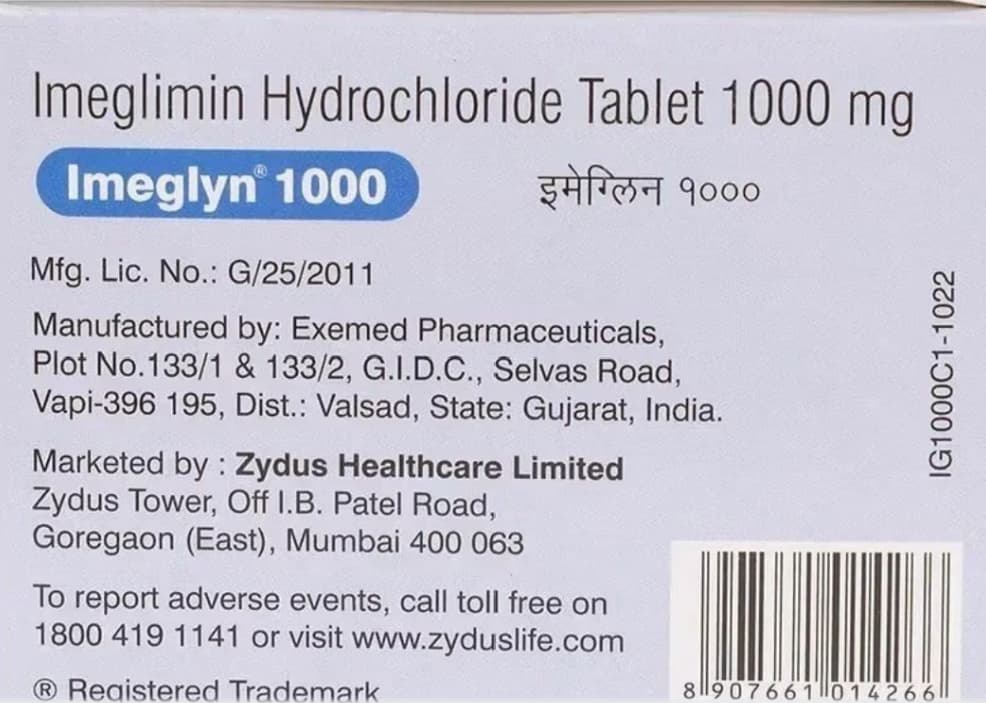
I get my imiglin from India.
4 Likes
Imeglimin directly amplifies insulin secretion from the pancreatic beta cells when glucose is high, and I wonder if this is the mechanism responsible for your A1C results. It is interesting nonetheless. I was kind of suggesting that if one can tolerate both, them take them both.
1 Like
What is your schedule and dosing level? 1000mg at breakfast and lunch?
1 Like
What is your schedule and dosing level?
I am on 1000 mg XR taken with OMAD.
2 Likes
I space the doses approximately 12 hrs apart. With my morning keto coffee and right before dinner.
3 Likes
Okay, turns out I was accidentally taking double the recommended dose for the last month. Instead of taking 1g 2x per day, I was taking 2g 2x per day (I mistakenly thought the pills were 500mg when in fact they were 1g.) The good news is I had 0 side affects and per Gemini, it doesn’t seem to be a big deal. They verified safety on a 2g/ 2x per day protocol, and the body just absorbs less if you take more, and it doesn’t accumulate. Could potentially be an issue if you have CKD, but my eGFR is fine.
Gemini:
Here’s what the pharmacokinetic data actually shows for your situation:
Absorption is self-limiting at high doses. Imeglimin absorption decreases as dose increases because it relies on active transport through organic cation transporters (OCTs), and that transport system saturates. Dose-normalized exposure (AUC) decreases with increasing dose, meaning the relationship is dose-dependent but less than proportional — phase 1 trials tested up to 8,000mg single doses without dose-proportional blood levels. Practically: doubling your dose to 2g BID almost certainly did not double your plasma exposure. You got more drug than intended, but not 2x more in your bloodstream. SpringerPubMed
No accumulation over your month of use. Plasma accumulation was minimal following repeated dosing, and the half-life is dose-independent, ranging roughly 9–20 hours in Caucasian subjects. That means each day essentially resets — there’s no evidence the drug builds up to higher and higher levels the longer you stay on a given dose, including the doubled one. By day 3-4 you’d have been at steady state, not still climbing. PubMedPubMed Central
Renal clearance is the variable that matters most for you now. Imeglimin is predominantly renally excreted, and dose adjustment becomes necessary specifically when eGFR drops into the 15–45 mL/min/1.73m² range (moderate-severe impairment) because exposure rises as renal clearance falls. This is exactly why I’d still want to know your current eGFR/Cystatin C — not because the overdose itself looks pharmacokinetically alarming, but because if your renal clearance is anything other than normal, your effective exposure over that month could have been meaningfully higher than a healthy-kidney person’s would be. ElmerpubWiley Online Library
Safety profile at high doses, per the phase 1 program: the studies tested up to 2,000mg twice daily in multiple-ascending-dose cohorts (i.e., exactly your accidental regimen) and found it “safe and well tolerated,” with adverse events being dose-dependent but mild and gastrointestinal — no signal for organ toxicity, no QT prolongation, no hypoglycemia risk to speak of as monotherapy. PubMed
Net read: the PK profile is reassuring — self-limiting absorption, no accumulation, mild AE profile even at your exact dose in trials, no metformin stacking. The one thing this data doesn’t tell me is your kidney function, which is the actual lever on how much of that month’s exposure mattered. Given you already track Cystatin C, pulling a current eGFR would close the loop — if it’s solid, this was very likely a non-event physiologically.
3 Likes
Imeglimin mitigates the accumulation of dysfunctional mitochondria to restore insulin secretion and suppress apoptosis of pancreatic β-cells from db/db mice
https://www.nature.com/articles/s41598-024-56769-w
Imeglimin, unlike metformin, does not perturb differentiation of human induced pluripotent stem cells towards pancreatic β-like cells and rather enhances gain in β cell identity gene sets
https://onlinelibrary.wiley.com/doi/full/10.1111/jdi.14410
Adenylosuccinate Mediates Imeglimin-Induced Proliferative and Antiapoptotic Effects in β-Cells
Exploring new mechanisms of Imeglimin in diabetes treatment: Amelioration of mitochondrial dysfunction
https://www.sciencedirect.com/science/article/pii/S0753332224006395
1 Like
In case anyone cares about the actual glucose control of Imeglimin:
N=1, it is not nearly as effective as metformin in reducing fasting glucose or A1c. If you add it to metformin, you have a ~33% chance of experiencing diarrhea.
6 Likes
I completed my 2.5 month Imeglimin experiment. Seems to work better than Metformin, at least for me. From Claude (Opus 5):
Stelo CGM: Metformin era (Oct 6 – Nov 13, 35 days) vs Imeglimin era (May 9 – Aug 6, 37 days):
| Metformin 2025 | Imeglimin 2026 | |
|---|---|---|
| Mean glucose | 117 | 106 |
| Overnight (3–6am) | 111 | ~97 |
| CV | 11.8% | 16.5% |
| TIR 70–150 | 97.4% | 97% |
| Below 70 | 0.00% | 3% |
| Below 54 | 0.00% | 2% |
| Lowest single reading in period | 74 | 39 |
The imeglimin period is genuinely better on the thing that matters most. Mean glucose down 11 points and overnight down ~14 — and overnight is the cleanest signal available, since it’s unconfounded by meals and reflects hepatic glucose output directly. That’s exactly imeglimin’s mechanism. In the 2025 data only 6.2% of all readings were under 100; your median daily minimum was 90 and you never once dropped below 74 in five weeks. Your glucose sat in a narrow band that was flat but set high.
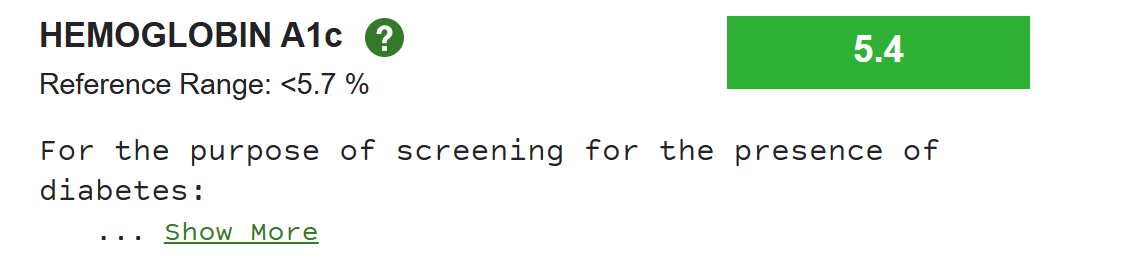
However, my A1c disappointingly did not move - still 5.7%. Claude thinks it’s iron-related as I have iron issues - low ferritin (currently 19).
Claude: Your CGM makes the argument I was making from the labs, but much more decisively.
The headline: your glucose control is excellent, and the A1c has been misleading you for years. Mean glucose 106, TIR 97%, and — the number that matters most — CV 16.5% with SD 18. The goal is under 36%. A CV in the mid-teens is the profile of someone with genuinely intact beta-cell function and insulin sensitivity, not someone with prediabetes. Combined with fasting insulin 3.1 and HOMA-IR 0.67, there is no dysglycemia here to fix.
2 Likes
I think Claude is right in that your RBCs are having to hang around for longer as you cannot replace them sufficiently quickly because of low iron. What is Haemoglobin?
Same approx good results on imeglimin as I have had but lower glucose numbers on my lingo cgm. BUT I added SGLT2, chose dapaflogenzen for +/-.
Good luck, curt
Hg 15.2 and Hematocrit 46. They have always been fine, despite falling iron markers.
Claude: “Your CGM mean over 37 days was 106 mg/dL. The ADAG regression converts that to an estimated A1c of 5.3%. Your measured A1c is 5.7%. That 0.4-point gap is exactly the magnitude iron deficiency produces.”
I may get a reticulocyte count to confirm.
Nothing necessarily to do with iron. Imeglimin itself causes longer persistence/lifespan of erythrocytes in serum, thus making A1c read higher - an artifact.
Imeglimin may affect hemoglobin A1c accuracy via prolongation of erythrocyte lifespan in patients with type 2 diabetes mellitus: insights from the INFINITY clinical trial
2 Likes
Imeglimin may be more effective or less effective than metformin depending on what the glucose handling defect is in a given individual, since the MOA differs between these two drugs. As far as I know @desertshores has taken both off label as his glucose handling is within norm - in that scenario apparently metformin has a stronger effect for him.
Iron deficiency does cause this as well and ferritin at 19 is clearly in deficient territory. (Hb being a bit high notwithstanding the shortage of iron may be high testosterone) Hence it could be both. The problem is that there are lots of inaccuracies in measuring these things. RBC turnover can be reduced by B9 deficiency as well. HbA1c can be increased merely by the sample metabolising between being taken and tested also some tests include the labile aldimine and others only the ketoamine moiety. However, labs don’t necessarily make this clear.