This analysis covers the discussion between Siim Land and Dr. Elie, a wellness coach and entrepreneur based in Dubai, focusing on how Elie achieved a VO2 max of 70 in his 50s and the critical importance of recovery and metabolic balance.
A. Executive Summary
The conversation centers on the “Limitless Human” philosophy, where VO2 max is positioned as the single most important metric for healthspan and longevity. Dr. Elie, at age 54, maintains an elite VO2 max of 70, placing him in the top 0.1% of his age group. He argues that while exercise provides the necessary stimulus for growth, the actual physiological adaptation occurs during recovery, a pillar he considers grossly understated in modern fitness.
A core theme is the move away from “fitness hacks” toward a scientific, data-driven lifestyle. Elie emphasizes that VO2 max is a holistic marker reflecting the efficiency of the heart, lungs, and muscular systems, and unlike many biological age tests, it cannot be “cheated” or improved overnight. His protocol involves a high-volume aerobic base (built through years of marathons) supplemented by high-intensity interval training (HIIT) to push ventilatory thresholds.
Practical advice is grounded in precision and prioritization. This includes specific recovery strategies—prioritizing sleep (7.5 hours starting at 8:30 PM) and nervous system regulation (monitoring HRV)—and a Mediterranean-based nutritional approach that focuses on protein synthesis and whole-food synergy. Ultimately, the discussion concludes that while data is necessary to move from “basic” to “advanced” health, the ultimate goal is balance (homeostasis) rather than obsession, where physical health supports mental clarity and human connection.
B. Bullet Summary (15 Key Insights)
VO2 Max as Gold Standard: It is the premier longevity metric; being in the bottom 25% doubles your risk of chronic illness.
The Recovery Paradox: Adaptations and strength gains do not happen during the workout, but in the recovery period that follows.
Data over Obsession: Use wearables and CGMs to trend data over weeks, but avoid daily obsession which spikes cortisol and hinders performance.
VO2 Max Testing: Wearable estimates are often inaccurate; a “gold standard” metabolic cart test (measuring gas exchange) is required for a true baseline.
High Aerobic Base: Elie’s elite score is rooted in a massive aerobic foundation from 50+ marathons, proving that long-term “Zone 2” training is essential.
HIIT for Resilience: High-intensity intervals are used specifically to increase ventilatory thresholds and cardiovascular “shocks” to prevent plateaus.
Nervous System Focus: Heart Rate Variability (HRV) is a proxy for the nervous system’s readiness; low HRV often predicts poor physical performance.
Maximum Heart Rate: The “220 - age” formula is too generic for fit individuals; training can counteract the age-related decline in max heart rate.
Movement Integration: Use “non-exercise activity” like walking pads and standing desks; these contribute more to health than a single 60-minute gym session.
Precision Supplementation: Elie follows a “blood-test-first” rule, supplementing only for deficiencies (e.g., Vitamin D, Omega-3) and periodically taking “zero supplement” breaks.
Mediterranean Wisdom: Traditional food pairings (e.g., lentils and cabbage) use natural enzymes to aid protein breakdown and digestion.
Priority over Hype: Success in a health journey depends on whether health is a genuine internal priority or a response to external peer pressure.
Sauna Benefits: Regular sauna use mimics a cardiovascular workout and is associated with a 63% lower risk of sudden cardiac death.
Hormetic Stress: Regularly “shocking” the body with weighted vests, inclines, or temperature changes keeps the system from reaching a comfort-zone plateau.
The Human Pillar: Long-term health is wasted without mental well-being and a positive relationship with oneself and others.
D. Claims & Evidence Table (Adversarial Peer Review)
Claim from Video
Speaker’s Evidence
Scientific Reality (Best Available Data)
Evidence Grade
Verdict
VO2 Max predicts mortality
Bottom 25% = 2x more likely to be ill.
Extreme cardiorespiratory fitness is associated with the lowest all-cause mortality; elite vs. low performers shows a 5x hazard ratio (Mandsager et al., 2018).
B (Cohort)
Strong Support
Sauna reduces heart death by 63%
Cites specific percentage for cardiac death.
The landmark Kuopio Ischaemic Heart Disease Study found 4-7 sessions/week reduced SCD by 63% (Laukkanen et al., 2015).
C (Cohort)
Strong Support
HIIT is better than Zone 2 for VO2 max
Claims HIIT increased his ventilatory thresholds.
Meta-analyses show HIIT generally yields higher VO2 max increases than steady-state, though a mix of both is optimal for athletes (Wen et al., 2019).
A (Meta-analysis)
Strong Support
Cabbage enzymes break down lentil protein
Cites “wisdom of the ages” regarding Lebanese food pairings.
Cabbage contains various enzymes, but the primary benefit is fiber and sulforaphane; there is no strong RCT evidence that it specifically “unlocks” lentil protein.
E (Expert Opinion)
Speculative
HIIT can increase max heart rate
Claims he pushed his zones higher through training.
While training improves stroke volume and efficiency, true physiological Max Heart Rate typically declines with age regardless of fitness. Training improves the ability to reach that max.
C (Physiological)
Weak/Conflicting
H. Technical Deep-Dive: VO2 Max Mechanisms
VO2 Max is defined by the Fick Equation: VO2 = Q x (CaO2 - CvO2) Where Q is Cardiac Output (heart rate x stroke volume) and (CaO2 - CvO2) is the arteriovenous oxygen difference (the ability of muscles to extract oxygen).
Elie’s elite score suggests two specific adaptations:
Eccentric Hypertrophy: The left ventricle of the heart has increased in volume, allowing for a greater Stroke Volume. His heart pumps significantly more blood per beat than an average 54-year-old.
Mitochondrial Density: His years of Zone 2 training have increased the density and efficiency of mitochondria in his slow-twitch muscle fibers, improving oxygen extraction capacity.
E. Actionable Insights
Top Tier (High Confidence)
Test Your VO2 Max: Find a facility with a metabolic cart (mask) for an accurate baseline. Aim for at least the “above average” category for your age group to significantly reduce all-cause mortality.
The 80/20 Rule: Follow a polarized training model. Spend 80% of your cardio time in Zone 2 (conversational pace) to build mitochondrial density and 20% in Zone 5 (HIIT) to improve peak output.
Sleep Hygiene: Prioritize a consistent sleep window. Elie’s 8:30 PM to 4:00 AM window aligns with natural circadian rhythms, maximizing deep sleep cycles.
Sauna Protocol: Aim for sessions at 70°C (158°F) for 20 minutes. Use it as a cardiovascular “mimetic” on days you cannot do a full workout.
Experimental (Risk/Reward)
Blood-Based Supplementation: Don’t guess; test. Conduct blood panels every 3–6 months to identify actual deficiencies (Vitamin D, Omega-3 index) before buying supplements.
HRV Monitoring: Use a wearable to track Heart Rate Variability. If your HRV is significantly below your baseline, treat it as a “nervous system yellow light” and prioritize recovery (walking, breathwork) over high-intensity training.
Avoid
The “Hack” Mindset: Avoid “7-minute abs” or singular supplement solutions. True cardiovascular fitness (70 mL/kg/min) requires years of consistent volume and recovery balance.
Sedentary “Rest”: Recovery is not just sitting. Use “active recovery” like low-intensity walking to move the lymphatic system and clear metabolic waste.
I’m not especially impressed when a 54 year old lays certain claims to a significant physical or physiological feat. In addition to a possible lack of self-awareness, their implications may not be accurate. Having spent several adult decades as a competitive distance runner and mingling with that crowd, I know many such people “70 or higher” runners, including myself at that age or older. Many of the people I knew are now infirm or dead. In terms of longevity, a VO2max of 70 at age 54 may or may not account for a greater longevity projection than a VO2max of 40 0r 45 at that age. The guy is operating in a evidence free zone.
I think I could get to 70 vo2max (super high for my age) but I’d have to give up everything else. TBH, I don’t know my vo2max because I don’t care. I just make sure my cardiovascular fitness is excellent. It is.
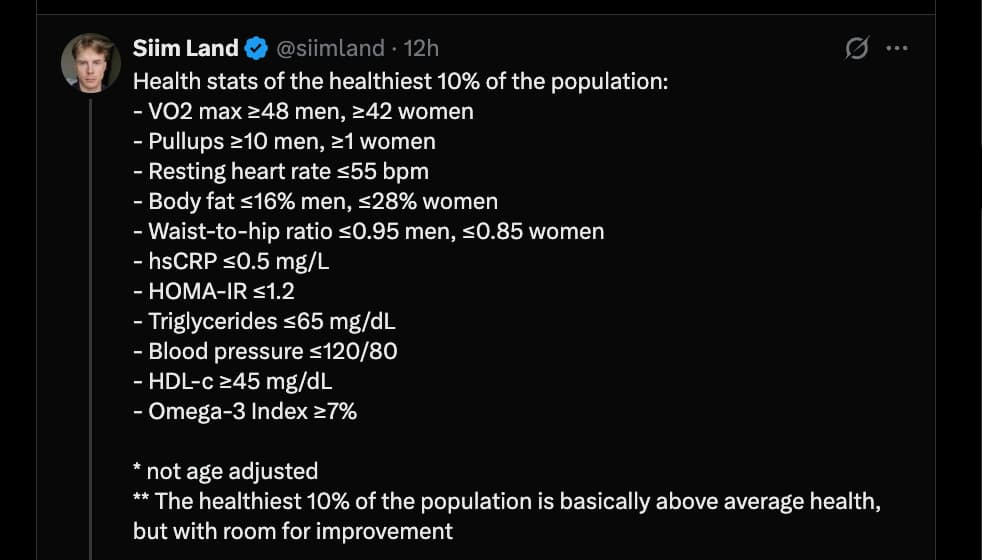
This list of metrics seems decent even though I don’t follow some of them:
Vo2max? (Zone 2 min/wk > 90; zone 4+ > 5 min)
Pull-ups? (Bar hang 1.5 minutes)
Resting HR = 40
Body fat = 15%
Hip2waste ratio ?
hsCRP = 0.22
homa-IR = 0.6
Trigs = 49
Blood pressure = 105/70
HDL = 51
Omega 3 index = 8.6
I’d add (my goals):
hours of natural sleep per night (8 = great)
sex with partner x / week (6 per week = great)
bar hang time (1 min = good; 2 min = great)
minutes of snow shoveling before back agony (>30 minutes = good)
% of 35 yo max HR seen last week (>85% =0.85 good)
days since last 100 max sprint (<10 = great, < 30 = good)
total testosterone (no symptoms; last reading 988, with TRT)
The Realistic VO2 Max Routine You Need (3 Hours/Week)
I. Executive Summary
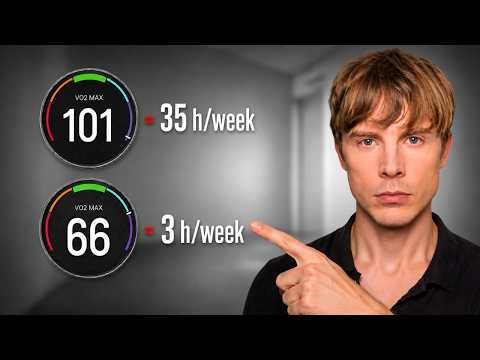
The presentation evaluates the physiological mechanisms, dose-response relationships, and programming paradigms for optimizing maximal oxygen uptake (VO2max) within a time-restricted framework (~3 hours per week). The central thesis posits that the cardiorespiratory fitness thresholds necessary to capture the majority of healthspan and longevity benefits (e.g., VO2max≥50mL/kg/min in middle-aged males) do not require high-volume endurance regimens (15–30 hours/week) utilized by elite triathletes. Instead, the speaker asserts that a polarized, concurrent routine combining low-intensity continuous training (Zone 2 / LISS) with targeted high-intensity intervals (HIIT/SIT) can induce significant cardiorespiratory adaptations (citing a personal laboratory-measured increase from 53 to 66 mL/kg/min) while concurrently maintaining resistance training.
From an exercise physiology standpoint, VO2max is dictated by the Fick principle (VO2max=Qmax×[a-vO2diff]max), requiring central cardiovascular adaptations (left ventricular eccentric hypertrophy, end-diastolic filling volume, and stroke volume) and peripheral muscular adaptations (skeletal muscle capillarization, mitochondrial volume density, and oxidative enzyme activity). The speaker reviews systematic meta-analyses demonstrating a temporal divergence between exercise modalities: sprint interval training (SIT) and high-intensity interval training (HIIT) drive rapid short-term increases in VO2max via enhanced central hemodynamics and fast-twitch fiber recruitment, but typically plateau after 8 to 10 weeks. Conversely, sub-lactate threshold endurance training (Zone 2 at 60–70% HRmax) generates steady, long-term peripheral adaptations with low systemic and autonomic fatigue.
Furthermore, the presentation addresses inter-individual variability and the “non-responder” phenomenon observed in clinical trials. Evidence demonstrates that non-responsiveness to standardized low-intensity aerobic protocols is largely an artifact of inadequate training dose, which can be abolished by escalating weekly training volume. The presentation also highlights recent randomized trial data showing volume-matched equivalence between distributed high-frequency schedules (4 days/week) and consolidated “weekend warrior” distributions (2 days/week). Ultimately, a 3-hour weekly template featuring two 50–60 minute Zone 2 sessions and one structured 4x4 Norwegian interval or SIT session is proposed as a sustainable, clinically robust cardiorespiratory optimization strategy.
II. Insight Bullets
Elite endurance athletes, such as Olympic triathlete Kristian Blummenfelt, can achieve recorded VO2max values exceeding 100 mL/kg/min through extreme training volumes of up to 30 hours per week combined with genetic predisposition.
Alaskan sled dogs exhibit exceptional aerobic capacities exceeding 200 mL/kg/min, driven by selective breeding for high maximal stroke volume and mitochondrial volume density.
Population-level epidemiological data demonstrate that achieving a VO2max of approximately 50 mL/kg/mincaptures the majority of cardiorespiratory-associated all-cause and cardiovascular mortality risk reductions (Mandsager et al., 2018).
The presenter achieved an approximate 25% increase in laboratory metabolic-cart measured VO2max (from 53 to 66 mL/kg/min) over several months using a 3-hour weekly routine.
Cardiorespiratory fitness values above 60 mL/kg/min in young-to-middle-aged males represent the elite tier (>95th percentile), while values below 30 mL/kg/min indicate elevated cardiovascular risk, and values of 15–20 mL/kg/min reflect the threshold for independent living in older adults.
Female normative VO2max percentiles are generally 10% to 15% lower than male equivalents due to lower average hemoglobin mass and smaller left ventricular chamber volume.
Age-related VO2max decline averages 7% to 10% per decade in sedentary adults after age 30, but this rate can be halved through sustained aerobic conditioning.
Maximal oxygen uptake is determined by three integrated systems: central cardiac stroke volume (Q), circulating oxygen transport capacity (total hemoglobin mass), and peripheral muscle oxygen extraction (a-vO2 difference).
In previously sedentary or untrained individuals with baseline VO2max<25–40mL/kg/min, progressive resistance training alone provides sufficient hemodynamic stress to elicit modest improvements in aerobic capacity (Milanović et al., 2015).
In recreationally trained individuals, resistance training alone fails to provide sufficient continuous stroke volume load, necessitating targeted cardiovascular exercise for cardiorespiratory adaptation.
High-intensity interval training (HIIT) elicits more rapid short-term VO2max improvements compared to moderate continuous training during the initial 4 to 8 weeks of an intervention.
Longitudinal meta-analyses demonstrate that over longer intervention horizons (10–15 weeks), low-intensity continuous training yields cumulative VO2max gains comparable to interval training (Wen et al., 2019).
Sprint interval training (SIT) yields rapid adaptations in the first several weeks, but adaptations typically plateau after approximately 10 weeks of continued stimulus.
High-frequency training (e.g., 6 sessions/week) produces greater raw mitochondrial and VO2max adaptations than lower frequencies, largely as a function of higher accumulated total weekly volume.
The reported 3-hour weekly training protocol consisted of 3 days of non-aerobic strength training, 2 to 3 sessions of 50–60 minute Zone 2 cardio, and 1 high-intensity interval session (2–4 min intervals).
Individual “non-responsiveness” to endurance exercise (observed in up to 40% of participants on standardized low-dose programs) can be eliminated by increasing weekly training volume rather than strictly increasing intensity (Montero & Lundby, 2017).
Zone 2 low-intensity continuous exercise features a lower barrier to entry, minimal orthopedic and autonomic strain, and rapid post-session recovery compared to all-out interval protocols.
A stratified heuristic for cardiorespiratory fitness suggests that individuals with VO2max<40mL/kg/min can progress via resistance training and daily ambulation (up to 10,000 steps/day), whereas those with VO2max>50mL/kg/min require a polarized combination of Zone 2 and HIIT.
For individuals with VO2max>60mL/kg/min, progressive cardiorespiratory gains become primarily volume-dependent, requiring progressive escalation of total weekly training hours.
An equivalence trial demonstrated that consolidating weekly endurance and HIIT volume into a 2-day “weekend warrior” format produced VO2max improvements non-inferior to distributing the same volume across 4 weekly sessions (Garnacho-Castaño et al., 2025).
Zone 2 continuous cardio produces optimal metabolic signaling when individual session duration is maintained for at least 50 to 70 minutes rather than fragmented into brief 20-minute bouts.
A 2019 systematic review and meta-analysis of 53 studies revealed that while short intervals (≤30 s) improve VO2max, long intervals (≥2 min) with cumulative high-intensity duration ≥15 min elicit superior overall gains (Wen et al., 2019).
The Norwegian 4x4 interval protocol consists of four 4-minute intervals at 85% to 95% HRmax interspersed with 3-minute active recovery periods at 60% to 70% HRmax, totaling 32 minutes per workout (Helgerud et al., 2007).
A randomized trial in overweight and obese adults showed that 6 weeks of 4x4 HIIT elicited superior VO2maximprovements compared to 10×1-minute intervals and 45 minutes of moderate continuous training.
The classic 4x4 protocol demonstrated a 7.2% increase in VO2max in healthy young males over an 8-week intervention (Helgerud et al., 2007).
A meta-analysis of sprint interval training showed that reduced-exertion protocols consisting of two to three 20-second all-out sprints (REHIT) elicit significant VO2max adaptations, whereas performing 4 to 7 sprints per session yields diminishing returns relative to fatigue (Vollaard et al., 2017).
Zone 2 endurance training expands peripheral mitochondrial volume density and capillary network density with low central nervous system fatigue.
Pragmatic programming for the general population prioritizes two low-intensity cardiovascular sessions (50–60 min at 60–70% HRmax) and one high-intensity interval session (e.g., 4x4 min at 85–95% HRmax) per week.
Progressive overload in aerobic conditioning should prioritize increasing low-intensity Zone 2 volume or lengthening interval duration rather than continually escalating peak interval intensity.
Maintaining elevated cardiorespiratory fitness across decades provides a physiological buffer against age-related frailty, loss of functional independence, and cardiovascular disease.
III. Adversarial Claims & Evidence Table
Claim from Video
Speaker’s Evidence
Scientific Reality (Current Data)
Evidence Grade (A-E)
Verdict
1. Exercise ‘non-responders’ (up to 40% in standardized trials) are converted to 100% responders by increasing training volume.
Exercise response studies showing dose-dependent adaptation to aerobic training.
Confirmed in human clinical trials: Montero & Lundby (2017) demonstrated that following 6 weeks of endurance training, 100% of individual “non-responders” exhibited significant VO2maxincreases when their weekly training volume was increased by 120 minutes. Non-responsiveness is primarily a dose-deficiency artifact.
Level B(Human Prospective Dose-Response RCT)
Strong Support
2. Long intervals (≥2 min, e.g., Norwegian 4x4) produce superior long-term VO2maxgains compared to short intervals (≤30s).
2019 meta-analysis of 53 studies evaluating interval duration, volume, and program length.
Meta-analysis by Wen et al. (2019) (n=53studies) confirmed that while short-interval HIIT (≤30 s) produces modest gains, long-interval HIIT (≥2 min) with cumulative high-intensity time ≥15 min over ≥4–12 weeks yields significantly greater effect sizes on VO2max(SMD=0.50–2.48).
Level A(Systematic Review & Meta-analysis)
Strong Support
3. Sprint interval training (SIT) yields maximum VO2maxbenefits with 2–3 repetitions of 20s all-out; 4–7 reps add fatigue without additional gain.
2017 meta-analysis on the effect of sprint numbers in SIT sessions on VO2max.
Confirmed in a meta-analysis by Vollaard et al. (2017) (78 studies, 1,188 participants): performing ≥4–6 Wingate sprints added negligible improvement to VO2max compared to 2 repetitions of 20-s sprints (REHIT), while substantially increasing rating of perceived exertion and recovery time.
Level A(Human Meta-analysis)
Strong Support
4. Consolidating volume into a 2-day ‘Weekend Warrior’ schedule yields VO2max adaptations non-inferior to a 4-day distributed schedule.
Recent randomized trial comparing 4x/week vs. 2x/week volume- and intensity-matched training.
Confirmed in a randomized trial by Garnacho-Castaño et al. (2025): 8 weeks of volume- and work-matched training resulted in statistically equivalent VO2max increases between high-frequency (4 days/wk) and low-frequency/weekend-warrior (2 days/wk) groups (47.8±6.4 vs. 47.3±6.7mL/kg/min).
Level B(Human Randomized Controlled Trial)
Strong Support
5. Resistance training alone increases VO2maxin older or untrained adults (VO2max<25–40mL/kg/min).
Exercise response literature in deconditioned cohorts.
Systematic reviews and meta-analyses show that in untrained or elderly populations with low baseline cardiorespiratory fitness, circuit resistance training increases VO2max by 4% to 8% via improved neuromuscular coordination, mitochondrial enzyme activity, and local capillary recruitment (Milanović et al., 2015).
Level A(Human Systematic Reviews & Meta-analyses)
Strong Support
6. A VO2max of 50 mL/kg/min captures all available longevity and cardiovascular risk-reduction benefits.
Large cohort studies (n=122,007) demonstrate that mortality risk declines progressively with increasing fitness, with the greatest risk reduction moving from low to above-average fitness. However, elite fitness (>97th percentile, VO2max>55–60mL/kg/min) showed further incremental survival benefit without evidence of an upper mortality plateau (Mandsager et al., 2018).
Level C (Large-Scale Human Epidemiological Cohort)
Plausible / Partial Support(Diminishing returns, but not an absolute ceiling)
7. Personal increase from 53 to 66 mL/kg/min achieved almost entirely through low-intensity Zone 2 cardio.
While high-volume Zone 2 training expands peripheral mitochondrial and capillary density, large percentage increases (~25%) in already-fit individuals typically require high peak stroke volume stimulation (which the speaker included via weekly interval training). Single-subject observations cannot isolate the precise contribution of the Zone 2 component vs. interval and genetic factors.
Level E(Single-Subject Case Report)
Plausible(Anecdotal confirmation)
IV. Actionable Protocol (Prioritized)
┌───────────────────────────────────────────────
│ EVIDENCE-BASED VO2 MAX PROTOCOL │
│ (~3 HOURS PER WEEK) │
├───────────────────────────────────────────────
│ [HIGH CONFIDENCE TIER] (Level A/B Evidence) │
│ • Polarized 80/20 Aerobic Base + High-Intensity Interval Structure │
│ - Session 1 (Zone 2 Base): 50-60 min continuous at 60-70% HRmax or blood │
│ lactate 1.5-2.0 mmol/L (conversational breathing pace). │
│ - Session 2 (Zone 2 Base): 50-60 min continuous at 60-70% HRmax. │
│ - Session 3 (Norwegian 4x4 HIIT): 4 x 4-min intervals at 85-95% HRmax │
│ interspersed with 3-min active recovery at 60-70% HRmax (~32 min total). │
│ • Progressive Volume Scaling for Plateau Management │
│ - Action: If progress plateaus after 8-12 weeks, increase Zone 2 volume │
│ by 20-30 min/week rather than increasing interval frequency. │
│ • Concurrent Progressive Resistance Training │
│ - Dose: 2-3 sessions/week focusing on multi-joint compound movements to │
│ preserve running economy and skeletal muscle power. │
├──────────────────────────────────────────────────
│ [EXPERIMENTAL TIER] (Level C/D Evidence, High Safety Margin) │
│ • Consolidated ‘Weekend Warrior’ Schedule (For Time-Constrained Schedules) │
│ - Day 1 (Weekend): 70-100 min continuous Zone 2 endurance. │
│ - Day 2 (Weekend): 6-8 x 4-min HIIT or extended interval series. │
│ - Efficacy: Non-inferior cardiorespiratory gains when total volume matched.│
│ • Reduced-Exertion High-Intensity Interval Training (REHIT / SIT) │
│ - Protocol: 10-min session with 2 x 20-sec all-out sprints. │
│ - Application: Time-efficient alternative for beginners/stalled phases. │
├───────────────────────────────────────────────
│ [RED FLAG ZONE] (Lacks Efficacy / Safety Data Absent) │
│ • Excessive High-Frequency HIIT (>3-4 All-Out Sessions/Week) │
│ - Hazards: Autonomic overreaching, mitochondrial dysfunction, sleep │
│ architecture disruption, elevated injury risk. │
│ • Omitting Aerobic Base Training in Pursuit of ‘HIIT-Only’ Optimization │
│ - Consequence: Early plateau (~8-10 weeks) due to blunted capillarization │
│ and inadequate peripheral mitochondrial substrate. │
└──────────────────────────────────────────────
High Confidence Tier (Supported by Level A/B Evidence)
Polarized 80/20 Aerobic Conditioning Framework: Allocate approximately 80% of total weekly cardiovascular time to low-intensity Zone 2 exercise (below the first lactate threshold, LT1, typically 60–70% HRmax) and 20% to high-intensity interval training (above the second lactate threshold, LT2, 85–95% HRmax). This distribution maximizes mitochondrial volume density and capillary expansion while managing systemic autonomic fatigue (Wen et al., 2019).
Standardized Norwegian 4x4 Interval Protocol: Perform one weekly high-intensity interval session consisting of 4 bouts of 4 minutes at 85% to 95% HRmax, separated by 3 minutes of active recovery at 60% to 70% HRmax. Meta-analyses confirm that long intervals (≥2 min) with cumulative high-intensity time ≥15 min elicit superior increases in peak stroke volume and VO2max compared to short intervals (Helgerud et al., 2007; Wen et al., 2019).
Volume Escalation to Eliminate Non-Response: When adaptation plateaus, the primary programmatic adjustment should be escalating low-intensity aerobic volume (e.g., adding 30–60 minutes of weekly Zone 2) rather than increasing interval frequency. Controlled trials demonstrate a 100% response rate when training dose is scaled sufficiently (Montero & Lundby, 2017).
Experimental Tier (Level C/D Evidence, High Safety Margin)
Consolidated “Weekend Warrior” Volume Distribution: For individuals unable to train on weekdays, consolidating total weekly aerobic volume into two weekend bouts (e.g., 70–100 minutes Zone 2 on Saturday, extended HIIT on Sunday) produces cardiorespiratory fitness adaptations non-inferior to higher-frequency schedules when total work is matched (Garnacho-Castaño et al., 2025).
Reduced-Exertion Sprint Interval Training (REHIT): Performing two 20-second all-out supramaximal cycle sprints within a 10-minute warm-up/cool-down session (e.g., CAROL bike protocols) provides a time-efficient alternative for initiating rapid cardiorespiratory gains without the neuromuscular wear of repeated Wingate protocols (Vollaard et al., 2017).
Red Flag Zone (Debunked / Safety Data Absent)
High-Frequency Chronic HIIT (>3–4 sessions per week): Performing near-maximal interval sessions more than 3 times per week induces progressive autonomic overreaching, blunts mitochondrial respiratory function, and elevates injury risk without providing superior VO2max gains compared to polarized protocols.
Exclusive Reliance on Smartwatch VO2max Estimates: Consumer wearable algorithms estimate VO2max based on submaximal heart rate to pace relationships, which are confounded by ambient temperature, hydration, cardiac drift, and beta-blocker pharmacotherapy. Formal metabolic cart testing (open-circuit spirometry) remains the reference standard for clinical accuracy.
I’ve got a V02 max of 53 and have hovered around there for several years. This is with about 3 hours per week of cardio, most of which is zone 2. The only one I don’t meet is RHR, which is about 60… and I’ve never had my Omega-3 index measured.