Why did you delete that post? Was something in error?
I mistakenly posted the same reply two times, so I deleted it. Please delete it completely including this reply if you can. I am new to use this website, and It was not easy for me to post a reply. You can see my original reply above.
1 Like
You can mix your rapamycin cream with other general skin cream to lower the concentration. It is good that you can cut down the price of rapamycin cream almost 10 times.
If you are not sure that the concentration of your rapamycin cream is below the concentration resulting in hair loss, you can avoid using it near scalp. However, you can still use it for skin except areas you expect growing hairs.
I think that ideally the best way is to maintain the concentration of rapamacin cream in a level promoting both hair growth and skin improvement. Then, you can use the cream both in skin and scalp.
I am using retinol cream both on my facial skin and scalp around my hair line. I will feel better if I can use rapamycin cream in the same way.
2 Likes
I have been applying it with a moisturizer, Tretinoin (4x weekly), AHA/BHA (2x weekly), or vitamin C serum so I never use it on its own. Perhaps that’s a good thing for lowering the concentration.
1 Like
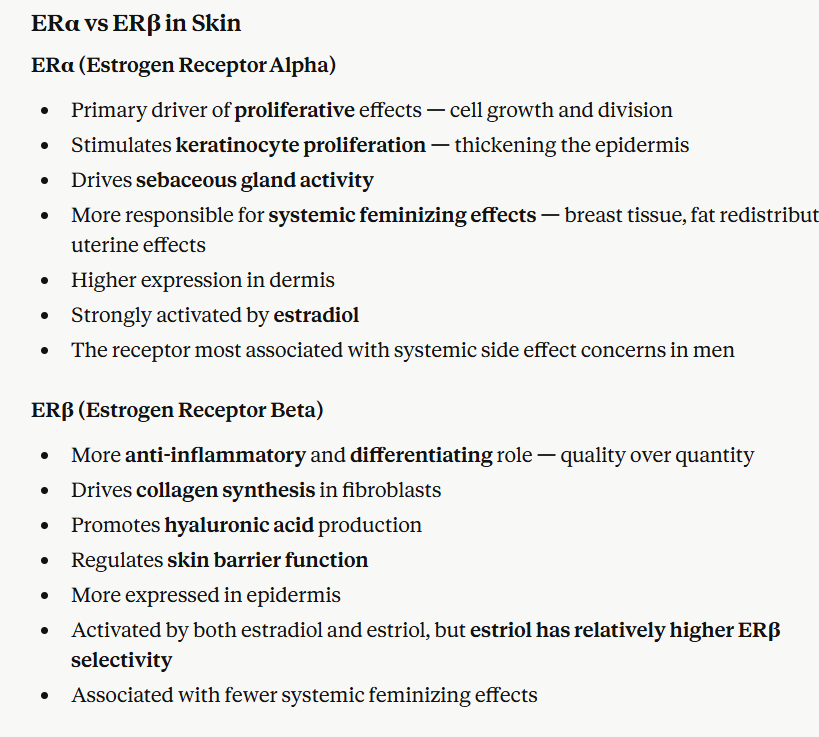
I’ve experimented with an 80:20 combo of estradiol:estriol cream on my face a couple of separate nights before bed and more than any other topical active I notice I wake up with better looking skin.
According to various AI models I’ve talked to about this they state estriol is likely a safer option longer term due to only agonising estrogen receptor beta, whereas estradiol agonises both ERa and ERb. I have tried estriol alone a number of times, I don’t recall having as dramatic an effect as the combination of estradiol and estriol.
This is what Claude says about the different estrogen receptors:
2 Likes
Dermatologist Shops Costco Skincare | What’s Worth Buying?
I. Executive Summary
This assessment identifies eleven specific dermatological products recommended by the speaker for their formula stability, ingredient efficacy, and cost-efficiency. The speaker prioritizes topical agents that modulate the skin barrier and dermal structure, specifically those containing niacinamide, centella asiatica, and alpha-hydroxy acids. A central theme of the recommendations is the “K-Beauty” (Korean Beauty) sector, which the speaker evaluates as having superior price-to-performance ratios for hydrating and anti-inflammatory formulations.
Among the top-tier recommendations is Beauty of Joseon Dynasty Cream, valued for its use of niacinamide to inhibit melanosome transfer and rice bran water for hydration. Similarly, Skin1004 Madagascar Centella Soothing Cream is highlighted for its inclusion of centella asiatica and tranexamic acid, which address redness and barrier repair. The speaker also endorses Torriden products, specifically the Cellmazing Firming Gel Mask for its occlusive properties that maximize the penetration of humectants and reduce transepidermal water loss (TEWL).
In the Western retail category, the speaker confirms the clinical utility of AmLactin (12% Lactic Acid), citing its ability to address dermal atrophy and increase dermal thickness—a claim backed by its status as an alpha-hydroxy acid with significant molecular penetration. For general body care, Neutrogena Hydro Boost Hyaluronic Acid Body Lotion and Aveeno Skin Relief Healing Ointment are recommended for their ability to maintain skin suppleness and reduce inflammatory markers via colloidal oat avenanthramides.
The speaker’s methodology for recommendation relies on “R&D footprints,” specifically praising Olay Every Night Retinol for its formulation stability and penetration testing. Conversely, the speaker aggressively filters out oral supplements, such as Nature’s Bounty gummies, due to diagnostic interference risks (biotin) and hepatic toxicity concerns (vitamin A), reinforcing a “topical-first” intervention strategy for dermatological longevity.
II. Insight Bullets
- Beauty of Joseon Dynasty Cream: Recommended for its dual-action niacinamide and rice bran water; effective for moisture barrier support and pigment management.
- Skin1004 Madagascar Centella Soothing Cream: Validated for its high centella asiatica content, specifically for soothing active redness and improving the appearance of red stretch marks. Bylka et al., 2013.
- Torriden Cellmazing Firming Gel Mask: Endorsed for its superior occlusion, allowing for “glassy” skin results through maximum hydration retention.
- Olay Every Night Retinol: Selected for its high-quality research and development; the speaker notes Procter & Gamble’s rigorous penetration testing.
- RoC Advanced Hydration+ Water Cream: Recommended as a fragrance-free alternative to traditional gel-creams, utilizing marine extracts for humectant-based hydration.
- Neutrogena Hydro Boost Hyaluronic Acid Body Lotion: Praised for its lightweight, non-greasy texture and efficacy in improving skin suppleness to prevent stretch mark severity.
- Aveeno Skin Relief Healing Ointment: Noted for its high glycerin content and oat-derived avenanthramides, which provide anti-inflammatory benefits. Pazyar et al., 2012.
- Round Lab 1025 Dokdo Cleanser: Recommended as a gentle, Korean alternative to classic Western “non-soap” cleansers; includes ceramides and hyaluronic acid.
- Torriden Dive In Serum: A recommended hyaluronic acid serum for those in hot, humid climates seeking lightweight hydration without heavy occlusion.
- Grace & Stella Eye Patches: Validated for acute de-puffing and fine-line reduction via hydration and thermal effects (if refrigerated).
- AmLactin 12% Lactic Acid Lotion: Highly recommended for “swearing by” results in reversing dermal atrophy and thickening the skin. Smith, 1996.
- Colloidal Oat Efficacy: Specifically identified as a superior skin protectant for atopic dermatitis and barrier repair in the Aveeno formulation.
- Niacinamide Mechanism: Validated for its unique ability to block pigment transfer from melanocytes to surface skin cells. Greatens et al., 2002.
- Tranexamic Acid Redirection: Recommended topically for redness/moisture barrier, while acknowledging its oral use is reserved for systemic pigment treatment.
- Occlusion Benefits: The speaker emphasizes that the “bouncy” skin effect from masks is a result of trapped water, not new collagen fiber synthesis.
IV. Actionable Protocol
High Confidence Tier (Level A/B Evidence)
- Dermal Thickening Protocol: Use AmLactin (12%) daily on sun-damaged areas to improve skin density. Warning: High concentration lactic acid increases UV sensitivity; apply broad-spectrum SPF 30+ daily.
- Retinoid Integration: Olay Every Night Retinol is identified as a stable entry point for nocturnal skin cell turnover. Apply a pea-sized amount to dry skin to minimize irritation.
- Anti-Inflammatory Cleansing: Utilize Round Lab 1025 Dokdo Cleanser with lukewarm water. Ensure thorough rinsing of the mandibular area to avoid contact dermatitis.
Experimental Tier (Level C/D Evidence)
- Post-Inflammatory Erythema (PIE) Management: Apply Skin1004 Madagascar Centella or Beauty of Joseon Dynasty Cream (Niacinamide) to red spots or “active” stretch marks to dampen the inflammatory cascade.
- Targeted Eye De-puffing: Store Grace & Stella Eye Patches in the refrigerator. Apply chilled for 10-15 minutes to induce vasoconstriction and reduce edema.
Red Flag Zone (Safety Data Absent / High Risk)
- Avoid: Nature’s Bounty Hair, Skin, & Nails Gummies. These contain Biotin which causes false cardiac/thyroid lab results and Retinyl Palmitate which poses hepatic risks.
- Avoid: Hot Water Washing. Cease using high-temperature water on the face as it dissolves the skin’s natural lipid barrier regardless of the cleanser used.
- Avoid: Topical Collagen for Wrinkles. Do not purchase products like the Torriden Mask expecting the collagen to “fill” deep wrinkles; use it strictly for surface hydration.
2 Likes
Just a share and I’m not sure of the cause.
I have noticed I have some pigmentation on my face. There isn’t anything bad and I’m not even sure I’m going to bother treating it anytime soon, but my face was pretty clear before.
The only two things that are different are:
I went from alternating zinc spf and chemical spf to only using chemical (beauty of joseon or skin1004). The Korean SPFs are known to be good at blocking UVA, so this is unlikely the reason. If anything, I gave up zinc because I heard these provided better coverage.
More likely:
I realized I started using red light in the fall… there are some people who say it gives them pigmentation… I’m guessing this happened to me… but it could just be a coincedence.
2 Likes
That sounds like the likeliest culprit to me — red, infrared light. It will probably clear out on its own with time. Some azelaic acid is helpful too, and really cheap from IndiaMart.
2 Likes
Thanks @medaura! Good to know you think AA works. I’ll give that a try! I was just thinking BBL but I’m not sure I have enough pigmentation for BBL to do its job and hate wasting money. I did it many years ago and it did an excellent job clearing freckles off my chest, but it did nothing on the one slight spot on my face.
AA fades gently. If you really want them gone then a TCA peel will do the job.
1 Like
This is an interesting image. It shows two twin sisters who aged very differently. One smoke and tanned and consequently had much older-looking, damaged skin than the other:
My brother isn’t a twin, and he is 3 years older than me. Back when we were in our early 20s people said we looked very similar, almost like twins. Today, I’m nearing 54 and my brother is 57; but the two of us look very different now. I barely have any gray hair and look younger than my age, and his hair has lost color for many years now, since he was in his mid-to-late 40s. His hair is also thinning while mine is still thick. His skin also looks a lot older than mine.
Our lifestyles are very different, which probably explains the difference much more than genetics. (He has for many years had a very unhealthy diet, while I have not. I also was vegetarian for a year or two, while he never was.)
…
I think it would be good to see some more examples of how lifestyle choices affect skin and hair in identical twins. E.g. how does omega-3 supplementation affect them? Polyphenol content? Fiber? Vegetarian or not? Protein?
5 Likes
@Beth For the last month I have tried increasing my OneSkin Face to 2x per day, and combining it with twice-weekly “nano needling”. That is, using the Dr. Pen microneedle pen with “nano” heads which are a silicon-based head that only penetrate 0.25mm. Ideally improving penetration into the epidermis, and it doesn’t hurt or cause redness.
Subjectively, I would say that it did help, and it kind of replicated the benefits I saw from starting OneSkin in the first place. I said back then that it did reduce some expression lines and wrinkles, and then stabilised at a ceiling of sorts. I think adding the nanoneedling and second application has given another improvement. So maybe worth a look?
1 Like
Ok @relaxedmeatball, you’ve convinced me to stop being lazy and to use my GloPro microneedle! I’m not too lazy to actually use it, but cleaning it has been a mental block!
@medaura I think it’s likely you will have a great source to do a TCA peel at home on the cheap… yes?
Also, anyone have thoughts on a GHK CU diy serum. I have the power in my cart, but not sure if it’s worth fitting something else into my routine?
PS I did realize I stopped using Elevai serum a few months ago, but I doubt that is the cause because my skin was the same before and after using it. I’m still thinking it was the red light.
@Albina fyi, I think you’d like to follow this thread…
1 Like
This is an interesting video with some info that I hadn’t heard before (I’m not someone who reads everything about skin). It’s produced using a synthetic voice (“AI slop”) on a YouTube channel that looks a little sketchy, so it’s easy to dismiss:
The two things I learned from it were:
-
beta-hydroxy acids (BHA) – specifically salicylic acid – as appear in Paula’s Choice 2% are cost-effective compared to other brands. And, doing an internet search, I see that it’s oil soluble and good for pores (not that I have much problem with pores, but that will change as I get older!).
-
Skinceutical’s C E Ferulic may be (extremely!) high-priced, but has some peer-reviewed clinical evidence behind it. I will personally not be buying it, though. Doing an internet search I found that certain vitamin C topicals can produce a “reservoir effect” where it stays in the skin for days, offering long-lasting protection from sun damage – though is no substitute for sunscreen. Still, it sounds like one can save on cost by just applying once every couple of days.
A prompt I gave GPT-5.5-thinking:
I have read that topical vitamin C can create a “reservoir effect” whereby it stays in the top layer of skin several says, even if you lightly wash the skin. Thus, it seems it could over some degree of protection from sun damage for several days in a row from a single application. Is this true?
Its response:
Yes, partly true, but it’s easy to overstate.
Topical L-ascorbic acid can build up in skin tissue under the right formulation conditions. A classic absorption study found that L-ascorbic acid had to be formulated at low pH to penetrate skin, with best absorption around 20%, and that skin levels became saturated after three daily applications; after stopping, the tissue disappearance half-life was about 4 days.
Skinceuticals CE Ferulic might last a lot longer.
I. Executive Summary
The multi-billion-dollar luxury skincare market relies heavily on narrative-driven marketing, proprietary nomenclature, and aesthetic packaging to justify extreme price premiums over functionally identical or superior drugstore alternatives. Analysis of raw ingredient lists reveals that high-margin prestige products regularly employ basic, low-cost commodities as their structural base. For instance, luxury formulations retail for up to $253 per ounce despite being built primarily on occlusives and humectants like petrolatum, mineral oil, and glycerin—base profiles structurally analogous to mass-market creams retailing for under $10. Similarly, prestige “essences” command over $260 per ounce for trademarked ferments that are biochemically categorized as commodity ingredients (Galactomyces Ferment Filtrate) widely available in $30 formulations.
The mechanical justification for a premium price point requires objective, verification-backed parameters: enforceable utility patents, transparent ingredient dosing, and rigorous, independent, peer-reviewed clinical data published in indexed journals. Most luxury brands rely instead on general raw material research or internal corporate testing, leaving a distinct translational gap between marketing rhetoric and clinically proven human outcomes.
A notable exception is the stabilized topical triad of 15% L-ascorbic acid, 1% alpha-tocopherol, and 0.5% ferulic acid at a highly acidic pH (3.0–3.5). This specific ratio is validated by foundational, peer-reviewed research showing it significantly doubles the photoprotective and radical-scavenging capacity of the individual components. However, this benchmark formulation faces an industry shift due to the expiration of its core utility patent, lowering entry barriers for competitor brands capable of overcoming the strict manufacturing demands of stabilizing low-pH ascorbic acid.
Conversely, aggressive corporate multi-product layering strategies present distinct clinical risks, particularly when high-concentration active compounds (e.g., retinoids, exfoliants) are introduced to pediatric populations with uncompromised epidermal barriers. This practice induces widespread contact dermatitis, chemical sensitization, and barrier degradation. Clinical efficacy and barrier homeostasis are optimized not by additive product stacks, but by a minimalist framework utilizing physiologically matched lipids (ceramides 1, 3, and 6-II), targeted oil-soluble beta-hydroxy acids, and minimalist, non-reactive vehicles.
II. Insight Bullets
- Asymmetric Pricing Realities Prestige skincare products frequently share identical top-five ingredient compositions with mass-market serums costing under $10, demonstrating that retail premiums are driven by branding architecture rather than raw material costs.
- The Occlusive Overlap of La Mer Despite cellular regeneration claims surrounding its fermented “miracle broth,” the structural core of Crème de la Mer consists of petrolatum, mineral oil, glycerin, and squalane, mimicking the basic occlusive profile of classic drugstore creams.
- Absence of Peer-Reviewed Luxury Validation Major luxury brands lack independent, peer-reviewed human trials published in medical journals for their specific final formulations, relying instead on proprietary internal data or generalized literature on raw ingredients.
- Pediatric Epidermal Sensitization Risks Marketing active ingredients (retinoids, alpha/beta-hydroxy acids) to pre-teen populations introduces high-strength compounds to healthy, uncompromised skin barriers, triggering chemical irritation and long-term barrier disruption.
- The “Skincare Smoothie” Paradox Mixing multiple high-active products together destabilizes specific formulation pH levels and dramatically increases chemical exposure vectors, maximizing the risk of contact dermatitis without improving clinical outcomes.
- Commodity Deception via Trademarking Prestige brands isolate common, bulk-sanded biotech byproducts—such as Galactomyces Ferment Filtrate—and apply trademarked names to obscure their identity as standard cosmetic commodities available at a fraction of the cost.
- Ceramide Mortar Biomimicry Topical application of essential ceramides (1, 3, and 6-II) physically replenishes the intercellular lipid matrix of the stratum corneum, directly decreasing transepidermal water loss (TEWL) and repairing barrier damage.
- The Transparency Percentage Standard Formulations that conceal the specific concentrations of their primary active molecules under vague terms prevent accurate clinical dosing and often disguise sub-therapeutic ingredient levels.
- Exclusionary Formulation for Reactive Skin Eliminating common sensitizers—specifically fragrances, dyes, lanolin, parabens, and formaldehyde-releasing preservatives—is clinically superior to adding “soothing” actives when treating reactive or post-procedure skin.
- Oil Solubility and Pore Penetration Salicylic acid (BHA) is lipophilic, enabling it to cross the sebum barrier and exfoliate inside the follicle lining to reduce pore congestion, a mechanism structurally impossible for water-soluble alpha-hydroxy acids (AHAs).
- Quantitative Micro-Comedone Reduction Clinical evaluations of optimized 2% salicylic acid vehicles demonstrate measurable structural changes in skin topography, including up to a 32% reduction in visible pore size over an 8-week period.
- Thermal Spring Anti-Inflammatory Frameworks Pharmacy-born brands use naturally derived selenium-rich thermal waters as an active base, anchoring formulations in dermatological oversight and mandatory safety compliance panels.
- Dehydrated Lipogenesis Overcompensation Withholding topical moisture from oily or acne-prone skin profiles exacerbates dehydration, prompting sebaceous glands to upregulate sebum synthesis and worsen acne vulgaris.
- Hyaluronic Thermodynamic Binding Mechanics Hyaluronic acid requires a clear aqueous environment to function efficiently; applying it to entirely dry skin causes the molecule to extract moisture from the deeper dermal layers, worsening structural dehydration.
- The Pinnell Antioxidant Triad Validation Combining 15% L-ascorbic acid, 1% vitamin E, and 0.5% ferulic acid at an exact pH range of 3.0–3.5 establishes a synergistic mechanism that doubles cutaneous photoprotection against ultraviolet radiation.
- Patent Expiration and Market Disruption The expiration of foundational utility patents opens the landscape for mass-market entities to manufacture scientifically validated antioxidant ratios, provided they can master the technical challenges of low-pH stabilization.
III. Actionable Protocol
High Confidence Tier (Level A/B Evidence)
1. Synergistic Photoprotection Protocol
- Target: Prevention of UV-induced photo-damage, collagen degradation, and cellular senescence.
- Compounds: 15% L-ascorbic acid, 1% alpha-tocopherol (Vitamin E), and 0.5% ferulic acid.
- Application Parameters: Apply 4–5 drops to a clean, dry face every morning prior to layering heavier emulsions or broad-spectrum UV blocks.
- Critical Metric: The solution must maintain a pH between 3.0 and 3.5. Discard or replace if the liquid transitions from a pale straw color to deep amber, indicating advanced oxidative degradation of the L-ascorbic acid (Pinnell et al., 2001).
2. Intercellular Lipid Matrix Restoration
- Target: Reversal of barrier disruption caused by aging, environmental stressors, or chemical over-exfoliation.
- Compounds: Physiologically matched ceramides (specifically Ceramides 1, 3, and 6-II), free fatty acids, and cholesterol.
- Application Parameters: Massage into the skin twice daily, immediately following the cleansing or active serum steps.
- Clinical Efficacy: This exact lipid triad mimics the stratum corneum’s natural mortar, structurally locking in moisture and lowering measurable transepidermal water loss (Elias et al., 2021).
3. Lipophilic Follicular Exfoliation
- Target: Resolution of acne vulgaris, closed comedones, and follicular congestion.
- Compounds: 2% Salicylic Acid (Beta-Hydroxy Acid).
- Application Parameters: Apply a uniform layer of an alcohol-free, liquid 2% BHA vehicle (pH 3.2–3.8) once daily or every other evening after cleansing. Do not rinse.
- Mechanism: Because it is lipid-soluble, it breaks down the sebum plugs inside the pores, providing a documented reduction in visible pore expansion and open/closed comedones (DermApproved Clinical Review, 2021).
Experimental Tier (Level C/D Evidence)
1. Aryl Hydrocarbon Receptor (AHR) Activation via Ferment Filtrates
- Target: Upregulation of epidermal differentiation markers (filaggrin, involucrin) and mitigation of inflammaging pathways.
- Compounds: Galactomyces Ferment Filtrate (GFF).
- Application Parameters: Apply a high-concentration GFF fluid essence immediately after cleansing, tapping gently until absorbed.
- Safety Margin: High. GFF has a low irritation profile, though its long-term anti-aging capabilities remain mostly supported by manufacturer trials and in-vitro keratinocyte models rather than large, multi-center, independent RCTs (Miyamoto et al., 2023; Olesen et al., 2022).
2. Low-Weight Humectant Vapor-Locking Protocol
- Target: Acute epidermal rehydration for combination and acne-prone skin types.
- Compounds: Purified Hyaluronic Acid or Sodium Hyaluronate in an oil-free, non-comedogenic water-gel matrix.
- Application Parameters: Mist the face with pure water or thermal spring water to ensure it is distinctly damp. Apply the water-gel instantly over the moisture film.
- Clinical Nuance: Skipping this wet step forces the humectant to pull moisture from underlying tissue, accelerating deeper dehydration rather than locking water into the upper skin layer.
Red Flag Zone (Safety Data Absent / High Irritation Risk)
1. High-Concentration “Skincare Smoothies” for Pediatric Skin
- Risk Profile: Applying adult-strength retinoids, alpha-hydroxy acids (AHAs), and strong chemical exfoliants to pre-teen skin.
- Clinical Outcome: Severe chemical irritation, breakdown of the natural skin barrier, and permanent allergen sensitization.
- Action: Enforce strict subtraction. Young skin possesses healthy cell turnover and an intact barrier; it does not need aggressive chemical resurfacing.
2. Non-Disclosed Active Concentration Serums
- Risk Profile: Purchasing luxury products that hide active concentrations behind proprietary or sensory titles.
- Clinical Outcome: Sub-therapeutic or highly erratic ingredient dosing. Without an explicit percentage declaration, consumers cannot track total chemical exposure, increasing the risk of cumulative toxicity and skin irritation.
3. Additive Product Layering During Acute Sensitization Overload
- Risk Profile: Adding new “soothing” or botanical creams to treat skin that is already red, stinging, or reacting poorly.
- Clinical Outcome: Severe exacerbation of contact dermatitis due to preservative and fragrance exposure.
- Action: Halt all complex formulas. Switch directly to a minimalist, short-ingredient vehicle devoid of all fragrances, essential oils, lanolin, and parabens (e.g., Vanicream base profiles) to allow the barrier to reset without added irritants.
IV. Reference Links
- Pinnell Vitamin C Stabilization Patent Study: Journal of Investigative Dermatology, 2001
- SkinCeuticals Clinical Binder Data: L’Oréal Dermatological Beauty Portfolio
- Ceramide Dominant Eczema RCT: Australasian Journal of Dermatology, 2021
- Galactomyces Ferment Filtrate Mechanism & AHR Pathways: PubMed Central / MDPI, 2022
- Paula’s Choice BHA Independent Formulation Review: DermApproved Product Analysis
- Follicle-Sulcus-Crack Complex (FSCC) Aging Trial: Journal of Cosmetics, Dermatological Sciences and Applications, 2023
1 Like
Here is a list of affordable skin serums that utilize the precise formulation blueprint of 15% L-ascorbic acid, 1% Vitamin E, and 0.5% Ferulic Acid at an exact pH range within 3.0–3.5.
The products below have been gathered based on open market pricing and verified formulation specifications. The data is sorted by the Lowest Cost Per 100ML of serum.
| Rank | Product/Brand Name (Exact title) | Vendor | Total Weight (Original Unit & ML or Grams) | Total Price (USD) | Cost Per 100ML of serum |
|---|---|---|---|---|---|
| 1 | C-Glow | Geek & Gorgeous | 1.01 fl oz / 30 ML | $14.00 | $46.67 |
| 2 | Clinical Vit C + E + Ferulic Defend Serum | Brandefy Skin | 1.00 fl oz / 30 ML | $35.00 | $116.67 |
| 3 | The Glow Maker | Maelove | 1.00 fl oz / 30 ML | $32.95 | $109.83 |
| 4 | C15 Super Booster | Paula’s Choice | 0.67 fl oz / 20 ML | $55.00 | $275.00 |
Technical Formulation Verification
- Geek & Gorgeous C-Glow: Formulated at a precise pH of 3.2–3.4 , matching your target specs perfectly while optimizing the absorption kinetics of the 15% L-ascorbic acid.
Goals To Get Glowing
- Maelove The Glow Maker: Features a verified pH of 3.2, incorporating extra soothing elements like aloe and hyaluronic acid to buffer the skin barrier against the highly acidic delivery.
- Brandefy Clinical Defend Serum: Purpose-built as a direct alternative to medical-grade options, keeping its pH below 3.5 to support molecular stability and transdermal penetration.
- Paula’s Choice C15 Super Booster: Their current updated formula targets a strict pH range of 3.1–3.5. It contains added peptides and ergothioneine but commands a higher premium per milliliter, positioning it at the top of the price curve for this list.
2 Likes
It’s worth mentioning that not only does the combination in Skinceuticals CE Ferulic and knockoffs increase protection against UV light, but apparently it also penetrates more deeply, down to the top dermis, unlike many other vitamin C formulations. Here is what Gemini 3.5-flash had to say:
When compared to generic Vitamin C topicals—many of which use more stable but far less biologically active derivatives (like magnesium ascorbyl phosphate) or fail to formulate at a pH below 3.5—the SkinCeuticals formulation penetrates significantly better. It ensures that the active, uncharged $L$-ascorbic acid reaches the viable epidermis and dermis where it can actually interact with fibroblasts to promote collagen synthesis and neutralize UV-induced reactive oxygen species.
The problem with ordinary vitamin C is that it only gets into the epidermis, so has to be paired with sunscreen, as the deeper layers of the skin don’t get any protection. One also needs sunscreen for Skinceuticals CE Ferulic – it’s just that you get more protection for those deeper layers than with plain vitamin C.
1 Like
FWIW, after deep diving on well priced Vit C options, I settled on Timeless (purchased at Iherb)
$25 autoship when it’s not on sale (I paid less)
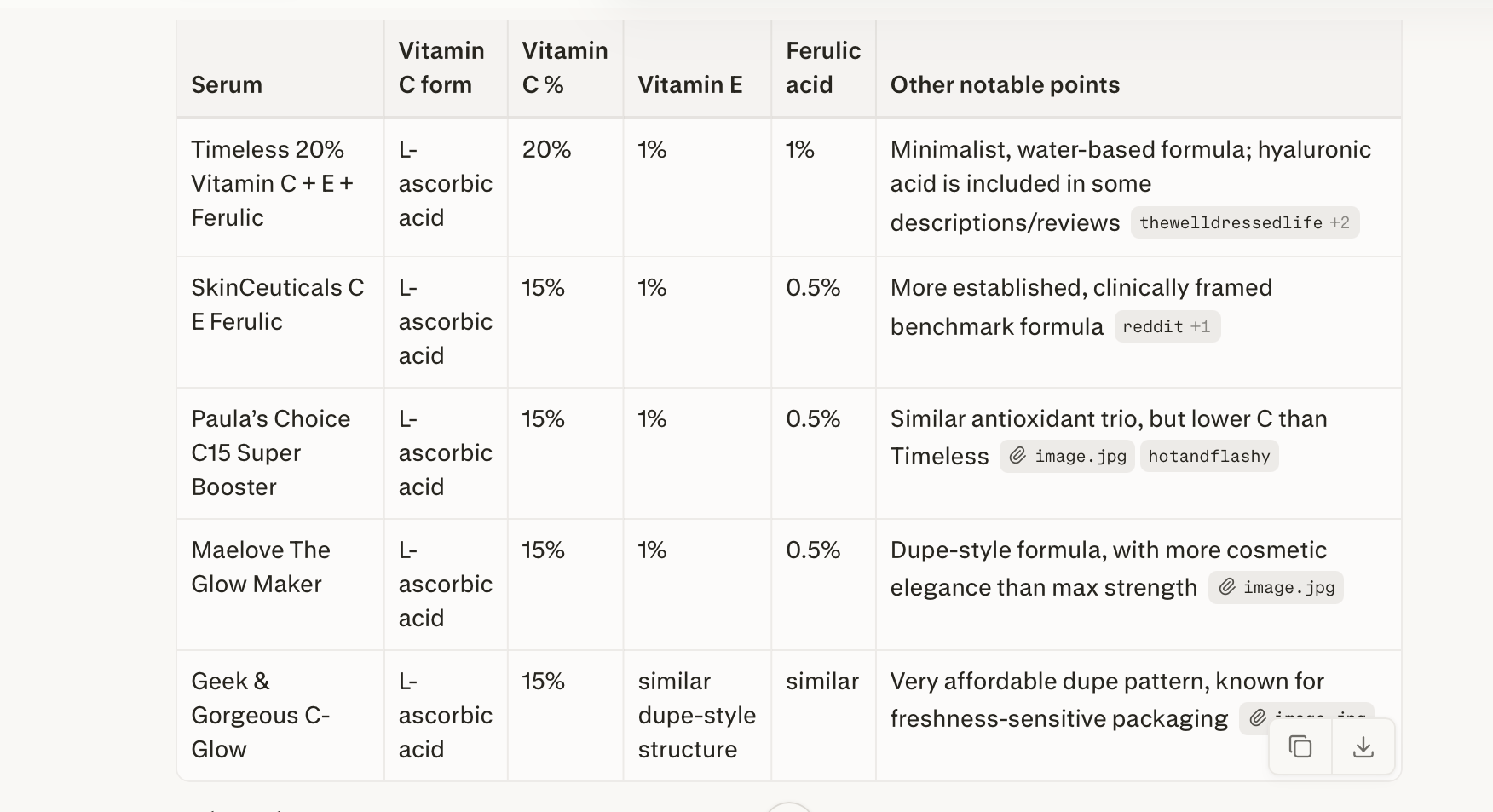
I have not used it much, so I can’t speak to its effectiveness. I used to use $$$ vit c daily for years but never noticed a difference. I continued for a long time just incase it was doing something, but worst case, if it made my spf work better, that was a win.
I’ll add, there are newer and more stable forms of vit c available these days. medik8/trinny London etc.
6 Likes
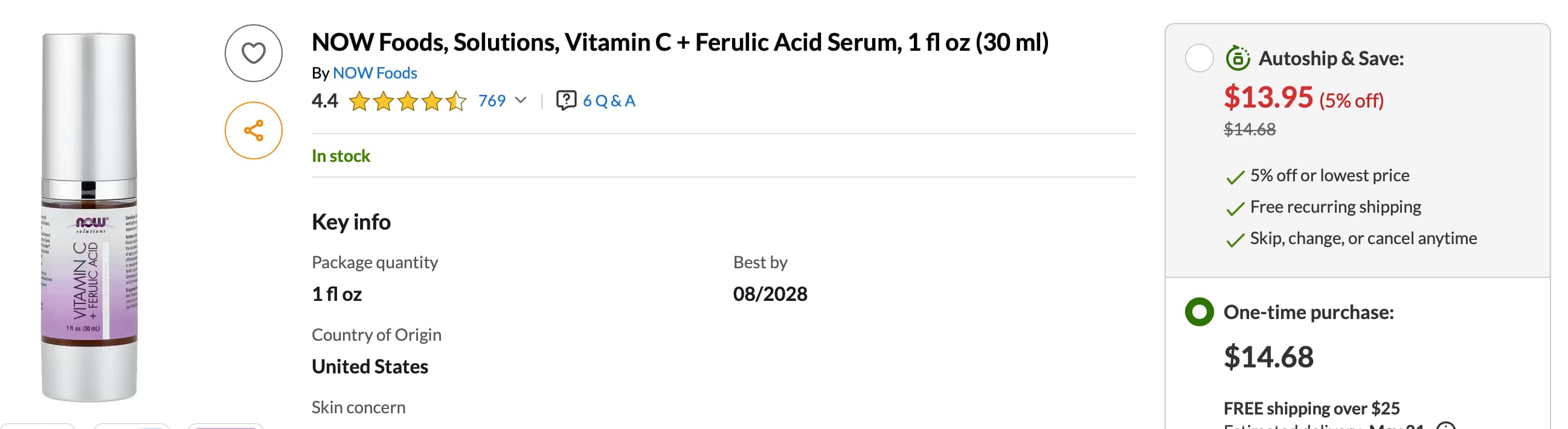
This looks interesting. I’ve found NOW to be a great brand:
https://www.iherb.com/pr/now-foods-solutions-vitamin-c-ferulic-acid-serum-1-fl-oz-30-ml/101675
2 Likes
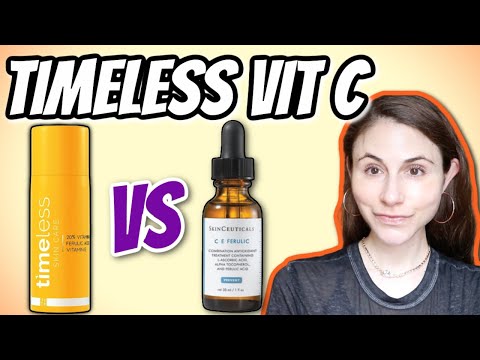
Dr. Dray video from 4+ years ago comparing Timeless Skin Care Vitamin C serum with Skinceuticals CE Ferulic:
3 Likes