I did a quick search of the forum and did not find this title. Hence here it is.
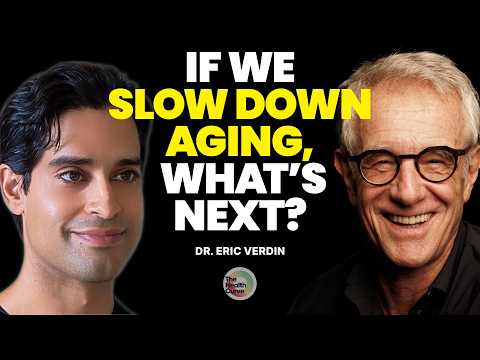
chatGPT:
Below is a cleaned, structured transcript, followed by a summary and critique. I have treated the uploaded transcript as the source text rather than independently verifying the YouTube audio.
Tidy transcript
Title / topic
How close are we to slowing aging in humans?
Interview with Dr Eric Verdin, President and CEO of the Buck Institute for Research on Aging.
1. Introduction and background
The host introduces Dr Eric Verdin as President and CEO of the Buck Institute for Research on Aging. The central question of the episode is: how close are we to slowing aging, and what would the implications be?
Verdin explains that he is originally from French-speaking Belgium and went to medical school with the aim of becoming a researcher. He completed his final year of medical school at Harvard, then trained as a bench scientist. His career included work at the NIH, the Picower Institute in New York, UCSF, and then the Buck Institute in Novato, California.
His laboratory has long focused on epigenetic regulators, and over the past 25 years this became closely connected to the biology of aging. At the Buck, he combines institutional leadership with running a lab focused particularly on epigenetic factors in the aging immune system.
2. Why aging research changed
Verdin says the field changed dramatically in the mid-1990s, when researchers including Cynthia Kenyon, Lenny Guarente, and Tom Johnson found mutations that could substantially extend lifespan in model organisms.
Before those discoveries, aging was often viewed as a largely random, degenerative process: each cell aged in its own way, and aging was seen almost as cellular catastrophe. The discovery that single mutations could double lifespan in animals suggested that aging was partly governed by master regulatory pathways.
That changed the field. If a single mutation could slow aging, it became plausible that a drug might also target the same pathways.
Initially, many people doubted the findings. Over the following 5–10 years, however, the observations were validated and aging biology became a serious molecular field. Verdin says many researchers expected this transformation to happen faster, but radical ideas often take decades to permeate science and medicine.
The current excitement, in his view, comes from the possibility that discoveries in animals may finally translate into human interventions.
3. Why translation to humans is hard
The host asks whether the key bottleneck has been translating animal findings into humans.
Verdin agrees. He identifies two main problems.
First, timescale. In mice, lifespan experiments take two or three years. In humans, proving a lifespan effect could require decades.
Second, safety tolerance. A drug for a serious disease may be accepted if its risks are justified by the condition being treated. But an anti-aging drug given to otherwise healthy people would need an exceptionally high safety bar. If a longevity drug harmed people, public and regulatory backlash could be severe.
Verdin argues that the longevity field must think carefully about risk, because interventions aimed at healthy people require a different standard from drugs used to treat life-threatening disease.
4. AI, simulations, and digital twins
The host asks whether AI and simulation could help solve the timescale problem.
Verdin describes this as an exciting area. He mentions work at the Buck Institute on digital twins, associated with Nathan Price. The idea is to create in silico models of human biology that could predict how a person might respond to an intervention.
He acknowledges that human biology is enormously complex: trillions of cells and vast numbers of chemical reactions. But he argues that models can begin with simplified variables and gradually become more sophisticated.
He also mentions work by another Buck colleague, James Yovich, aimed at simulating a single cell at high resolution. Verdin hopes that individual-level digital twin models and cell-level simulations may eventually converge.
The long-term vision is that a person could have a personalised model based on genetics, lifestyle, physiology and other data, helping predict whether a given drug or intervention would benefit them.
5. Scientific and cultural inflection point
The host asks whether aging research has moved from a scientific inflection point to a cultural and capital inflection point.
Verdin agrees. The initial discoveries rewrote the understanding of aging. Those discoveries have now been widely validated in animal models, and in some cases researchers believe aspects of aging may be reversible.
However, Verdin does not believe humans will achieve immortality. He does believe lifespan and healthspan can be significantly increased.
He notes that human life expectancy has roughly doubled over the past 150 years. He is cautious about predicting the future, but says science is accelerating and aging biology has become a frontier attracting very smart people from many disciplines.
6. How close are we to slowing aging in humans?
Verdin says we may be closer than many people realise.
He distinguishes between two waves of intervention.
The first is available now: lifestyle interventions such as sleep, exercise, diet, physical activity and social connection. He argues that many people could gain substantial healthy life by optimising these factors.
The second wave is future-oriented: drugs that directly modify aging pathways. He suggests that some already-approved drugs may turn out to have effects on human lifespan or healthspan. He names GLP-1 agonists and SGLT2 inhibitors as examples of drugs that could plausibly affect aging-related outcomes, though he acknowledges that this is not yet fully demonstrated in humans.
He predicts that within about five years there may be one or two drug interventions shown to increase human lifespan or meaningfully affect aging-related outcomes.
His practical advice is to optimise current lifestyle factors now, while preparing for a future in which more powerful interventions become available.
7. Bottlenecks: funding, regulation, and the medical system
The host asks what the main bottleneck is if the science is not the bottleneck.
Verdin says the biggest bottleneck is funding.
Big pharma has been cautious because aging is not recognised as a disease, and there is no clear regulatory pathway for approving a drug that targets aging itself. Verdin does not personally think aging should be classified as a disease, but he does think it should be treated as a major modifiable risk factor, analogous to high blood pressure or high cholesterol.
He argues that modern medicine is really “sick care”: it treats people after they develop heart disease, cancer, Alzheimer’s, Parkinson’s, diabetes, stroke or other diseases. Since age is the biggest risk factor for most chronic diseases, slowing aging could theoretically delay many of them at once.
But this would require a different economic model: one focused on keeping people healthy rather than treating them after they become sick. Verdin suggests that some parts of the existing system may be poorly aligned with prevention, because current healthcare economics are built around treating disease.
8. Biomarkers, epigenetic clocks, and proof
The host asks what would count as proof that aging itself is being slowed.
Verdin says the timescale problem has driven interest in biomarkers of aging. These are surrogate measures that might indicate biological age or rate of aging without waiting decades for mortality outcomes.
He discusses epigenetic clocks, based on DNA methylation patterns measured in blood. These clocks can estimate biological age and, in some newer forms, possibly rate of aging.
Verdin gives his own example: although chronologically almost 69, some clocks estimate his biological age at about 61. He says other clocks suggest he is aging at about 75% of the average rate for his age.
He cautions that these tools are not fully ready for routine medical use. Different clocks can give different results, and interpretation requires expertise. Still, he thinks such biomarkers will be used in clinical trials to test interventions over one or two years rather than decades.
9. Verdin’s personal longevity practices
The host asks what Verdin personally does to slow aging.
Verdin says he engages in self-experimentation partly because it helps him understand the tools and their limitations.
His main priorities are:
Exercise. He does multiple forms: VO₂ max training, high-intensity interval training, zone 2 training, strength training, flexibility and balance.
Diet. He watches what he eats and drinks little or no alcohol.
Sleep. He views sleep as foundational. Poor sleep makes him crave carbohydrates, reduces his motivation to exercise, and makes it harder to maintain healthy behaviour.
Human connection. He says strong social connection is one of the biggest predictors of life expectancy. He argues that loneliness and connection should be studied more deeply as biochemical and psychobiological phenomena.
10. Supplements and hype
Verdin is cautious about supplements. He says the supplement space receives enormous commercial attention, but many products are unproven, poorly regulated, or inadequately tested.
He mentions a study by Andrea Maier in Singapore that tested NMN supplements and reportedly found that more than 20% contained no NMN. His advice is that people should be careful about both which supplements they choose and where they buy them.
He does not dismiss all supplements, but he argues that there is a major gap between what is marketed and what is proven.
11. Social determinants and “zip code health”
The host asks whether anti-aging drugs can overcome environments that make it difficult to eat well, sleep well, move and maintain social connection.
Verdin says one of the strongest predictors of life expectancy is where someone lives. He refers to the social determinants of health: access to healthy food, walkable streets, safe environments, education, and supportive communities.
He notes that within cities, life expectancy can differ dramatically between neighbourhoods. Food deserts, lack of sidewalks, poor urban design and limited access to green space all affect health.
He cites Dan Buettner and the Blue Zones idea: changing people’s environments may be more effective than simply telling individuals to make better choices. For example, reducing fast-food density, increasing walkability, planting trees and making healthier choices easier could improve population health.
Verdin worries about longevity medicine becoming “medicine by the healthy for the wealthy.” He says the field needs to ensure that its benefits apply broadly, not just to rich people using elite longevity clinics.
12. Can drugs replace lifestyle?
The host asks whether future anti-aging drugs could make lifestyle less important.
Verdin says this is a concern. His dystopian worry is that longevity science could help create a civilisation of “couch potatoes” who rely on drugs while ignoring lifestyle.
He predicts that lifestyle will remain a major force for longevity for at least the next 50 years. There is no evidence that drugs can yet eliminate the effects of a poor lifestyle.
He also emphasises that lifestyle improves present-day quality of life, not only future lifespan. Exercise, good food and sleep increase happiness, energy and mood. He says many people discover that pursuing longevity improves how they feel immediately, not merely how long they might live.
13. Longevity medicine
The host asks how anti-aging science might enter healthcare.
Verdin says he once thought the ideas were so powerful that mainstream medicine would simply adopt them. But he now thinks the ideas are too radical for the existing medical system.
Medical training still gives too little attention to nutrition, sleep and exercise. Therefore, rather than reforming medicine from within, he thinks a new field is emerging: longevity medicine.
He says longevity medicine is not for treating cancer or heart attacks once they occur. It is aimed at prevention: keeping people healthy and delaying disease onset.
He consults for longevity clinics and says the field is early and varied. Some clinics are serious, but the term “longevity” has become a buzzword. He mentions efforts in Abu Dhabi to define regulations for what counts as a longevity clinic, and says professional frameworks and certification systems are beginning to emerge.
His vision is that people might start seeing a longevity doctor around age 30, with the goal of maintaining health across the lifespan.
14. What is real and what is fluff?
Asked what is real versus fluff in longevity medicine, Verdin identifies the supplement world as one of the biggest areas of concern.
He also mentions hyperbaric oxygen therapy, cryotherapy and various devices or interventions. He does not dismiss them outright, but says many are unproven. The problem is the gap between what is sold and what has been rigorously demonstrated.
15. Are we ready for longer lives?
The host asks whether society is ready for significantly longer healthspan and lifespan.
Verdin identifies two main concerns:
- Planetary strain — more people living longer could increase demand for resources.
- Inequality — the rich already tend to live longer than the poor, and longevity interventions could widen that gap.
However, he pushes back against claims that radical lifespan extension is imminent. He does not think most people are about to live to 140 or 150. He says current evidence suggests a hard human lifespan limit around 115, and he has not seen convincing evidence that this will soon be broken.
His conservative expectation is that lifespan may continue increasing at roughly the historical pace: about two extra years per decade. Over a century, that could mean many people living to around 100 rather than 80, but not an immediate revolution.
He argues society has adapted to lifespan changes before and may have time to adapt again.
16. AI and the future of aging research
In the final section, the host asks whether aging research, AI, environmental pressures and disease burden need to be considered together.
Verdin agrees that this is an extraordinary moment in human history. He thinks AI may become one of the most important forces shaping research and society.
But he returns to the key bottleneck: proving interventions are safe and effective in humans. AI may accelerate discovery, modelling and clinical trial design, but it does not remove the need for rigorous human evidence.
He cautions against a free-for-all “right to try” approach where everyone experiments with everything. Individual experimentation may happen, but scientific progress requires building reliable knowledge step by step.
He warns that unsafe human experimentation could damage the entire field. He compares the risk to gene therapy, where early deaths in clinical trials caused a long backlash and slowed the field for years.
For anti-aging interventions, the safety standard must be especially high because these interventions are aimed at improving life in mostly healthy people, not treating an immediately fatal disease.
Summary
The interview presents a cautious but optimistic view of longevity science.
Verdin’s central argument is that aging biology has moved from speculation to serious molecular science. Discoveries in the 1990s showed that lifespan could be altered by specific genetic pathways in animals, which changed aging from a passive deterioration model into a field of regulated biology.
He argues that translation to humans is now the key challenge. The science is advancing, but human trials are difficult because aging takes decades to measure and because interventions for healthy people require very high safety standards.
His practical message is twofold:
First, people should focus now on proven or plausible lifestyle foundations: exercise, sleep, diet, social connection, and avoiding harmful behaviours.
Second, the next wave may involve drugs that modify aging-related pathways. He speculates that some existing drugs, including GLP-1 agonists and SGLT2 inhibitors, may eventually show broader healthspan or lifespan effects, though he acknowledges this is not yet proven.
He is enthusiastic about biomarkers, especially epigenetic clocks, but sees them as research tools rather than fully mature clinical instruments. He is also enthusiastic about AI, digital twins and simulation, but does not present them as replacements for clinical evidence.
Socially, he worries that longevity medicine could widen inequality or become elite medicine. He argues that environmental and social determinants of health remain crucial, and that drugs will not soon replace lifestyle or public health.
His overall position is moderate: aging can probably be slowed, healthspan can likely be extended, but radical claims of imminent immortality or 150-year lifespans are unsupported.
Main claims
-
Aging is biologically regulated, not merely random decay.
The key evidence is that mutations can alter lifespan in model organisms. -
Human translation is the central bottleneck.
Mouse studies are feasible over years; human lifespan trials would require decades. -
Safety standards must be very high.
Anti-aging interventions would often be given to relatively healthy people. -
Lifestyle remains the strongest current intervention.
Exercise, sleep, diet and social connection are presented as the actionable foundation. -
Some existing drugs may turn out to affect aging biology.
GLP-1 agonists and SGLT2 inhibitors are mentioned as examples, but not as proven longevity drugs. -
Biomarkers may enable shorter trials.
Epigenetic clocks and rate-of-aging measures could provide surrogate endpoints. -
The supplement market is overhyped and under-regulated.
Verdin sees a large discrepancy between marketing and evidence. -
Longevity medicine is emerging but immature.
It needs standards, regulation, training and accountability. -
Social determinants still matter.
Drugs alone will not solve poor diet environments, inactivity, loneliness or inequality. -
Radical lifespan extension is not imminent.
Verdin is sceptical of claims that many people alive now will soon live to 140 or 150.
Critique
Strengths
The interview is scientifically restrained compared with much longevity media. Verdin explicitly rejects immortality claims and questions predictions of near-term 140–150-year lifespans. That is important because the longevity field often suffers from overstatement.
He also makes a useful distinction between what people can do now and what might come later. The immediate recommendations — exercise, sleep, diet, social connection — are sensible and broadly aligned with conventional preventive medicine, even if the episode does not quantify the evidence in detail.
The safety argument is also strong. Anti-aging drugs are ethically different from cancer drugs or end-stage disease therapies. If an intervention is aimed at healthy people, even a small risk can become unacceptable at population scale.
His caution about supplements is valuable. The supplement market is full of biological plausibility, weak evidence, inconsistent quality control and aggressive marketing. Verdin’s warning about product quality is especially relevant.
The social determinants section is another strength. He avoids the simplistic view that longevity is just a matter of individual discipline or expensive interventions. He recognises that environment, education, urban design and inequality shape health outcomes.
Weaknesses and gaps
The biggest weakness is that several quantitative claims are asserted rather than demonstrated in the interview.
For example, the claim that optimising lifestyle could give “an extra 20 years of healthy life” may be directionally plausible for comparing very healthy versus very unhealthy populations, but it is a broad claim. It would need careful definition: 20 years compared with whom, measured how, and after adjusting for socioeconomic status, genetics and reverse causation?
The discussion of GLP-1 agonists and SGLT2 inhibitors is intriguing but underdeveloped. These drugs have strong evidence for specific disease outcomes, especially diabetes, obesity, cardiovascular and kidney-related outcomes, but showing that they slow aging itself is a different claim. The interview acknowledges this distinction, but casual listeners may come away thinking these are already validated longevity drugs.
The biomarker discussion is also optimistic. Epigenetic clocks are useful research tools, but their status as surrogate endpoints is not settled. A biomarker can correlate with mortality or disease risk without being a validated measure of causal aging. If a drug improves a clock score, that does not necessarily prove it extends life or healthspan. This is one of the central unresolved problems in the field.
The “funding is the bottleneck” claim is partly true but incomplete. Funding matters, but so do endpoint definition, regulatory acceptance, trial design, population selection, adverse event monitoring, intellectual property, commercial incentives, and the risk that interventions may have different effects across age, sex, frailty and disease states.
The digital twin section is promising but speculative. Simulation may help prioritise hypotheses, but the episode does not explain what level of predictive accuracy currently exists, what has been prospectively validated, or how such models would avoid overfitting.
The regulatory discussion is sensible, but the analogy with blood pressure and cholesterol is imperfect. Blood pressure and LDL cholesterol are measurable causal risk factors with decades of interventional trial evidence. “Aging” is broader, multidimensional and harder to operationalise. Regulators would need concrete endpoints, not simply the concept of slowed aging.
Scientific critique from an aging-mechanism perspective
The episode is strongest at the level of field overview, but weaker mechanistically. Given Verdin’s background in epigenetics, it would have been useful to hear more about specific pathways: nutrient sensing, mTOR, AMPK, NAD metabolism, sirtuins, mitochondrial dysfunction, inflammation, cellular senescence, immune aging, chromatin regulation and stem-cell exhaustion.
The interview also does not clearly distinguish among:
Lifespan extension — living longer.
Healthspan extension — living longer without disease or disability.
Compression of morbidity — the period of illness before death becomes shorter.
Biological age reversal — biomarkers move in a younger direction.
Disease-risk reduction — fewer heart attacks, strokes, cancers or dementia cases.
These overlap but are not identical. A drug could reduce cardiovascular mortality without being a general anti-aging drug. A biomarker could improve without changing outcomes. A lifestyle intervention could improve quality of life without extending maximum lifespan.
Policy critique
Verdin is right that the current healthcare system is reactive. However, the interview underplays why prevention is hard to implement. Preventive care often requires upfront spending, long time horizons, behaviour change, and benefits that accrue to different institutions than those paying the costs.
The “sick care” critique is fair rhetorically, but medicine already contains preventive elements: vaccination, hypertension treatment, statins, smoking cessation, screening programmes, diabetes prevention and public health regulation. The stronger argument is not that prevention is absent, but that prevention is underweighted, poorly incentivised and unevenly delivered.
The inequality concern is very important. Longevity medicine could widen gaps if it remains clinic-based, biomarker-heavy and expensive. Conversely, the biggest healthspan gains at population level may come from low-tech interventions: reducing smoking, improving air quality, safer streets, better food environments, earlier hypertension control, resistance training access, dental care, sleep health and social connection.
Overall assessment
This is a good, measured interview. Verdin avoids the worst excesses of longevity hype and gives a balanced view: aging biology is real, translation is possible, but safety, evidence and regulation matter.
The strongest message is practical: do not wait for future longevity drugs to fix poor lifestyle or poor environments. Exercise, sleep, diet and social connection remain the current foundation.
The weakest part is the evidence gradient. The episode moves between well-supported public-health advice, plausible but unproven drug hypotheses, emerging biomarkers and speculative AI models without always clearly labelling the evidential strength of each.
A more rigorous version of the discussion would separate claims into four categories:
| Category | Examples from the interview | Evidence status |
|---|---|---|
| Established health advice | Exercise, sleep, diet, low alcohol, social connection | Strong for health outcomes |
| Promising medical interventions | GLP-1 agonists, SGLT2 inhibitors | Strong for specific diseases; not proven as general anti-aging drugs |
| Research tools | Epigenetic clocks, rate-of-aging biomarkers | Useful but not fully validated as clinical endpoints |
| Speculative future tools | Digital twins, whole-cell simulation, AI-driven longevity prediction | Promising but early |
The interview is therefore best understood as a credible overview of where the longevity field is heading, rather than proof that human aging can already be pharmacologically slowed.