1 Like
Here is the rigorous summary and analysis of the transcript featuring Dr. George Church, a pioneer in synthetic biology and genomics.
A. Executive Summary
Dr. George Church argues that Longevity Escape Velocity (LEV)—the point where scientific progress adds more than one year of life expectancy for every year lived—may have already occurred, but remains statistically invisible due to population-level “noise.” He contends that the path to confirming LEV lies not in multi-decade longevity studies, but in age reversal therapies that offer rapid feedback loops.
Church details his lab’s shift from single-molecule interventions to polypharmacy via gene therapy, utilizing multiplexed editing to target aging’s multifactorial nature. He highlights the “Translational Gap” in delivery as the primary bottleneck, which his spin-off companies (e.g., Dyno Therapeutics) are solving using Scientific AI to design viral capsids that target the brain 100-fold better than current standards while de-targeting the liver.
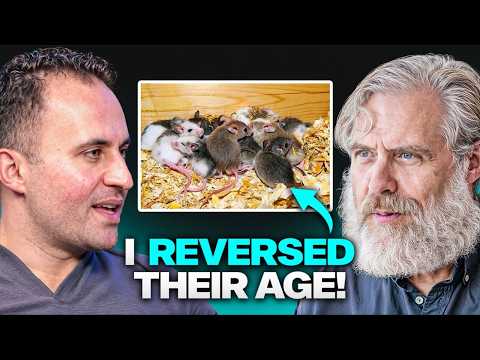
Key experimental evidence cited includes Rejuvenate Bio’s work with triple-gene therapies (FGF21, α-Klotho, sTGFβR2) and Yamanaka factors (OSK), which have demonstrated a doubling of remaining life expectancy in elderly mice. Church contrasts this high-yield “Scientific AI” with Artificial General Intelligence (AGI), which he views as having a poor risk/reward ratio due to high energy costs and existential “bad actor” risks. Ultimately, he envisions a future where age-related diseases are rendered extinct—similar to smallpox—through equitable, scalable gene therapies.
B. Bullet Summary
- LEV Ambiguity: Longevity Escape Velocity may theoretically exist today, but data noise prevents confirmation; “smoothing functions” in actuarial data hide exponential biotech progress.
- Reversal > Prevention: Reversing age-related pathology allows for faster clinical trials (months vs. decades) compared to traditional lifespan studies.
- Polypharmacy Necessity: Aging lacks a single “master switch”; successful intervention requires multiplex gene therapies targeting dozens of pathways simultaneously.
- Delivery is the Bottleneck: The efficacy of gene therapy is limited by the inability to target specific tissues; off-target delivery to the liver causes toxicity.
- AI-Driven Capsid Design: Machine Learning combined with “multiplex libraries” (MLM) allows for the creation of viral vectors that are 100x more brain-specific.
- Yamanaka Factors (OSK): Inducing partial reprogramming in 124-week-old mice (human equivalent ~77 years) extended their remaining lifespan by 109%.
- Triple Gene Therapy: Combinations of FGF21, sTGFβR2, and α-Klotho show promise in treating multiple age-related comorbidities in animal models.
- Xenotransplantation Progress: Genetically modified pig kidneys (eGenesis) have successfully functioned in humans, offering a potential solution to the organ shortage crisis.
- TFome Platform: GC Therapeutics uses a library of human transcription factors to engineer specific cell types (e.g., for cell therapy) 100x faster than standard differentiation.
- Scientific AI vs. AGI: Church argues Scientific AI (protein design) offers immediate, tangible biological breakthroughs, whereas AGI poses high risks with marginal added utility over human intelligence.
- Mendelian Disease Extinction: Universal genetic sequencing and counseling could eliminate severe hereditary diseases, offering a massive ROI for healthcare systems.
- SRSF-1 Factor: Identified as a novel splicing factor that can reprogram cells to a youthful transcriptomic state.
D. Claims & Evidence Table (Adversarial Peer Review)
Role: Longevity Scientist & Peer Reviewer.
Standard: Strict adherence to the hierarchy of evidence. Claims based on mice/worms are flagged as Translational Gaps.
| Claim from Video | Speaker’s Evidence | Scientific Reality (Best Available Data) | Evidence Grade (A-E) | Verdict |
|---|---|---|---|---|
| “Longevity Escape Velocity (LEV) might have already happened” | Theoretical argument regarding statistical noise vs. exponential tech progress | Current actuarial data shows life expectancy plateauing or declining in some regions (CDC/WHO). No empirical evidence supports LEV has been reached in humans. | E (Expert Opinion) | Speculative / Theoretical |
| “Yamanaka Factors (OSK) extend remaining life in old mice” | Cites Rejuvenate Bio study (109% increase in remaining life) | Verified by Macip et al. (2024) & bioRxiv (2023). Treatment in 124-week-old mice extended median remaining lifespan significantly. Major Translational Gap to humans. | D (Mouse only) | Strong Pre-clinical Support |
| “Triple Gene Therapy (FGF21, Klotho, sTGFβR2) treats age-related disease” | Cites Rejuvenate Bio internal/published data | FGF21 & Klotho have robust mouse data for life extension (David et al. 2022; PNAS). Human safety trials for FGF21 exist (for NASH), but not for aging. | D (Mouse only) | Plausible (Animal Data) |
| “AI-designed capsids target brain 100x better than AAV9” | Cites Dyno Therapeutics data | Supported by Stanton et al. (Nature Neuroscience) & Dyno internal data (bCap1/Dyno-yp2). Shows >100x transduction in NHPs vs AAV9. | D (Primate/Mouse) | Strong Support (Pre-clinical) |
| “Pig kidneys can get people off dialysis” | Mentions eGenesis/recent transplants | Verified. The eGenesis trial (Slayman case) showed function for ~2 months before patient death. Rejection remains a hurdle but proof-of-concept exists. | E → B (Single Case Study) | Experimental / Plausible |
| “SRSF-1 acts as an age-reversal factor” | Cites lab data | Verified bioRxiv (2023) paper from Church lab identifying SRSF1 as a splicing factor that restores youthful transcriptomes in mice. | D (In vitro/Mouse) | Emerging / Speculative |
| “Genetic sequencing prevents diseases with 100-fold ROI” | Cites UAE genome project & potential smallpox-style extinction | Cost-effectiveness of whole-genome sequencing (WGS) for general population is debated. Targeted screening is cost-effective (Level A), but universal WGS ROI is not yet Level A proven. | C (Modeling) | Debated / Context-Dependent |
E. Actionable Insights (Pragmatic & Prioritized)
Note: Dr. Church’s insights primarily involve advanced biotechnologies currently in clinical or pre-clinical development. There are no “biohacks” here, only medical pathways to watch.
Top Tier (High Confidence - Clinical Availability)
- Genetic Screening (The “UAE Model”):
- Action: Obtain Whole Genome Sequencing (WGS) combined with genetic counseling.
- Why: To identify Mendelian risks (carrier status) and actionable pharmacogenomic variants. This is the only intervention Church cites as having an immediate “100-fold” return on investment for health preservation.
Experimental (Watch List & Clinical Trials)
- Monitor “Polypharmacy” Gene Therapies:
- Target: Watch for Phase I human trials from Rejuvenate Bio specifically targeting FGF21 or sTGFβR2 for specific pathologies (e.g., heart failure, kidney disease) as a proxy for aging.
- Xenotransplantation Awareness:
- Target: For patients with end-stage renal disease (ESRD), monitor eGenesis clinical trials for porcine kidney transplants. This is a rapidly moving field that may offer alternatives to dialysis sooner than expected.
Deep Science (Investment/Research Focus)
- Scientific AI > Generative AI:
- Insight: Church suggests the highest value leverage is in AI models trained on physics/biology (protein design) rather than language (LLMs). Follow developments in Dyno Therapeutics (capsid design) and GC Therapeutics (cell programming).
- Focus on “Delivery” Technologies:
- Insight: The bottleneck for longevity meds is not the drug, but the delivery. Technologies that solve the “Liver Toxicity Problem” (e.g., liver de-targeting capsids) are the critical path to viable human gene therapy.
H. Technical Deep-Dive: The Delivery Bottleneck & “Multiplexing”
The Problem: Liver Sequestration
Current gene therapies (using AAV vectors) suffer from a massive inefficiency: when injected systemically, >90% of the viral load is sequestered by the liver.
- Consequence: To get enough therapeutic agent to the brain or heart, you must inject massive doses.
- Risk: These high doses cause hepatotoxicity (liver damage) and trigger dangerous immune responses (cytokine storms).
The Solution: Multiplexed Library Screening (MLM)
Dr. Church’s companies (Dyno Therapeutics) use a combination of Generative AI and In Vivo Screening:
- Design: AI generates millions of theoretical viral capsid protein sequences.
- Synthesis: These millions of variants are synthesized into a “Multiplex Library.”
- Selection: The entire library is injected into a test animal (e.g., primate) simultaneously.
- Sequencing: Tissues are harvested, and Next-Gen Sequencing (NGS) identifies which specific barcodes made it to the brain vs. the liver.
- Iteration: This data feeds back into the AI to optimize the next generation.
- Result: Vectors like Dyno-bCap1 that achieve 100-fold higher brain transduction while actively avoiding the liver, effectively widening the therapeutic window.
The “Triple” Therapy Mechanism
Rejuvenate Bio’s approach targets three distinct aging hallmarks simultaneously:
- FGF21 (Fibroblast Growth Factor 21): Regulates metabolism, insulin sensitivity, and extends lifespan in mice.
- α-Klotho: A protein that declines with age; overexpression improves kidney function and cognitive performance.
- sTGFβR2 (Soluble TGFβ Receptor 2): Acts as a “sink” to bind excess TGFβ, reducing fibrosis and chronic inflammation (inflammaging).
- Why Triple? Church argues that fixing one pathway (e.g., just insulin) is insufficient due to compensatory mechanisms. Hitting three non-overlapping pathways provides synergistic protection against multimorbidity.
2 Likes
From a marketing perspective it is a good claim to make, but I don’t think it is a valid claim unless there is one or more human beings that are actually taking interventions that fit the LEV definition.
Personally I think there will be a number of steps resolved. Even if the mitochondria/acetylation step is resolved there will be issues with things like nuclear dna Mutation that need separate solutions.
7 Likes