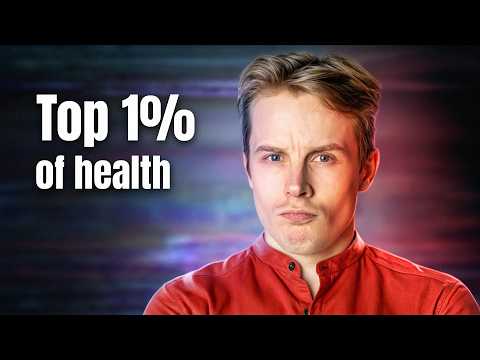
Despite being young, I believe Siim has become one of the best educators in the health and longevity space. This video is spot on and straight to the point.
Despite being young, I believe Siim has become one of the best educators in the health and longevity space. This video is spot on and straight to the point.
I follow him on X and overall good info.
OK, you got me - I give up. Why exactly is this completely random video worth watching for anyone who has not lived under a rock for the past 600 years? As far as I can see, he says absolutely nothing that you can’t hear from any random “health” personality, or your aunt Tilly for that matter. Exercise, weight and cardio, eat well, sleep well, be connected, get blood tests. I mean seriously. Among his points is “take supplements that can help you, but not the ones that don’t” - gee, thanks for that bit of wisdom. Then he throws out a mishmash of supplements he takes completely random as far as I can see, fat generalities (“omega-3” - OK, no breakdown as to what is better EPA, DHA, combination of both, ALA, what?). He has done zero work to arrive at his supplement recommendations or justify them in any way - why do you need any of the particular ones (never specifies any form), or why he takes them in particular, he just namechecks the supps from the same general group of supplements that everyone and their dog pushes all over the internet. Oh, but it’s Siim saying it, I guess? As opposed to Bliim, Griiim or Tiiim. He’s in good health he tells us. All due to his special routine, he tells us. Yeah, right. He’s what, in his early 30’s? Newsflash: most young people are going to be pretty healthy with pretty good bloodwork assuming they’re not doing drugs or anything extreme. Get back to me, Siim, when you hit your late 40’s or 60’s, and then I might think your personal example means anything at all. Right now, my friend, you are living the youth dividend, nothing to brag about that you “earned”. Hey, I’m 25 and cancer free! No heart attacks! Congratulations, here’s a medal, now sit down, adults are talking.
This isn’t even useful for the average minimally health aware person out there, because they’ve heard all these generalities a billion times everywhere anyway. Seriously, is any such person going to sit up and go “weights and cardio, wow, had no idea!”, “good diet NO WAY!?”.
Now for the longevity crowd who follow the science and read the science papers, this is a complete and utter puzzle as to what exactly we’re supposed to get out of this - an utter mystery. Same ole’ nostrums as every advice column ever, but this time with no science backed proof on most of it (supplements, show us the literature! Why these??). Gobsmacked.
I’m not hating on this guy, just honestly puzzled. If I were at a meeting of astronomy fans, I wouldn’t expect someone to burst in and announce: “hey guys, amazing great information - the moon orbits the earth!!!UNO! I can’t give you any math or physics of how that happens, but boy it happens, took me 12 years to find out, you get that amazing fact in one sentence!”. I mean… OK?
This response strikes me as a textbook case of “I’m going to argue for no reason because I’m having a bad day.”
I promise you I put less than one minute of thought into making this thread before you wrote this entire essay of a response.
It’s really not that deep.
I agree. There is nothing new here that I haven’t heard a thousand times before.
Clickbait, as far as I am concerned. People watching, hoping in vain for some new insight.
I didn’t learn anything new from this video specifically either, but for beginners or those who need a reminder, that’s great.
I vehemently disagree with his view that you don’t have to optimize and that “consistency is better than perfection” based on his own example and anecdote. For all we know, that might simply be because of genes and youth, and not solely determined by consistent health habits and lifestyle. If you don’t have the genes or youth, you might need more intensive biohacking like Mike Lustgarten does. That’s at least certainly the case for older people or those with specific diseases or conditions. General advice and consistency can’t be enough eventually.
This response strikes me as a textbook case of “I’m going to argue for no reason because I’m having a bad day.”
Actually, no. I figured that if a fellow frequenter of this board posts something, I respect him/her enough to check it out. When I then don’t understand why it was posted, I ask - which is what I did in my “essay”. If I had no respect for the poster, I wouldn’t bother reading their post in the first place or responding, much less with an “essay”.
Time is the most precious commodity. There are thousands of studies to be read and information to be gathered. I thought that if you started a whole thread about something, it must be important. I didn’t want to miss it.
I promise you I put less than one minute of thought into making this thread before you wrote this entire essay of a response.
That explains it. Misleading title though.
It’s really not that deep.
Too bad.
The fact you took this much time and effort to respond to a video with no new information for you says a lot more about you than it does about me. Not everyone here is as smart and knows everything like you do already.
I’m out.
So my spending time and effort in responding is something bad? What are we here for? Apparently hit and run remarks “I’m out” are what’s good.
Since we are on the subject of health guys/gals to follow or listen to I find this guy ( Hunter Williams) very good especially when it comes for info on peptides. The way he explains things it kind of sticks, but I’m sure everyone has their own favorite or maybe few favorites
Why You’re Stuck: GLP-1 Plateaus (And How to Break Through)
As far as Siim Land guy I think he is pretty good for newbies (on longevity and health front) but for more advanced people (like many on these boards) I am afraid I’d have to agree with @CronosTempi, not much there…
I agree Hunter is smart… and a great… trusted resource. Breaks things down nicely for the layperson…without being condescending.
Does anyone want me to run it through ChatGPT for a transcript/summary etc?
As someone asks for it (by liking my question) here it is
(punctuation, capitalization and line-breaks cleaned; wording unchanged)
I’ve been interested in health for over twelve years, since high school. Now I can confidently say I’m in the top 1 % of health. I have excellent fitness (high muscle strength and VO₂), excellent body composition (low body-fat and very low visceral fat), and perfect blood-work—everything in the optimal ranges linked to the lowest mortality risk and greatest longevity. My sleep is perfect and I have abundant energy all day.
In this video I’m going to break down the routine that helped me reach that “top 1 %” status and the most important lessons I learned.
My routine (after 12 years of tweaking)
- Resistance-training – 3-4 sessions a week, ~45 min each, focused on progressive overload (muscle growth is a by-product of getting stronger).
- Cardio – 2-3 sessions a week: Zone 2 for 60 min twice weekly (sometimes a single 90-min session) and one weekly HIIT session (repeated sprints or the Norwegian 4 × 4).
- Sleep – 7-8 h, no alarm, in bed ≈ 10 p.m. every night.
- Diet – Mediterranean-style: seafood, vegetables, fruit, whole grains, meat, dairy, eggs, berries. ~120-130 g protein (1.6 g · kg⁻¹ · d⁻¹), 200-300 g carbs, 70-80 g fat.
- Sauna – 20 min, 4 × week.
- Supplements – collagen, astaxanthin, glycine, TMG, hyaluronic acid, omega-3s, magnesium.
Key lessons
- Consistency beats perfection. Twelve years without more than a week off training has mattered more than a “perfect” program.
- Train both cardio and weights. Strength training boosts muscle, bone and strength; cardio improves heart health, HRV, visceral-fat loss and brain health. Too much intense exercise can back-fire; include moderate work (hiking, cycling, brisk walks, slow jogging).
- Personalize your diet via blood-work. There is no single best diet; adjust carbs and fats to keep glucose and lipids in range. Energy balance matters most—extra body-fat is harmful whatever food it came from.
- Test, adjust, retest. Use bloods, DEXA, etc., only if you’re willing to change behaviour based on results.
- Supplements that “work”. Collagen, astaxanthin, lutein + zeaxanthin, glycine, NAC, magnesium, melatonin, ashwagandha, berberine, omega-3s, taurine, creatine.
- Regular sleep timing matters as much as sleep duration.
- Mental health drives physical health. Quality relationships are the biggest determinant of life satisfaction.
Take-home routine for viewers
- Weights 3× wk, moderate cardio ≥2× wk (40-60 % HRmax).
- Whole-food diet, watch energy balance.
- Test only if willing to act on data.
- Use evidence-backed supplements only.
- Sleep 7-8 h at the same time nightly.
- Start with the simpler “realistic longevity routine” video if this feels overwhelming.
| Section | Main message |
|---|---|
| Routine reveal | Author details a balanced, time-efficient program covering strength, Zone 2, HIIT, Mediterranean diet, sauna and minimal supplements. |
| Big ideas | Consistency trumps perfection; combine cardio + weights; personalize diet via biomarkers; energy balance first; sleep and mental health are foundational. |
| Viewer takeaway | Adopt a good-enough routine you can sustain; iterate using objective tests; focus on fundamentals before chasing hacks. |
| Issue | Why it matters |
|---|---|
| “Top 1 % of health” claim | It’s anecdotal. Without population comparators (e.g., VO₂max percentiles by age/sex, multicompartment body-comp, multi-marker panels) the percentile boast is marketing, not science. |
| Supplement list | Many cited benefits remain “promising but preliminary”. Astaxanthin, glycine, taurine and hyaluronic-acid ingestion have small or heterogeneous human data sets. Even collagen shows inconsistent results: recent systematic reviews disagree on efficacy (pubmed.ncbi.nlm.nih.gov). Costs may outweigh marginal gains for the average viewer. |
| Sauna generalisation | The Finnish studies linking 4-7 sauna sessions per week with lower mortality are male-only, observational and culturally specific (pmc.ncbi.nlm.nih.gov). Extrapolating them to everyone without qualifiers glosses over confounders (e.g., physical-activity level, social factors). |
| Visceral-fat & body-fat thresholds | Flat cut-offs (≤15 % men, ≤30 % women) ignore age, ethnicity and individual risk profiles. Instead, waist-to-height ratio or visceral-fat indices provide better risk stratification across populations. |
| Carbs, fats and “energy balance first” | While true in weight management, health outcomes also depend on food quality, satiety and glycaemic response. “A calorie is a calorie” oversimplifies diet-behaviour dynamics. |
| Testing cadence | The video encourages frequent, potentially expensive labs but undersells working with a qualified professional to interpret and act on borderline or unexpected results. |
| Potential survivor bias | The presenter is already lean, male, apparently young-middle-aged, Nordic and fitness-oriented; results may not extrapolate to older, metabolically compromised or female audiences. |
The routine showcased is a solid, evidence-concordant template built on exercise variety, Mediterranean eating, good sleep hygiene and modest heat therapy. Viewers will find practical, sustainable principles—particularly the insistence on consistency and biomarker feedback.
However, the framing sometimes drifts into personal-branding hyperbole (“top 1 %”, broad supplement roster, one-size body-fat targets). Treat the program as a thought-starter, not a universal prescription; verify claims (especially supplement efficacy) against systematic reviews and, where relevant, discuss results with qualified health professionals.
Thanks John.
Loved this last bit from AI.
Potential survivor bias The presenter is already lean, male, apparently young-middle-aged, Nordic and fitness-oriented; results may not extrapolate to older, metabolically compromised or female audiences.
Hahaha 
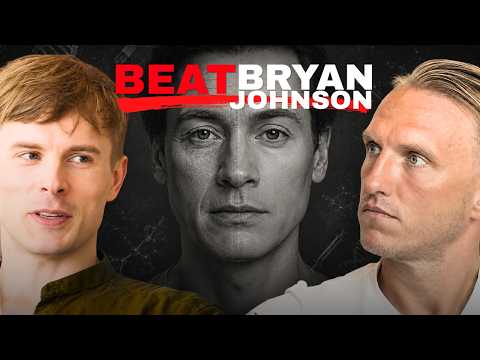
This interview features high-performance conditioning specialist Siim Land detailing his practical, biomarker-driven framework for life extension and metabolic optimization. Land contrasts his approach with the highly complex protocols popularized by figures like Bryan Johnson. Having previously secured a top ranking on the Rejuvenation Olympics leaderboard via epigenetic rate-of-aging metrics, Land has shifted his clinical focus away from costly, generalized biological age clocks. Instead, he prioritizes highly targeted, accessible, and comprehensive standard blood biomarker panels (spanning 22 to 100 metrics) to evaluate and optimize organ-system performance.
The core thesis of Land’s framework is that extreme, restrictive lifestyles are counterproductive. Achieving true longevity requires a pragmatic balance between biomarker optimization and long-term behavioral compliance. He highlights that while optimal lifestyle habits and caloric restriction can push an individual’s biological age into optimal percentiles (such as his own calculated phenotype age delta of ~21 years below chronological age), lifestyle modifications alone cannot extend human lifespan beyond its current biological constraints (~120 years). Reaching lifespans of 150 years or achieving “longevity escape velocity” requires the development of future biotechnologies, such as cellular rejuvenation, advanced genetic editing, and early multi-cancer screening.
Land’s nutritional and training strategies focus on systemic balance over isolated metrics. He rejects chronic, extreme caloric restriction, advocating instead for the intuitive consumption of whole, unprocessed foods following a high-fiber, moderate-protein (1.4 to 1.6 g/kg), and moderate-to-high carbohydrate carbohydrate structure, paired with a calculated restriction of saturated fat.
His physical conditioning framework relies on functional calisthenics and target VO2 max parameters, positioning relative body-weight strength as a highly accurate proxy for healthy body composition. Furthermore, Land debunks common social media fearmongering regarding shifting disease demographics. He explains that while the absolute number of chronic disease cases has risen due to population expansion and increased life expectancy, age-adjusted mortality rates for cardiovascular disease and cancer have declined by 70% to 80% since the 1970s. This underscores the immense efficacy of modern preventive screening and basic lifestyle modifications.
The biomarkers, physical conditioning metrics, and epidemiological mortality data analyzed by Siim Land represent foundational pillars within contemporary preventive cardiology and geroscience.
Methodological Caveat: Although adjusting lifestyle habits to optimize fasting insulin (<5 uIU/mL) and triglycerides (<50 mg/dL) dramatically mitigates your probability of developing preventable metabolic and cardiovascular diseases, individual maximum lifespan remains heavily dictated by genetic architecture and biological constraints. Lifestyle intervention serves to optimize healthspan and push chronological age closer to its natural biological ceiling, not to alter the intrinsic rate of human aging.