Previous studies have shown that people with Parkinson’s disease experience distressing dreams more frequently than the general population, but nightmares had not been considered as a risk indicator for Parkinson’s disease.
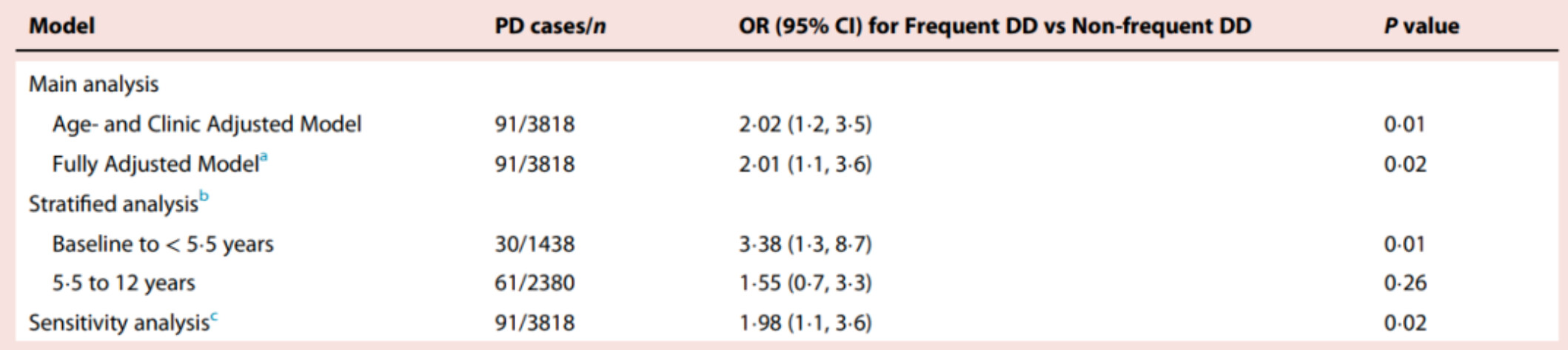
In this study[1], researchers analyzed data from a large cohort study in the United States, which included 3,818 community-dwelling older men over a 12-year period. At the beginning of the study, these participants completed a series of questionnaires, including questions about sleep quality.
At the end of the study, participants who reported having nightmares at least once per week were followed up to analyze whether they were more likely to have been diagnosed with Parkinson’s disease.
Overall, 91 cases of Parkinson’s disease were diagnosed during the follow-up period.
The study found that people who frequently had nightmares were twice as likely to later be diagnosed with Parkinson’s disease as those who did not. However, most diagnoses occurred within the first five years of the study, during which frequent nightmare sufferers were more than three times as likely to develop Parkinson’s disease.
I recently had a nightmare, and since I’m super sensitive to every little signal from my body, I got curious and did a quick search. I found that nightmares are actually linked to an increased risk of Parkinson’s! That made me wonder: why did I have a nightmare in the first place? Then I remembered I had some sugar-free yogurt(1kg!!!) at night. Looking into it further, I saw that nightmare disorder scores are closely related to food allergies and lactose intolerance.
So I just wanted to share this little journey with you all. A quick tip for everyone: if you enjoy yogurt, try to drink it during the day instead!
Nightmare Disorder Index scores were strongly associated with Food Allergy and Lactose Intolerance, the latter being mediated by the severity of gastrointestinal symptoms. Healthy eating, such as less evening eating, predicted higher dream recall, while unhealthy eating—including gastric symptoms, lower reliance on hunger and satiety cues, and evening eating—predicted nightmares and dream negativity. More dreams of the rarebit fiend: food sensitivity and dietary correlates of sleep and dreaming