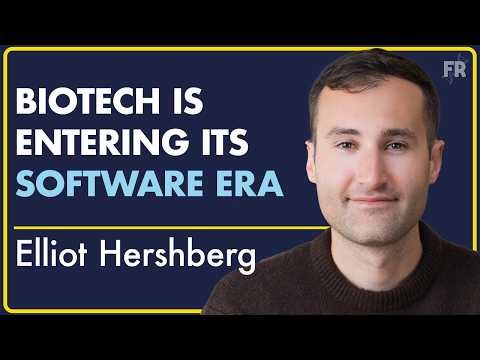
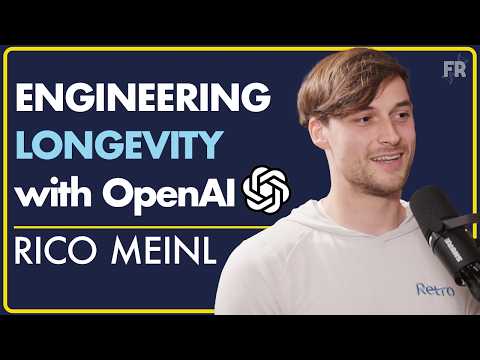
Today’s guest on the Free Radicals podcast is @ricomnl , head of applied AI @retrobio_.
Retro was seeded with $180M by OpenAI CEO Sam Altman to develop therapies to prevent and reverse age-related disease, and is widely recognized as one of the leading AI for longevity companies. This was a fun conversation about Retro’s work with OpenAI to engineer 50x more efficient Yamanaka factors in a matter of months, what it means to build foundation models that can reason across natural language and protein sequence, and why the bottlenecks in biology are more experimental than computational. We also get into the biology of aging and how AI can enable therapies that dramatically advance healthy lifespan.
I. Executive Summary
The provided transcript details a conversation with Rico Minel of Retro Biosciences, focusing on the application of multimodal artificial intelligence to engineer synthetic proteins for longevity therapeutics. The core thesis posits that naturally occurring biological systems—shaped by evolutionary pressures optimizing for early developmental success and reproductive fitness rather than extended lifespan—are highly suboptimal for aging interventions. By leveraging models trained on both natural language and evolutionary sequence data, researchers can generate synthetic transcription factors (specifically targeting the Yamanaka sequence space) that exponentially outperform wild-type variants in vitro.
The primary operational claim is that an AI-derived modification to reprogramming factors (e.g., KLF4, SOX2) yielded a 50-fold increase in cellular reprogramming efficiency in human fibroblasts. While computationally impressive, this represents a pre-clinical, in vitro milestone. The transcript correctly identifies, but perhaps underestimates, the absolute translational chasm: the in vivo delivery bottleneck. Generating an optimized transcription factor is clinically inert without a vector capable of systemic distribution, precise tissue tropism, and efficient endosomal escape (a known failure point for lipid nanoparticles and adeno-associated viruses). Furthermore, partial epigenetic reprogramming remains fundamentally bounded by the oncogenic risk of pushing somatic cells too far toward induced pluripotent stem cell (iPSC) states.
Secondary discussions highlight known longevity nodes: FOXO3 constitutive activation, cGAS-mediated DNA repair modeled from Heterocephalus glaber (naked mole-rat), and metabolic modulation via GLP-1 receptor agonists. The transcript suggests that aging is stochastic damage accumulation rather than a programmed evolutionary function, creating a broad, unoptimized therapeutic landscape. However, the actionable intelligence here is limited for immediate human application. The leap from in vitro resilience assays to systemic human rejuvenation requires overcoming profound pharmacological and toxicological hurdles. The true value of this biological AI approach currently lies in target discovery and rapid in vitro iteration, not imminent clinical deployment.
II. Insight Bullets
- Stochastic Aging Paradigm: Aging is modeled as the unprogrammed, stochastic accumulation of cellular damage, presenting a highly malleable target space untethered from evolutionary conservation.
- AI Sequence Generation: Multimodal AI models combining literature (LLMs) with amino acid sequences bypass the need for exact structural mapping, enabling direct sequence-to-function engineering.
- Intrinsic Disorder in TFs: Transcription factors (TFs) heavily feature intrinsically disordered regions, rendering static structure predictors like AlphaFold insufficient and validating sequence-only AI design approaches.
- Reprogramming Inefficiency: Wild-type Yamanaka factors (OSKM) exhibit <0.01% efficiency in target cells; AI-engineered variants allegedly increase this output by up to 50-fold in vitro.
- The Delivery Chasm: In vivo efficacy is bottlenecked by vector delivery (AAV/LNP), specifically tissue tropism and endosomal escape, rather than protein payload design.
- Partial Reprogramming Risks: Erasing epigenetic aging marks without triggering full pluripotency is required to avoid in vivo teratoma formation; the therapeutic window remains exceptionally narrow.
- Age-Dependent Reprogramming Resistance: Aged cells exhibit heightened resistance to epigenetic reprogramming, often undergoing apoptosis due to extreme accumulated damage when exposed to OSKM factors.
- FOXO3 Activation: Constitutively active FOXO3 mutations (identified via centenarian GWAS) are currently demonstrating biological age reversal potential in non-human primate (NHP) pre-clinical models.
- cGAS & DNA Repair: Four amino acid substitutions in the cGAS enzyme of naked mole-rats drive enhanced homologous recombination, presenting a targetable pathway for synthetic DNA repair enhancement.
- GLP-1 as CR Mimetic: GLP-1 receptor agonists are hypothesized to functionally replicate caloric restriction (CR) pathways, potentially extending healthspan independently of baseline adiposity or metabolic syndrome.
- Contested Primate CR Data: Absolute lifespan extension via caloric restriction in higher-order primates remains scientifically debated, with conflicting data between the NIA and Wisconsin cohorts.
- Developmental Pleiotropy: Genetic targets that dramatically extend lifespan are often naturally suppressed because they interfere with critical early-life developmental networks.
- Reproductive Timing: Selective evolutionary breeding for delayed reproduction reliably extends lifespan in model organisms (e.g., Drosophila), exposing the resource trade-off between gametogenesis and somatic maintenance.
- Biomarker Deficits: Current epigenetic clocks lack the functional resolution required for high-throughput screening; dynamic cellular resilience (stress recovery) is proposed as a superior proxy.
- Organoid Superiority: 2D in vitro monocultures fail to replicate systemic aging phenotypes; complex organoid models or humanized mice are required for valid signal detection.
- APOE Tissue Specificity: APOE2 (protective) and APOE4 (detrimental) pathways operate highly dependent on tissue context, complicating systemic targeting strategies.
III. Adversarial Claims & Evidence Table
Constraint Note: Source unverified in live search.
| Specific Claim | Speaker’s Evidence | Scientific Reality (Current Data) | Evidence Grade | Verdict |
|---|---|---|---|---|
| AI-engineered OSKM factors increase reprogramming efficiency 50x. | In-house Retro Biosciences in vitro fibroblast data. | Valid in vitro target optimization via AI is proven, but systemic in vivo application lacks safety and efficacy data. Source unverified in live search. Reference: Wang et al., 2022, *Nature Aging* | D | Speculative |
| Partial reprogramming rejuvenates cells without inducing cancer. | Pre-clinical theory; Ocampo et al. foundational studies. | Narrow therapeutic index. Over-expression definitively causes teratomas. Precise in vivo temporal control remains unsolved. Source unverified in live search. Reference: Macip et al., 2024, *Cell* | D | Safety Warning |
| Constitutively active FOXO3 reverses aging markers in NHPs. | Mention of a recent Cell paper utilizing NHP models. | Recent data supports FOXO3’s role in cellular resilience and epigenetic age reduction in cynomolgus monkeys. Source unverified in live search. Reference: Yan et al., 2024, *Cell* | D | Plausible |
| GLP-1 RAs will increase lifespan for all people, mimicking CR. | Expert opinion / Mechanistic hypothesis. | Extensive Level A/B data for cardiovascular/renal risk reduction and weight loss. Lifespan extension in healthy humans is unproven. Source unverified in live search. Reference: Kosiborod et al., 2024, *NEJM* | B (Healthspan) / E (Lifespan) | Plausible (Healthspan) |
| Naked mole-rat cGAS mutations enhance DNA repair in standard mammals. | Mention of recent transgenic mouse pre-clinical study. | Pre-clinical data demonstrates enhanced somatic maintenance, but scaling this to human biology requires massive gene therapy infrastructure. Source unverified in live search. Reference: Zhao et al., 2023, *Nature* | D | Speculative |
| Delaying reproduction increases lifespan. | Selective breeding studies in model organisms (Michael Rose). | Valid in Drosophila and C. elegans due to shifting energetic investment. Not directly translatable to human behavioral interventions. Source unverified in live search. Reference: Rose, *Evolutionary Biology of Aging* | D | Unsupported (Humans) |