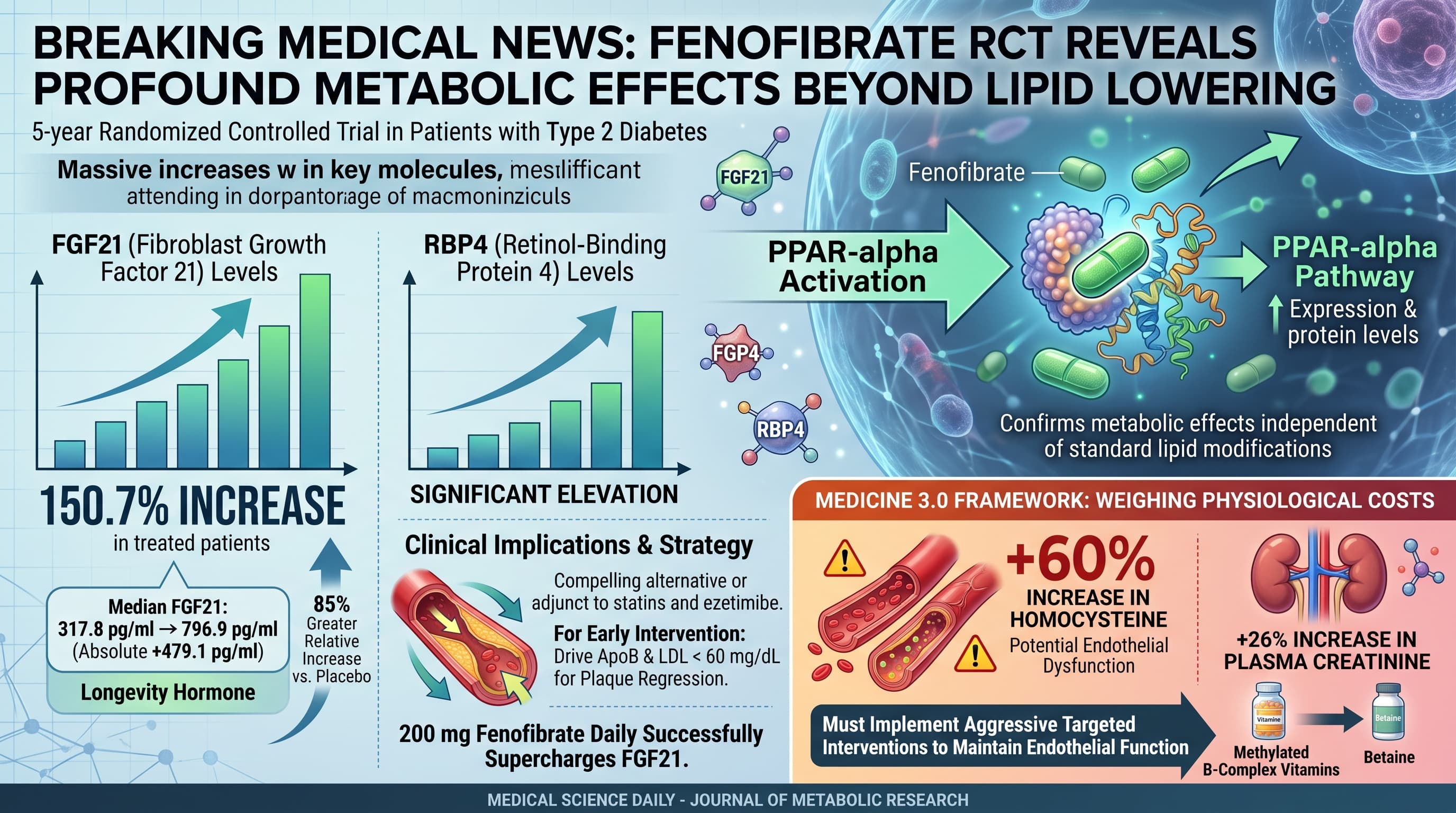
In mouse studies, FGF21 has been shown to increase lifespans by 30% to 40%. Now, a randomized controlled trial investigating the lipid lowering drug fenofibrate reveals that five years of continuous therapy significantly elevates circulating levels of Fibroblast Growth Factor 21 (FGF21) and Retinol-Binding Protein 4 (RBP4) in patients with type 2 diabetes. The data demonstrate a massive 150.7 percent increase in FGF21 among treated patients. This confirms that fenofibrate exerts profound metabolic effects through the PPAR-alpha pathway independent of standard lipid modifications.
Pharmaceutical interventions that reliably elevate longevity associated hormones in humans over long time horizons are rare. Researchers investigating the secondary effects of fenofibrate have published data demonstrating that the drug acts as a powerful pharmacological lever to sustain high levels of Fibroblast Growth Factor 21 (FGF21) in the human bloodstream. FGF21 is highly regarded in longevity research for its role in regulating metabolic health and extending lifespan in animal models.
The research team analyzed serum samples from 216 patients enrolled in the Fenofibrate Intervention and Event Lowering in Diabetes (FIELD) study. Patients received either 200 milligrams of co-micronized fenofibrate daily or a placebo over a five year period. The primary objective was to determine if fenofibrate altered three specific biomarkers linked to cardiovascular risk and metabolic aging: adipocyte-fatty acid-binding protein (A-FABP), FGF21, and RBP4.
The results establish fenofibrate as a specific activator of the PPAR-alpha receptor with highly durable downstream effects. Treated patients experienced a staggering 150.7 percent increase in circulating FGF21 levels over five years. The placebo group saw only a 35.5 percent increase due to natural disease progression. The drug also elevated RBP4 levels by 18.3 percent compared to a 7.8 percent increase in the placebo group. Fenofibrate had no significant effect on A-FABP.
These hormonal shifts occurred alongside known cardiovascular benefits. Fenofibrate drove low-density lipoprotein (LDL) and apolipoprotein B (ApoB) down by 23.3 percent and 19.8 percent respectively. However, the researchers noted that the FGF21 increase was independent of the drug’s effect on lipids, glycemic control, or renal function markers. This finding isolates the PPAR-alpha signaling pathway as a primary mechanism for systemic FGF21 upregulation in humans.
Actionable Insights
For individuals actively utilizing early intervention protocols to drive ApoB and LDL below 60 mg/dL for coronary plaque regression, fenofibrate presents a compelling alternative or adjunct to statins and ezetimibe. The practical takeaway is that standard clinical doses of fenofibrate (200 mg daily) successfully supercharge FGF21.
The effect size of this intervention is massive. Fenofibrate elevated median FGF21 levels from a baseline of 317.8 pg/ml to 796.9 pg/ml. This represents an absolute increase of 479.1 pg/ml. Compared to the placebo group, fenofibrate yielded an 85 percent greater relative increase in this longevity hormone over the five year study period.
However, evaluated through a strict Medicine 3.0 framework, these benefits must be weighed against significant physiological costs. Fenofibrate treatment drove a 60 percent increase in homocysteine and a 26 percent increase in plasma creatinine. If deploying fenofibrate off-label for geroprotection, individuals must implement aggressive targeted interventions (such as methylated B-complex vitamins or betaine) to suppress homocysteine and maintain optimal endothelial function.
Context/Source
- Paywalled Paper: Long-Term Fenofibrate Therapy Increases Fibroblast Growth Factor 21 and Retinol-Binding Protein 4 in Subjects with Type 2 Diabetes.
- Institutions: University of Sydney, University of Melbourne, University of Hong Kong, Royal Prince Alfred Hospital.
- Country: Australia and China.
- Journal Name: The Journal of Clinical Endocrinology & Metabolism.
- Impact Evaluation: The impact score of this journal is 5.8, evaluated against a typical high-end range of 0 to 60+ for top general science, therefore this is a Medium impact journal.