I am a bit confused about this also. Isn’t zone 1 and zone 2 pretty close? I definitely could not keep my heart rate at zone 1 when running but easier to achieve when swimming or biking. And wouldn’t the 80/20 ratio be most related to athletes above a certain age? I can’t conceive of most younger athletes having the patience for zone 1. The following site pretty much blends zone 1 and 2 within the same training zone. see Beginner Triathlete
Yes, have been following Allan for almost a year. Agree he is great.
(Was just not agreeing that the amount of zone 1 he was suggesting for the 80 year old is consistent with what I feel he has been suggesting more in general - where it feels like zone 2 would play a larger role).
The following is from the “Perspective” segment of the paper you give.
It is possible to be an 80-year-old man and have a VO2max of a 35-year-old with a low cardiovascular risk profile. The volume of physical activity for an active and highly fit 80-year-old man is high, seven and two times higher than recommendations for moderate and vigorous physical activity. The reduction in VO2max with aging is normal in the 80-year-old man, indicating the importance of having a high maximal oxygen uptake at a young age.
Note how they surmise that an 80 man year old man needs to be training hard his whole life. Contrast this with the recent article on the 93 year old rower. He started training later in life (73 I believe). Also, the volume of activity at 80 is very high compared to younger men. Again, contrast this with the 93 year old rower. His training is much less vigorous in comparison.
There is a lot to consider here. But my guess is that there are few younger people living now that could have the same results as the man in this report. The cultural and physical lifestyle that existed for this person has disappeared.
But if anyone were to reverse engineer this person’s experience that allows running at such a high level on a treadmill - I would love to see it. But I find most younger folks on this forum pretty clueless about how they are going maintain an active life into their older years. I would add Peter Attia to that clueless category as an example. The majority of younger active folks are going to beat themselves up with some activity and wonder how they got to be so decrepit despite thinking they did all the right things.
What’s the plan younger folk? 
1 Like
"Peter Attia posted a new podcast featuring peak performance with Olav Aleksander Bu. Haven’t viewed it yet but looks very interesting and features VO2 max.
Olav Aleksander Bu is an internationally renowned sports scientist acclaimed for his coaching prowess with elite athletes spanning a diverse range of sports disciplines. In this episode, Olav delves deep into the intricacies of VO2 max and its profound impact on performance. They explore the relationship between VO2 max and ATP production, energy efficiency, and power, as well as the impact of low-intensity training on VO2 max. The conversation extends to Olav’s experiences pushing the boundaries with high-performance athletes and the data driven interventions he uses to improve performance. They also dissect the role of lactate threshold, discuss other important metrics to track, and explore the exciting possibility of utilizing a portable VO2 testing device as a practical alternative to traditional lab-based assessments.
3 Likes
I will definitely listen to this eventually but I’m not sure I’ll learn much that I can use on myself. I am not interested in maximizing my athletic performance. I am only interested in maintaining a good level of fitness for my enjoyment of life and to get exercise/ activity that supports my health now and into the future.
I often wonder if Attia has lost the longevity thread and is just rationalizing his natural tendency for extreme everything. Not just swimming but swimming to Catalina island multiple times. Not just hiking but hiking with 50 lbs of useless stuff in a backpack.
Let me know if I am missing something.
8 Likes
Peak oxygen uptake after the 80s as a survival predictor
Findings
The mortality rate was nearly three times higher in individuals with VO2peak below 80% of the predicted values. The data emphasize the prognostic value of VO2peak in older adults, comparable to its significance in younger individuals.
Message
Oxygen uptake below 80% of age-specific reference values serves as a predictor of mortality in octogenarians.
3 Likes
He might be using his podcast with all the extra focus on exercise to help launch his new company, 10^2. Hopefully he’ll start getting back to more of the more medical aspects of longevity soon?

2 Likes
The goal at 10 Squared, Dr. Peter Attia’s new performance center in Austin, is to reimagine how we think about exercise. MH sent a lab rat to test it out.
The 10 Squared squad are like fitness precogs in Minority Report, connecting clues in the present to prevent a bad event before it happens in the future. They will triangulate the results from the 30 drills I do for stability, strength, and cardio; factor in my body composition from a DEXA scan; then prescribe a fitness plan to power me for the next five decades. That’s not a typo; this program is not 7-Minute Abs! or Great Shape in 4 Weeks! It’s a training blueprint for your whole life.
3 Likes
@Neo I guess it’s the thing to do. Something about a fool and his money comes to mind. But if money is no object then it’s just a matter of investing your time well. Even then I don’t think this is the thing to do.
3 Likes
Rhonda Patrick suggests that more HIIT is important:
CHAPTERS:
(00:52) Why “below normal” cardio may be a great starting point (for adding years to your life)
(02:47) The simple math of 45 days of life extension (per 1 mL/kg/min VO2max)
(02:54) Is there an upper limit to the longevity benefits of VO2 max?
(03:52) Why poor cardiovascular fitness is nearly as bad as a chronic disease
(04:32) Why zone 2 training may not improve VO2 max (for some people)
(05:47) Protocols for improving VO2 max quickly
(06:50) How to estimate VO2 max in 12 minutes (without a lab)
(07:47) What it takes to reverse 20 years of heart aging
(10:21) Blood pressure benefits of vigorous exercise
(10:51) The role of blood pressure in dementia
(11:09) The BDNF brain benefits of high-intensity exercise
(11:46) The signaling role of lactate production by muscle
(13:54) How training effortfully improves focus & attention
(14:45) Protocols for maximizing BDNF from training (HR training targets and duration)
(15:04) Anti-cancer effects of vigorous exercise
(15:52) Why shear stress kills circulating tumor cells — an experiment in three cell lines
(16:14) Why reducing circulating tumor cells likely greatly increases survival
(16:41) What if you exercise in short bursts all day long?
(17:47) Why “exercise snacks” are a crucial pre- and post-mealtime activity
(18:30) The best ways to improve mitochondrial biogenesis — and metabolism
(19:28) The mortality benefits of breaking up sedentary time
(23:58) Why the protein RDA is too low (and the flawed experiments that lead to that)
(25:00) How much protein is needed for muscle?
(26:49) Does omega-3 reduce muscle atrophy?
(28:22) Why we should lift for aging and to prevent the 8% per decade decline of muscle
(29:45) Is lifting heavy necessary for gaining muscle?
(30:47) What the sauna has in common with exercise
(32:27) Does the sauna enhance the benefits of exercise?
(34:26) How heat shock proteins prevent plaque aggregation & slow muscle atrophy
(36:05) Can sauna after resistance training boost hypertrophy?
(36:48) Sauna parameters (temperature, duration, frequency, & humidity)
(37:42) Comparing traditional saunas to infrared
(38:42) Are hot baths a valid sauna alternative?
(39:54) Audience Q&A
(40:02) Is EPA or DHA responsible for omega-3’s effects on disuse atrophy?
(41:36) Are endurance athletes at risk for cardiovascular injury? ’
(42:40) What mechanisms are responsible for sauna’s benefits?
(44:50) Is a sauna temperature above 200 °F too hot?
(47:14) My recommended sauna temperature & duration
4 Likes
Thx will take a look. For those new to this thread, you might to look at his short post
2 Likes
I think Rhonda is deeply tied in with CrossFit, so it’s hard to trust her science and logic when she argues for more HIIT. I personally don’t think the overall body of science agrees that you should do large amounts of HIIT (more than a couple times a week).
HIIT is a tool, a very good one. It can and should be utilized. There is nothing better for emptying all of your glycogen stores quickly, which forces your body to do work to replenish them.
But, doing too much long term will eventually eat up your central nervous system and cause burnout/injury.
Long term health requires us all to focus on several aspects and keep them all healthy. For some reason, some people want to make it a this vs that conversation. It’s just not, there is no shortcuts to your best self. We all need to be moving a lot and for several hours a week if we want to live longer. Most of your movement should be in zone 1/2, conversational pace. Get out in nature, find a walking/jogging community so you can talk while moving, garden.
6 Likes
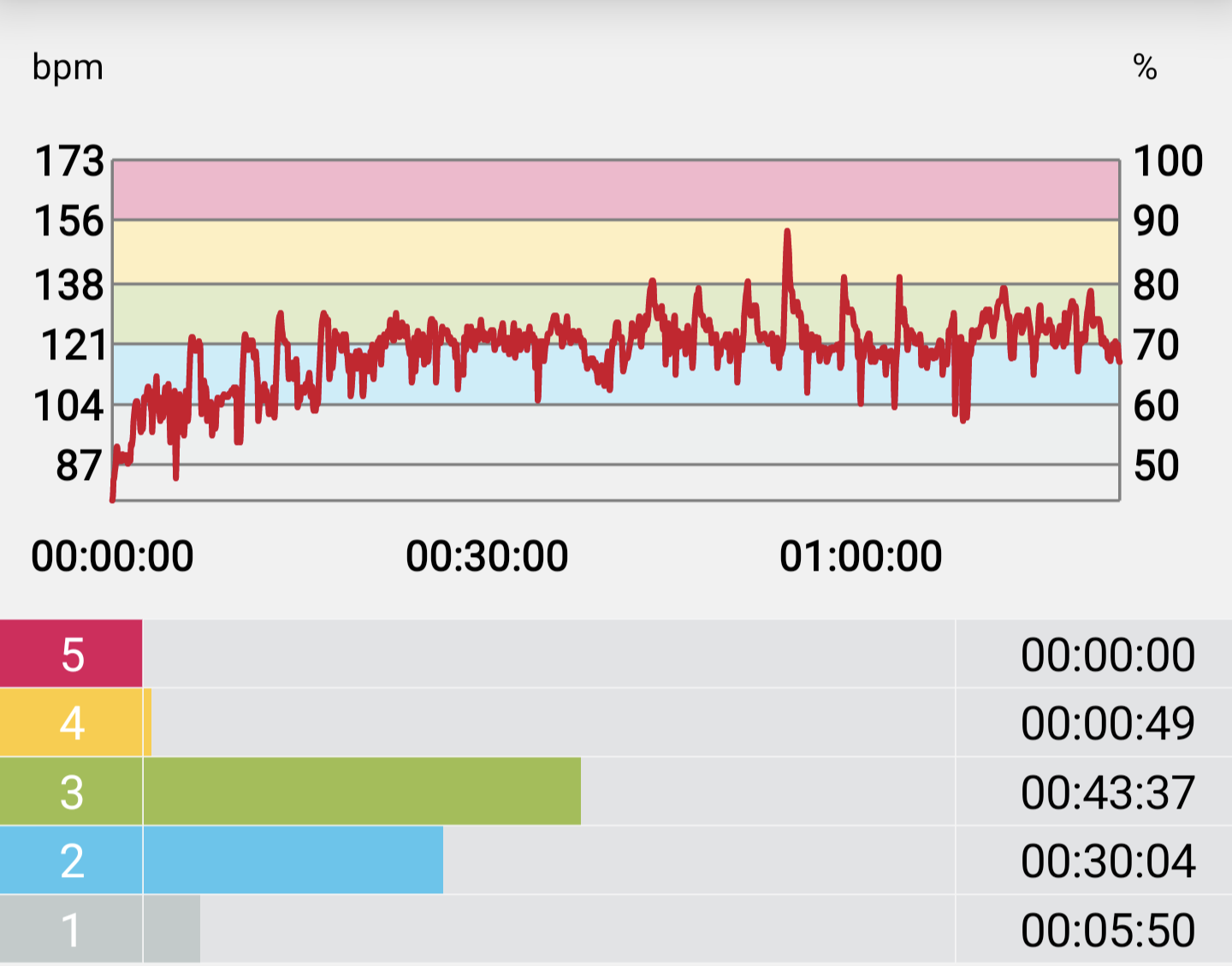
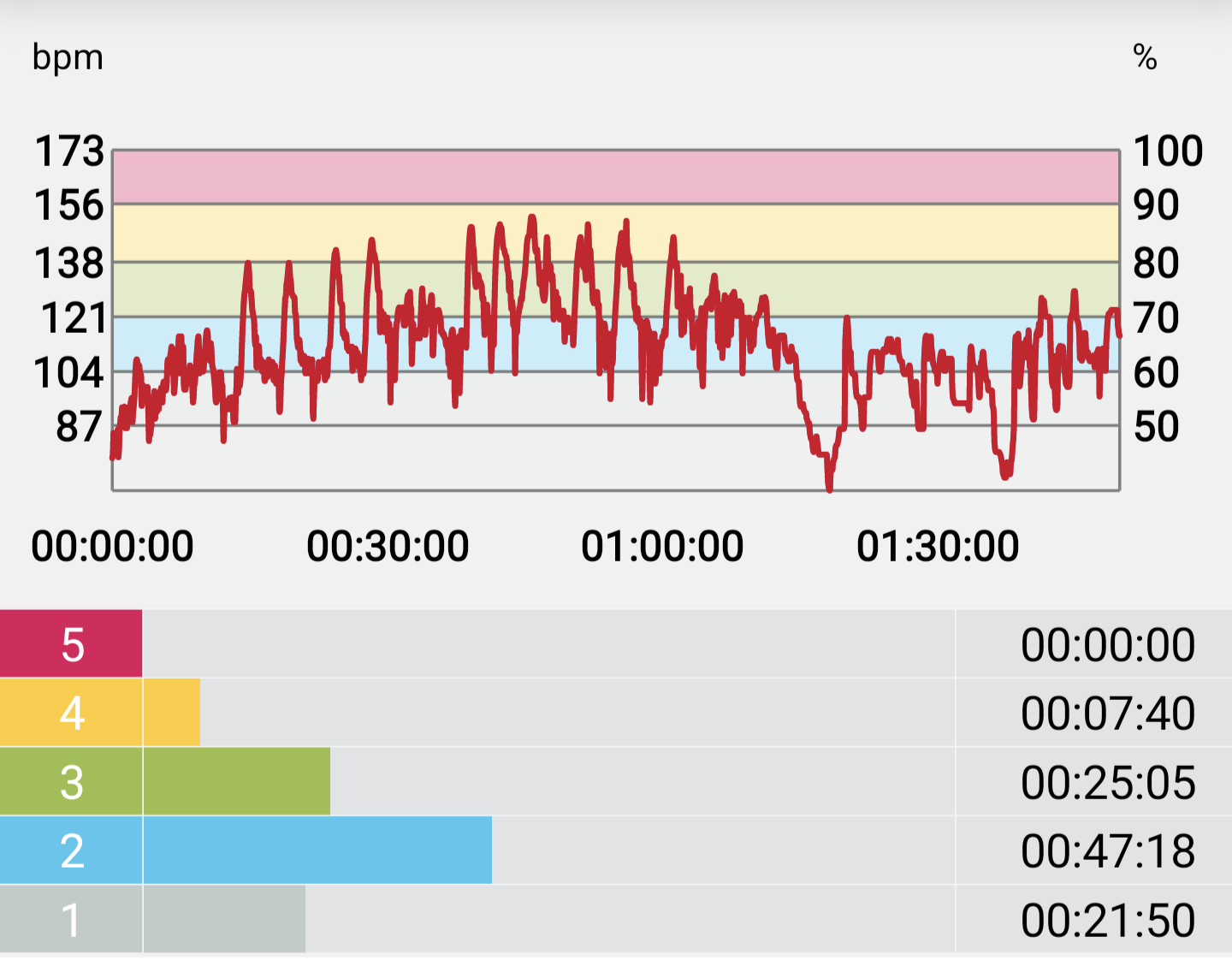
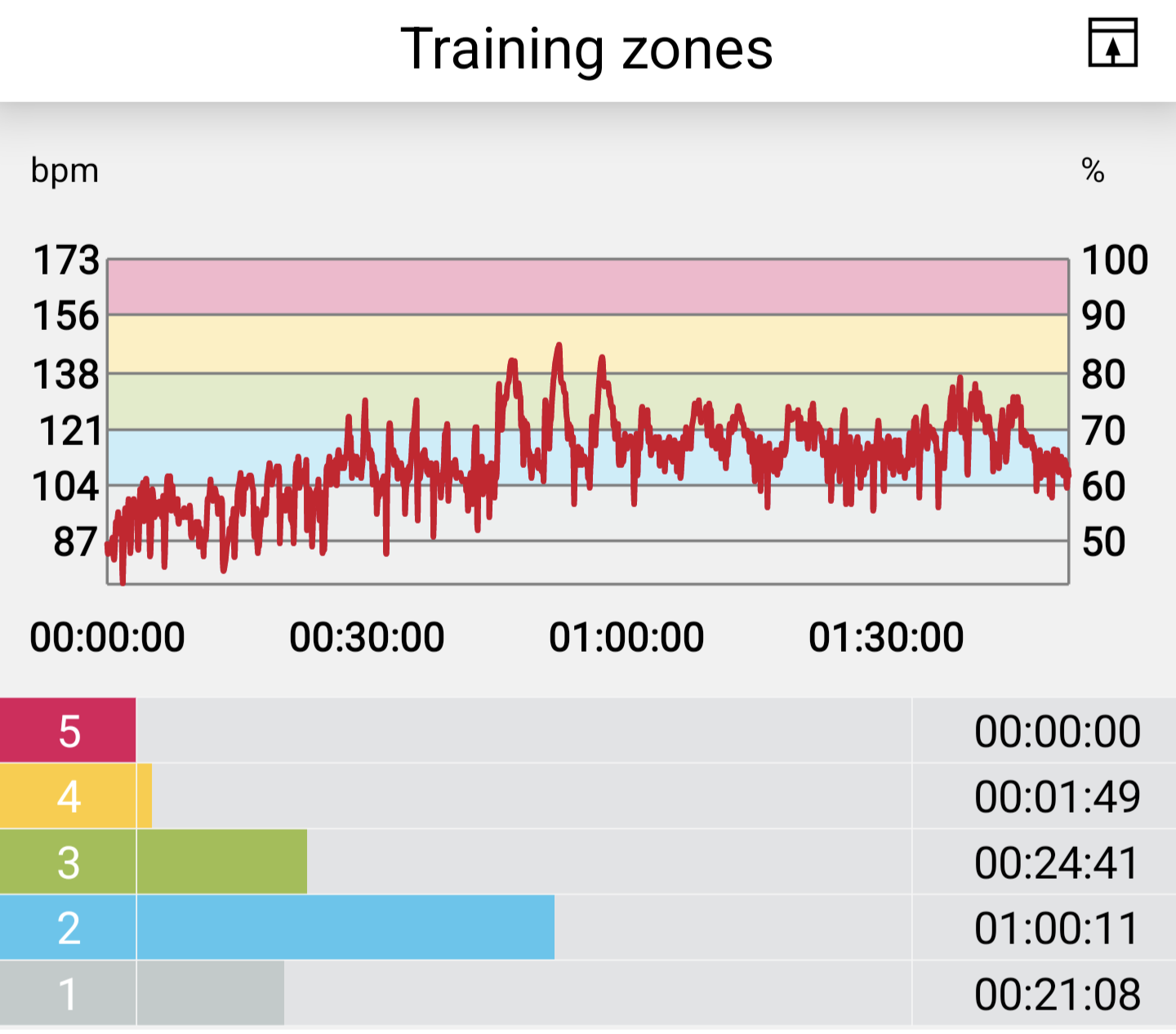
These are some heart rate curves from recent workouts. Ignore the zones as I believe the top of my zone 2 is actually around 133bpm. (Polar calls that Zone 3.)
Without knowing the activity, how would you classify these workouts? Does it seem reasonable to count them as Zone 1/2 cardio workouts?
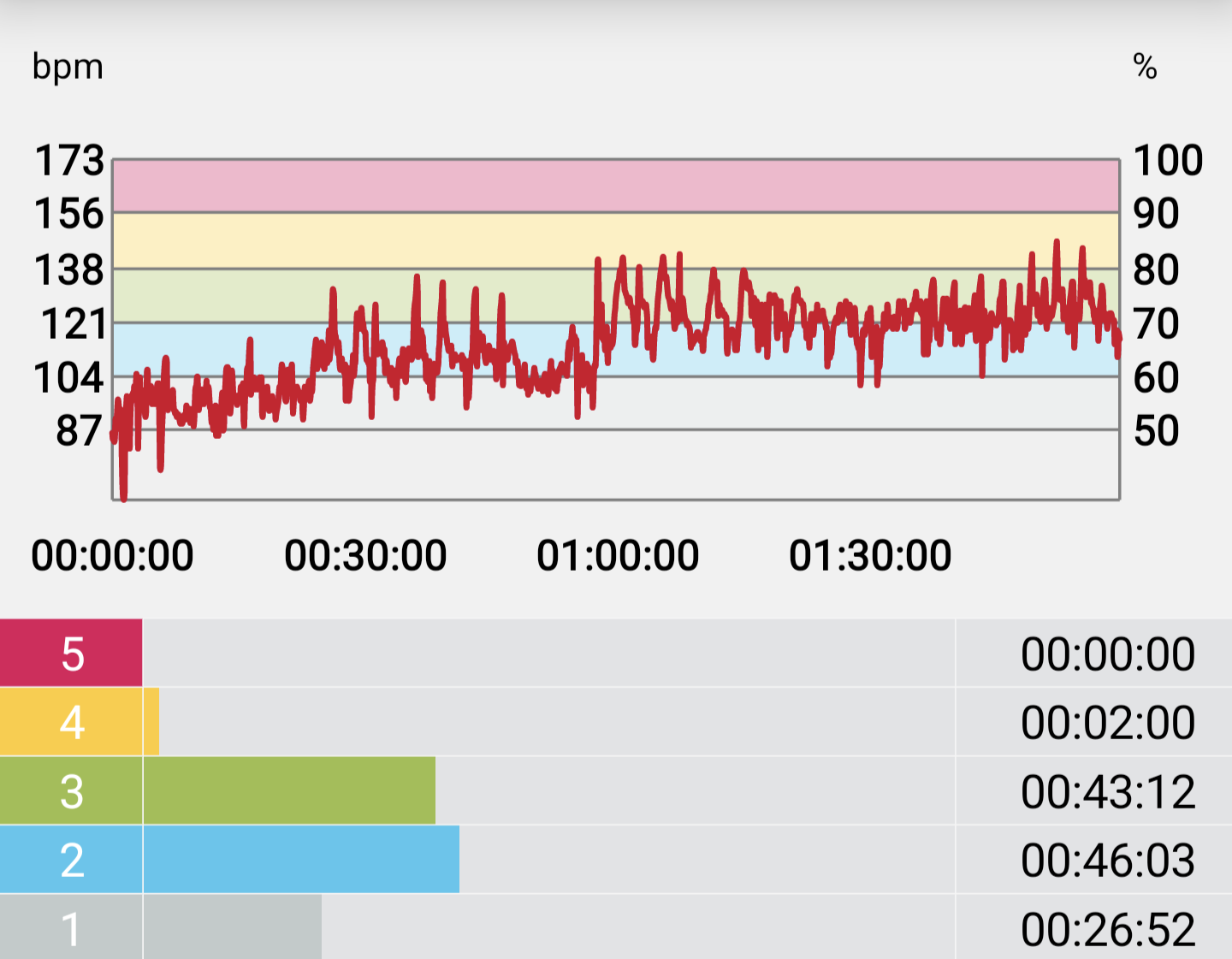
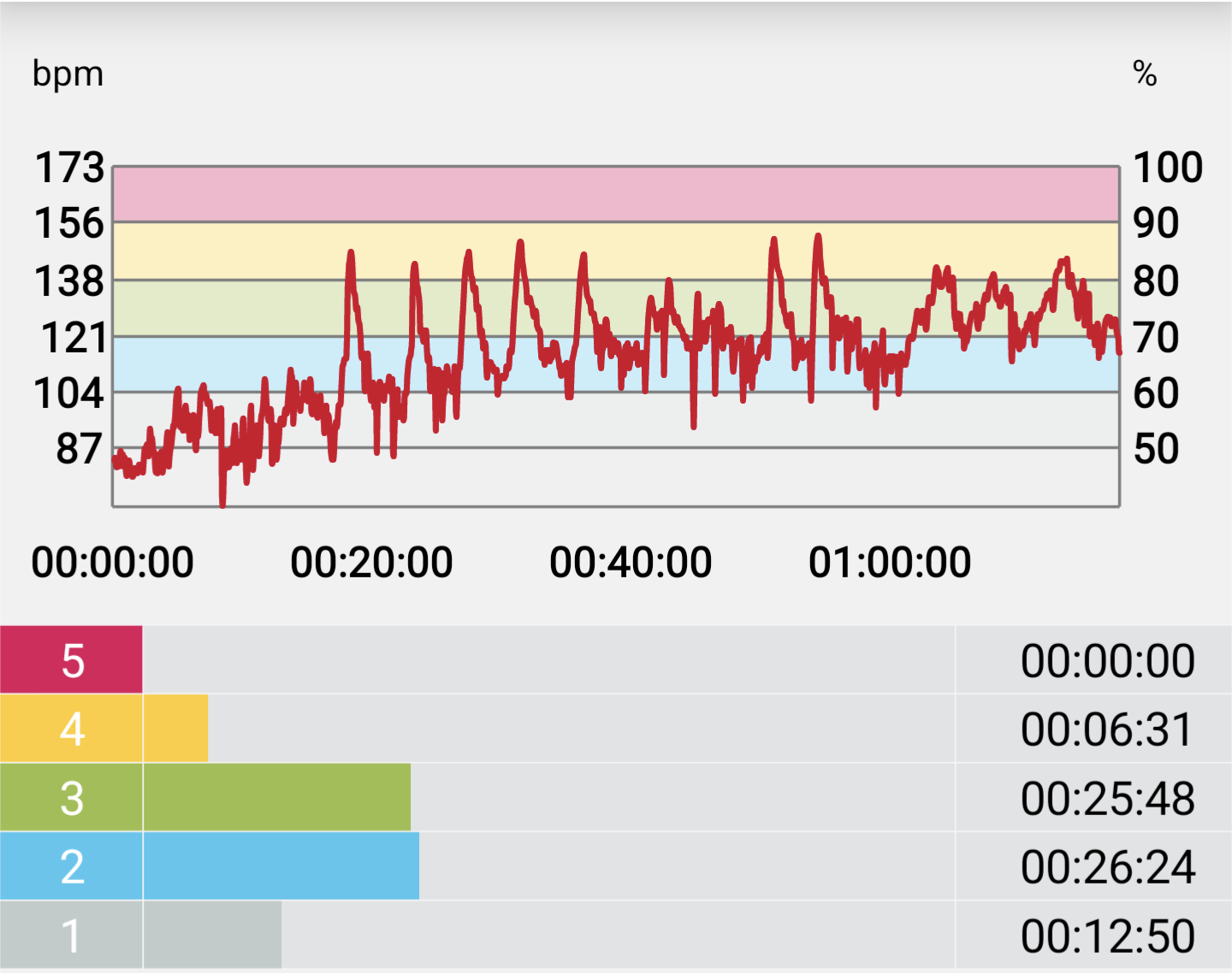
1 Like
I’m not an expert on this nor do I know you but I would not conclude that these workouts are easy zone 1 / 2 workouts. These look like sweetspot workouts to me. Zone 2 is not “top of zone 2”. If these were my workouts, my advice to myself would be go easier on these so that my HR never touches my max zone 2 HR. Then go much harder a little 1-2x/week. One of these sweetspot workouts is fun and good if you can fit it in with sufficient recovery and without hurting sleep. Again, this is what I’d do for myself.
2 Likes
Are some of these resistance training, or something else that is one/off/on/off?
1 Like
Thanks for your feedback. I didn’t disclose the activity type because I didn’t want to bias any responses, but these are actually some recent strength training sessions. It’s typical in conversation to bucket exercise into cardio or resistance training, but when I look at these curves and pay attention to my breathing, I conclude I’m getting some kind of cardio workout.
I think this is only the case when the weights are relatively low 8-20 rep range, the rest periods are short, and I’m doing super sets.
When doing low rep work, my HR is lower but with rapid spikes that take me from 90-150bpm within seconds (not quite that high in this example).
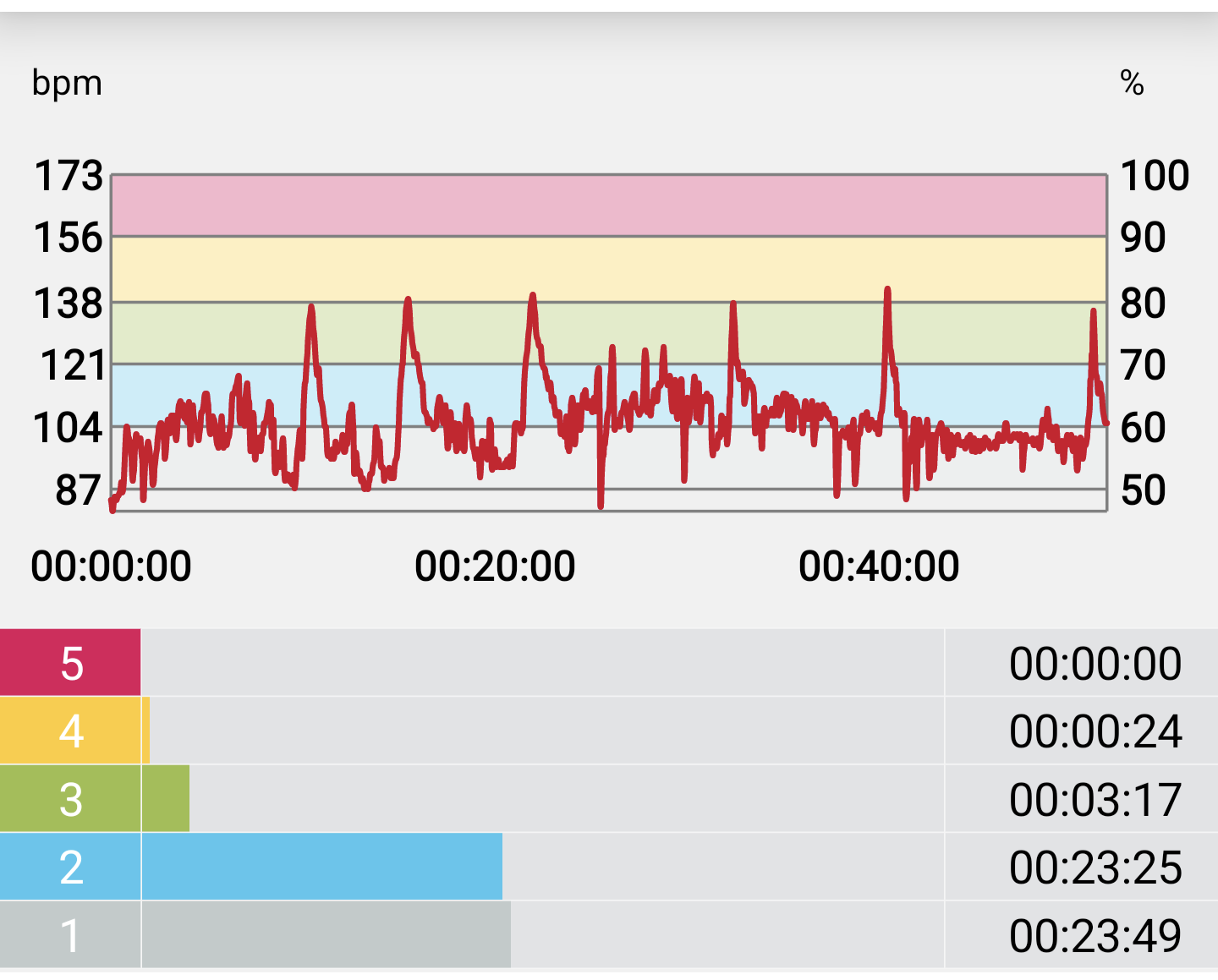
2 Likes
Yes, all resistance training.
You are doing what is defined as circuit resistance training. That is what I do to raise my heart rate for a significant amount of time now that I am old. I can no longer do regular cardio like running or bicycle riding.
Apparently, my body wasn’t built to play tennis on hard courts and run on all surfaces because I could not extend this activity beyond my 50s. I tweaked a knee playing tennis and developed severe pronation in my ankles.
So, now I do circuit training to raise my heart rate for a significant amount of time.
This is also something that raises klotho levels. It doesn’t seem to require strenuous VO2
max exercises.
“Circuit resistance training (RCT) is a full-body workout that involves moving quickly between 8–10 stations that work different muscle groups. Each station has a different exercise, and you’ll typically do 10–25 reps at each station. RCT combines strength training and cardiorespiratory training,”
“Studies applying moderate-intensity aerobic exercise (35-40% VO2max or 40-42% max heart rate) increased klotho levels by 12-55.8%.”
2 Likes
Interesting. I suppose thinking of it as circuit training is a good mental model and maybe a decent proxy when thinking about how to incorporate the sessions into an overall exercise program.
These workouts actually follow a hypertrophy training program that begins with typical compound lifts before transitioning into accessory exercises. The rest periods are moderate @ 2-3 min unless doing supersets. It’s typically 3-6 sets per exercise, a couple exercises per muscle group.
I’m not brave enough to tell the bodybuilders on the steroid forums that they’re doing a form of circuit training, so I’ll stick to calling it “powerbuilding”. 
That what I thought. It’s probably valuable, at the same time I’ve heard leaders in zone 2 explain that it does not constitute a zone 2 session - you are not at an optimal state of mitrocodrial and fat energy metabolism conditioning when going up/down/up/down in sawtooth forms exertion vs. the smooth, constant exertion of normal zone 2 cycling, running, etc.
2 Likes