Gemini Pro AI Video Summary and Analysis
Here is the high-resolution summary and adversarial analysis of the provided transcript.
Executive Summary
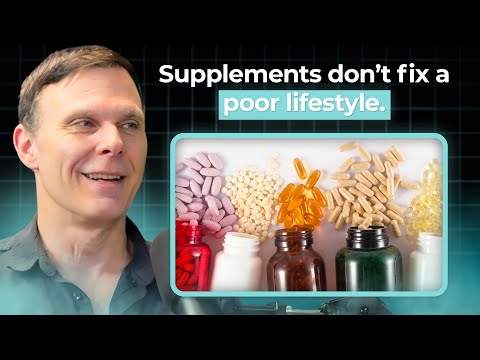
In this end-of-2025 protocol update, longevity scientist Matt Kaeberlein details his personal health strategy, emphasizing a philosophy of “foundations over fluff.” Kaeberlein prioritizes the four pillars of healthspan—Eat, Move, Sleep, Connect—asserting that these provide the vast majority of health benefits compared to the incremental gains of supplements. He adopts a highly skeptical stance toward the supplement industry, citing misalignment of incentives and poor quality control. His personal supplement stack is minimal, focusing only on compounds with specific mechanistic or genetic rationales (e.g., Methylfolate for MTHFR variants, Lithium for dementia prevention).
medically, Kaeberlein is aggressive regarding prevention. He utilizes Testosterone Replacement Therapy (TRT) for quality of life, SGLT2 inhibitors (Jardiance) for glucose regulation, and PCSK9 inhibitors (Repatha) for lipid management after detecting soft plaque. He remains a proponent of cyclical Rapamycin based on robust animal data (Interventions Testing Program), while explicitly rejecting Metformin for metabolically healthy individuals due to null lifespan data in mice and potential interference with exercise adaptations.
Bullet Summary
The Four Pillars (Foundation)
- Alcohol Elimination: Removing alcohol from the home yielded the single largest improvement in sleep quality and overall health; strictly viewed as “empty calories.”
- Dietary Rules: Prioritizes protein (salmon, poultry) and fiber (>40g/day). Utilizes “Keto bread” (Royo) to spike fiber intake without glucose spikes.
- Zone 2 & Resistance: Daily Zone 2 cardio (30 mins) combined with resistance training 3-4x/week. Focuses on compound movements rather than isolation exercises.
- The “Connect” Deficit: Admitting that social connection is his weakest pillar, he actively schedules time to nurture relationships, viewing this as critical for long-term healthspan.
Supplements (The “Incremental” Stack)
- Skepticism First: Most supplements (Ashwagandha, NAD+ boosters, Resveratrol) are rejected due to weak evidence or contamination risks.
- Lithium Orotate (5mg): Added based on epidemiological data linking groundwater lithium to reduced dementia risk and recent mechanistic papers on Alzheimer’s protection.
- Calcium Alpha-Ketoglutarate (Ca-AKG): Takes Rejuvant (disclosed conflict of interest: SAB member). Notes mouse frailty data is strong, though lifespan data is weak.
- Creatine Monohydrate (5g): Considered a “no-brainer” for muscle maintenance, with emerging evidence for cognitive benefits and energetic buffering in the brain.
- Methylfolate: Added specifically to address a confirmed MTHFR genetic variant.
Pharmaceutical Interventions
- Testosterone Strategy: Switched from weekly to daily injections to minimize hormonal peaks/troughs and control hematocrit spikes.
- Lipid Aggression: Initiated Repatha (PCSK9 inhibitor) after a coronary scan revealed early soft plaque, bypassing statins for more potent ApoB reduction.
- Glucose Control: Uses Jardiance (Empagliflozin) 10mg/day. Resulted in fasting glucose dropping from ~100 to the 80s and reduced A1C, despite no subjective feeling of change.
- Rapamycin Protocol: Continues cyclical dosing (8mg/week for 12 weeks, then off). He dismisses recent influencer decisions to stop, citing strengthening animal data.
- Metformin Rejection: Explicitly advises against Metformin for non-diabetics. Cites ITP data showing zero lifespan extension in mice and risks of blunting exercise gains.
Claims & Evidence Table (Adversarial Peer Review)
Role: Longevity Scientist & Peer Reviewer.
Standard: Claims are evaluated against human RCTs (Level A/B) and the Interventions Testing Program (ITP).
| Claim from Video | Speaker’s Evidence | Scientific Reality (Best Available Data) | Evidence Grade | Verdict |
|---|---|---|---|---|
| “Alcohol impairs sleep quality.” | Personal bio-data & anecdotal observation. | Validated by extensive human sleep studies showing alcohol reduces REM sleep and increases fragmentation (Colrain et al.). | A | Strong Support |
| “Ca-AKG reduces frailty/improves healthspan.” | Cites mouse studies & Brian Kennedy’s observations. | ITP confirmed healthspan benefits in mice. Human data is limited to small trials (demethylation claims are controversial). | D (Mouse) / C (Human) | Plausible / Speculative |
| “Lithium Orotate (low dose) prevents dementia.” | Cites epidemiological water studies & Nature paper (Yankner). | Correlation in populations is strong (Kessing et al.). No RCTs exist for prevention using micro-doses. | C (Observational) | Speculative (Safety High) |
| “Creatine benefits brain/cognition.” | Plausible mechanism (energetic buffer). | Cochrane reviews show muscle benefit. Cognitive benefit is mixed but positive in stressed states (sleep deprivation/elderly). | B (Emerging) | Plausible |
| “SGLT2 inhibitors (Jardiance) extend lifespan.” | Cites mouse ITP data (Canagliflozin). | ITP confirmed lifespan increase in mice. Human data (EMPA-REG) shows reduced CV death in diabetics/heart failure. | D (Healthy Humans) / A (Disease) | Translational Gap (Likely beneficial) |
| “Metformin does not extend lifespan in healthy subjects.” | Cites lack of ITP mouse results. | Correct. ITP found null results for Metformin in mice. Human “diabetics live longer” data (Bannister) likely flawed/debunked. | A (Negative Data) | Strong Support (for stopping) |
| “Rapamycin extends lifespan.” | Cites animal data (consistent). | ITP Gold Standard: reproducible life extension in mice. No human lifespan RCT. Safety profile well-known but risks exist. | D (Human Efficacy) | Experimental / Strongest Animal Data |
| “Testosterone spikes cause hematocrit increase.” | Clinical observation. | TRT-induced polycythemia is a known side effect, dose-dependent. Frequency modification is a common management strategy. | B | Standard of Care |
| “PCSK9 inhibitors reduce soft plaque.” | Personal scan logic. | GLAGOV trial showed regression of coronary atherosclerosis with Evoelocumab (Repatha). | A (RCT) | Strong Support |
Actionable Insights (Pragmatic & Prioritized)
Based on the transcript and the “Scientific Reality” assessment, here is the prioritized protocol.
Top Tier (High Confidence / Level A-B Evidence)
- Zero Alcohol Strategy: If sleep or recovery is a priority, eliminate alcohol. It is the most immediate lever for sleep quality improvement.
- Target ApoB Aggressively: If soft plaque is present, lifestyle is insufficient. Pharmacological intervention (PCSK9 inhibitors or Statins) is required to arrest progression.
- Resistance Training + Creatine: Combine 3-4x weekly compound lifting with 5g Creatine Monohydrate daily. This preserves lean mass and likely supports cognitive resilience.
- Fiber Saturation: Aim for >40g fiber daily. If diet prevents this, utilize psyllium husk or high-fiber substitutes (like low-carb breads) to support gut health and lipid clearance.
Experimental (High Upside / Safety Managed)
- SGLT2 Inhibition: For those with stubbornly high fasting glucose (>100 mg/dL) despite lifestyle optimization, SGLT2 inhibitors (like Empagliflozin) offer a mechanism to offload glucose and protect kidneys/heart, though longevity benefits in healthy humans are extrapolated from mice.
- Lithium Orotate (Micro-dose): Taking 1-5mg of Lithium Orotate is a low-risk, potential high-reward intervention for long-term neuroprotection, mimicking natural groundwater levels in “Blue Zones.”
Protocols to AVOID
- Metformin for Longevity: Do not take Metformin if you are metabolically healthy and active. It offers no proven lifespan benefit in healthy models and may degrade your exercise results.
- “Kitchen Sink” Supplementation: Stop taking expensive stacks (Resveratrol, NAD+ boosters) unless you have a specific deficiency or biomarker you are treating. The “connect” pillar yields higher ROI than these compounds.
Technical Deep-Dive: SGLT2 Inhibitors vs. Metformin
The transcript highlights a crucial pivot in longevity pharmacology: the displacement of Metformin by SGLT2 inhibitors (Sodium-glucose Cotransporter-2 inhibitors).
- Mechanism of Action: SGLT2 inhibitors (e.g., Empagliflozin, Canagliflozin) block the reabsorption of glucose in the proximal tubule of the kidney, causing glycosuria (excretion of glucose in urine).
- The ITP Divergence: The Interventions Testing Program (ITP), the gold standard for testing longevity drugs in genetically heterogeneous mice, found that Canagliflozin extended median lifespan significantly (particularly in males). In stark contrast, Metformin has repeatedly failed to show significant lifespan extension in the same rigorous ITP protocols.
- Physiological Impact: While Metformin works by inhibiting Complex I of the electron transport chain (increasing AMP:ATP ratio and activating AMPK), this mechanism can interfere with the mitochondrial biogenesis required for exercise adaptation. SGLT2 inhibitors lower glucose and insulin load without inhibiting mitochondrial respiration, making them theoretically superior for active individuals seeking caloric restriction mimetics without the metabolic penalty of Metformin.