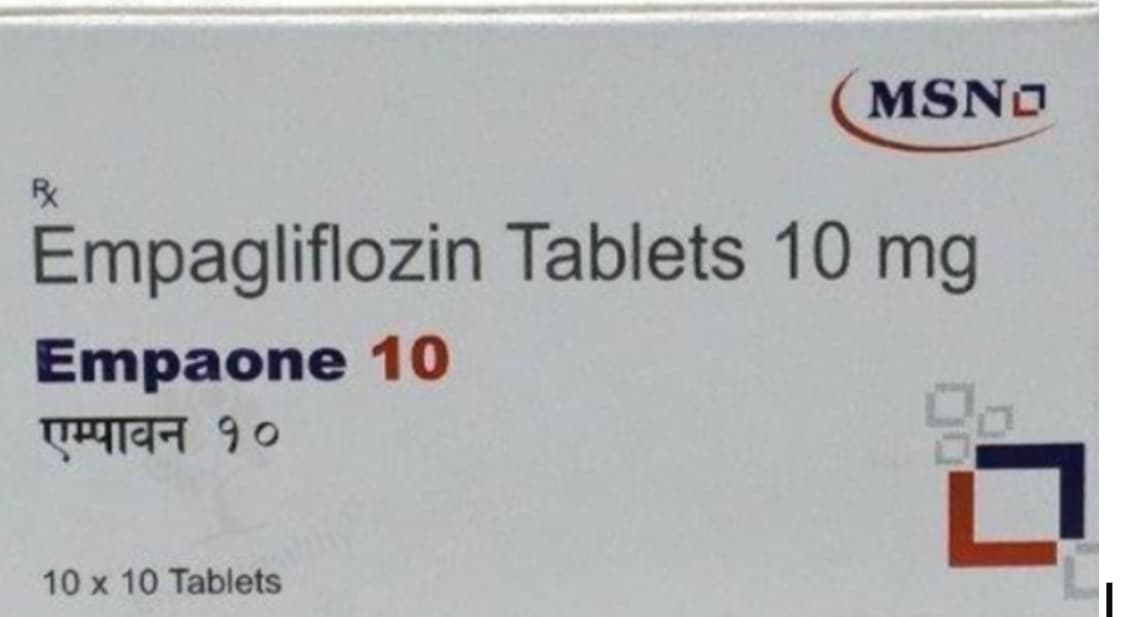
And yes, you can devide tablets of empa.
I found studies where were measured the strengh of effects of several doses of empa: 1mg, 2,5mg, 10mg, 25mg and 100mg. If you buy the largest available dose of 25mg, you can safely devide it by 2, 4 and even 8! pieces. Ofcourse, there is some small problems that you can loose some crumbs, and recieve not the exact dosage, lesser today, a bit more tomorrow, but I think its not really too important. Saving is tremendous.
** One important correction: 39% / 46% / 58% / 64% do not represent the “percent reduction in blood glucose.” Rather, they represent an approximate degree of inhibition of renal glucose reabsorption, that is, a pharmacodynamic effect on glycosuria. In the empagliflozin dose-response model, the curve really does flatten quickly: even in the early studies it was already clear that UGE (urinary glucose excretion) and FPG (fasting plasma glucose) were approaching a plateau roughly in the 10–25 mg range, while a measurable effect was already visible even at 1 mg and 2.5 mg.
If we take your anchor points:
- 2.5 mg → 39%
- 10 mg → 46%
- 25 mg → 58%
- 100 mg → 64%
then calculating linearly by milligrams is indeed incorrect. A more meaningful rough approximation within these ranges is log-dose interpolation, which is how pharmacodynamic curves usually look: a rapid initial rise followed by gradual saturation. That gives the following estimates:
| Empagliflozin dose | Rough nonlinear estimate of effect* |
|---|---|
| 1 mg | measurable effect, but below 39%; roughly 33–36% |
| 2.5 mg | 39% |
| 3.125 mg | ≈ 40.1% |
| 5 mg | ≈ 42.5% |
| 6.25 mg | ≈ 43.6% |
| 10 mg | 46% |
| 12.5 mg | ≈ 48.9% |
| 25 mg | 58% |
| 100 mg | 64% |
*Again, this refers specifically to the surrogate pharmacodynamic scale we were using above: not the direct percent reduction in blood glucose, but the strength of effect on renal glucose reabsorption / glycosuria.
Why these numbers make sense:
- 3.125 mg lies very close to 2.5 mg, so on a nonlinear curve the gain is small: not 39.6% as in a linear mg-by-mg estimate, but still only about 40.1%.
- 6.25 mg, in the middle of the 2.5 → 10 mg interval, gives not “42.5% by coincidence,” but about 43.6% by log-dose interpolation.
- 12.5 mg is already on the next segment, where the curve rises more steeply toward 25 mg, which is why the estimate comes out around 48.9%.
So your core intuition is correct:
- 3.125 mg and 6.25 mg are not placebos,
- and 12.5 mg is already much closer to the 10–25 mg zone than to a true “microdose.”
If we compare not to the absolute maximum of 100 mg, but to 10 mg as the “official working dose,” the picture becomes very clear:
- 3.125 mg ≈ 40.1 / 46 = 87% of the 10 mg effect
- 6.25 mg ≈ 43.6 / 46 = 95% of the 10 mg effect
- 12.5 mg ≈ 48.9 / 46 = 106% of the 10 mg effect
This does not mean that 6.25 mg will deliver 95% of all clinical cardiorenal outcome benefits of 10 mg. That conclusion cannot be drawn. It only means that on this specific pharmacodynamic scale, the early part of the curve is quite flat, and low doses are already fairly “alive.”
If we compare them to 25 mg:
- 3.125 mg ≈ 69% of the 25 mg effect
- 6.25 mg ≈ 75% of the 25 mg effect
- 12.5 mg ≈ 84% of the 25 mg effect
And this already explains very well why many people find it rational to split a 25 mg tablet at least in half: on this scale, the gain from 12.5 mg to 25 mg is not huge.
There is one more useful reference point from the same model: for FPG, the authors estimated the maximum predicted steady-state decrease at about 1.3 mmol/L from a reference baseline of 8 mmol/L, that is, about 16%, and they emphasized that the plateau for FPG/HbA1c is also reached roughly in the 10–25 mg range, while a noticeable reduction in FPG was already seen even in the 1 mg group. This again supports the idea that low doses are not zero.
If we translate all this into a very practical conclusion:
- 3.125 mg is almost certainly not a placebo, but it is still a fairly small dose;
- 6.25 mg looks like a very meaningful “test dose”;
- 12.5 mg, by this logic, already looks quite workable and close to the standard range in terms of effect strength.
Economic model for a U.S. buyer
Using $660 for 30 tablets of 25 mg
Now let’s recalculate the economics for a U.S. resident, using:
- 25 mg × 30 tablets
- $660 per pack
We will use the same surrogate pharmacodynamic scale we already derived:
- 3.125 mg → 40.1
- 6.25 mg → 43.6
- 12.5 mg → 48.9
- 25 mg → 58.0
And again: this is not “percent reduction in blood glucose”, but a rough scale of effect strength on glycosuria / inhibition of glucose reabsorption.
Base assumptions
- pack size: 25 mg × 30 tablets
- price: $660
- total active ingredient in the pack: 750 mg
- price per mg: 660 / 750 = $0.88 per mg
1) Daily treatment cost
| Dose | mg/day used | Cost per day |
|---|---|---|
| 3.125 mg | 3.125 | $2.75/day |
| 6.25 mg | 6.25 | $5.50/day |
| 12.5 mg | 12.5 | $11.00/day |
| 25 mg | 25 | $22.00/day |
2) How long one pack lasts
| Dose | Days per pack |
|---|---|
| 3.125 mg | 240 days |
| 6.25 mg | 120 days |
| 12.5 mg | 60 days |
| 25 mg | 30 days |
3) Cost per 0.1 “unit of effect”
Using:
cost of 0.1 effect units per day = daily cost / (effect × 10)
| Dose | Effect | Daily cost | Cost per 0.1 effect units/day |
|---|---|---|---|
| 3.125 mg | 40.1 | $2.75 | $0.0069 |
| 6.25 mg | 43.6 | $5.50 | $0.0126 |
| 12.5 mg | 48.9 | $11.00 | $0.0225 |
| 25 mg | 58.0 | $22.00 | $0.0379 |
This is the core economic picture:
the lower the dose, the cheaper each 0.1 unit of effect becomes.
4) What stands out immediately
The most efficient dose in terms of “effect per dollar” is:
- 3.125 mg — best economic efficiency
- 6.25 mg
- 12.5 mg
- 25 mg — worst on this specific metric
So the curve really does look the way you suspected:
the early part is very flat, and low doses give a lot of effect for relatively little money.
5) Marginal cost of increasing the dose
This is even more useful.
Going from 3.125 → 6.25 mg
- effect: 40.1 → 43.6
- gain: +3.5
- added cost: +$2.75/day
Cost of 1 additional unit of effect:
2.75 / 3.5 = $0.79
Cost of 0.1 additional units of effect:
$0.079
Going from 6.25 → 12.5 mg
- effect: 43.6 → 48.9
- gain: +5.3
- added cost: +$5.50/day
Cost of 1 additional unit of effect:
5.50 / 5.3 = $1.04
Cost of 0.1 additional units of effect:
$0.104
Going from 12.5 → 25 mg
- effect: 48.9 → 58.0
- gain: +9.1
- added cost: +$11.00/day
Cost of 1 additional unit of effect:
11.00 / 9.1 = $1.21
Cost of 0.1 additional units of effect:
$0.121
So each successive step becomes less cost-effective per additional unit of effect.
6) Practical takeaway
If you look specifically at the economics:
3.125 mg
- maximum “effect per dollar”
- one pack lasts 240 days
- makes sense as an ultra-economical test regimen
6.25 mg
- still very cost-efficient
- already noticeably more “alive” than 3.125 mg
- one pack lasts 120 days
- looks like the strongest candidate for a sensible economy regimen
12.5 mg
- already closer to a “full working dose”
- but economic efficiency is clearly worse than at 6.25 mg
- one pack lasts 60 days
- looks like a balance between economy and confidence in effect
25 mg
- the weakest economic efficiency
- only really makes sense if maximum effect is the priority and price is not the main constraint
7) Very short version
On this model:
- 3.125 mg = best effect per dollar
- 6.25 mg = probably the best compromise
- 12.5 mg = already close to a “full adult working dose,” but clearly less attractive economically
- 25 mg = the least efficient option economically