From: The Beyond Tomorrow Podcast with Julian Issa: https://www.youtube.com/@TheBeyondTomorrowPodcast/videos
I. Executive Summary
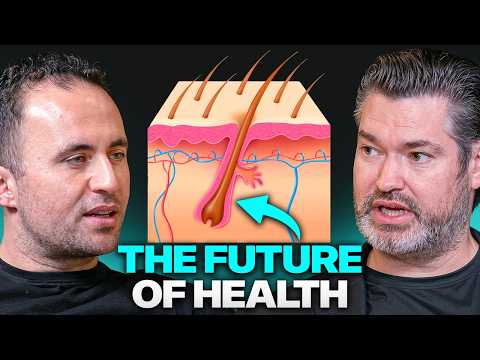
The provided transcript outlines a commercial framework for autologous somatic cell banking, specifically targeting hair follicle-derived mesenchymal stem cells (HF-MSCs) for current aesthetic and forthcoming regenerative medicine applications. The core thesis posits that cryopreserving HF-MSCs at a chronologically younger age secures a biologically optimized, non-senescent autologous resource. This resource can theoretically be expanded in vitro to extract a “secretome”—conditioned media containing paracrine signaling factors and exosomes—for clinical use. The speaker (representing a commercial entity, Acorn Biolabs) advocates for the immediate clinical utility of topically applied autologous secretomes, delivered via microneedling or fractional lasers, primarily for androgenetic alopecia and skin rejuvenation.
Critically, the transcript bridges established cryobiology with speculative translational geroscience. While the mechanics of cryogenic preservation at -196°C and the inherent multipotency of HF-MSCs are scientifically validated, the clinical superiority and definitive efficacy of topically applied autologous secretomes for tissue regeneration lack robust validation through large-scale, independent Human Randomized Controlled Trials (RCTs). The transcript aggressively relies on mechanistic plausibility (extracellular vesicle signaling, angiogenesis induction) and early preclinical successes (e.g., the in vitro generation of pancreatic progenitor cells and Natural Killer cells) to project future interventions for systemic aging, oncology, and autoimmune pathophysiology.
From a rigorous geroscientific perspective, the enterprise currently functions primarily as an autologous biological insurance policy bundled with aesthetic fringe benefits. The transition from unregulated or loosely regulated topical applications to FDA/EMA-approved injectable intra-articular or systemic therapies involves substantial regulatory, scaling, and pharmacokinetic hurdles. While autologous therapies eliminate the graft-versus-host disease (GVHD) risks associated with allogeneic cell products, the assertion that HF-MSC banking is a requisite intervention for lifespan or healthspan extension remains unsupported by current human survival data. Consumers and clinicians must distinguish between validated laboratory phenomena (e.g., induced pluripotency) and the speculative frontier of commercialized longevity therapeutics.
II. Insight Bullets
- Hair follicles provide an accessible, non-invasive source of multipotent mesenchymal stem cells (MSCs), circumventing the morbidity associated with bone marrow aspiration or adipose lipoaspiration.
- Cryopreservation at -196°C successfully halts cellular metabolism, preserving the epigenetic and transcriptomic state of the harvested cells.
- The anatomical structure of the hair follicle offers a protective niche of keratinocytes and fibroblasts, maximizing cell viability during transit to central laboratories.
- Peripheral blood draws yield high cellular volume but low stem cell utility, as erythrocytes lack a nucleus and the requisite genomic blueprint for regenerative expansion.
- Advanced in vitro culture protocols attempt to mitigate chronological age constraints by extending culture times for older cells to accumulate adequate secretory factors.
- The therapeutic mechanism of MSCs has shifted from a model of direct cellular engraftment to a paracrine signaling model mediated by the “secretome.”
- The secretome contains growth factors, cytokines, and exosomes (lipid bilayer vesicles packed with mRNA and microRNA) that modulate localized tissue behavior.
- Current commercial application of the secretome relies on physical barrier disruption (microneedling, laser) to facilitate transdermal delivery of macromolecules.
- Injectable autologous secretomes are entering early human trials for subdermal delivery and intra-articular administration (e.g., for osteoarthritis), leveraging systemic anti-inflammatory mechanisms.
- Autologous stem cell derivatives intrinsically bypass the major histocompatibility complex (MHC) mismatch risks, negating graft-versus-host disease (GVHD) profiles.
- HF-MSCs can be successfully reprogrammed via exogenous transcription factors into induced pluripotent stem cells (iPSCs) for downstream lineage specification.
- In vitro directed differentiation of HF-MSCs has yielded endoderm-lineage pancreatic beta-cell progenitors, presenting a theoretical roadmap for Type 1 Diabetes therapies.
- Preclinical data suggests HF-MSCs can be differentiated into functional Natural Killer (NK) cells, which degrade chronologically but are vital for immunosurveillance of oncogenic and senescent cells.
- 3D bioprinting has successfully generated functional micro-tissue constructs (e.g., cardiac and bladder tissue), though scaling to systemic organ replacement remains blocked by vascularization challenges.
- Translating in vivo animal epigenetic reprogramming (e.g., cyclical Yamanaka factor expression) to human subjects possesses a severe translational gap and elevated oncogenic risk.
- Behavioral and pharmacological protocols (e.g., minoxidil, finasteride, systemic metabolic management) remain the evidence-based foundation for treating hair loss, to which regenerative topicals are currently only adjunctive.
III. Adversarial Claims & Evidence Table
| Claim from Video | Speaker’s Evidence | Scientific Reality (Current Data) | Evidence Grade | Verdict |
|---|---|---|---|---|
| Topical Secretome halts hair loss & regrows hair. | Anecdotal patient reports; internal 7-month data; observation of decreased shedding. | Systematic reviews indicate MSC-derived exosomes/conditioned media promote dermal papilla proliferation and angiogenesis. However, standardized autologous protocols lack large-scale phase 3 RCT validation compared to standard-of-care (Minoxidil/Finasteride). Li et al., 2023 | Level B / C | Plausible |
| Intra-articular secretome reduces joint inflammation. | Animal data; unreleased early-phase human study approvals. | Intra-articular injection of MSC-derived exosomes for osteoarthritis demonstrates safety and reduction of pro-inflammatory cytokines (IL-6, TNF-alpha) in early human RCTs, but long-term cartilage regeneration remains disputed. D’Arrigo et al., 2022 | Level B | Plausible |
| HF-MSCs can be turned into pancreatic progenitor cells. | Published collaboration with University of Toronto (“published in Cells”). | HF-MSCs and other somatic cells can be reprogrammed to iPSCs and directed to pancreatic endoderm in vitro. A highly technical reality, but in vivo human engraftment and glucose-responsive insulin secretion are not yet clinical realities. Nabi et al., 2022 | Level D | Translational Gap |
| HF-MSCs can generate NK cells to clear cancer/senescence. | Lab collaboration with National Research Council; suppression of tumor lines in vitro. | Generating functional NK cells from iPSCs is biologically feasible and a major focus of next-generation immunotherapy. However, autologous iPSC-NK therapies for clearing senescence in vivo in humans lack safety and efficacy data. Goldenson et al., 2022 | Level D | Translational Gap |
| Cryopreservation at -196°C halts cellular aging. | Standard principles of cryobiology. | Verified. Liquid nitrogen temperatures arrest cellular metabolism and prevent chronological accumulation of epigenetic degradation or telomere attrition during storage. Jang et al., 2017 | Level A | Strong Support |
| Autologous therapies carry no rejection risk. | Biological principles of MHC matching. | Generally true for raw MSCs. However, extensive in vitro expansion or epigenetic reprogramming to iPSCs can induce genomic instability or alter immunogenicity, requiring rigorous GMP quality control. Drukker et al., 2006 | Level C | Plausible (with caveats) |
IV. Actionable Protocol (Prioritized)
High Confidence Tier (Level A/B Evidence)
- Targeted Pharmacology for Alopecia: Do not substitute standard-of-care with regenerative topicals. Utilize 5-alpha reductase inhibitors (Finasteride/Dutasteride) to halt DHT-mediated follicular miniaturization, paired with Minoxidil to upregulate follicular vascular endothelial growth factor (VEGF).
- Systemic Inflammatory Management: To support endogenous stem cell niches and reduce stem cell exhaustion, prioritize proven geroprotective interventions: rigorous cardiorespiratory training (VO2 max development), optimization of glycemic variability, and targeted nutrient sensing pathway modulation (e.g., AMPK activation, mTOR inhibition).
Experimental Tier (Level C Evidence - High Safety Margin)
- Autologous Somatic Cell Banking: For individuals with high disposable income, cryopreserving HF-MSCs in early adulthood operates as a reasonable hedge against future regulatory approvals of autologous iPSC or secretome therapies. The safety risk is effectively zero (minor follicular extraction).
- Microneedling + Exogenous Peptides/Secretomes: Using fractional microneedling (0.5mm - 1.5mm depth) combined with sterile, rigorously tested topical exosome or conditioned media preparations can accelerate dermal remodeling and upregulate localized collagen synthesis. Sourcing must be sterile to prevent cutaneous infections.
Red Flag Zone (Safety Data Absent)
- Systemic/Unregulated Injectables: Do not pursue off-label, non-FDA/EMA approved intravenous (IV) or intra-articular injections of uncharacterized “stem cell secretomes” or exosomes, especially from allogeneic (donor) sources outside of tightly controlled clinical trials. Risks include severe immune reactions, zoonotic/bacterial contamination, and theoretical oncogenesis via uncharacterized growth factor signaling.
V. Technical Mechanism Breakdown
1. The Mesenchymal Stem Cell (MSC) Paracrine Paradigm
Historically, regenerative medicine hypothesized that MSCs engrafted into damaged tissue and directly differentiated to replace dead cells. Current consensus dictates a “hit-and-run” paracrine mechanism. HF-MSCs act as local immunomodulators and trophic factories. When cultured, they secrete a highly concentrated conditioned media (the “secretome”) rich in Vascular Endothelial Growth Factor (VEGF), Fibroblast Growth Factor (FGF), and Transforming Growth Factor-beta (TGF-b). These factors suppress local macrophage hyperactivation (shifting from M1 pro-inflammatory to M2 anti-inflammatory phenotypes) and stimulate endogenous fibroblasts.
2. Exosomal Micro-RNA (miRNA) Transfer
A critical component of the secretome are exosomes—nanoscale extracellular vesicles (30-150 nm) enclosed in a lipid bilayer. These vesicles protect their cargo from extracellular nucleases. HF-MSC exosomes deliver specific miRNAs to target cells. Upon endocytosis, these miRNAs bind to complementary messenger RNA (mRNA) sequences within the target cell, preventing their translation into protein. In the context of joint inflammation or skin aging, exosomal miRNAs downregulate the translation of matrix metalloproteinases (MMPs), enzymes responsible for degrading collagen and cartilage infrastructure.
3. Induced Pluripotency (iPSC) & Lineage Specification
To convert HF-MSCs into pancreatic beta-cells or Natural Killer (NK) cells, the adult somatic cells must first be pushed up the Waddington epigenetic landscape back to a pluripotent state. This is achieved via viral or episomal vector transfection of the Yamanaka factors (Oct4, Sox2, Klf4, c-Myc). Once stabilized as iPSCs, the cells are exposed to a highly orchestrated sequence of chemical cues (e.g., Wnt signaling activators, retinoic acid) in bioreactors to systematically force them down definitive endoderm or hematopoietic lineage pathways. The primary barrier to commercialization is ensuring 100% differentiation, as any residual undifferentiated iPSCs injected in vivo possess a high risk of forming teratomas.