I ordered doxepin 25 mg tablets from India, and they are on their way. I also ordered and received a “DUBSTAR Pill Cutter Splitter for Cutting Multiple Pills, 1/2 1/4 Pill Cutter Splitter.”
If I had to do it over again, I would opt for the 10 mg tablets.
I think the 3 mg recommended is a little on the cautious side. I am just experimenting, not planning for continuous use.
“Low-dose hypnotic use (3–6 mg) is pharmacologically quite different from antidepressant-range dosing (≥75 mg/day) – essentially antihistamine vs full-blown TCA.”
Geriatric caution: Multiple sources recommend lower starting doses in older adults (e.g., 10 mg QHS for systemic doxepin). (Means take 10 milligrams every night at bedtime. The instruction is a combination of a drug measurement and a Latin abbreviation for the timing."
“Doses of doxepin used for sleep normally range from 3 to 6 mg, but high doses of up to 25 to 50 mg may be used as well.”
“Doxepin, have been used for decades to treat insomnia. This is particularly common practice in the UK”
So, cutting the 25 mg tablets into quarters seems relatively safe."
No, I haven’t abandoned trazodone as a sleep aid. Mainly, I use trazodone to get back to sleep if something has awakened me during the night. I probably have a lifetime supply of trazodone.
I ordered trazodone initially because I was not aware of doxepin. Doxepin is more widely prescribed for sleep problems than trazodone. I just want to compare the two.
I paid $40 for 200 Doxepin 25 mg tablets. (I will split the pills into four parts.)
Doxepin seems like the better choice.
Big-picture comparison
Feature
Trazodone
Doxepin (low-dose 3–6 mg)
Regulatory status for insomnia
Off-label (approved as antidepressant)
FDA-approved for sleep-maintenance insomnia (Silenor 3–6 mg) PMC+1
Main sleep effect
Mild–moderate sedation, ↓ awakenings; weak effect on objective sleep measures
Stronger, consistent effect on staying asleep (↓ wake after sleep onset, ↑ total sleep time, better sleep efficiency) PMC+2ResearchGate+2
Evidence quality
Several small RCTs, Cochrane & AASM rate evidence low quality, small benefits; no long-term data Wikipedia+1
Multiple RCTs (adults & elderly) up to 12 weeks, plus FDA dossier; evidence moderate quality for sleep-maintenance insomnia PMC+2FDA Access Data+2
Guideline stance
AASM, VA/DoD, ACP all recommend against using trazodone as a routine insomnia drug (harms ≥ benefits, weak evidence) AASM+1
AASM gives a (weak) recommendation for low-dose doxepin for sleep-maintenance insomnia AASM+1
Typical insomnia dose
25–100 mg at bedtime (vs 150–400 mg for depression) MDPI
3–6 mg at bedtime; much lower than antidepressant doses (25–300 mg) PMC+1
Major concerns in older adults
Orthostatic hypotension, dizziness, falls, morning grogginess, QT-prolongation risk, rare priapism, drug interactions U.S. Pharmacist+1
At 3–6 mg, very little anticholinergic effect, next-day sedation similar to placebo in trials; higher doses (>6 mg) behave like a typical TCA with all the anticholinergic baggage PMC+1
jjrap1, I’ve been using Doxepin 3 mg to 6 mg periodically for several years when I feel the need to get good sleep. I have a supply of 10 mg capsules which I take apart. Fill the smaller side of the capsule from the larger side and pour that amount under the tongue. Underfill just a bit. Then, fill the smaller part of the capsule once more (underfill just a bit) from the larger side and pour that under the tongue. Finally, put the capsule back together. It is guesswork, but it’s the simplest method I’ve found for trying to get roughly a 3 mg to 6 mg dose (2 doses per capsule). I was not able to find pills or caplets for my order several years ago, but if you do find them cutting them in half would be much less complicated than trying to equally proportion the 10 mg capsule into two reasonable doses.
Another variation on my method is to fill the shorter side of the capsule from the longer side once and pour that under the tongue (maybe ~ 3 mg). Put the capsule back together and do the same thing the next night (maybe ~ 3 mg). Do the same thing the third night to see how close the shorter side gets to being full. If it’s as full as the first two nights then you’ve successfully divided the 10 mg dose into roughly 3 portions each at ~ 3 mg.
The next-day sleepiness effect has always made me stop taking Doxepin after a few days. It has always been a potential danger when driving (from personal experience). So, I avoid anything other than short driving trips the day after having taking Doxepin. However, I’ve read that this next-day sleepiness effect may go away after a few weeks. So, with my current experiment I am going to try it for two to four weeks non-stop to see if that is true. If so, it may be a long-term solution for me.
If you experience irritating next-day drowsiness from Doxepin try taking caffeine from capsules or coffee. It may help. Or, modafinil (low dose - 50 mg). Of course, this gets into the cycle of one drug for sleep (Doxepin) and one drug upon waking (Modafinil). But, would this cycle be better than using the old OTC antihistamines Diphenhydramine or Doxylamine? I don’t know, but maybe. Plus, Modafinil seems to affect different people differently which means testing to see how it may work for you.
Of course, you could just ask your PCP for a trial prescription of Silenor (6 mg caplets) to see if it will help your sleep problems. It would likely be easy to cut a 6 mg Silenor pill into two 3 mg halves to try at first.
Suggestion: Check for contraindications of Doxepin with any other medicines you take.
Odd from the study: Doxepin: “At 3–6 mg, very little anticholinergic effect, next-day sedation similar to placebo in trials; higher doses (>6 mg) behave like a typical TCA with all the anticholinergic baggage.” Perhaps you are inadvertently taking more than 6 mg. Or, more likely you accumulate too much taking it every day.
“The half-life of oral doxepin is typically between 8 and 25 hours, with a mean of around 15–17 hours. However, it is important to note that the active metabolite, nordoxepin, has a longer half-life of 28 to 81 hours.”
Where as “Trazodone is eliminated in two phases, with an initial half-life of 3 to 6 hours and a terminal half-life of 5 to 9 hours.” So not so much accumulation.
Trazodone: “morning grogginess”
Personally I have never experienced morning grogginess from taking a 10 mg trazodone tablet, even if I have taken it only a few hours before I get up in the morning.
desertshores, I don’t notice much anticholinergic effect at 3 mg to 6 mg of Doxepin. It’s the antihistamine effect I refer to when talking about Doxepin and next-day sleepiness. It’s just a constant feeling most of the day that I would like to lie down and take a nap. However, my thinking seems to be pretty clear when using Doxepin. An additional note is that it seems to diminish my physical stamina noticeably.
On the other hand, a strong anticholinergic effect like that from Doxylamine gives me “foggy brain” much of the next morning. My thinking and actions are slow, like that of a sloth! Well, maybe not a sloth. But, that’s what I compare it to until it wears off.
Well, I just ordered 10mg doxepin tablets to give it a shot starting at ~2.5mg and to be able to stop using that evil anticholinergic doxylamine (aka Costco sleeping pills) waaay too frequently. Here’s hoping!
With you on this 100%. LDN for me is the ONLY med that I can say has had the most effect (positive) in overall health and wellbeing (mainly pain and inflammation but helped me with sleep also) of all meds I’ve ever taken. I take or have taken in the past many other meds (rapa, metformin, SGLT2i, Statin etc.) but no med has had such a profound effect as LDN (3mg). The best part is the fact that it works immediately. I didn’t bother to start low and titrate, started at 3mg (3 months ago) and been there since and works great for me.
As a side note, I was having somewhat mid to high level muscle and joint pain (which clearly affected my sleep) and that is all gone on LDN. Not sure it is doing anything else, and not sure if it will do anything for those that have no pains and aches.
Melatonin, Trazodone, or Doxepin for Sleep Disorders
A 6-month study compared trazodone (50mg), doxepin (10mg), and melatonin (3mg) as alternatives to benzodiazepines for insomnia in 175 psychiatric patients. All improved sleep quality, with trazodone showing slightly better efficacy but more morning grogginess than the others.
I took low-dose Doxepin (3 mg to 6 mg) nightly for two weeks. The next-day sleepiness effect did not go away. And, the reduced stamina while taking it did not diminish. Caffeine and modafinil helped some, but did not resolve the problem. So, I will go back to my old plan of using it only when necessary.
Yes, I found the same effect from using doxepin. It does differ from trazodone in that it has “hypnotic” effects, and when coupled with galantamine or donepezil, produces effects that are very similar to lucid dreaming, in that you are aware and have some control and guidance of the dream.
Unfortunately, this does not result in a good night’s sleep. (Of course, results may vary.)
And also, unfortunately, at the rate that I will be using it, I have more than a lifetime’s supply.
My go-to stack when I have a disturbing day or activities that make me restless and mind racing at bedtime is:
100 mg melatonin ~ 1hr before sleep (tells the body it’s time to go to sleep)
2 grams l-tryptophan ~ 1/2 hr before sleep (shortens sleep onset)
10 mg trazodone ~ 1/2 hr before sleep (shortens sleep onset)
50 mg quetiapine ~ 1/2 hr before sleep (shortens onset and maintains longer sleep times)
This combo for my particular physiology works great and feels “clean” with no morning-after effects.
Dr Frasers AD thread got me interested in DORA’s so I asked by new best friend Perplexity a few questions about the opportunity to use peptides for this function.
One of my questions was if the sleep improvement was the key to the benefit, it is definitely part of the benefit but may not be the entire benefit from DORA’s
Since my current obsession is peptides I asked about that and found some interesting info on DSIP, my new fav peptide for increasing the quality of my sleep. One thing is does, it “concentrates” sleep patterns. We go in and out of the various stages of sleep in what looks like random cycles. It helps to concentrate deep sleep phases earlier in the sleep cycle and increase the duration of deep sleep, for me it was a significant improvement.
Deep sleep is important for clearing out the physical aspects of the brain.
@Jay, Well… I did get capsules even tho’ I ordered tablets Oh well, I have a scale, and this is just an experiment to see if I can improve my sleep-maintenance. Sort of like what you did, I took one 10mg capsule opened it. There is 120mg of media (active ingredients + fillers) in each capsule. A white powder. Presuming the active ingredients are uniformly distributed in the filler, to get 3mg of doxepin would be 40mg of media. But there will be some loss in the capsule-making process, so I’m starting with making 3 capsules and tossing out the residual … starting below 3mg and going slow. I didn’t taste it to see if your method was tolerable.
jjrap1, If 3 mg helps you get a good night’s sleep, then that is the right dose for you. I found that around 5 mg worked better for me. The scale method sounds precise and I have tried it. I also tried mixing the capsule contents with a specific amount of liquid using an oral syringe. With a 1 ml oral syringe I drew tap water and put it into a small dropper bottle 2 times for a total of 2 ml of water. (In your case it would be 3 times to get 3 doses.) I then poured the contents of the capsule in, closed the bottle and swirled the contents trying to keep the mixture near the bottom of the bottle. I let it set for a few hours for the Doxepin HCL to dissolve in the water. At that point I drew 1 ml of liquid out of the bottle as the first dose using the oral syringe. I placed the bottle in the fridge for a 2nd dose if needed. Of course, the bottle needs to be swirled before use each time. With this method some of the ingredients that are mixed with the Doxepin won’t dissolve and will coat the inside of the bottle with a white film. Assuming some of that white film to be Doxepin I thought swirling would be better than shaking in order to reduce the total amount of the white film.
The sleep is good when needed, but the unfortunate problem is that the next-day lingering sleepiness and reduced energy and stamina may hit you as it has other people on the forum. So, I try to limit use to only when needed and for a short period of time. It usually takes me a few days after this for energy and stamina to come back up to normal.
I believe hospitals commonly use Trazodone, Tempazepam and possible Silenor (Doxepin) as sleep aids, but I wonder about nursing homes. Doxepin would seem to be a good choice in a nursing home for an elderly invalid who needs good sleep and calming of nerves when next-day physical activity and alertness is not a big priority. I’m just thinking ahead about possibilities in case that’s in my future!
@desertshores, @Jay: doxepin is a bust for me; tho’ mildly effective as a sleep even at 3mg, the next day haze is a show-stopper; no amount of caffeine cuts through the fog… it’s really unpleasant! Time to move on!
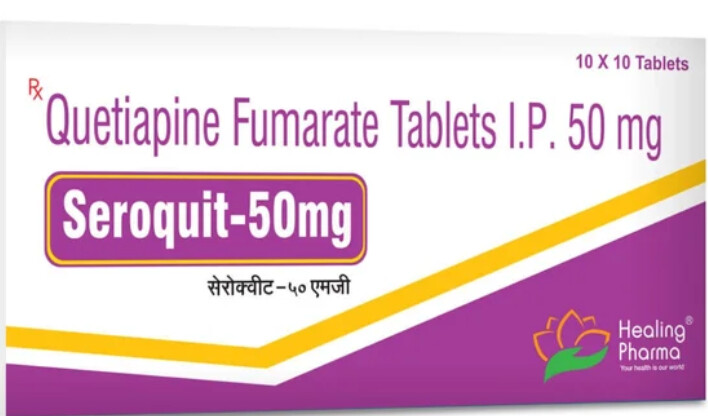
@desertshores can you tell me what quetiapine pharma co and size tablets you are buying? Just the 50mg tablets, or something larger and cutting them into pieces? I see they are available up to 300mg. How did you arrive at the 50mg dose? Trial and error? Thanks much!
The only reason I tried doxepin is because it has a slightly better safety profile for long-term use.
My daughter has been using 100 mg tablets for many years with no obvious ill effects.
She gave me a few to try. The 100 mg tablets were a little too strong for me. I think the 300 mg tablets would be way too much for most people. 50 mg is the dose I use, and it seems just right for me. Too high of a dose is too much of a good thing.
The pills are very cheap from India. I would order the 50 mg tablets.
These are the ones I ordered, and they work quite well.


 Oh well, I have a scale, and this is just an experiment to see if I can improve my sleep-maintenance. Sort of like what you did, I took one 10mg capsule opened it. There is 120mg of media (active ingredients + fillers) in each capsule. A white powder. Presuming the active ingredients are uniformly distributed in the filler, to get 3mg of doxepin would be 40mg of media. But there will be some loss in the capsule-making process, so I’m starting with making 3 capsules and tossing out the residual … starting below 3mg and going slow. I didn’t taste it to see if your method was tolerable.