i LOVE guanfacine because it can increase mental capacity and output while being the EXACT opposite of a stimulant
instead of making the brain a clusterfuck it decreases firing making you calm and clear headed instead of all over the place
- calm focus
- better working memory
- “zen” flow state
- better mental resilience to stress
- no hyperactivity
- less distraction
how the fuck does it do that since it literally decreases neural signaling?
guanfacine is a selective agonist of the α2A receptor, a receptor located primarily in the prefrontal cortex which could be named the “control conter of mental performance”.
activation of α2A by guanfacine results in less intracellular cascades going on that would normally make you stimulated.
it makes your brain less noisy so that you can think. clearly.
now you need to get the dosing right because it can be sedative at higher doses. anywhere in between 1-2mg is enough.
I’ve heard good things about it. I’m about to trial some ADHD medication and this is something I’m interested in adding in conjunction with a stimulant.
selective agonist of the α2A receptor
Sounds good! Is there safety/longevity data on this?
It’s approved for human use so it is somewhat safe.
As for longevity I did find one study that mentioned it for worm lifespan effects, according to DrugAge it increased worm lifespan by 15%
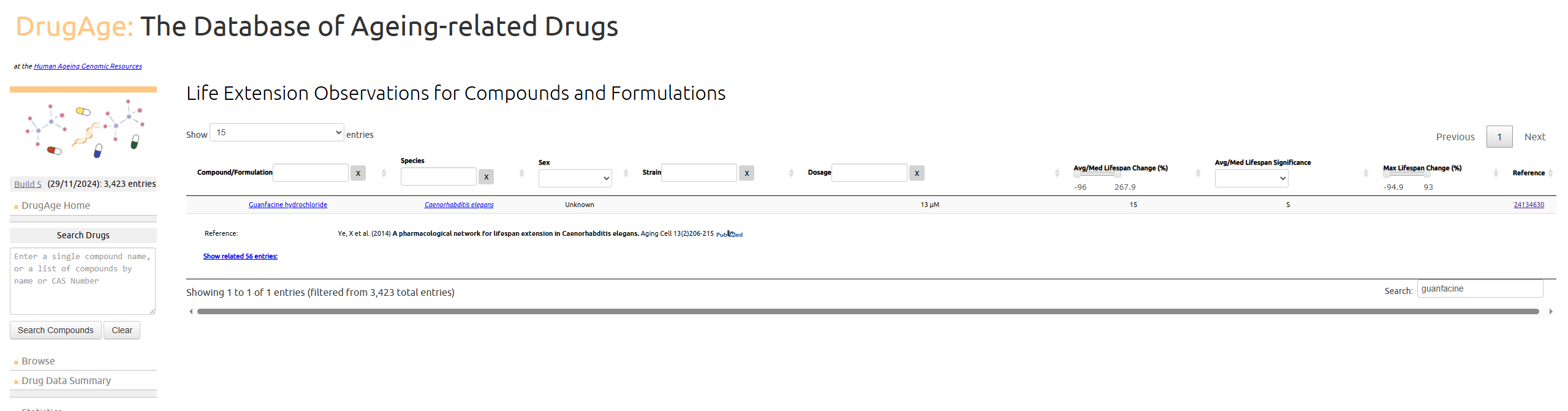
But actually reading the study I struggle to find where it specifically mentions what guanfacine does: https://onlinelibrary.wiley.com/doi/10.1111/acel.12163
Mechanism and Selectivity
These agents function by stimulating alpha-2 receptors in the central nervous system, which inhibits the firing of sympathetic nerves.
Guanfacine: Selective for the alpha-2a subtype. This selectivity is associated with fewer sedative side effects compared to non-selective agents.
Clonidine: Non-selective (binds alpha-2a, 2b, and 2c). While effective at reducing sympathetic tone, it is associated with higher rates of sedation and hypotension.
Clinical Efficacy in Combination
The literature provides specific evidence for the utility of combining alpha-2 agonists with methylphenidate to manage cardiovascular side effects. A longitudinal case study of a patient with renal disease (ADPKD) and ADHD reported that monotherapy with methylphenidate (18 mg) caused hypertension and tachycardia, while monotherapy with guanfacine caused hypotension. The combination of Methylphenidate (18 mg) and Guanfacine (4 mg) successfully stabilized blood pressure (<110/75 mmHg) and managed symptoms, effectively balancing the “push” of the stimulant with the “pull” of the alpha-agonist.
This combination strategy addresses the “decrease in cardiac baroreflex sensitivity” observed with methylphenidate use, potentially restoring autonomic responsiveness.
https://aristotle.science/share/thread/thr_vsWmagdxt657q7cxVeifvfEB
5.4. Guanfacine protects PFC neurons from psychological and physiological stress
Evidence from both in vivo and in vitro studies show that guanfacine can protect PFC circuits from stress exposure, including preventing atrophy due to chronic stress exposure. This has been seen for both psychological stressors such as restraint stress in rodents (Hains et al., 2015), as well as for physiological stressors such as reduced oxygen (Kauser et al., 2013). As both psychological and physiological stressors drive feedforward calcium-cAMP-PKA-K+ signaling and impair working memory, guanfacine’s ability to inhibit these actions may preserve network connectivity and PFC function (schematically shown in Fig. 6A).
Fig. 6. Guanfacine counteracts the effects of chronic stress in PFC. (A) A schematic illustration showing how stress increases, while guanfacine inhibits, the feedforward Ca2±cAMP-PKA-K+ actions that weaken PFC network connectivity, neuronal firing and function. α2A-AR are also expressed on activated microglia, where α2A-AR stimulation deactivates microglia and thus has anti-inflammatory actions. (B) Example of a layer II/III mPFC pyramidal cell distal dendrite from a control vs. chronic stressed rat, showing the reduced spine density in the stressed PFC. Scale bar indicates 25 μm. Adapted from (Hains et al., 2009) with permission. (C) Chronic stress (Str) exposure reduces PFC spine density in vehicle-treated rats, but not in those receiving daily guanfacine treatment. Con = control; Str = chronic stress; Veh = vehicle; Gfc = guanfacine. Adapted from (Hains et al., 2015) with permission.


In addition to direct actions on dendritic spines, guanfacine’s protective effects may involve anti-inflammatory actions through α2A-AR on glia (Gyoneva & Traynelis, 2013). As schematized in Fig. 6A, α2A-AR are expressed on activated microglia, where their engagement deactivates microglial activity (Gyoneva & Traynelis, 2013). Thus, guanfacine may reduce microglial phagocytosis of spines. The anti-inflammatory effects of α2A-AR agonists are well-established, and contribute to their widespread use as co-anesthetics in surgery, where they reduce the incidence of emergence delirium (Zhang et al., 2020). These anti-inflammatory effects may also contribute to guanfacine’s protections from hypoxia in animal models (Kauser et al., 2013, Kauser et al., 2016), and from encephalitis in humans (Singh-Curry, Malhotra, Farmer, & Husain, 2011). Thus, guanfacine’s engagement of α2A-AR in PFC may have coordinated actions, both strengthening connections on spines and reducing local phagocytic actions by glia.
My MD has me using guanfacine along with ritalin. It enables a lower dose of Ritalin and it also helps my sleep architecture as measured by an EEG device. I am a huge fan.
I agree with your description of how it helps.
I just got 30-day supply from asking PCP
they recommend you take it at night
How did using guanfacine go for you?
Idk, it feels like nothing
That’s a shame. I want to try it.
how about sleep, did it help?
Maybe I need to ask for it longer to see if it has any effect, someone has a slide on how it helps decrease ADHD-related RSD…
https://www.additudemag.com/webinar/emotional-dysregulation-rejection-sensitive-dysphoria/
(this isn’t a fully credible source and overstates the correlation but there is overlap)
[idk, betterucare ketamine is really easier/the more probably path at this pt]
Depends if your issue is norepinephrine. I would argue you’d need exposure therapy as well. Additionally, your anti-androgen approach I’ve seen you tout elsewhere on the forum will not help. Higher testosterone and DHT will aid in taking rejection more favourably.
Methods: In a randomized, placebo-controlled, double-blind, cross-over design, 22 children with ADHD were tested in tasks of sustained attention, vigilance, motor and interference inhibition, and time discrimination after single doses of guanfacine extended release, lisdexamfetamine, and placebo, with weekly washouts. Across tasks, composite measures of mean reaction time (MRT), intra-subject reaction time variability (coefficient of variation; CV), thought to reflect inattention, and premature responses were analyzed. Age-, IQ-, and sex- matched typically developing youth were assessed once without medication to test for potential drug normalization effects on performance differences compared to participants with ADHD on placebo.
Results: Lisdexamfetamine significantly improved MRT and CV, while guanfacine worsened CV, compared with placebo and the other drug, with large effects. Although not reaching significance, there were moderate to large effects for lisdexamfetamine improving time discrimination and omission errors and for guanfacine to worsen omission errors in a sustained attention task relative to placebo and the other drug.
Conclusion: These differential effects of lisdexamfetamine improving MRT and CV, while guanfacine worsening CV are clinically relevant, because they are the most replicated cognitive impairments in youth with ADHD. Findings suggest that guanfacine, unlike lisdexamfetamine, may not improve attention in children and adolescents with ADHD.
I just got a prescription for 1mg guanfacine. I’ll be experimenting taking this before bed nightly for a while. I also take dexamphetamine daily for ADHD which helps a lot for executive function but does have a negative impact on my already poor sleep.
I’m hoping guanfacine works for me without the side effects I see occur in the anecdotes I’ve read.
Seems to be either a miracle or just causes fatigue, erectile dysfunction, depression, etc. Reversable mind you, just don’t jump off quickly to avoid rebound hypertension.
Well first night wasn’t bad. I took it around 9.30pm. Started feeling very relaxed around 1 hour later.
It didn’t put me to sleep right away, in fact once I went to bed I almost felt insomnia. But then I finally got to sleep and I felt great. It has a very nice calming effect so far without feeling sedating or mentally impairing.
I noticed my drive to jump out of bed in the morning wasn’t as strong. This might sound like a bad thing but I tend to have such poor sleep that my brain just thinks “may as well get up, laying here is a waste of time”. This is promising to me so long as it doesn’t turn to lethargy.
Just having some breakfast now and then I’ll have dexamphetamine and see if the extended release guanfacine has an impact on the norepinephrine effect of this medication.
Not liking what I’m hearing but I might be misinterpreting it a bit LOL. Do keep us posted as you try some more though (in about a week or so). More interested in quality of sleep and duration of sleep (if at all effected).
It felt like the quality of sleep was better. Duration was about 7-7.5 hours, which isn’t bad.
The calmness really does help while laying in bed though. I’ve not felt like that in a while.
I’m going to be keeping a journal tracking everything about this for the next 30 days. I’ll probably make a few posts here if anything significant happens.
I’m on 1mg extended release for the time being.
If I ever be able to get 7 hours, I’d be on cloud nine LOL. 7-7:30h is excellent. I’m being able to make up on weekend though. sleep both days from 10PM to 3AM and then again from 6AM to 11AM for a total of 20hours on weekend. Weekdays its efing bad most days 4-5h and couple days about 6. I do get an urge to sleep during the day but can’t as I’m working.
BTW do you usually get 7-7.5h or last night was and improvement on duration?