This is an order of magnitude more dangerous than Rapamycin IMO.
I do have a PhD in cell biology, run a lab, and we have two papers published using temporary reprogramming (OKSM) for regeneration, and have been invited to write a commentary on other reprogramming papers. So I’d call myself reasonably credible in this field.
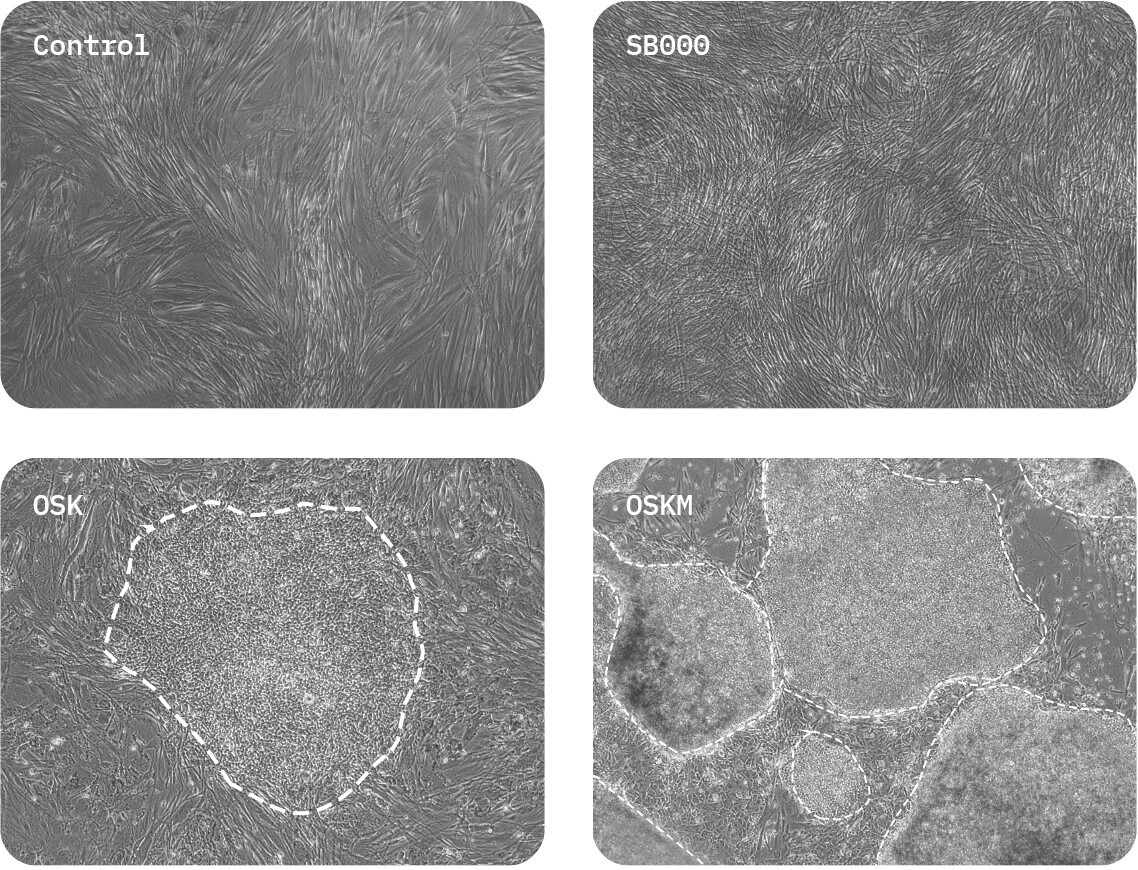
With that said, I am quite surprised it’s going forwards in humans, in any capacity. Even without the c-Myc, I see this as a fairly risky approach which is not well established and there’s a huge amount we don’t know. For example, as @Olafurpall has alluded to, this is very sensitive to the dose, timing etc. Reprogram too much and cells lose their function, de-differentiate, and even become pluripotent and form tumours. That will be extremely detrimental. If you reprogram optic nerve cells too much, they will stop being nerve cells at all, and there’s no coming back from that.
However, I do believe in the scientific principle that a temporary, controlled, partial reprogramming can rejuvenate cells, because I’ve seen it with my own eyes in my lab and others.
Delivery is crazy difficult, and we can’t control which cells receive the reprogramming factors, or how much. You just kinda inject it around the area and cross your fingers. Most of the work is done in mouse models, and often we us genetically edited mice which can enable OSK(m) using drugs like doxycycline or tamoxifen - but those techniques are not applicable to humans. For humans, I assume they’re using AAV. We can try to develop some sort of specificity using promoter driven expression, but it’s still not well defined. It’s also extremely dependent on the type of cell, so what works well for an optic nerve neurone may not work for a muscle cell or a liver cell.
So yes, I think it’s very cool that people are pushing this forwards. But it has to be done very carefully. Racing ahead, taking too many risks etc could backfire spectacularly. If someone develops a nasty teratoma behind their eye the whole stem cell and reprogramming field will be tarnished for at least a decade. The last thing we need is some sort of celebrity hype man over-selling this.