Will a human ever celebrate a 150th birthday? You bet, says Stephen Austad, a biology of ageing researcher at the University of Alabama at Birmingham. Austad is so sure that life expectancy is poised for another rapid rise, he put money down in 2000 that the first person to reach 150 was already alive.
It’s a fantastical idea, counters Jay Olshansky, a longevity researcher at the University of Illinois Chicago, who took Austad’s bet and foresees a payout for his descendants in 2150.
So far, the numbers seem to fall in Olshansky’s favour. During the twentieth century, medical advances added 30 years to human life expectancy. Since then, the rise has slowed significantly — as Olshansky was sure it would.
“In 1990, colleagues and I forecast that the rise in life expectancy will slow, as more people live long enough to be exposed to the immutable force of ageing,” Olshansky says1. When Olshansky revisited this analysis in 2024, he and his co-authors confirmed that life expectancy in the developed world was flatlining2.
The human body has been pushed about as far as it can go by conventional medicine, Olshansky says. “As long as ageing remains unmodified, you can’t push out the envelope of survival much beyond where we are today.” The only path to further radical human lifespan extension, he concluded, is to slow the ageing process itself.
Austad agrees. “I think we’re very close to being able to do it,” he adds, noting numerous approaches that have shown promise in animals and, increasingly, in people.
Perhaps surprisingly, given their wager, Olshansky also sees great potential in this work. “I’m very optimistic that we will be able to slow down the biological process of ageing,” he says. “I think it will happen in our lifetime.” On how much this might impact lifespan, Olshansky and Austad differ, although both agree that such considerations are a distraction. Ultimately, the point is not how long we live, but how well we live.
Read the full story: Could humans live to 150? Why some researchers think we’re on the cusp of a major longevity breakthrough (Nature)
8 Likes
I wonder how many people would want to live to 150? I was born in 1953 and had a great childhood but not sure I’m keen on living that long given how the times have changed. Since this is a longevity site doubt many folks here agree with me. 
1 Like
What if a 145 years old guy is physically capable like 50 today and looks like 50 too, are you still don’t want to live to 150?
4 Likes
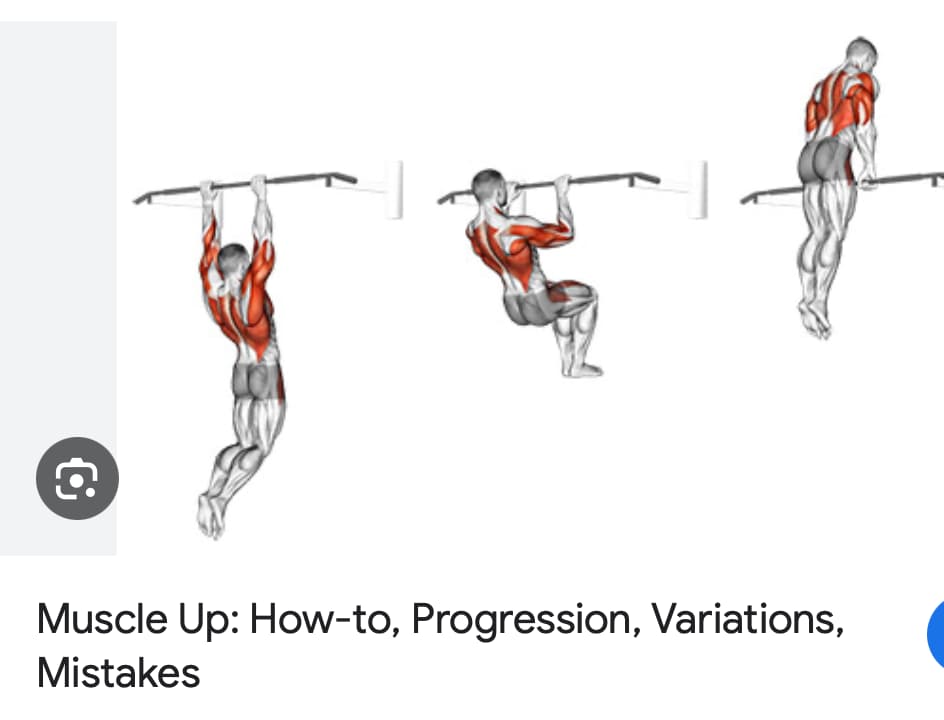
I was born in 53 also and times sure have changed. What keeps me going is a goal to do a muscle-up. Sounds like a silly goal, who cares, but its important to me. And I still have family in the house, so that’s a big factor. If I was alone I’d probably do some volunteer work at church to get me around people every few days. I’ve had relatives that died old and alone and its rather sad. So the question of “what to do” in extreme old age is very important to meaning and to life itself. Best Wishes.
3 Likes
As long as you feel good why not keep living. World is insane I agree, but I’m kinda curious how it turns out.
2 Likes
People will be so different once humans start living to 150 it will be hard to predict what they will think about living longer. The difference in what they will think then versus now will be even more dramatic than comparing one’s present self with, say, one’s self at age 5. They’re like two completely different people (even accounting for the effects of development).
Even what it means to be human is going to shift radically. In 50 more years it might even be commonplace to replace some of our biological organs with mechanical versions that never break down, including even parts of our brains – or, if we opt to remain “biological”, we might have an army of little sub-1 cubic millimeter robots swimming through our bodies at all times replacing tissue with younger versions, eliminating cancer, removing plaque, synthesizing medicines on the fly, etc. Our medical technology might be as advanced compared to today as computer technology circa 2025 is more advanced than computer tech circa 1975 (50 years prior).
Because things will be so radically different from today, I tend to focus on what people will be thinking and doing just 10 to 20 years into the future (not 50+).
Even just 5 years from now I expect tech will be absolutely crazy impressive (just look at how fast AI is advancing, with no signs of plateauing any time soon, contrary to what you might read in The New Yorker or The Atlantic); definitely something people should be hoping to live long enough to bear witness to. We’re about to enter an era unlike any seen in human history, in fact. Progress will be several times faster than the industrial revolution.
2 Likes
I had to look up muscle pull up - wow that’s quite a goal and not silly at all! It’s nice that you still have folks in the house.
1 Like
Does it scare you a bit though? I heard an AI expert say that it’s possible these AI robots could reach the capability to destroy humans. Will there even be human life in 150 years?
The pulling on up over the bar - wow! You’d really have to be “lean and mean” to do that.
You’ve got a point re being curious about what’s to come, seeing how the lives of the younger generations turn out and such.
Due to chronic health issues causing much fatigue, some pain, and decreased mobility due to a bad fall and disastrous knee replacement I’m not able to travel or be too active but y’all have still made me rethink it because I can still find joy and I am curious. Sometimes I just get tired and discouraged but I suppose even healthy folks get that way and can’t truly appreciate what they have because they’ve nothing to compare it with. Currently my entertainment is watching a wasp that is hanging on to life in my kitchen window - being mid November in Colorado near 7000 ft up, am wondering if it’s a queen because shouldn’t they all be dead by now? I gave her a grape which really perked her up.
2 Likes
For a complicated set of reasons, I do not fear to an excessive degree AIs “taking over” and destroying humanity. I think that could happen, but my worry about it is low.
At the top of my list of worries is people using AI to track basically everyone, and then using it against them in various ways. e.g. to stifle free speech (easily track down inconsistencies in something someone has said or written, and make them out to be a hypocrite; or, harass them online using bots that know every flaw they possess; or ferret out embarrassing truths about them), to increase lawsuits (much more easily track down things to sue people over), make protesting much more difficult (protesters can be easily tracked by face recognition, and then added to a spreadsheet “enemies list” of people to harass). Also, theoretically we could have a society where it’s impossible to get away with a crime, if everyone’s every move is tracked (which sounds good, except who decides what should be considered a crime and what shouldn’t be?); and prisoners could never, ever escape with AI watching their every move every hour of the day – and if they try to kill themselves we can track that, too.
I think, in fact, that this is the world we are headed towards. Many science fiction novels that imagined more “freedom” (where what you said or did at time A at place B didn’t strongly determine what you’re capable of doing at time C and place D) got it wrong. We’ll need to find some way to adapt to this. Maybe we’ll need to become less attached to a fixed self-concept or something.
1 Like