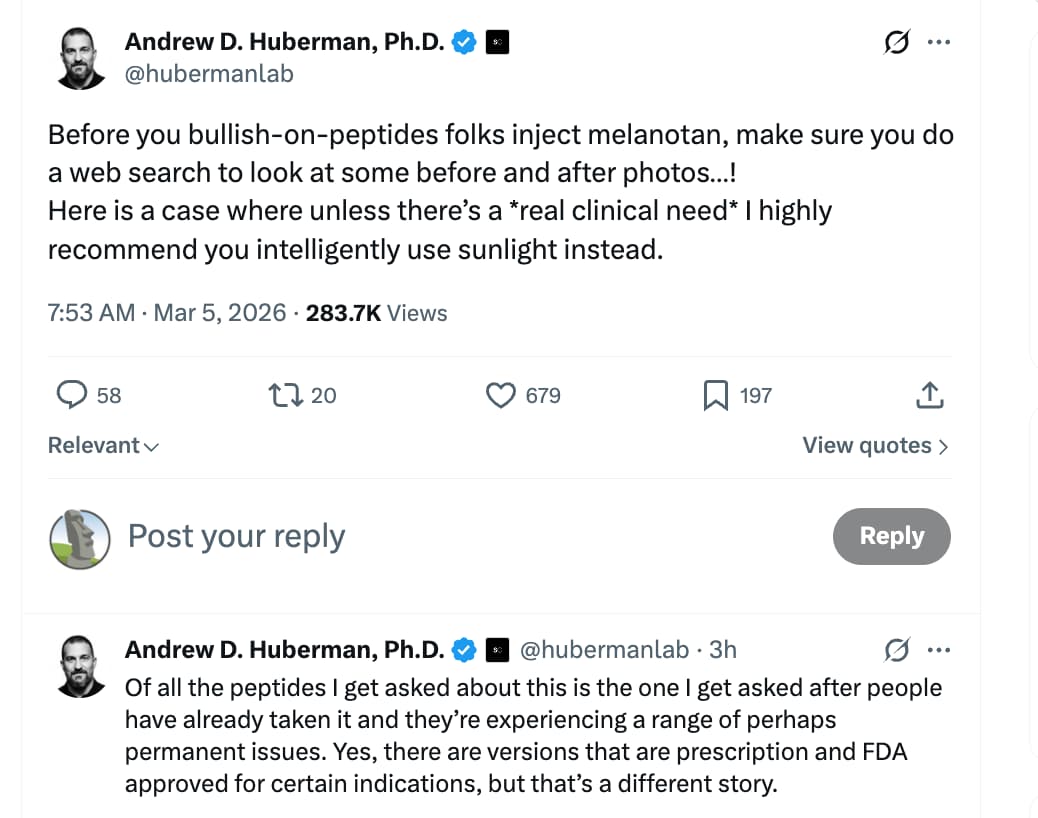
Here is a summary of the top 20 peptides in use today, their purported benefits, and risks, and open questions. (Gemini Pro, Deep Search):
Comprehensive Expert Analysis of the Top 20 Peptide Therapeutics
This report provides a critical evaluation of the twenty most common non-GLP-1 peptides used in the longevity and biohacking communities. Each molecule is assessed based on clinical evidence, verified risks, and translational challenges.
1. Tissue Repair & Injury Recovery (The “Wolverine” Peptides)
BPC-157 (Body Protection Compound-157)
BENEFITS:
Scientific evidence indicates that BPC-157, a 15-amino acid fragment derived from gastric juice, promotes significant tissue repair in tendons, ligaments, and muscle. It functions primarily through the upregulation of Vascular Endothelial Growth Factor (VEGF) and the nitric oxide (NO) system to drive angiogenesis.
-
Musculoskeletal Healing: Preclinical models show accelerated healing kinetics and improved collagen organization in Achilles tendon ruptures.
-
GI and Systemic Repair: Evidence suggests protective effects against NSAID-induced gut damage and potential benefits for neuropsychiatric conditions like depression.
-
Reference:(https://pubmed.ncbi.nlm.nih.gov/40005999/)
RISKS and SIDE EFFECTS:
-
Regulatory Restrictions: The FDA classified BPC-157 as a Category 2 bulk drug in 2023, citing potential immunogenicity and complexities in manufacturing.
-
Theoretical Oncogenesis: While studies show it may inhibit certain tumors, the potent VEGF-driven angiogenesis carries a theoretical risk of supporting micrometastases.
-
Specific Issues: High levels of NO can inhibit heme insertion into hemoglobin, leading to anemia or altered drug metabolism.
-
Reference:(https://pmc.ncbi.nlm.nih.gov/articles/PMC12446177/)
FAQ:
-
Does BPC-157 cause tumor growth through angiogenesis? While it stimulates VEGF, some studies suggest it may simultaneously inhibit uncontrolled cell proliferation. However, whether this holds in aging humans with occult cancer is Unknown.
-
Is oral administration as effective as injection? BPC-157 is stable in gastric acid, making oral use plausible, but most regenerative data is based on systemic or localized injection.
-
Can BPC-157 interfere with standard medications? Through its impact on CYP enzymes and the NO system, it may alter the metabolism of other drugs. The specific interactions are largely Unknown.
TB-500 (Thymosin Beta-4 Analog)
BENEFITS:
TB-500 is a synthetic fragment of Thymosin Beta-4 (TB4). Clinical evidence for TB4 includes heart tissue protection post-myocardial infarction and reduction of ocular discomfort in eye health trials.
-
Tissue Repair: Promotes cell migration and shifts macrophage polarization from M1 (pro-inflammatory) to M2 (anti-inflammatory).
-
Circulation: Assists in vascular growth support systemically.
-
Reference:(https://www.innerbody.com/thymosin-beta-4-and-tb-500)
RISKS and SIDE EFFECTS:
-
Safety Data: Human safety for TB4 is considered “excellent,” but human safety data specifically for the synthetic TB-500 fragment is Data Absent.
-
Oncogenic Risk: Like all angiogenic factors, individuals with active cancer must avoid these peptides.
-
Common Side Effects: Headaches, dizziness, and injection site reactions (redness/swelling).
-
Reference:(https://globalrph.com/2025/11/bpc-157-and-tb-500-background-indications-efficacy-and-safety/)
FAQ:
-
Is TB-500 identical to TB4? No, TB-500 is the 7-amino acid active site segment. A 2024 study suggests its efficacy might actually come from its metabolite, Ac-LKKTE.
-
Does it help with hair loss? Preclinical research is positive, but human clinical confirmation is Unknown.
-
Is it legal for athletes? No, it is banned by WADA under the S2 category.
GHK-Cu (Copper Peptide)
BENEFITS:
GHK-Cu is a naturally occurring tripeptide that declines by 60% by age 60.
-
Skin and Hair: Increases collagen, elastin, and skin thickness while reducing fine lines. It also promotes hair growth by ensuring follicles receive nutrients via improved circulation.
-
DNA Repair: Modulates over 1,000 genes, including those for antioxidant defense (Nrf2 activation).
-
Systemic Recovery: May restore function in COPD-damaged lung cells and act as a SIRT1 activator to reduce inflammation in digestive diseases like colitis.
-
Reference:(https://pmc.ncbi.nlm.nih.gov/articles/PMC6073405/)
RISKS and SIDE EFFECTS:
-
Copper Toxicity: Excessive doses may cause abdominal pain, tremors, and metallic taste.
-
Contraindications: Individuals with Wilson’s disease or copper metabolism disorders should avoid GHK-Cu.
-
General Reactions: Mild skin irritation when used topically; dizziness or nausea when used via injection.
-
Reference:(https://amazing-meds.com/ghk-cu-side-effects-risks-safety-and-precautions/)
FAQ:
-
How long can I use GHK-Cu? It does not appear to lead to tolerance, and users report ongoing benefits with consistent use for skin and connective tissue.
-
Can I combine it with Vitamin C topically? It is not recommended to combine GHK-Cu with harsh actives like Vitamin C or retinoids, as they can cause irritation or reduce efficacy.
-
Does it increase the risk of cancer? While it stimulates angiogenesis, it also demonstrates anti-cancer properties by suppressing metastatic gene expression. The net effect in a living human tumor environment is Unknown.
2. Growth Hormone Secretagogues (GHS)
CJC-1295 (DAC Formulation)
BENEFITS:
CJC-1295 is a long-acting GHRH analog that increases GH and IGF-1 levels.
-
Sustained GH Release: A single injection can increase GH 2- to 10-fold for over 6 days and IGF-1 1.5- to 3-fold for 9-11 days.
-
Body Composition: Improved fat loss and muscle growth through increased IGF-1 availability.
-
Reference:(https://pubmed.ncbi.nlm.nih.gov/16352683/)
RISKS and SIDE EFFECTS:
-
Cumulative Effect: Multiple doses can cause IGF-1 levels to remain above baseline for up to 28 days, necessitating careful monitoring to avoid side effects of chronic GH elevation.
-
Common Reactions: Flushing, warm sensation, and injection site irritation.
-
Reference:(https://pmc.ncbi.nlm.nih.gov/articles/PMC5632578/)
FAQ:
-
What is DAC? DAC (Drug Affinity Complex) binds to albumin, extending the peptide’s half-life from minutes to roughly 6-8 days.
-
Will it cause acromegaly? While intended to mimic pulsatile release, chronic high-dose use could theoretically mimic acromegaly-like symptoms. Monitoring IGF-1 is critical.
-
Does it affect insulin? GH elevation can antagonize insulin action, potentially raising blood glucose.
Ipamorelin
BENEFITS:
Ipamorelin is a selective ghrelin receptor agonist that stimulates GH without significantly impacting cortisol or prolactin.
- Vitality: Improves sleep quality, muscle repair, and body composition.
- Reference:(https://www.liquivida.com/a-better-you/the-role-of-ghrp-2-and-ghrp-6-in-enhancing-health-and-vitality)
RISKS and SIDE EFFECTS:
-
Lethal Risk: A clinical study using intravenous Ipamorelin for gastric motility identified serious adverse events, including death.
-
Immunogenicity: Subcutaneous administration may pose risks for immunogenicity due to unnatural amino acids and potential impurities.
-
Human Safety: Human safety data for standard subcutaneous longevity protocols is Data Absent.
FAQ:
- Is it safer than GHRP-2? It has a “cleaner” profile regarding cortisol and prolactin elevation, which are common with GHRP-2.
- Does it cause hunger? As a ghrelin mimetic, it can cause transient increases in appetite, though usually less so than GHRP-6.
- What organ function should be checked? Periodic IGF-1 levels and blood glucose monitoring are recommended.
Tesamorelin
BENEFITS:
Tesamorelin is the only FDA-approved GHRH analog for reducing visceral fat in HIV-infected patients with lipodystrophy.
-
Targeted Fat Loss: Specifically reduces abdominal (belly) fat by approximately 18%.
-
Reference:(https://www.accessdata.fda.gov/drugsatfda_docs/label/2025/022505s020lbl.pdf)
RISKS and SIDE EFFECTS:
-
Malignancy Risk: It is contraindicated in patients with active malignancy due to IGF-1 elevation.
-
Fluid Retention: Can lead to edema, joint pain (arthralgia), and carpal tunnel syndrome.
-
Metabolic Impact: May cause glucose intolerance or diabetes mellitus.
-
Reference:(https://www.mayoclinic.org/drugs-supplements/tesamorelin-subcutaneous-route/description/drg-20074632)
FAQ:
-
Can I use it for general weight loss? No, Tesamorelin has a “weight neutral” effect; it shifts fat distribution rather than causing overall weight reduction.
-
Is it safe for children? Use is not recommended in children whose bones are still growing.
-
What if I miss a dose? Take it as soon as possible, but do not double doses if it is nearly time for the next scheduled injection.
MK-677 (Ibutamoren)
BENEFITS:
An orally active ghrelin mimetic that maintains elevated GH and IGF-1 levels for 24 hours.
-
Anabolic Effects: Increases fat-free mass and can reverse nitrogen wasting.
-
Sleep: Improves sleep quality, specifically increasing REM sleep duration.
-
Reference:(https://pmc.ncbi.nlm.nih.gov/articles/PMC5632578/)
RISKS and SIDE EFFECTS:
-
Hyperglycemia: Significantly decreases insulin sensitivity, leading to increases in blood glucose and HbA1c.
-
Physical Pain: Muscle pain and fluid retention (edema) are frequent.
-
Reference:(https://pmc.ncbi.nlm.nih.gov/articles/PMC5632578/)
FAQ:
-
Is it a peptide? Technically no, it is a small molecule secretagogue, but it is grouped with peptides because of its mechanism.
-
How long should an “off-cycle” be? Because of its impact on insulin resistance, off-cycles are recommended, but the optimal duration to reset sensitivity is Unknown.
-
Does it cause hunger? Yes, it is known to cause a significant increase in appetite.
3. Metabolic & Fat Loss
AOD-9604 (Anti-Obesity Drug)
BENEFITS:
AOD-9604 is a C-terminal fragment of human GH (residues 177-191) developed to trigger lipolysis without the metabolic risks of full GH.
-
Lipolysis Stimulation: Increases fat breakdown as shown by elevated plasma glycerol in animal models.
-
Tissue Support: Emerging research suggests it may aid in cartilage repair and osteoarthritis.
-
Reference:(https://jofem.org/index.php/jofem/article/view/157/195)
RISKS and SIDE EFFECTS:
-
Mixed Efficacy: While modest weight loss (2.6 kg) was seen in one Phase IIb study, a larger 24-week trial involving 534 participants failed to show statistically significant weight loss.
-
Human Status: Withdrawn from human therapeutic development in most regions; currently sold as a research chemical.
-
Reference:(https://driphydration.com/blog/aod-9604-guide/)
FAQ:
-
Does it affect insulin or IGF-1? No, unlike full-length GH, AOD-9604 does not impact carbohydrate metabolism or serum IGF-1 levels.
-
Why did it fail human trials for fat loss? The robust lipolytic effects seen in Zucker rats did not translate to significant weight loss in humans. The exact molecular reason for this gap is Unknown.
-
Is it legal for sport? No, it is banned by WADA.
MOTS-c (Mitochondrial-Derived Peptide)
BENEFITS:
MOTS-c is an “exercise mimetic” encoded by the mitochondrial genome that activates the AMPK pathway.
-
Insulin Sensitivity: Restores youthful insulin sensitivity levels in aged mice within 7 days.
-
Physical Performance: Systemic treatment in mice increased treadmill performance by 2-fold.
-
Reference:(https://pmc.ncbi.nlm.nih.gov/articles/PMC9905433/)
RISKS and SIDE EFFECTS:
-
Human Safety: No effective method for clinical application has been fully developed; formal human safety studies are Data Absent.
-
Delivery Hazards: If using genetically engineered bacteria for delivery, virulence and uncontrollable immune responses are significant biosafety concerns.
-
Reference:(https://pmc.ncbi.nlm.nih.gov/articles/PMC9866798/)
FAQ:
-
How does it enter cells? It is an ongoing investigation; MOTS-c can enter cells within 30 minutes, but the mechanism of entry without degradation is Unknown.
-
Does MOTS-c decline with age? Yes, human plasma levels are 11-21% higher in youth compared to middle-aged and elderly individuals.
-
Is it safe for the liver? Preclinical data suggests MOTS-c avoids the hepatotoxicity seen with other treatments like metformin.
5-Amino-1MQ (NNMT Inhibitor)
BENEFITS:
A small molecule inhibitor of nicotinamide N-methyltransferase (NNMT), an enzyme overexpressed in the adipose tissue of the obese.
-
Metabolic Restoration: Increases intracellular NAD+ and SAM levels, reducing fat mass and improving glucose tolerance in mice.
-
Liver Health: Normalizes elevated ALT/AST levels in models of diet-induced obesity.
-
Reference:(https://pubmed.ncbi.nlm.nih.gov/39161060/)
RISKS and SIDE EFFECTS:
-
Human Exposure: FDA lacks human exposure data on its safety; human clinical trials are Data Absent.
-
Epigenetic Impact: By blocking SAM consumption, it may alter global DNA and histone methylation patterns. The long-term safety of this is Unknown.
FAQ:
-
Is it orally bioavailable? Pharmacokinetic studies in rats showed substantial plasma exposure via the oral route.
-
Does it affect muscle? It effectively distributes to metabolically active tissues including muscle and liver.
-
What is the “Dual Drain”? NNMT overexpression causes a dual drain of NAM (precursor for NAD+) and SAM (universal methyl donor); 5-Amino-1MQ blocks this drain.
4. Cognitive & Nootropic
Semax & Selank
BENEFITS:
Synthetic Russian neuropeptides used for neuroprotection (Semax) and anxiety relief (Selank).
- Connectivity: fMRI signals show altered resting-state connectivity in the amygdala and prefrontal cortex within 20 minutes.
- Neurotrophic Factors: Rapid induction of BDNF and NGF expression in the cortex and hippocampus.
- Reference:(https://pubmed.ncbi.nlm.nih.gov/32342318/)
RISKS and SIDE EFFECTS:
- Evidence Gap: Well-conducted, published English-language human trials are lacking.
- Specific Contexts: Semax effects may selectively depend on tissue state (e.g., more active in ischemic cortex vs. intact cortex).
- Reference:(https://www.alzdiscovery.org/uploads/cognitive_vitality_media/Semax-Cognitive-Vitality-For-Researchers.pdf)
FAQ:
-
How long does the BDNF increase last? Preclinical data shows BDNF levels increase at 3-8 hours but return to baseline by 24 hours.
-
Do they have sedating effects? No, Selank provides anxiolytic effects via GABAA modulation without the amnesia or dependence of benzodiazepines.
-
Is Semax useful for Alzheimer’s? There is currently no evidence that Semax is beneficial for AD.
Dihexa
BENEFITS:
A small molecule angiotensin IV analog designed for neuroregeneration.
-
Synaptogenesis: Induces spinogenesis and synaptogenesis at picomolar concentrations, effectively restoring spatial learning in rodent models.
RISKS and SIDE EFFECTS:
-
Potent Proto-Oncogene Agonist: Dihexa activates the c-Met receptor. The HGF/c-Met axis is a major driver of oncogenesis, invasion, and metastasis in human cancers.
-
Human Safety: The FDA has not identified any human exposure data for Dihexa; human safety is Data Absent.
-
Reference:(https://pmc.ncbi.nlm.nih.gov/articles/PMC7491978/)
FAQ:
-
Does Dihexa cross the blood-brain barrier? Yes, it was specifically engineered for high hydrophobicity and BBB penetration.
-
How would one monitor safety while taking it? A longevity specialist would likely mandate intensive cancer screening (e.g., liquid biopsy or MRI) due to c-Met activity, but a validated protocol is Unknown.
-
Is it related to blood pressure? It is an analog of Angiotensin IV, which is part of the brain’s renin-angiotensin system, but its primary action is synaptogenesis rather than systemic BP control.
5. Immune & Longevity
Thymosin Alpha-1 (TA1)
BENEFITS:
A 28-amino acid immune modulator that restores T-cell homeostasis.
- Broad Efficacy: Clinically validated in over 11,000 subjects for COVID-19, sepsis, and as an adjuvant to chemotherapy to reduce toxicity.
- Reference:(https://pubmed.ncbi.nlm.nih.gov/38308608/)
RISKS and SIDE EFFECTS:
-
Regulatory Status: Despite global approval in 35 countries, the FDA restricted its use in compounded pharmacies in 2023.
-
Severe Illness Limitation: Recent evidence suggests TA1 may not prevent progression or reduce mortality in non-severe COVID-19 patients.
-
Reference:(https://pmc.ncbi.nlm.nih.gov/articles/PMC8102900/)
FAQ:
- How long is the half-life? It is very short—less than 3 hours.
- Does it cause cytokine storms? No, it is actually used to mitigate them by inhibiting the overactivation of T-cells.
- Why did the FDA restrict it? The restriction appears focused on manufacturing standards and the definition of a bulk drug substance rather than new toxicity data.
Epitalon (Epithalon)
BENEFITS:
A tetrapeptide that upregulates telomerase and lengthens telomeres.
-
Cellular Rejuvenation: Enhances hTERT mRNA expression and extends cellular lifespan beyond the Hayflick limit in human fibroblasts.
-
Anti-Cancer Signals: Some Russian studies report Epitalon inhibits leukemia and slows tumor growth via enhanced immune surveillance.
-
Reference:(https://pulseandremedy.com/anti-aging/epithalon-the-peptide-linked-to-longevity-and-cellular-renewal/)
RISKS and SIDE EFFECTS:
-
Long-Term Human Data: Comprehensive long-term safety data (years of use) is Data Absent.
-
Theoretical Risk: Telomerase activation could theoretically support the replicative immortality of existing cancer cells.
-
Reference:(https://sciety.org/articles/activity/10.21203/rs-7066545/v1)
FAQ:
-
Does it work on all chromosomes? It is Unknown if it extends telomeres at the same rate across all chromosomes.
-
Is it a melatonin supplement? No, but it stimulates endogenous melatonin production in the pineal gland, which can improve sleep quality.
-
What is a standard “Longevity” cycle? Researchers often use 5-10 mg for 10-20 days, followed by several months of rest.
SS-31 (Elamipretide)
BENEFITS:
Targets the mitochondrial inner membrane to stabilize cardiolipin and enhance ATP production.
-
FDA Approval: Approved in December 2024 (as FORZINITY) for Barth syndrome.
-
Muscle Strength: Demonstrated significant improvements in knee extensor muscle strength in TAZPOWER trials.
RISKS and SIDE EFFECTS:
-
Injection Site Reactions: The most common adverse effect, often treatable with oral antihistamines.
-
Failed Indications: Clinical trials in heart failure and primary mitochondrial myopathy have failed to reach their primary endpoints.
-
Reference:(https://www.alzdiscovery.org/uploads/cognitive_vitality_media/SS-31-Cognitive-Vitality-For-Researchers.pdf)
FAQ:
-
Does it bind differently in different tissues? SS-31 binds directly to the mitochondrial transporters ANT and ATP synthase; the threshold for this effect in neurons vs. muscle is Unknown.
-
Is it an antioxidant? It was originally thought to be one, but its primary function is likely membrane stabilization and electron transport efficiency.
-
How long is it safe to use? Treatments longer than 4 weeks have not been rigorously studied in general aging populations.
6. Cosmetic & Lifestyle
Melanotan II & PT-141
BENEFITS:
PT-141 (Bremelanotide) is FDA-approved for female hypoactive sexual desire disorder (HSDD). Melanotan II is used unofficially for rapid skin tanning.
-
Sexual Function: Statistically significant improvements in sexual desire and related distress.
-
Reference:(https://pmc.ncbi.nlm.nih.gov/articles/PMC6819023/)
RISKS and SIDE EFFECTS:
- Melanoma Danger: Melanotan II use is linked to the development of new moles, atypical nevi, and melanoma. It can also darken existing lesions, masking the early detection of skin cancer.
- Cardiovascular: Causes transient blood pressure increases and should be used with caution in at-risk patients.
- Rhabdomyolysis: Melanotan II has been associated with fatal muscle destruction in rare cases.
- Reference:(https://www.hpra.ie/safety-information/safety-notices/article/reminder-of-serious-health-risks-with-melanotan-2-self-tan-products)
FAQ:
-
Is PT-141 as risky as Melanotan II for tanning? PT-141 is more selective for sexual desire pathways, but focal hyperpigmentation was seen in 1/3 of subjects when used daily.
-
Does a tan from these peptides protect against UV? No, artificial tanning from peptides does not provide the UV protection of standard sunscreen.
-
What is the “Barbie Drug”? This is the social media nickname for Melanotan II due to its effects on tanning, weight loss, and libido.
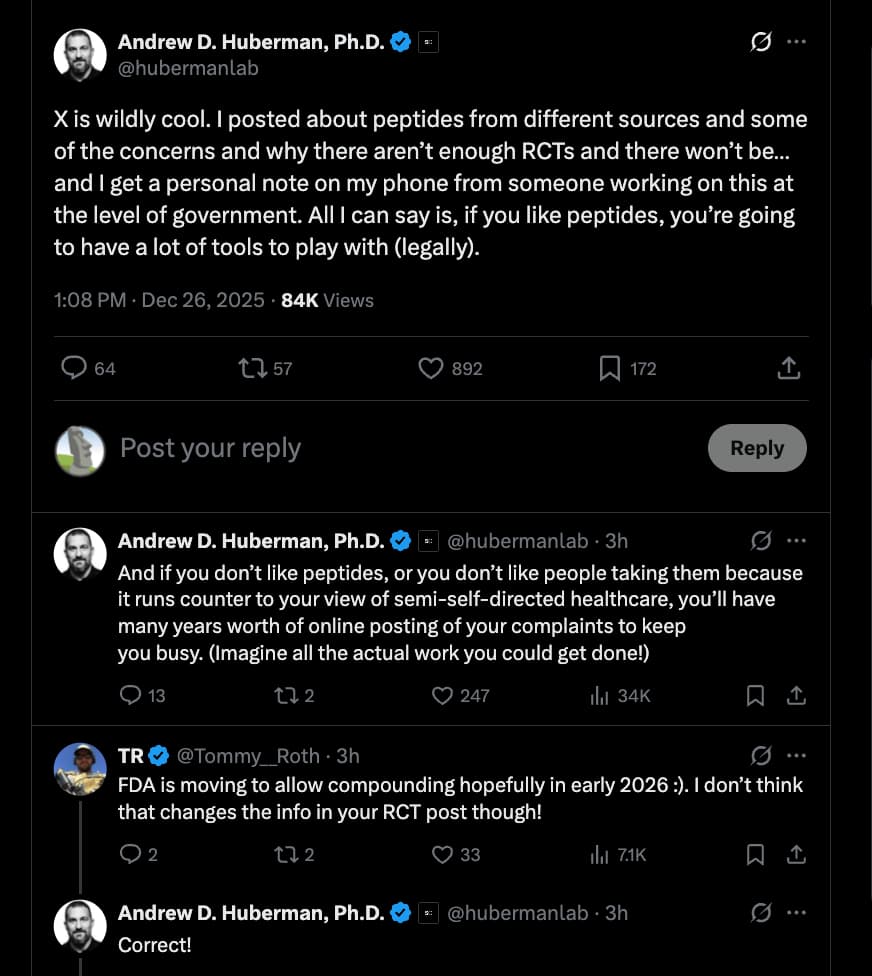
 once a week does the trick LoL!