Cervical disc surgery - advice?

Absolutely talked to the surgeon - he will be the one doing the procedure. There will be an additional observer assistant surgeon who is there also in a learning capacity, but the procedure itself will definitely be done by him, the lead surgeon.

Jogging - yes, bouncing up and down is in fact impossible when the symptoms are in full bloom. However, I had a corticosteroid shot in the area in the diagnosis process (long story that’s quite instructive, I will write a post about this once it’s all over). As a result I have had a temporary abatement of the symptoms and I’m simply taking advantage of the situation to exercise the way I couldn’t in the previous weeks. I cleared this with the surgeon. Some exercises are restricted: no weighted jump squats for now or months post surgery etc.

2 Likes

Brilliant of you to point out what needs to be discussed prior with the surgeon.

I was a pharma rep a million years ago. One day I was in surgery with a doc to observe him doing a laparoscopic procedure, and he offered to let me grab hold of his tools so I could take ‘look around’. ME!! I was mortified (as was everyone else in the room).

Needless to say, when I’ve had surgeries, I insist no reps be in the room! This was obviously not normal, but you can’t ignore what wildly inappropriate things some people will do in their misguided effort to flirt.

2 Likes

Wow, that is scary! The reason I thought of this is that recently in Seattle, a dentist was left paralyzed from the chest down after a spinal cord surgery to remove a benign tumor. He claims he was specifically assured that no residents would be involved in the surgery (only observing behind glass), but says this isn’t what happened. Of course, it all needs to play out in court to find out the full story.

2 Likes

I don’t think it has been said and maybe not super critical given the audience here but…

Recovery needs protein. Appetite is often very diminished from surgery, pain etc. Chowing down on meat after a c spine surgery is probably not what you want to do.

IMO, nearly everyone should be on protein shakes after most significant surgeries.

Nearly everyone carb loads the morning of surgery now. If that isn’t in your surgeon’s protocol, it maybe worth wondering what else isn’t. Many also do the night before.

Hibiclens showers for 2 days prior also basic protocol.

The data on pre op urine testing and nasal swabbing is less clear but hardware instilling surgeries are allowed to overkill on these things.

NSAIDs post op is one that orthopods were mostly late to the game on. They had data from the mid 90s about reduced cartilage healing. It was a common disagreement in the trauma world. It seems like most of them have gotten past this. The narcotic avoidance has driven that home for most.

On that topic (rant here) most orthopods still give too many narcotic pills after surgery. The addiction data correlates very well to number of pills given and back surgery is one of the gateways to addiction. Mostly pre-op pain started the process. Neck surgery is a different world with much less pain and better satisfaction which was noted above.

No resident anywhere observes behind glass except in the movies. Perhaps exaggeration - maybe outside the US? But hard to have glass near a field.

Reps often help in the room. If there is a problem, they are the technical assist. They never scrub in - not allowed. Lots of people make requests and generally these things are ignored if they aren’t reasonable. Residents assist in teaching hospitals. And that is non negotiable in most situations.

2 Likes

Eighteen days post surgery.

Just back from post-op checkup.
All good as far as the surgery.
Still have swelling around my neck.
Still difficult to swallow.

No more requirement to wear a soft collar.

Cleared to sleep on my side.
Cleared to use the Katalyst suit.
Cleared to do body weight squats, lower body exercises (below my shoulders), walking.
Cleared to do lower body mobility work.

Full body stretching a month or two out.

Got in 10 thousand steps this morning.

Started doing isometric squats against a wall while I brush my teeth.
I sometime vary this with horse stance or full squats (hamstrings to calves).
I can pull myself up if I get stuck but so far pretty good.

Main restriction, don’t introduce momentum to any movements that can torque my neck beyond where it can currently easily move.

Bending my head forward, no issues.
Turning my head is to side maybe 50% restricted from before the surgery.
Bending my head backwards, I can go further than I feel comfortable doing (the X-Ray tech had me bend back for one of the images.

No physical therapy for another month.

No issues with bending forward, backward, or side to side from the waist or even up to the thoracic spine e.g., no issue picking something up from the floor.

All in all, much less restrictive than I anticipated.

Still waking at night 3 to 4 times, but this has improved from waking hourly.
Post op congestion has cleared.

3 Likes

Fabulous, @Alpha, sounds like the recovery is going well. I have given a lot of thought to exercise post-op, want to start ASAP, long before PT sessions, start walking immediately, and yes, isometric exercises - I do tons of squats anyhow, and isometric will be perfect. Need the blood and nutrients circulating to assist with recovery.

@DavidCary, yes, that was mentioned by the surgeon, since he has an official teaching position at UCLA, but assured me that the resident is not going to actually do the procedure, just assist and observe, plus he emphasized that there’s a well trained team around, so many eyes, no danger the resident is going to muck it up.

Yes, I gave a lot of thought to nutrition. I routinely take in soy and pea protein powder with my breakfast “soup”, but decided that post-op I will switch to whey protein shakes for some time (lactoferrin etc.). My one concern is to keep up calcium intake (and other bone related minerals), because sometimes high protein low calcium can leach out of the bones, not ideal when looking for bone fusion. I have developed a protocol centered on bone health I am going to follow. That’s another reason I want to get back to exercise as soon as possible. However, I am rather ambivalent about using a bone stimulator - I am going to talk to the surgeon, I have only one level C5-C6, he can assess how the bone looks and what is necessary.

Re carb loading:

Role of preoperative carbohydrate loading: a systematic review

also:

Re: opiods, I’ll use them as needed, but every time I’ve had them prescribed (for dental surgery etc.), I pick up the prescription and don’t end up using them as I don’t need them (I have a bunch of bottles in my medical fridge, some going back like 15 years - good reminder to get rid of the old ones!). Odds are I am not going to go big on them - when I had massive radiculopathy pain prior to a proper diagnosis (a story in itself🙄), my wife reminded me I had a bunch, urged me to take some to at least get a bit of sleep… took a couple of times did diddly squat, so I gave up on them and gritted it out.

I still have another consult scheduled before the surgery, so I’m writing down my questions and concerns. Pro tip: yeah, I know we are all supermen with a memory like a steel trap, but seriously, write down your questions on your ipad or notebook, and don’t be embarrased to crack it open with your doc; amazing how things can slip your mind while there’s a firehose of info and sensory input coming at you during your limited time doctor visit. You may even want to have someone come with you to the appointment as a note taker, as two sets of ears are better than one.
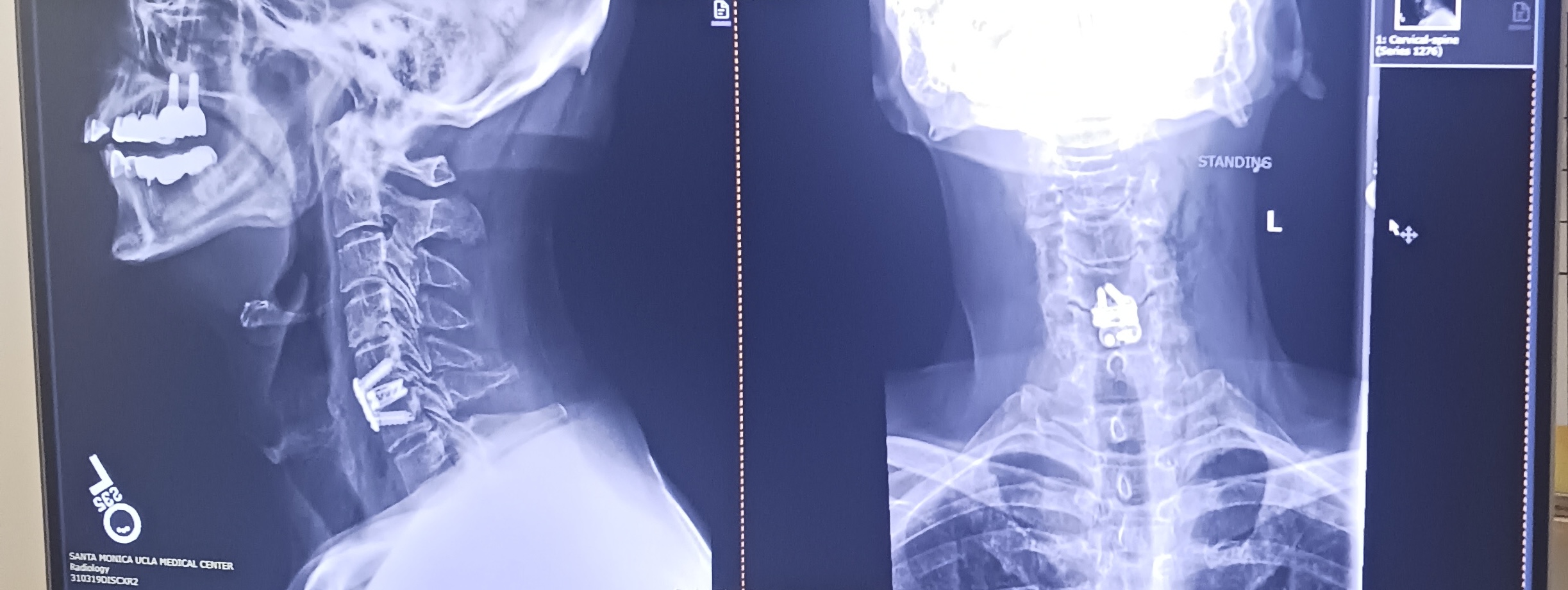
1 Like

My thoughts accompany you.

AND

I ordered a set of Captains of Crush Grippers, to maintain and perhaps increase grip strength as an alternative to the hanging from bars and lifting heavy things that has maintained this functionality so far.

Thank you @Alpha and everyone else for the well wishes. It’s been 4 days since my surgery, so early days yet. So far it seems at least that the surgery went well and the X-rays look good. I’m scheduled for a post op visit with my surgeon first week of January at which point I may have additional information. It’s too early to draw massive conclusions about what worked and what not from my extensive preparation list, and of course it applies to me individually, may not apply to anyone else. Once I’ve gathered a bit more data, I can come back and do a commentary on my big post up the thread and draw a few conclusions. Some things are obvious, and should go without saying, but it hits you hard when you experience it: your surgeon and team are super important, and it’s impossible (at least for me) to imagine how I could have gone through the whole ordeal without my wife at my side helping all the way. To say I was leaning on her would be the understatement of the century. You do need someone at your side who is 100% reliable, and if you have that person, you are lucky indeed. Friends from all over offer help, but there’s a kind of paradox - less is more; while super grateful for all the support, it’s not practical to have a steady stream of visitors while trying to recover and picking up the pieces - you’d spend all your time relating over and over again what the events were and the current status etc… here my wife was again of giant help. I’m grateful to everyone for the excellent care I have received and humbled that so many resources were marshalled on my behalf. If I had to identify one emotion, it would not be fear, or concern or worry, it would be gratitude. I have so much to be thankful for. I’ll check in soon with more thoughts and experiences. Thanks again everyone!

6 Likes

Immediately following my 2 week post-op checkup I started using my Katalyst suit again.
I highly recommend it.

I get in 2 intense training sessions per week (note that with the sessions dialed up to the proper intensity one can’t do more than 2 per week) even with all my movement constraints.

It did wonders for my morale and confidence in maintaining or even strengthening my physical functionality even through the recovery and fusion process.

That’s interesting, because the people at UCLA who were treating me never heard of it. I asked them because I was wondering if they would clear me to use such a device. Neither the surgeon nor any of the three different PT people heard of it. I thought it was slightly odd, because I know a similar suit (the German one) was cleared by the FDA for use in some circumstances.

FWIW, some users prefer Visionbody over Katalyst for a few reasons. I don’t know how valid.

The hardware.

4 Likes

Katalyst also FDA cleared.
Visionbody certainly looks interesting and maybe easier to use.

Then …

He lives pretty clean these days. He works out every day. He recently bought a workout system called Katalyst, a vest and leg bands that send electrical charges to the muscles, creating resistance, so you feel like you’re lifting weight. “Part of getting old is you can’t build muscle. Your body won’t do it. And this thing’s made me so strong. My arms are twice the size they’ve ever been. It’s crazy,” he says.

The man can have anything, he got a Katalyst;-)

1 Like

Katalyst is only compatible with Apple products? That’s lame.

2 Likes

OK, so I just pulled the trigger on Visionbody - the one complicating factor is that each suite is made to order and they have you take your measurements. Officially it takes 4-6 weeks for delivery, but I’ve read horror stories of it taking up to 5 months. We’ll see.

1 Like

Interested in this. I’ve heard stories of these suits being quite effective. Can you give us a ballpark price of what you spent?

As I understand it you don’t just sit there and get impulses for muscle contraction but you have to work out in the suit… is that correct. So it sort of adds intensity to your normal workout? Does it only add intensity to the exercises you are doing or is it more generalized than that?

Price: I purchased the first round of Katalyst availability. I think I paid something under $2500. I think the price has increased to $3000 under the company’s new management.

Just sit there:

You can certainly “…just sit there…” and get a high intensity workout. The suit makes it a demanding high intensity workout. Sit in a chair with the intensity cranked up twice a week or 20 minutes and you will get ripped.

Note: you can’t really do things like work on a computer with the suit on, your arms vibrate too much.

The rest (see below) keeps you engaged. Probably helps with range of movement and neuromuscular training.

The Katalyst app has maybe a hundred different workout sessions that take you through a range of calisthenic type movements. Some targeted toward different sports or goals.

Stimulation protocols: The suit has 4 main types of stimulation protocols:

  • Strength: 4 seconds of stimulation. 4 seconds off. Intensity increasing over the full 20 minute session.

  • Aerobic: Constant pulsing for a selected session time, 10 min, 20, min, 30 min. This can push aerobic training into otherwise unattainable levels of intensity. Consider, you can’t run miles carrying a meaningful percentage of your body weight, but you could run miles wearing the suit cranked up to its highest intensity.

  • Flexibility: 4 seconds of stimulation. 4 seconds off. Not certain if the intensity increases of the 20 minute sessions.

  • Recovery: A constant kneading like massage stimulation. Imagine a full body massage chair.

The calisthenic like movements can include (as example):

  • Presses
  • Pulls
  • Squats
  • Cossack squats
  • Flys
  • Crunches
  • Obliques

Some strength sessions include shadow boxing movements.
No plyometric movements in the recorded sessions as they wouldn’t sync well with the 4 x 4 second protocol.

I’ve sometimes done them with a light weight training bar.
I’ve sometimes actually used weights with the session.

1 Like

FWIW, I paid $1,890 for the Visionbody suit, and I don’t recall if I had to pay additional taxes and shipping, because I did it in a bit of a haze right before midnight 12/31, lol. I just remember the $1,890 price I clicked. Still waiting for them to acknowledge my having sent them the measurements.

@Alpha re: celebrities who can get anything they want and choosing Katalyst. Meh, I spent decades both professionally and privately with a lot of a-list celebs and various ultrawealthy machers (due to my work), and I’m super unimpressed with their discernment skills outside their area of expertise. Sure they can afford anything, but that doesn’t mean they choose the best or their assistants do. It’s mostly a crapshoot. This does NOT mean I think Visionbody is better than Katalyst, I honestly don’t know. I just liked some aspects of the Visionbody (smaller, lighter, faster to use), but only a good comparison by someone who has used both might tell us something actionable. If I’m wrong, I can always buy the Katalyst later :grinning:

1 Like

@Alpha @CronosTempi Thanks for sharing the details. I’ll be interested in hearing CronosTempi’s take to compare with Alpha’s. So body builders must use this sort of thing as well for toning? It just seems like a good way to do a home gym. It is expensive but seems very tempting. I may join the ranks as I’m often away from the gym and need an alternative workout to stay consistent. @CronosTempi In reviewing this thread it looks like you had your surgery the end of December. I hope your recovery is going smoothly. Hang in there!

Thank you, @59vw, yes, as I’ve reported in a post earlier in the thread, the surgery was successful. The surgery took place early 12/26, so it’s been some 9 days. Everything seems to be going well. I’ll write a longer report soon after my upcoming visit with my surgeon next week.

1 Like

Maybe. I did read the Bruce Lee had rigged up something like this back in the 1970s.

I first learned about this technology from an article about professional soccer (football) teams in Germany embracing the early versions of these suits before they had miniaturized the power pack and control systems. Originally the suits connected by wires to a bank of computers and controllers. They cost something like $100,000.

1 Like