@desertshores, @Kelman you’re more than wecome guys, we all learn from each other, and Charles you are my hero at 85. I know it’s highly unlikely, but Charles, you could write a book on all the supplements and drugs you took throughout your long lifetime, your experiences, how your ideas on health have evolved and your memory of how the longevity space looked like throughout the decades. I’d absolutely read such a book, it would be incredible fun. Heck, I’m 67-68, and even I remember the huge number of fads - which by the way is always a tought in the back of my mind, how some big trend today that seems super-important will turn out to be just another fashionable flash in the pan. Are you old enough to remember Geritol? For awhile there it was pretty much the only game in town, lol. Would you believe it’s still around and being sold to their clientel of 90-somethings, apparently there are enough of those to still sustain sales.
Yes, the first one I remember was the Linus Pauling vitamin C fad. Could prevent the common cold and cure cancers. Easy to believe at the time, as this was from a Nobel Prize-winning scientist.
“Centered on his belief that megadoses of Vitamin C (ascorbic acid) could prevent or cure the common cold and significantly treat advanced cancer. While Pauling was a double Nobel Prize winner, his later-life advocacy for “orthomolecular medicine”—the use of high doses of vitamins—met intense resistance from the medical community as clinical trials failed to replicate his dramatic results”
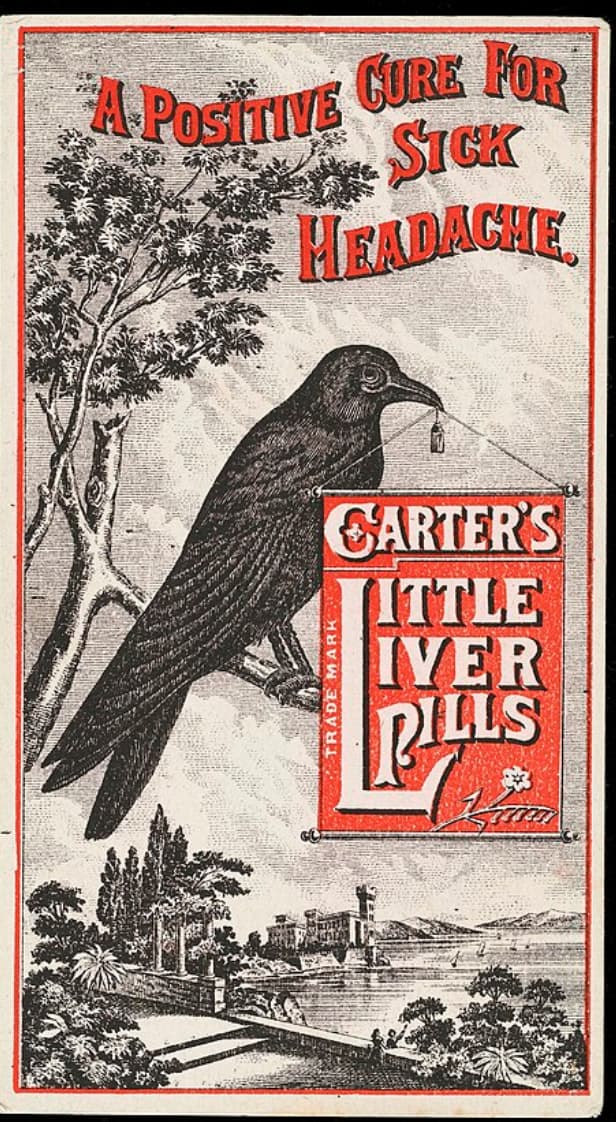
From my childhood radio:
Carter’s Little Liver Pills. Which led to a common phrase at the time: "Someone had more of something than Carter had liver pills.
Another was Iron Tonics for “Iron Poor Blood”. One popular one was Hadacol.

Wow, I went down quite a rabbit hole reading about Hadacol. I like this anecdote:
“When [Groucho] Marx asked LeBlanc what Hadacol was good for, LeBlanc gave an answer of startling honesty. “It was good,” the senator said, “for five million dollars for me last year.””
I feel like this is also the appropriate answer to a ton of supplements “what good is it for” - especially the rich vein of “peptides”.
Also amusing were the attempts to revive the brand after it collapsed in the early 50’s:
“According to the United States Patent and Trademark Office, there were two attempts to revive Hadacol. The first was in 1987 by Edmondson Enterprises of Shreveport, Louisiana.[17] The second attempt was in 1997 by Au Pharmaceuticals of Tyler, Texas.[18] Both attempts to revive the brand were unsuccessful. In 1976, “Hadacol” multi-vitamins were distributed by the Atlanta, Georgia-based “Hadacol Corporation” in an unsuccessful attempt to revive the brand name.”
Everything old is new again, but with updated packaging, or as PT Barnum said, there’s a new sucker born every minute😜.


I often wonder why “the standard of care” (I hate that phrase) is not Pitavastatin given that with the exception of needing to go to very large doses, it seems superior to all other statins. This furthers my skepticism of doctors / the medical establishment. They just seem to parrot committee approved talking points rather than actually think about things from the base fundamentals. I often wonder if specialists in heart disease have as much knowledge of the relevant drugs as even an average member of this forum. These people will let us die because preventing death doesn’t fit within their bureaucratic ritualism.
Well, we know this is true - many cardiologists barely measure ApoB, let alone employ more complex algos. You could say they’re a day late and dollar short, but really, they’re literally years behind. Standard of care is dictated by CYA legal considerations and insurance industry dictates. Patient care comes in third, with predictable results🤷.
It’s probably also a symptom of insurance than anything. The way insurance works in the US is that there are at most 4 drugs offered by companies per drug class. Doctors are often limited by these 4 choices, and have little incentive to look for a 5th one, even if it might be superior.
It’s probably because other statins have detected an all-cause mortality benefit in trials, have more data, and presumably more generic availability. I would pick HbA1c over that like Gil however.
I’d like to switch to pitavastatin but my insurance doesn’t cover it. Who are the reputable Indian brands? Or is there a separate thread for that?
See this thread - and prompt to identify them: Generally Good Indian Pharma Companies - #66 by RapAdmin
I’ve been using the Zydus brand “Pivasta” and it seems to be working as expected.
Seconding @Tilmitt, Pivasta 4 by Zydus. Been taking it for about 18 months, 4mg/day, and labs show it works.
Pitavastatin is not the standard of care because it is too expensive for most patients. Other statins are cheaper and more cost effective. Pitavastatin is the option for the rich or with Indian connections.
Do we know which medications are safe to take from Indian pharma vs. those we’d prefer to source from labs with stronger governance?
My insurance also doesn’t cover pita, but I still buy it in the US. However, if there was little risk of contaminants in pitavastatin, I would prefer to get it cheaper from India. Same goes for Ezetemibe and Acarbose. How do we tell which is safe enough to buy from India vs. which are better sourced in the US?
The Obesity Engine of Cardiovascular Disease: Why Treating Symptoms Fails the Heart
Modern cardiology is facing a stagnation crisis. Despite decades of advanced pharmacotherapy and surgical intervention, cardiovascular disease (CVD) remains the primary global killer. A new study published in the American Journal of Preventive Cardiology suggests the problem lies in our fundamental “paradigm of care”. We are treating the smoke rather than the fire.
The conventional medical model manages cardiometabolic drivers—hypertension, dyslipidemia, and high blood sugar—as independent, concurrent silos. However, researchers from the Mount Sinai Fuster Heart Hospital and various Spanish institutions argue for a “dominant driver” paradigm. By analyzing 966 patients, they demonstrated that in 66.5% of cases, abnormal adiposity (fat mass, distribution, and function) is the “earliest causative driver” that impels all subsequent metabolic failures.
The data reveals a massive discordance between how we see disease and how it actually progresses. Under the conventional lens, 97.2% of the study population appeared to have dyslipidemia and 87.6% had hypertension. But when filtered through the dominant driver model, these “diseases” were exposed as downstream consequences of obesity in the vast majority of patients.
The most alarming finding involves “predisease.” Traditionally, being “overweight” or “prediabetic” is viewed as a warning zone. This study found that over 90% of patients in these supposedly early stages already presented with clinical complications. This suggests that by the time a patient crosses the threshold into “disease,” the damage is already entrenched.
The researchers conclude that the advent of highly effective weight-loss pharmacotherapies (like GLP-1 agonists) allows for a radical simplification of care. Instead of polypharmacy to manage individual symptoms, clinical efforts should pivot aggressively to the root cause: adiposity. By extinguishing the engine of obesity, the downstream fires of hypertension and diabetes may never need independent treatment.
Actionable Insights
-
Redefine “Normal”: Do not rely on BMI <25 as a guarantee of safety. The study emphasizes that “predisease” ranges (BMI 25-29.9 and A1C 5.7-6.4%) are associated with a >90% complication rate. If you are in these ranges, you should likely be treated as a “disease” patient rather than a “risk” patient [Confidence: High].
-
Target the Root: If you have high blood pressure or poor lipid profiles alongside excess body fat, the adiposity is likely the “dominant driver”. Prioritize fat loss over independent symptom management to potentially reverse downstream markers without additional blood pressure or cholesterol medications [Confidence: Medium-High].
-
Beyond BMI: Adiposity-based chronic disease (ABCD) involves more than weight; it includes fat distribution (visceral/liver fat) and function (adipokines). Use waist circumference or DEXA scans to identify hidden adiposity risk even if your weight seems manageable [Confidence: High].
-
Early Intervention: Complications arise far earlier than current diagnostic thresholds suggest. Waiting for a formal Type 2 Diabetes or Hypertension diagnosis is a failed strategy for longevity [Confidence: High].
Context & Impact Evaluation
- Paywalled Paper: The dominant driver paradigm of cardiometabolic care
- Institutions: Icahn School of Medicine at Mount Sinai (USA); Centro Nacional de Investigaciones Cardiovasculares (Spain).
- Journal: American Journal of Preventive Cardiology.
- Impact Score: The impact score (CiteScore 2023) of this journal is 3.3, therefore this is a Medium-Low impact journal.
Thank you for that! I’m not taking statins, but if I were to, I would go for pitavastatin due to your research and advocacy. I wonder how many people are lurking here, anonymous, and switching to pitavastatin thanks to your efforts.
I have been on 10mg rosuvastatin for decades. (also 10mg etimibide) I wonder if 4mg pitavastatin would be too much? or maybe it would be a good dose for me.
I would start at 2mg and after a while check your blood markers and adjust if need be. I started at 1mg for about 2 months and then 2 for another 3-4 months, together with 10mg Exetimibe and my LDL_c went down over 40 points in 5 months (from 124 to 82). I’ll continue at 2mg another 6 months and see if it goes down even further, if not I’ll up the dose to 4mg.
The drop is most likely from Ezetimibe, pitavastatin 4mg is less potent than rosuvastatin 10mg for pure ldl reduction.