Cancer drug tames atherosclerosis inflammation and plaque in animal models
by Isabella Backman, Yale University
edited by Sadie Harley, reviewed by Robert Egan
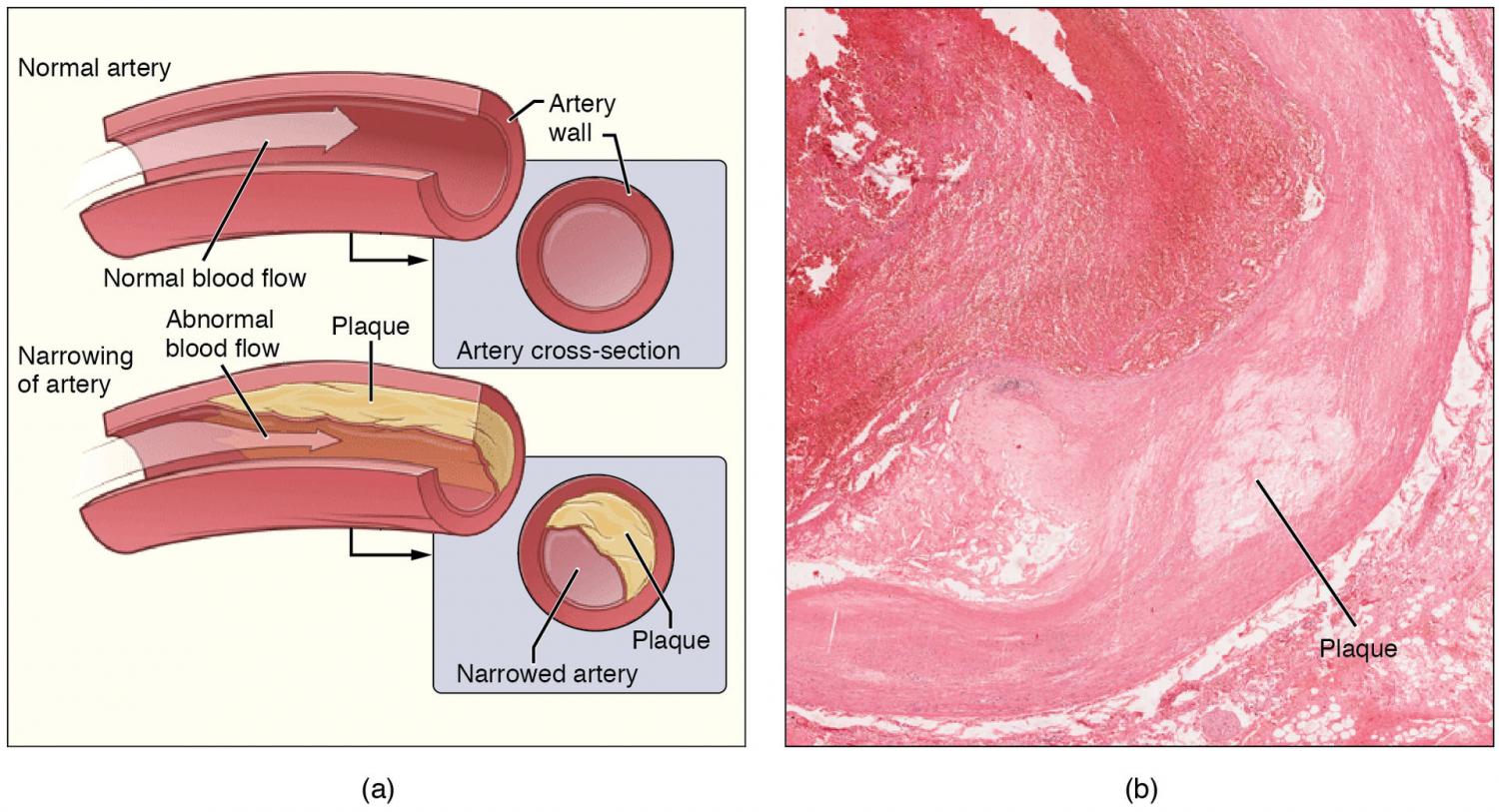
Atherosclerosis is a condition affecting the cardiovascular system. If atherosclerosis occurs in the coronary arteries (which supply the heart) the result may be angina pectoris, or in worse cases a heart attack. Credit: Wikipedia/CC BY 3.0
A new Yale study has identified a promising therapeutic avenue for atherosclerosis, a condition caused by inflammation and plaque buildup in arteries. Martin Schwartz, Ph.D., Robert W. Berliner Professor of Medicine (Cardiology) and the study’s principal investigator, investigates how the mechanical forces from blood flow and pressure affect the cells lining the arteries and how cell responses to forces contribute to cardiovascular disease.
Atherosclerosis predominantly affects regions of the arteries that bend or branch, creating disturbances in blood flow dynamics that activate cells’ inflammatory pathways and eventually lead to plaque buildup.
In a study published in Proceedings of the National Academy of Sciences, Schwartz’s team, led by associate research scientist Divyesh Joshi, Ph.D., found that a protein complex called Polycomb Repressive Complex 2 (PRC2) is associated with disturbed blood flow and inhibits anti-inflammatory mechanisms in the arteries that mitigate atherosclerosis.
By blocking PRC2, the team successfully reduced harmful plaque in animal models of the disease.
“By inhibiting PRC2, we boost protective pathways that reduce inflammation and could protect people from plaque rupture in atherosclerosis,” Schwartz says.
What causes atherosclerosis?
Atherosclerotic plaques are present in nearly all adults in developed countries. They are usually asymptomatic because a protective fibrous cap forms over the plaques. But if the cap weakens and ruptures, it triggers the formation of a blood clot that can lead to a heart attack or stroke. Plaques vulnerable to rupture tend to have a thinner cap or exhibit heightened inflammation.
Scientists believe there are three types of factors driving atherosclerosis. The first type is metabolic risk factors, including elevated cholesterol and blood sugar. Inflammation is another—individuals with autoimmune or other inflammatory diseases are at higher risk for the disease.
An important but overlooked third factor, Schwartz says, is the biomechanics of blood flow through the arteries. In places where the arteries are straight tubes, blood flow activates protective, anti-inflammatory genes. Where arteries curve sharply, disturbing blood flow, there are fewer of these protective factors and increased inflammation.
Rest of the article:
https://medicalxpress.com/news/2026-09-cancer-drug-atherosclerosis-inflammation-plaque.html