Smart! Which one did you go with? Any other top candidates I should look into?
1 Like
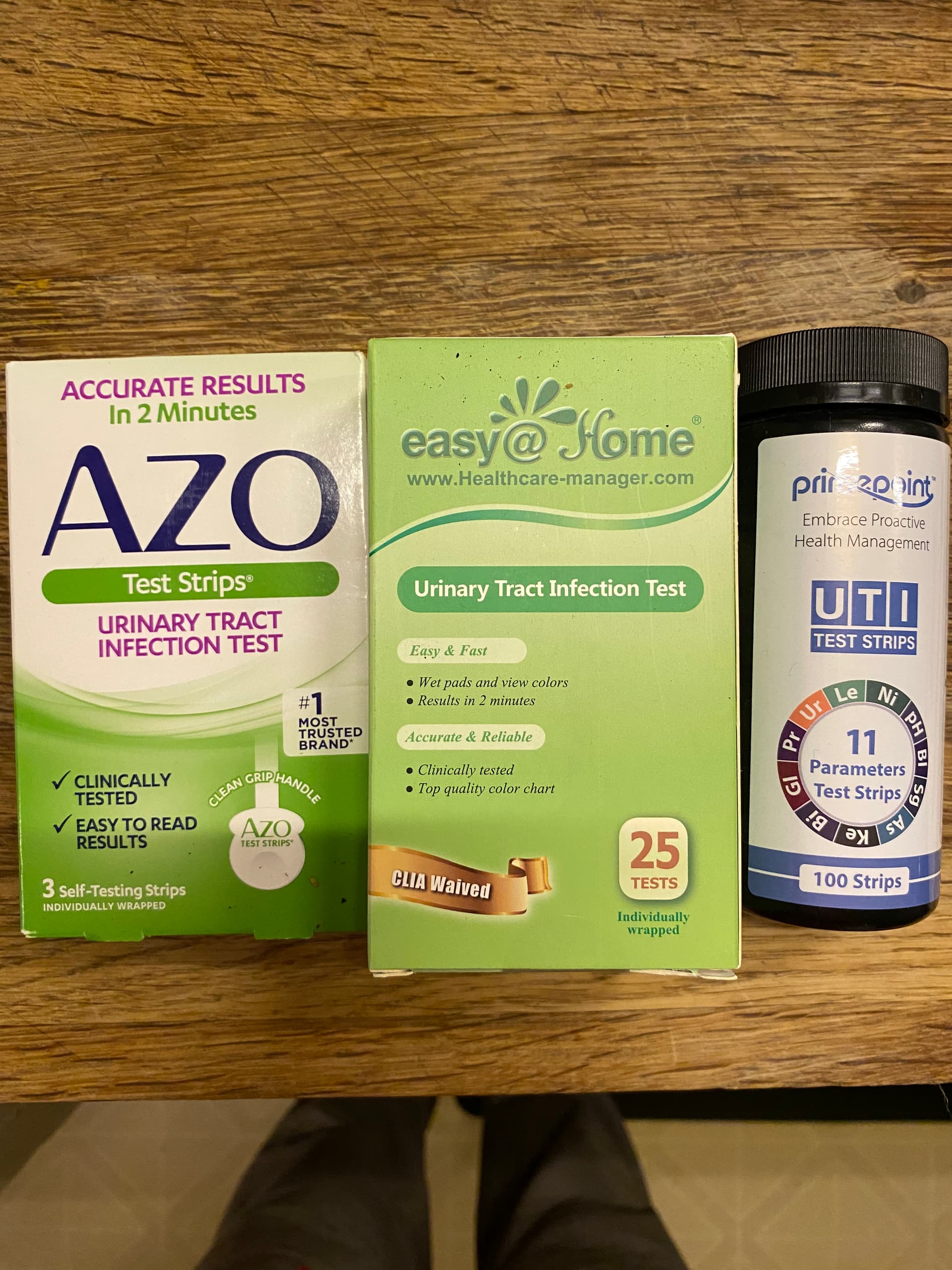
Btw., this is useful in many situations. For example, during my recent AFCD surgery, I had a catheter inserted. This abrades the urinary track, and there is some danger of infection. Before surgery I stopped taking empagliflozin, and before I resume taking it again I want to make sure my urinary track is fully healed and there are no bacteria lurking, because obviously, having glucose in your urine can result in unnecessary infections. Therefore before resuming empa in three weeks after surgery I intend to use the strips for a full week to make sure my track is likely free of any infection.
1 Like
Thanks for sharing the info about the test strips!
I didn’t know what AFCD surgery is, so I searched for it.
Is this it?
ACDF (Anterior Cervical Discectomy and Fusion) surgery is a common neck procedure to relieve pain, numbness, or weakness from pinched nerves by removing a damaged spinal disc and fusing the vertebrae together with a bone graft, spacer, and plate/screws, often with high success rates for pain relief and recovery.
Yes, I tend to agree. I’ve been on for a couple of years now and absolutely no issues or noticeable side effects.
3 Likes
Sorry, yes, I meant ACDF, I have a whole thread about it, that’s what I’ll be updating soon.
1 Like
I went from 10mg to 20 mg Jardiance and started severe night time cramps. salt/electrolytes and back down to 10mg. Hopefully this corrects everything.
Our research demonstrated for the first time that EMPA reduced the incidence of ventricular arrhythmia by regulating AMPK/mTOR signaling and restored autophagic flux in DOX-treated rats and NRVCMs.
5 Likes
I don’t have time to read the full paper this morning, but wanted to post this so I don’t forget.
Compared with DPP4i users, SGLT2i users had less cardiovascular events, except for increased stroke/TIA in females (HR 1.744 [1.654-1.839]). Compared with GLP1RA, SGLT2i use was associated with a decrease risk of MACE in both men and women, but higher risk for other cardiovascular and peripheral vascular events. Among SGLT2i users, those who developed erythrocytosis had increased incidence of thromboembolic events compared to those without erythrocytosis. Lastly, among SGLT2i patients treated for their erythrocytosis, the men who discontinued SGLT2i had increased risks of stroke/TIA, MI, and limb ischemia, while women had increased risk of stroke/TIA, MI, and venous thrombosis. Those who received anti-platelet therapy were associated with elevated risks of stroke/TIA, MI, venous thrombosis, and limb ischemia. In contrast, patients who receive phlebotomy had no significant difference in the outcomes. Therefore, regular monitoring of hematologic parameters is recommended for early detection and modified therapeutic strategies should be considered to reduce complication risks.
8 Likes
Picking up on an earlier discussion, did you have any luck getting your HCT under control? If so mind if I ask what worked for you?
Yes, it’s back down to normal range after stopping empagliflozin and changing to testosterone cream instead of injections.
1 Like
So people had HIGHER erythrocytosis on GLP1’s than they did on SGLT2’s. I am very surprised to hear that since this is the first time we are hearing that they increase hematocrit as far as I am aware. It was already very well established already that SGLT2’s had this side effect.
2 Likes
Where are you seeing this? I must have missed it.
This also doesn’t make sense unless it’s reverse causation (sicker patients were put on anti-platelet therapy).
Me too, first time I’m hearing about this association
GLP1RA use was associated with a significantly higher risk of erythrocytosis in both male (HR 1.605 [1.573, 1.636] and female (HR 1.697 [1.640, 1.755]) patients compared to SGLT2i use.
Here’s the money quote @Davin8r
2 Likes
I don’t know, I’m sticking with my SGLT2i (empagliflozin), especially that I don’t suffer from erythtrocytosis. I figure that since I’m also on a statin (pitavastatin 4mg/day), my endothelial tissue should be fine. All in all, seems like SGLT2i are remarkably safe meds comparatively speaking with fewer side effects unless you have some conditions that might predispose you to genito-urinary infections. That said, I’m always glad to be alerted to possible problem areas or drug interactions, so thank you @Davin8r for bringing this paper to our attention👏.
5 Likes
Something is going on here, because the first line in the Discussion section says
“Our study shows that SGLT2i is associated with a significantly higher risk of erythrocytosis in both male and female patients with type 2 diabetes compared to DPP4i and GLP1RA”
I read the paper, and the entirety of it, in all the results tables reflects higher erythrocytosis risk with SGLT2i therapy in diabetics compared to other classses of drugs (including GLP1-RA). At the same time, the risk of MACE (but not other CVD outcomes) is still lower with flozins, and stopping the use of flozins in those who do have erythrocytosis has risks. There are some male vs female differences. This is correctly reflected in the CONCLUSION section, therefore the discrepancy with the abstract is probably a simple mistake.
Conclusion
In this study, we found a significant association between SGLT2i use and an increased risk of erythrocytosis in patients with type 2 diabetes. Among SGLT2i users, the development of erythrocytosis was linked to a higher incidence of arterial and venous thromboembolic events. Our findings highlight the need to carefully monitor erythrocytosis (hemoglobin levels exceeding 16.0 g/dL in females and 16.5 g/dL in males, as well as hematocrit levels exceeding 48% in females and 54% in males) in patients receiving SGLT2i. Interventions such as discontinuation of SGLT2i and antiplatelet therapy did not fully mitigate the thromboembolic risks associated with erythrocytosis. In summary, given the proven cardioprotective effects of SGLT2 inhibitors26, their use should be approached with caution in individuals who already have erythrocytosis or possess additional risk factors. When intervention is required, phlebotomy may represent the most appropriate management strategy. Further research is needed to develop optimized management strategies for these patients to reduce adverse cardiovascular outcomes."
3 Likes
Yes, it has to be an error because there’s just no evidence or plausible mechanism by which GLP agonism would cause erythrocytosis, and if it did, we’d know it by now.
This part of the discussion section sums up my concerns nicely:
“The risk of erythrocytosis with SGLT2i use might be exacerbated by concurrent therapies, such as testosterone replacement therapy. Studies have demonstrated that combined SGLT2i and testosterone therapy increases erythropoietin levels and red cell production, heightening the risk of secondary erythrocytosis. This observation underscores the importance of a thorough medication review when initiating SGLT2i, particularly in male patients receiving testosterone therapy. Physicians should monitor hematologic parameters closely and consider modifying therapeutic strategies to reduce the compounded risks.”
2 Likes
If I’m reading Table 1 well, about 8.6k of users were on testosterone and Sglt2 inhibitors, and about the same number were on GLP1s and testosterone . The authors say that they controled for that in their analysis .
Some things that could explain elevated erythrocytosis in GLP1 users :
- higher baseline bmi, which means higher incidence of sleep apnea. Sleep apnea can cause erythrocytosis.
- higher co morbidities compared to SGLT2 users
1 Like