I don’t think it will go well in coffee, but I’ve never tried it. Hyaluronic acid absorbs water and turns into a gel. I add it to my shot of EVOO in the morning.
1 Like
I wwill try in coffeee. I’d mix with collagen powder and other stuff i add so it doesnt clump up, then add hot coffee. Heat will likely keep it thin. I hope that works lol. Otherwise I’ll capsule and take heaps of them.
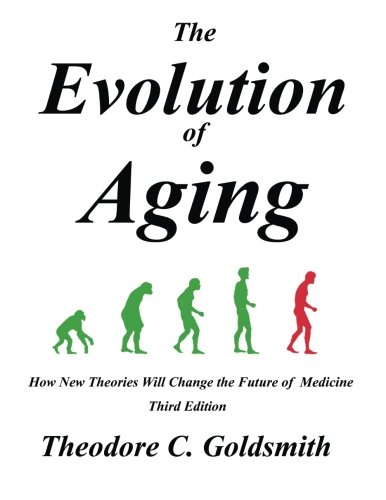
I’d also add a title that I don’t think I have ever seen mentioned before: The Evolution of Aging by Theodore Goldsmith. It goes over all of the theories of aging from the perspective of evolutionary biology.
If more people viewed aging from that angle, then I think a lot of the kind of “magical” thinking in areas of the longevity community could be avoided. i.e. anti-aging via antioxidants, random plant supplements, etc… He leans towards “programmed death” in his book which I tend to agree with. But in either that theory or in antagonistic pleiotropy, still the only conclusion is that genetic treatments like Yamanaka factors are the real focus for reversing/stopping aging.
And it is probably the case anyway that most in this space want to reverse aging and not just slow it down, as many of us have already developed age-related health issues.
3 Likes
I would argue that assuming that aging is simply an evolutionary program that needs to be reversed is magical thinking. Aging is not that simple. Also treatment like the use of antioxidants and random plant supplements, while often aimed at stopping damage (e.g. antioxidants) are often not taken for that purpose. Everything you ingest, including supplements, influence your epigenetics.
Epigenetic rejuvenation is of major important to slow down and reverse aging but it must be understood that it’s only a part of the solution. You cannot ever fully stop aging or reverse it fully in an animal with epigenetic rejuvenation alone. You still need to fix a lot of other things with other methods, some of which would fall under the term damage repair.
2 Likes
I think damage prevention is far more important than damage repair. Especially DNA damage. If you look at the longest living mammalian species, they excel and preventing DNA damage (NMR, Greenland shark, whales, etc.) Right now, I think that’s one of the main driving factors in their long lives.
I’m looking for new and innovative ways to prevent DNA damage from happening.
3 Likes
I would say that which one is more important, prevention or repair, depends entirely on how old you are. In a young person, prevention is more important because he hasn’t accumulated that much damage yet. However in a person that is already quite old, lots of the damage has already been done and repair starts becoming more important.
3 Likes
Any updates from the community? Looking for recommendations for books published in recent years/months - something good to read over the Christmas holidays. 