Hahaha… was my exact thinking too.
1 Like
These guys seem to have it. I’ve been going to try some also…a little hesitant to start jabbing myself. I wonder how much worse the nasal spray is. If it could help my elbows I’d probably go for it.
1 Like
I’ve become hugely bullish about Sauna after the VEGF mice study.
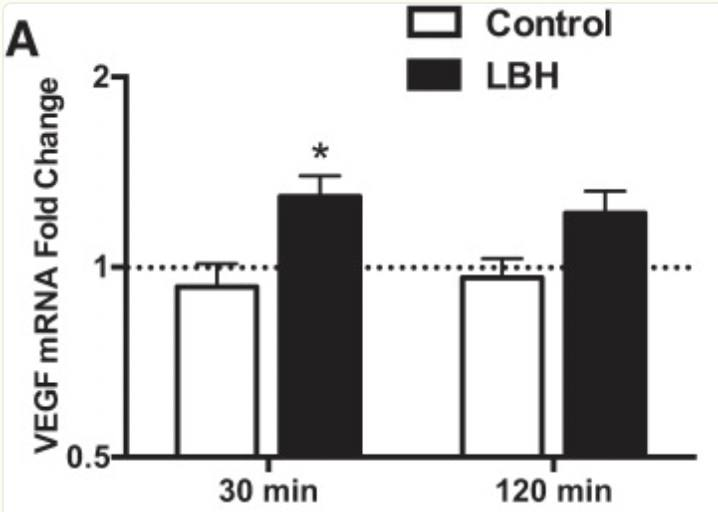
Heat therapy promotes the expression of angiogenic regulators in human skeletal muscle
4 Likes
The researchers compared the lifespans of mice living at normal atmospheric oxygen levels (about 21%) to the lifespans of mice that, at 4 weeks of age, had been moved to a living environment with a lower proportion of oxygen (11%—similar to that experienced at an altitude of 5000 meters).
They found that the mice in the oxygen-restricted environment lived about 50% longer than the mice in normal oxygen levels, with a median lifespan of 23.6 weeks compared to 15.7 weeks. The oxygen-restricted mice also had delayed onset of aging-associated neurological deficits.
Reduced Oxygen Intake Linked to Extended Lifespan - Neuroscience News
(Higher altitude living mice presumably upregulated VEGF, EPO etc)
5 Likes
This might relate a tiny bit to people permanently living high above sea level.
The oxygen content in the air remains constant at approximately 21% regardless of altitude above sea level. What changes with altitude is the air pressure, which affects the amount of oxygen reaching the lungs per breath. I have listed the relative oxygen content in the air for cities located on a very high high altitude above sea level. if they were living dramatically longer than the average person in the same country, we should have known it by now.
La Rinconada, Peru (5,100 m): About 50% of the oxygen content at sea level
El Alto, Bolivia (4,000 m): About 60-65% of the oxygen content at sea level
Potosí, Bolivia (3,700 m): About 65-70% of the oxygen content at sea level
La Paz, Bolivia (3,600 m): About 68% of the oxygen content at sea level
Shigatse, China (3,800 m): About 65% of the oxygen content at sea level
Lhasa, China (3,650 m): About 67% of the oxygen content at sea level
Juliaca, Peru (3,825 m): About 65% of the oxygen content at sea level
Oruro, Bolivia (3,700 m): About 65-70% of the oxygen content at sea level
Cusco, Peru (3,400 m): About 70% of the oxygen content at sea level
It is important to note that these percentages represent the relative amount of oxygen available for the body to absorb, not the actual percentage of oxygen in the air.
"There’s also data to suggest a 20% lower mortality for people who can exercise to a certain metabolic equivalent (MET). Dr. Shapiro explained, “An activity that has a value of 4 METs means you’re exerting four times the energy than you would if you were sitting still. Living at higher elevation may promote a relatively high fitness level since 5-7 METs are required even for slow uphill walking.”
“The point being,” he said, “is that even just walking for exercise can be enough when you when you live in this area to really improve your risk of mortality.”
On the other hand, while higher altitude may be protective against development of some diseases, it could increase mortality as a disease progresses. There is higher mortality from, chronic obstructive pulmonary disease (COPD) or emphysema, lower respiratory illnesses.
4 Likes
Wow! Thanks for the study. I just want to point out that those mice were aging way faster than normal. The effect will surely be there in normal mice but maybe the “50% lifespan” increase will be lower.
Those mice only lived for 15.7 weeks? That’s about 100 days. That’s a really unfortunate breed. 900 days is more typical for most experimental mice.
Here is a website selling NO supplements
Celery salt and tadalafil.{both male and female]
Will supply NO that your body uses for pennies a day.
2 Likes
Interesting information. I like Dr Nathan Bryan’s approach to caring for the endothelium of the blood vessels. I am sure others here are familiar with this. Here is a good talk with Dr Perlmutter and Dr Bryan. I do also take 1/2 of one of the N1O1 lozenges a day with lots of arugula in my salad.

3 Likes
I started taking Manganese about a year ago.
We take 5mg, 5 days a week and none on the weekend.
My PWV has improved and that is an indicator of arterial elasticity. And when I say “improved”, my “number” has not changed much but I’m one year older and it’s still a bit lower than it was last year. So I call that a win 
My BP has also dropped significantly in the past 18 months but that is most likely due to the weight loss. BP is not as good an indicator of arterial health as PWV though, it’s just the more common measurement.
Just don’t, as in DO NOT, exceed the RDA as there are risks associated with Manganese
1 Like
this was my thought exactly. I’m taking this combo now for a climbing injury and wondered if longevity might be a side effect. have there been any murine longevity studies looking at BPc 157 and TB500?
1 Like
I don’t know of any, it would be interesting to see studies like that on some of the “popular” peptides
Does nitric oxide (NO) not increase free radicals, which could accelerate aging? I’m not sure that using substances like arginine, citrulline, or sildenafil is better than doing aerobic exercise, which naturally stimulates NO without the risk of producing too much and generating effects contrary to longevity.
2 Likes
Sure, exercise is better than exogenous chemicals. But if you need more help (BP, ED), using the oral pathway (vegetable nitrates converted to nitrite by bacteria in mouth) can help older people get more NO. Use NO test strips to see if it’s working. NO doesn’t last long; I don’t worry about having too much.
6 Likes
yes, a very relevant point. As always, cell biology is complex. Reduction of NO can almost be seen as a hallmark of aging.
"Studies in experimental models and even humans reveal that constitutive production of nitric oxide (NO) is reduced with aging and this circumstance may be relevant to a number of diseases that plague the aging population. NO is a multifunctional signaling molecule, intricately involved with maintaining a host of physiological processes including, but not limited to, host defense, neuronal communication and the regulation of vascular tone. NO is one of the most important signaling molecules in our body, and loss of NO function is one of the earliest indicators or markers of disease. Clinical studies provide evidence that insufficient NO production is associated with all major cardiovascular risk factors, such as hyperlipidemia, diabetes, hypertension, smoking and severity of atherosclerosis, and also has a profound predictive value for disease progression including cardiovascular and Alzheimers disease. "
A healthy endothelium and a healthy capillary density is vital for optimal function. Capillary density is the number of capillaries present in a tissue, such as muscle or the organs in the body, which plays a crucial role in determining the oxygen flux from red blood cells to mitochondria, influencing tissue oxygenation and metabolic waste clearance.
Hypo-perfusion of organs is detrimental, not only for the brain and heart, but for the entire body. If we choose to intervene, it is vital to understand that generating to much NO is not what we should aim for. For instance, the brain is one organ where too much nitric oxide might be detrimental. Yet again we need nitric oxide in the brain.
Functions and dysfunctions of nitric oxide in brain - ScienceDirect
“Nitric oxide (NO) works as a retrograde neurotransmitter in synapses, allows the brain blood flow and also has important roles in intracellular signaling in neurons from the regulation of the neuronal metabolic status to the dendritic spine growth. Moreover NO is able to perform post-translational modifications in proteins by the S-nitrosylation of the thiol amino acids, which is a physiological mechanism to regulate protein function. On the other hand, during aging and pathological processes the behavior of NO can turn harmful when reacts with superoxide anion to form peroxynitrite. This gaseous compound can diffuse easily throughout the neuronal membranes damaging lipid, proteins and nucleic acids. In the case of proteins, peroxynitrite reacts mostly with the phenolic ring of the tyrosines forming nitro-tyrosines that affects dramatically to the physiological functions of the proteins. Protein nitrotyrosination is an irreversible process that also yields to the accumulation of the modified proteins contributing to the onset and progression of neurodegenerative processes such as Alzheimer’s disease or Parkinson’s disease.”
Exercise is my best bet for having a healthy level of NO in my body.
3 Likes
I’ve been wondering about this one > Prostaglandin E1 to enhance circulation in the brain during sleep.
Prostaglandin E1 Alleviates Cognitive Dysfunction in Chronic Cerebral Hypoperfusion Rats by Improving Hemodynamics
5 Likes
I really like your celery as a snack trick. Been going through quite a bit in late evening since I read it increases zeta potential. Should therefore decrease clots. Cucumbers were listed too.
I have not been checking my NO with and without. I’ll try working on that.
4 Likes
I found this article interesting, conclusion:
The coadministration of vitamin C with dietary NO3 could boost NO production and improve EF and also may enhance the conversion of NO2− to NO. Initial evidence suggests that if these two dietary agents are coadministered, their synergistic effects may be more powerful than their individual potency.
https://www.sciencedirect.com/science/article/pii/S0899900723000254
1 Like
Another one for protecting NO is pomegranate. It acts against oxidative destruction of NO.
5 Likes