chatGPT:
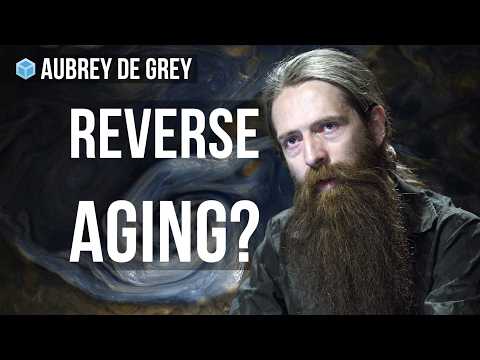
Aubrey de Grey on LEV Foundation — Tidy Transcript, Summary, and Critique
Tidy Transcript
Host: I’m sure a lot of people tuning in know Aubrey de Grey and what he does. He is President of the LEV Foundation, founded the SENS Foundation, and has done pioneering work on the fundamental idea of damage repair in aging. Thank you so much for joining us again, Aubrey. It’s wonderful to have you back. I’ll let you start your presentation.
Aubrey de Grey: Rock and roll. Let me spend the next hour or so talking about what we are doing at LEV Foundation and why we’re doing it. I’m going to make this broad enough to include plenty of background for those who are new to this whole idea, as well as some in-depth material for people who already know the field well.
A bunch of what I’m going to do in the first 10 minutes includes explaining what rejuvenation is and explaining what longevity escape velocity is. Of course, LEV stands for longevity escape velocity.
There’s a question that is not asked nearly often enough, and the reason it is not asked more often is that people think they already know the answer. They think the answer is obvious. I’d like to explain why it is not obvious, and what the answer really is.
The question is this: 200 years ago, literally more than one-third of babies would die before the age of one, even in the wealthiest countries in the world. That doesn’t happen anymore. Hardly any babies die in infancy. How did we achieve that? We know the answer: hygiene, sanitation, mosquito nets, basic medicines, vaccines, antibiotics, and so on.
So we have to ask why those same approaches have not worked for the health conditions that arise increasingly in people who were born a long time ago. After all, they have not worked. The vast majority of the medical budget in wealthy countries is now spent on elderly people, precisely because we have more elderly people now. We no longer see as much early-life death, so we are left with this epidemic of chronic conditions of late life. Why?
People think the answer is simply complexity. They recognize that lots of different things go wrong late in life, and that these things often go wrong around the same time, interact, and exacerbate one another. That is part of the answer, but it is not the main part. The main part is something different.
So let’s begin with another question people do not ask very much: in what way can somebody be sick? If you ask that, most people will give an answer that amounts to a table with several columns.
One column is infections — communicable diseases. These used to kill many people and now kill far fewer, at least early in life. Another column is genetic diseases, which some people inherit. Then there are the chronic diseases of late life — Alzheimer’s disease, most cancers, heart disease, and so on. And then almost everybody places “aging itself” in some separate category way off to the side, as though it is something different from disease. Aging itself includes things like frailty, sarcopenia, and similar conditions.
The implication is that these things called “aging itself” are so different from diseases that they are somehow off limits to medicine — not only untreatable now, but forever untreatable. That is a real problem, because it is not true.
So let’s start at the beginning and define aging. It is remarkable that we even have to do that. Aging has been one of humanity’s central preoccupations throughout civilization, and yet if you ask 10 people for a definition of aging, you will get 10 different answers. That’s ridiculous.
Here is the definition I’m going to use: aging is the combination of two processes. First, metabolism creates damage throughout life — even before we are born. Metabolism is the entire network of processes that the body engages in to keep us alive from one day to the next. The body is a machine — an extraordinarily complicated one, but still a machine. Its function is determined by its structure, and that structure changes over time. It accumulates self-inflicted changes to its structure and composition as a consequence of its normal operation. I call that damage.
The second process is that damage eventually makes us sick. The more damage you have, the sicker you are. Why does that happen only later in life if metabolism creates damage throughout life? Because the body is built to tolerate a certain amount of damage without significant decline in function.
So pathology — everything that goes wrong late in life — emerges only after damage exceeds a threshold. This is why the term “damage” is useful. It is the set of intermediates between metabolism and pathology.
This definition tells us a great deal. If we say we want to do something about aging, what do we mean? We mean we want to separate metabolism from pathology. We want the body to continue doing metabolism — in other words, continue being alive — without becoming sick. That is exactly what we want to do with any machine if we want it to last a long time.
This gives us a way to correct the earlier table. We still have communicable diseases, genetic diseases, diseases of late life, and “aging itself.” But the dividing line should not be between diseases of late life and aging itself. It should be between communicable diseases and everything else. Infectious disease is external. The diseases of late life are side effects of being alive.
That means there is no meaningful difference between diseases of late life and “aging itself.” The diseases in one category are simply aspects of aging that we chose to give disease-like names to. The other category contains the aspects we call aging itself. That is semantics, nothing more.
Once you understand that, it becomes impossible to regard aging itself as off limits to medicine. It also helps rebut the idea that aging is somehow a blessing in disguise. People do not say that Alzheimer’s disease is a blessing in disguise, yet they often say they would not want to live very long, or that getting rid of aging would create various social problems. They do not make those arguments in the same way about late-life diseases.
The reason all this matters is that if you draw the line in the wrong place, you end up pursuing the wrong kind of medicine. Historically, the dominant approach has been what I call the geriatrics approach: trying to separate metabolism from pathology by separating damage from pathology. In other words, let damage accumulate, then try to stop it from making us sick.
That has not worked. And if you think about it, it is obvious why it has not worked: you are attacking the consequences of something that is accumulating, so your interventions become progressively less effective as the burden increases.
The complexity of late-life pathology does matter, but the main problem is that this approach is misguided. Trying to cure the pathologies of late life while ignoring the accumulating underlying damage is wrongheaded.
Over a century ago, some people began to realize this. They concluded that medicine should be more preventative: intervene before people are sick, rather than after they are sick. In terms of my definition, that means separating metabolism from pathology by separating metabolism from damage. Make the body run more cleanly, so it generates damage more slowly. That is the gerontology approach.
This idea was inspired partly by the fact that different species age at different rates. The hope was that by studying those differences we could learn how metabolism creates damage more slowly in long-lived species, then translate that knowledge into therapies.
It was a good idea in principle. Unfortunately, it too has been unsuccessful, not because it is fundamentally misguided in the same way as geriatrics, but because metabolism is extraordinarily complicated. A simplified diagram of metabolism looks like uncommented spaghetti code. The generation of damage is too intertwined with the functions we need metabolism to perform. If you try to clean up metabolism, you will almost certainly create unintended consequences.
Even decades ago, many experts in biogerontology recognized that this was not going to work very well. The result was a kind of resignation — treating aging a bit like earthquakes. We know they are bad, but we do not seriously expect to stop them.
That changed in 2000, when I had what I regard as a eureka moment. There is a third way to separate metabolism from pathology. We do not need to separate metabolism from damage or damage from pathology. We can instead periodically remove the damage itself. We do not need to eliminate all of it — only enough of it to keep total damage below the threshold that causes pathology.
That is the maintenance approach. It has transformed the field over the past quarter century. We do preventative maintenance.
And really, this is common sense. We already do it with simple machines. A 100-year-old car can still work if it has received extraordinarily thorough preventative maintenance, even though it was never built to last 100 years. The human body is much more complicated, but it is still a machine. So in principle, if we repair damage sufficiently well, we can stop it from reaching the point where it causes disease.
But of course, to do that, we need to identify what the damage actually is. Just as rust is one of the major forms of damage in a car, we need to identify the corresponding forms of damage in the body.
When I first began formulating this strategy in a serious way, one reason I became optimistic was that although the body is extraordinarily complicated, the different types of damage seemed to fall into a manageable number of categories. I very quickly settled on seven categories.
That was encouraging because the categories themselves were not new. In fact, all of them had already been characterized for many years. So maybe we really did already understand the main categories of damage well enough.
Then the question became: how do we eliminate these different forms of damage? Some of the proposed repair strategies were already in development, and some were my own ideas, but all of them seemed difficult yet foreseeable.
That led eventually to my first foundation, the Methuselah Foundation, then SENS Research Foundation, and now LEV Foundation. Over time, many of these efforts moved into academia and the private sector, including spinout companies.
And this general idea has become mainstream. A decade after I began promoting it, five colleagues published the “Hallmarks of Aging” paper. It became the Bible of the field. In substance it was very much a restatement of the kind of divide-and-conquer framework I had been arguing for, though with better graphics and arriving at the right time.
I could go through the individual damage categories and repair approaches, but I have done that in many talks and people can find those online. Instead I want to focus on what LEV Foundation is doing now.
Everything I have said so far implies that bringing aging under medical control will require a divide-and-conquer strategy: multiple different interventions, used together in the same individual, to repair multiple types of damage. Once you accept that, two stages of work become obvious. First, develop the component therapies. Second, combine them.
In most fields of engineering, putting working components together is usually the easy part. But in medicine it is not, because we are manipulating a system we still understand very poorly. Even if each component works on its own, combinations may produce surprises, interactions, or antagonisms.
So it is absolutely imperative to move into the combination phase as soon as possible, even while some component therapies are still under development.
That is what LEV Foundation focuses on.
All through my career, I have been motivated primarily by humanitarian concerns. I want to do things that need doing but are not being done by others. Combination studies are a prime example of that.
The private sector has little incentive to do them because combining existing interventions usually does not generate strong new intellectual property. Academia has little incentive because combination studies are less rewarded than mechanistic work that tests hypotheses and yields publications. So this work falls between stools. That means we have to do it ourselves.
These experiments are large and expensive, but a few years ago I was able to raise enough philanthropic money to do the first major round. This was our Robust Mouse Rejuvenation experiment, or RMR.
The milestone was to take middle-aged mice — 18 months old — and extend their average lifespan by about a year beyond what they would normally have. Since those mice would otherwise live to around 30 months, the goal was roughly to get them to 42 months. At the time, the best existing interventions that started at 18 months could add only about four months. So we wanted to get around three times that effect size.
The first experiment used four interventions: rapamycin, young blood stem cells, telomerase gene therapy, and a senolytic. These were chosen because they addressed different aspects of aging. Rapamycin was included mainly as a positive control, since I do not expect it to translate very well to long-lived species like humans. The main idea was to test whether these interventions would be additive.
The answer was yes. In female mice, the group receiving all four interventions did better than controls, and the intermediate groups receiving subsets of the interventions fell in between. That is what we hoped to see. It suggests additivity.
The problem was that the total amount of life extension was still only around four months. We did not break through the existing ceiling.
In males, the result was messier. Some groups receiving treatments did worse than controls early on, though some later caught up and overtook them. Other groups looked fine initially and then declined sharply. So the male data were harder to interpret cleanly. But overall, the interventions still showed beneficial effects.
Now, I often get mischaracterized in the media as someone pursuing immortality. I have helped invite that by talking publicly about the possibility of very large lifespan extension. But in reality I do not work on immortality or even longevity per se. I work on health. I am a medical researcher. Longevity is a side effect of health.
And in mice we can test this directly. We can measure lifespan over a relatively short timescale, but we can also measure healthspan using assays of memory, vision, hearing, agility, strength, endurance, and so on. We did a large amount of that in the experiment because it is important to show that lifespan extension comes from extending healthy life.
So what happens next?
We proved the concept of combination therapy by showing additivity. But we did not surpass the glass ceiling. Our conclusion is that we simply did not hit enough boxes. Some important forms of damage were still not being sufficiently repaired, and those unaddressed damages were still killing the mice not much later than usual.
So the next study aims to throw more of the kitchen sink at the problem. We want to use a substantially larger set of interventions at the same time — around eight in total. Five are definitely selected, two more are also very likely, and one additional choice is still under consideration, possibly oxytocin.
We have designed the experiment, identified suppliers, obtained some reagents for free, and established a strong experimental site. We have found ways to cut costs. But the study is still huge. It will involve roughly twice as many interventions and roughly twice as many mice, and it is expected to cost in the neighborhood of $6 million, compared with around $3.5 million for the earlier study.
That is a great deal of money for a mouse study, though not by the standards of clinical trials. But it still has to be raised, and because combination studies do not align well with academic or private-sector incentives, it still depends on philanthropy.
One of the ways we are trying to do that is through strong relationships with the crypto and blockchain community. A group called VitaDAO has been very supportive. They created a token and an AI chatbot related to aging and longevity. That has promotional value for our work, but also some broader educational value.
So let me conclude the talk by thanking our donors and collaborators, including Ichor Life Sciences, which carried out the first experiment so effectively. If people want more details, they can contact me directly or look at our recent review article explaining the interventions and the reasoning behind them in more depth. And of course, people can support the work through the LEV Foundation.
Q&A — Tidy Transcript
Host: How do you feel the overall vibe of the longevity industry has changed over the last five to seven years, since the Berlin conference in 2018?
Aubrey de Grey: Things have continued to change, and at an accelerating rate. The conference landscape has exploded. We did conferences in Berlin in 2018 and 2019, then after COVID we ran a series in Dublin from 2022 onward, and later did one in Las Vegas with the Coalition for Radical Life Extension. But now there are so many conferences that I probably will not run our own anymore. I’d rather run sessions within other conferences, especially to highlight promising researchers whose work is relevant to longevity even if it sits outside conventional gerontology.
The bigger change is the emergence of the private sector. Ten years ago, there was essentially academia and me — in other words, philanthropy. Then some early investors began to see the field as investable. That changed the business model. At SENS Research Foundation we started spinning projects out into companies when they became mature enough to attract investors. Since then the sector has grown enormously. Retro, Altos, BioAge, Insilico Medicine — these kinds of companies and funders have changed the landscape dramatically.
That means I can narrow my focus more to the areas that are still neglected, especially combination studies.
Host: It seems as though you are the only organization doing these combination damage-repair studies in mice.
Aubrey de Grey: That is basically true. The academic community is highly supportive of this work in principle, but they do not do it themselves because of institutional constraints. The gold standard mouse intervention program is the NIH Interventions Testing Program. They do excellent work, but they do not do much combination work, do not usually start in middle age, and do not do injection-based interventions such as gene or cell therapies. Some researchers have tried putting together two things here and there, but nobody has done this in earnest the way we are.
Host: Has AI become more useful for longevity research than it used to be?
Aubrey de Grey: Yes, it is becoming more useful all the time. It is clearly valuable for drug discovery and related tasks. Insilico Medicine is probably the poster child for that, and BioAge is another example. AI advances in biology more generally, like AlphaFold and successor tools, are also helping. But AI cannot create data out of thin air. It extracts insight from data. If we do not generate the right kinds of empirical data — especially lifespan and combination data — AI will not solve the problem for us. That is why the experiments we are doing are so important.
Host: Have there been any changes to the “seven deadly things”?
Aubrey de Grey: At the level of the fundamental categories, no. I am actually proud of that. It suggests we really do understand aging well enough, at least at the level of damage categories, to pursue a divide-and-conquer repair strategy. What has changed is not the categories but the possible repair approaches. Back in 2002, I usually presented one strategy per category. Now there are several per category, which is good because it gives multiple shots on goal.
By contrast, the Hallmarks of Aging framework has undergone several revisions. That is because the hallmarks were framed more as processes or consequences — things like altered protein turnover or impaired intercellular communication — rather than as root structural lesions. So I am not surprised that the hallmarks framework evolves more.
Host: Does the dominance of the hallmarks framework hamper communication with the wider industry?
Aubrey de Grey: Not in any serious way. I have written about the comparisons and contrasts between the two taxonomies. But the most important thing is that both frameworks point to the same broad conclusion: there is no single silver bullet for aging, so we need a divide-and-conquer strategy. That is the central point.
Host: Do you think more researchers are now focusing on damage repair rather than slowing aging?
Aubrey de Grey: Definitely. David Sinclair is a good example. He became prominent through calorie restriction mimetics — drugs intended to trick the body into acting as though it is in famine. That approach made sense because calorie restriction had long been known to extend life in mice. But over time he, like others, has increasingly recognized that in long-lived species such as humans, that approach is unlikely to do very much. He is now much more focused on damage repair, especially epigenetic damage. The XPRIZE Healthspan is another example of the shift toward rejuvenation and turning the clock back.
Host: What about government funding?
Aubrey de Grey: Government is not really separate from academia, because academia is largely funded by government grants. But there is some nuance. In the US, agencies like ARPA-H have been created in a moonshot spirit, somewhat analogous to DARPA. Some of their funding does go into aging-related work. That is valuable. But even ARPA-H is not really set up to fund the kind of combination work we are doing. So for now, philanthropy is still essential.
Host: If you got the $6.5 million tomorrow, what would the timeline look like?
Aubrey de Grey: We have not been sitting on our hands. We have already spent two years refining the design, building relationships, identifying interventions, and optimizing logistics. In fact, we already began a pilot phase using small numbers of mice to work out dosages and identify possible antagonistic interactions. The larger study will probably proceed in phases. We may begin with the group that gets everything plus groups that get individual interventions, and defer some of the intermediate combination groups until later, depending on early results. That way we can learn more efficiently.
Audience question: Why have we not seen dramatic lifespan improvements yet, despite exponential increases in biological knowledge? Will there be an inflection point?
Aubrey de Grey: Yes, I am absolutely certain there will be an inflection point. Historically, average lifespan was low because of infant and childhood mortality. Then it rose rapidly once sanitation, vaccines, and antibiotics arrived, and later that gain plateaued. We now need a similarly dramatic new kind of medicine, but one that targets the health problems of late life. When that arrives, it will likely change things quickly, just as public health measures did before.
Host: Is there a direct equivalent in aging to the “germ theory” breakthrough in infectious disease?
Aubrey de Grey: Not really. Infections usually either kill quickly or are overcome. Aging is different. It is cumulative and progressive. So there is no single analogous culprit like a microbe. The right analogy is the accumulation of damage.
Audience question: Even in animal models, we have only doubled lifespan at best, not achieved longevity escape velocity.
Aubrey de Grey: That is true. But those lifespan gains mostly come from calorie restriction or calorie-restriction mimetics. Those interventions work best in short-lived species and much less well in long-lived species. In nematodes you can get a five-fold increase. In mice maybe 50 percent. In dogs perhaps 10 percent. In monkeys only a few percent. That is because those responses are built into the biology of species exposed to famine pressures. To beat that ceiling requires genuine damage repair, which is harder.
Also, paradoxically, longevity escape velocity will be harder to achieve in short-lived species, because the species dies before science can iterate fast enough. It is a concept that matters more for long-lived species like humans.
Audience question: What about cryonics?
Aubrey de Grey: I do not want to speculate too much, but I think it will eventually work. There are still a lot of hard problems. Interestingly, some work in Australia, such as cultured neuron experiments from Cortical Labs, may inform aspects of cryopreservation and recovery.
Audience question: What timeframe do you estimate for reaching longevity escape velocity?
Aubrey de Grey: My current estimate is the late 2030s. I would put the 50/50 point at around 12 to 15 years from now. I do not agree that our arsenal for modifying biology is fundamentally limited. CRISPR, gene therapy, cell therapy, and related technologies are advancing exponentially.
Host: What do you expect the treatment cadence to look like?
Aubrey de Grey: There are two separate questions here. One is longevity escape velocity, meaning the pace of scientific progress. The other is the practical frequency of treatments for patients. If initial therapies can postpone late-life disease by 20 years, that may already be enough to achieve escape velocity because scientists would have time to develop the next increment. But the frequency of treatment will depend on the intervention. Some treatments might be needed every 10 years, others perhaps monthly. It is too early to say. The good news is that many of these therapies could likely be delivered by simple injection, and multiple therapies could potentially be combined into a single administration.
Host: Great. Thanks very much.
Aubrey de Grey: Thank you.
Summary
This talk is Aubrey de Grey’s updated defense of the damage-repair / maintenance model of aging, framed around the work of the LEV Foundation.
His core argument is that aging should be understood as:
metabolism → damage accumulation → pathology
Rather than treating late-life diseases as fundamentally distinct from “aging itself,” he argues they are all manifestations of the same underlying process: the accumulation of structural and molecular damage caused by normal metabolism. This reframing matters because it changes the strategy of intervention.
He contrasts three broad approaches:
- Geriatrics: try to treat late-life disease after pathology appears.
- Gerontology / slowing metabolism-derived damage: try to make metabolism “cleaner” so damage accumulates more slowly.
- Maintenance / damage repair: periodically remove the damage itself, keeping it below the threshold that causes pathology.
His main claim is that the first approach has largely failed, the second is too complex to deliver large gains in humans, and the third is the most plausible route to meaningful rejuvenation.
He then moves from theory to LEV Foundation’s practical work: combination intervention studies in mice. The premise is that no single therapy will be enough, because aging involves multiple damage categories. Therefore, therapies must be combined.
The first major combination study reportedly found additive effects across four interventions, especially in female mice, but did not break through the existing lifespan-extension ceiling seen in middle-aged mice. De Grey interprets this as evidence that the approach is right, but the intervention set was not comprehensive enough.
The next planned study will therefore use a larger panel of interventions, more mice, and a phased design. He argues this work is neglected because it falls between academic incentives and private-sector incentives, so philanthropy remains essential.
In the Q&A, he expands on five themes:
- the longevity field has become much more mainstream and investor-backed;
- AI is useful but cannot substitute for generating the right experimental data;
- the SENS-style seven damage categories remain stable even if the hallmarks framework evolves;
- the field is shifting from slowing aging toward rejuvenation / repair;
- he still estimates a plausible path to longevity escape velocity in the late 2030s.
What is Novel or Distinctive Here?
The talk is not especially novel in its fundamental thesis — it is a mature restatement of de Grey’s long-standing SENS framework — but several things are distinctive:
1. Strong emphasis on combination studies
The most practically important novelty is not the theory but the operational focus: testing combinations of interventions in middle-aged mice rather than evaluating single interventions in isolation.
2. Framing combination work as structurally neglected
He offers a plausible institutional argument for why this work is underfunded: it is not ideal for academia because it is less mechanistically elegant, and it is not ideal for venture investors because combining known interventions often yields weak IP.
3. A more mature positioning relative to the field
Rather than presenting himself simply as an outsider, he now presents the maintenance framework as effectively mainstream and partly vindicated by the field’s evolution, especially via the hallmarks literature and the growth of private longevity biotech.
4. Clearer distinction between healthspan and longevity rhetoric
He explicitly stresses that he works on health, not immortality. That is rhetorically important because his public reputation has often been shaped by more provocative claims about lifespan extension.
Critique
Strengths
1. Conceptual clarity
The talk is very effective rhetorically. The definition of aging as metabolism creating damage, followed by damage causing pathology is simple and memorable. Even if one does not fully accept the model, it is a strong explanatory framework.
2. Correct insistence that aging and late-life disease overlap heavily
He is right to challenge the conventional conceptual split between “aging” and “age-related disease.” In practice, the boundary is porous and often artificial.
3. Valuable focus on intervention combinations
This is probably the strongest practical part of the talk. Aging biology is full of partial interventions with modest effects. Systematically testing combinations is an obvious and underdone next step.
4. Honest acknowledgement of uncertainty in translation
He is careful, at several points, to distinguish mice from humans. He also concedes that rapamycin may not translate strongly to long-lived species and that treatment cadence and escape velocity cannot yet be specified with precision.
Weaknesses and Limitations
1. Overconfidence in the “damage” framing
His framework is elegant, but it may be too totalizing. Not all age-related dysfunction is straightforwardly reducible to a static list of accumulated lesions. Some aspects of aging involve dynamic regulatory changes, altered signaling, maladaptive repair, ecological shifts between cell populations, and feedback loops that are not easily captured by a lesion-repair model alone.
In other words, the distinction between “damage” and “dysregulation” is not always clean.
2. He downplays the possibility that metabolism-modulating interventions may still matter in humans
He argues that slowing-aging approaches such as calorie-restriction mimetics are unlikely to do much in long-lived species. There is some logic to this, but he may understate the possibility that moderate, multi-pathway metabolic tuning still yields meaningful human benefit, especially when combined with repair approaches.
3. The argument from stable categories is suggestive, not decisive
He takes pride in the fact that the SENS categories have not changed. But category stability does not necessarily prove conceptual completeness. A taxonomy can remain stable because it is coarse. The more important question is whether the categories are sufficient for intervention design and prediction.
4. Additivity in mice is encouraging but still limited
The first RMR study appears to show additivity, but the reported failure to exceed the prior lifespan-extension ceiling is a major caution flag. It could mean:
- important damage categories remain untreated,
- intervention timing is suboptimal,
- interactions are more complicated than expected,
- the measured endpoints are constrained by a shared bottleneck,
- or mouse lifespan may simply be harder to move through this strategy than hoped.
De Grey favors the first explanation, but the evidence does not yet clearly discriminate among these possibilities.
5. Under-discussion of mechanism
Ironically, although he criticizes academia’s mechanism-first incentives, mechanism still matters. If a combination works, understanding why it works and which interactions matter is essential for translation, safety, prioritization, and regulatory acceptance. Combination empiricism is valuable, but without a stronger mechanistic backbone it may become difficult to scale.
6. Timelines remain highly speculative
His estimate of a 50/50 chance of longevity escape velocity in the late 2030s is bold, but the empirical base offered in this talk does not justify that confidence. The gap between additive effects in mice and robust human rejuvenation is enormous.
Overall Assessment
This is a strong strategic talk and a clear statement of the SENS / LEV worldview.
Its biggest value is not in presenting new biology, but in clarifying a program:
- aging should be treated as an accumulation of repairable damage,
- medicine should target that damage before it causes pathology,
- therapies will likely need to be combined,
- and combination studies are currently under-supported but essential.
The talk is persuasive at the level of research strategy, especially in its argument that testing combinations is a neglected bottleneck.
Where it is weaker is in the leap from strategic plausibility to confidence about timelines, field convergence, and the sufficiency of the damage taxonomy. The maintenance model is powerful, but likely incomplete on its own. A fuller theory of aging probably has to integrate damage, dysregulation, adaptation, and systems-level feedback rather than treating the latter mostly as downstream consequences.
So the fairest conclusion is:
de Grey is probably right that combination repair is an essential part of any serious anti-aging program, but he may still be too confident that it is the dominant key and that the remaining conceptual gaps are small.
Bottom Line
Aubrey de Grey presents aging as a medical engineering problem of damage accumulation and repair. The talk’s strongest contribution is its practical focus on combination rejuvenation studies in mice, which may indeed address a real bottleneck in the field. The weakest part is the confidence with which this framework is treated as close to sufficient, especially given the still modest experimental gains and the difficulty of translating from mice to humans.