I temporarily dropped my subscription to Peter Attia. I will renew sooner if anyone finds his new release on thyroid health worthwhile in terms of new information.
Two of his podcasts on thyroid;
#373 – Thyroid function and hypothyroidism: why current diagnosis and treatment fall short for many, and how new approaches are transforming care | Antonio Bianco, M.D., Ph.D. - Peter Attia MD
#408 ‒ AMA #89: Thyroid health: interpreting symptoms, diagnosing and treating dysfunction, and navigating the gray zone - Peter Attia MD
FWIW…
#373 has much more detail information
Thank you. I think I have the #373 in my files. I’ll go back and review.
The new podcast on this topic, that just came out this week:
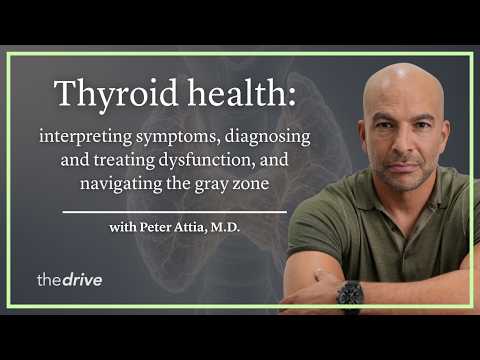
I. Executive Summary
Thyroid hormone homeostasis operates via a tightly regulated neuroendocrine feedback loop governed by a strict “Goldilocks principle,” wherein deviations above or below narrow physiological thresholds induce severe morbidity. Unlike androgen replacement, where supra-physiological levels are frequently well-tolerated symptomatically, excessive thyroid hormone exposure introduces unacceptable risks of atrial fibrillation, accelerated bone mineral loss, insomnia, anxiety, and cognitive dysfunction. Conversely, systemic thyroid deficiency suppresses basal metabolic rate, causing hypothermia, bradycardia, lethargy, and weight gain.
In this clinical analysis, Dr. Peter Attia critiques the polarized landscape of thyroid management, emphasizing that approximately 5% of adults in the United States exhibit clinically meaningful thyroid dysfunction. Mismanagement is pervasive across two diametric clinical extremes. Conventional practice often errs on the side of reductionist underdiagnosis by relying exclusively on population-wide thyroid-stimulating hormone (TSH) reference cutoffs (frequently dismissing patients with positive autoantibodies, suggestive ultrasound findings, or elevated TSH around 4.2 mIU/L). Conversely, alternative and functional medicine practitioners routinely overdiagnose tissue-level hypothyroidism, misinterpreting normal physiological fluctuations in free T3 or reverse T3 (rT3) as definitive conversion defects and prescribing exogenous hormones inappropriately.
Crucially, generalized symptoms such as fatigue, affective blunting, brain fog, and weight gain exhibit near-zero diagnostic specificity for thyroid failure; blinded trials demonstrate that clinical presentation alone cannot differentiate euthyroid from hypothyroid patients due to massive symptomatic overlap with sleep deprivation, perimenopause, and iron deficiency anemia. Furthermore, mild TSH elevations frequently resolve spontaneously without pharmacological intervention. Accurate diagnosis and intervention therefore require a rigorous, laboratory-first framework that synthesizes serial biochemical testing, clinical history, antibody status, and organ structure while strictly avoiding aggressive hormone replacement in transient or borderline cases.
II. Insight Bullets
- Biphasic Toxicity Profile: Thyroid hormone regulation adheres to a strict Goldilocks dynamic where both excess and deficiency produce pathological states, differing markedly from male androgens, which exhibit an asymmetric tolerance profile at supra-physiological levels.
- Prohormone Physiology: The thyroid gland predominantly synthesizes and secretes thyroxine (T4), an inactive prohormone containing four iodine atoms, which requires tissue-level enzymatic deiodination to become triiodothyronine (T3).
- Peripheral Autonomy: Peripheral conversion of T4 to T3 occurs locally across specific tissues via distinct deiodinase enzymes, creating local metabolic variations that circulating blood tests cannot directly visualize.
- Metabolic Gain Control: Circulating thyroid hormones function essentially as the gain knob on cellular metabolic rate, dictating the intensity and speed of cellular respiration rather than cellular differentiation.
- Clinical Presentation of Hypothyroidism: Primary thyroid hormone insufficiency depresses overall metabolic throughput, leading to bradycardia, hypothermia, unexplained weight gain, and diminished subjective physical and cognitive capacity.
- Clinical Presentation of Hyperthyroidism: Excess thyroid hormone accelerates systemic metabolism, triggering elevated heart rate, unintentional weight loss, psychomotor agitation, severe insomnia, and cardiac arrhythmias.
- Epidemiological Prevalence: Clinically significant thyroid dysfunction affects approximately 5% of the United States adult population, making it one of the most common yet mismanaged endocrine disorders.
- High Diagnostic Error Rates: Thyroid pathophysiology remains among the most routinely mismanaged clinical areas, driven by diagnostic blind spots and therapeutic extremes across specialties.
- Structural Visibility Gaps: Pituitary thyroid-stimulating hormone (TSH) acts as an upstream surrogate marker of central feedback, but fails to provide direct visibility into intracellular active T3 activity within the liver, heart, and brain.
- Polarized Clinical Paradigms: Clinical management is divided between dogmatic functional medicine practitioners who view hypothyroidism as ubiquitous and conventional physicians who restrict diagnosis strictly to severe, late-stage disease.
- Symptom Non-Specificity: Subjective complaints such as chronic fatigue, low energy, and sluggishness carry almost no diagnostic specificity for thyroid dysfunction and fail to reliably distinguish euthyroid from hypothyroid cohorts in blinded clinical trials.
- Primary Diagnostic Confounders: Non-endocrine and transition-state etiologies—predominantly sleep fragmentation, iron deficiency anemia, and perimenopause/menopause—closely mimic hypothyroid symptom clusters.
- Perimenopausal Diagnostic Overlap: The clinical overlap between perimenopause and mid-life thyroid dysfunction represents one of the single largest diagnostic traps in ambulatory clinical practice.
- Limitations of Symptom-First Paradigms: Relying primarily on subjective symptoms to diagnose thyroid failure leads to high false-positive rates; objective clinical probability requires a prioritized laboratory-first biochemical evaluation.
- Underdiagnosis in Primary Care: Conventional primary care regularly fails patients by evaluating laboratory cutoffs in complete isolation, dismissing individuals with normal-borderline TSH (e.g., 4.2 mIU/L) despite strongly positive thyroid autoantibodies, heterogeneous gland parenchyma, or familial history.
- Functional Medicine Overreach: Alternative practices frequently overdiagnose thyroid pathology by claiming standard reference ranges are invalid and mischaracterizing normal physiologic variances in free T3 or elevated reverse T3 as definitive pathology.
- Unsubstantiated Etiological Narratives: Alternative practitioners routinely construct elaborate, non-validated clinical narratives involving adrenal fatigue, intestinal dysbiosis, and toxic burden to explain perceived peripheral conversion defects.
- Spontaneous Biochemical Normalization: A high percentage of patients presenting with mild, subclinical TSH elevation spontaneously revert to normal euthyroid parameters upon repeat serial testing without pharmacologic intervention.
- Iatrogenic Hormone Toxicity: Unwarranted exogenous thyroid hormone administration presents serious downstream health hazards, substantially increasing the risk of atrial fibrillation, neurocognitive instability, and accelerated osteoporotic bone demineralization.
- Subscription Architecture: The Drive podcast provides full AMA deep-dives, detailed show notes, and research monographs through a member-supported model available via Peter Attia, MD.
IV. Actionable Protocol (Prioritized)
Clinical Decision Pathway: Thyroid Assessment & Intervention
Stage 1: Initial Presentation & Comprehensive Diagnostic Workup
When a patient presents with non-specific systemic complaints—such as chronic fatigue, unexplained weight fluctuations, mood disturbance, or subjective cognitive decline:
-
Primary Laboratory Panel:
- Core Pituitary-Thyroid Axis: Serum TSH, Free T4 (FT4), Free T3 (FT3).
- Autoimmune Markers: Anti-Thyroid Peroxidase (Anti-TPO), Anti-Thyroglobulin (Anti-Tg).
-
Differential Confounder Screen:
- Hematologic & Iron Stores: Complete Blood Count (CBC), Serum Ferritin.
- Secondary Clinical Screens: Polysomnography (for Obstructive Sleep Apnea), clinical perimenopause/menopause transition staging.
Stage 2: Biochemical Stratification & Decision Matrix
| Clinical Presentation | Primary Diagnostic Criteria | Tier Classification | Immediate Clinical Action | Follow-Up & Surveillance |
|---|---|---|---|---|
| Overt Hypothyroidism | • TSH > 10.0 mIU/L |
• OR Elevated TSH with low Free T4|High-Confidence Tier
(Level A/B Evidence)|Initiate Levothyroxine (LT4) monotherapy|• Recheck TSH and FT4 at 6–8 weeks.
• Screen baseline bone mineral density and cardiac rhythm.|
|Subclinical Hypothyroidism (Mild)|• TSH 4.5–10.0 mIU/L
• Normal Free T4|Monitoring Tier
(Level A/B Evidence)|Withhold immediate prescription.
Evaluate and manage sleep, iron deficiency, or perimenopause.|Repeat complete thyroid panel in 8–12 weeks.
(50–80% normalize spontaneously).|
|Persistent Borderline Elevation|• Repeat TSH 5.0–10.0 mIU/L
• Positive Anti-TPO titers
• High refractory symptom burden|Experimental Tier
(Level C/D Evidence)|Consider a time-limited, low-dose trial of LT4 (25–50 mcg/day)|Discontinue therapy if objective clinical/biochemical benefit is absent by 8–12 weeks.|
|Isolated Lab Aberrations|• Normal TSH and Free T4
• Elevated Reverse T3 (rT3)
• Borderline-low Free T3 alone|Red Flag Zone
(Lacks Safety Data)|Do not prescribe T3/T4.
Avoid fabricated diagnoses (e.g., adrenal fatigue).|Reassure patient against iatrogenic thyrotoxicosis, arrhythmia, and accelerated bone loss.|
Stage 3: Stepwise Implementation Sequence
- Step 1: Laboratory-First Confirmation
- Rule out physiological variation and lab error. Never initiate lifetime endocrine replacement therapy based on a single mildly elevated TSH value or non-specific symptoms alone.
- Step 2: Rule Out Common Mimics
- Address systemic non-thyroidal drivers first: verify iron saturation and ferritin levels, assess sleep architecture, and evaluate reproductive hormone transitions.
- Step 3: Autoimmune & Structural Assessment
- If TSH remains borderline (3.5–4.5 mIU/L) with persistent clinical concern, assess anti-TPO/anti-Tg titers and obtain a thyroid ultrasound to evaluate parenchymal heterogeneity and lymphocytic infiltration.
- Step 4: Targeted Intervention & Retesting
- Reserve LT4 initiation primarily for confirmed overt disease (TSH > 10.0 mIU/L or low FT4).
- For persistent subclinical disease with high antibodies, conduct a carefully monitored trial with clear cessation criteria to prevent iatrogenic subclinical hyperthyroidism.
High-Confidence Tier (Level A/B Evidence)
- Biochemical Confirmation of Overt Hypothyroidism: Initiate standard thyroid hormone replacement therapy using levothyroxine (synthetic T4) solely when serum TSH is persistently elevated above 10.0 mIU/L, or when elevated TSH is accompanied by low free T4, as validated by consensus guidelines and systematic reviews (JAMA Clinical Review).
- Mandatory Retesting for Subclinical Elevations: For patients presenting with mild TSH elevation (between 4.5 and 10.0 mIU/L) and normal free T4, withhold immediate medication and repeat complete testing in 8 to 12 weeks. Clinical literature demonstrates that up to 50–80% of subclinical cases spontaneously normalize to euthyroidism on repeat testing (BMJ Clinical Review).
- Systematic Screening for Clinical Mimics: Prior to attributing diffuse fatigue and metabolic slowdown to endocrine failure, rule out high-prevalence mimics via serum ferritin, complete blood count (CBC), polysomnography for obstructive sleep apnea, and formal assessment of perimenopausal status (European Thyroid Journal Review).
- Autoimmune and Morphological Stratification: In patients with high-normal or borderline TSH (e.g., 3.5–4.5 mIU/L), obtain anti-thyroid peroxidase (anti-TPO) and anti-thyroglobulin (anti-Tg) antibodies alongside thyroid ultrasonography to evaluate lymphocytic infiltration and hypoechoic tissue heterogeneity before establishing a watchful waiting protocol (Thyroid Guidelines).
Experimental / Monitoring Tier (Level C/D Evidence)
- Selective Low-Dose Therapeutic Trials in Symptomatic Mild Elevation: A highly conservative, short-term therapeutic trial of low-dose levothyroxine (25–50 mcg daily) may be considered in younger or non-elderly patients displaying persistent mild TSH elevations (5.0–10.0 mIU/L), positive anti-TPO titers, and debilitating symptoms refractory to lifestyle optimization (Lancet Diabetes & Endocrinology). Therapy must be discontinued if objective biochemical and clinical improvements fail to materialize within 8 to 12 weeks.
- Comprehensive Peripheral Profiling for Selected Cohorts: Assessing free T3 alongside free T4 can be clinically useful when central secondary hypothyroidism is suspected or when monitoring treatment adherence; however, its diagnostic utility as an isolated biomarker for peripheral conversion failure remains unproven.
Red Flag Zone (Debunked / Lacking Safety Data)
- Exogenous Hormone Administration Driven by Reverse T3 (Safety Data Absent): Prescribing synthetic T3 (liothyronine) or escalating thyroid replacement based on elevated reverse T3 (rT3) ratios or borderline-low free T3 in the presence of normal TSH is strongly discouraged. It lacks clinical trial efficacy and regularly induces iatrogenic thyrotoxicosis.
- Symptom-Only Prescribing (Debunked): Diagnosing and medicating thyroid dysfunction based purely on subjective, non-specific symptoms (weight gain, brain fog, fatigue) without confirmatory lab pathology has been thoroughly refuted by blinded trials (PMC Case-Control Analysis).
- Iatrogenic Overtreatment Hazards: Excessive thyroid hormone supplementation suppresses TSH, exposing patients to elevated risks of new-onset atrial fibrillation, left ventricular hypertrophy, and accelerated trabecular and cortical bone loss leading to osteoporosis (JAMA Network Open).
- Fabricated Etiological Diagnoses: Attribution of peripheral conversion deficits to concepts like “adrenal fatigue” or non-specific “toxic overload” lacks validated biochemical assays and physiological support.
Produced by Gemini 2.5 Pro
3 Likes