You have anthrax? That’s contagious… hahaha.
Eat some carrots and sweet potatoes… the orange coloring might balance to a more tanned look. 
You have anthrax? That’s contagious… hahaha.
Eat some carrots and sweet potatoes… the orange coloring might balance to a more tanned look.
Exactly correct. Lutein and zeaxanthin (and mesozeaxanthin) are most absorbed by tissues in the eye and most biologically significant. Astaxanthin is absorbed too, but to a much smaller extent, and doesn’t seem to do anything beyond what the former accomplish. I posted a ton of papers in various threads on all these carrotenoids and the eye.
Hello RapAdmin, are you still taking 144mg of astaxanthin daily? Could you please share if you’re taking synthetic or natural astaxanthin?
I’m currently taking synthetic astaxanthin from the brand ZanthoSyn, which you can buy it on GNC, Sometimes GNC have 50% off promotions, making it the cheapest synthetic astaxanthin I’ve seen.
https://www.gnc.com/antioxidants/539602.html#q=ZanthoSyn&lang=default&start=1
I’ve read the 2019 safety review paper. While the maximum safe dose for natural astaxanthin seems quite high, I’m unsure about the safety of synthetic astaxanthin.
I know of people taking synthetic astaxanthin, such as Siim Land has been taking 24mg of synthetic astaxanthin daily for a year. Does anyone else have experience with synthetic astaxanthin?
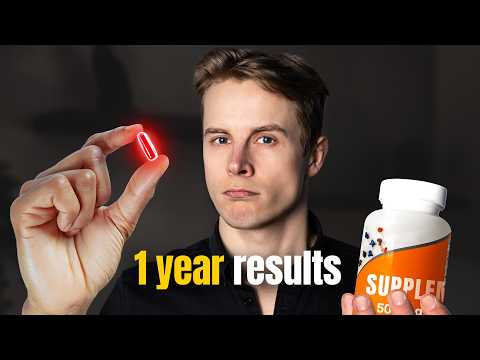
I’m currently taking 3 ZanthoSyn capsules daily, which is 12mg * 3 = 36mg of synthetic astaxanthin. My liver enzyme levels are normal, but compared to the dosage for ITP, it seems insufficient. I plan to increase it to 12mg * 4 = 48mg. What are your thoughts, or are there any research papers I could refer to? Thank you.
I only did it for a week or two - then (because everything the Asta powder touched seemed to stain red, and I was concerned about my teeth) I stopped. I haven’t had time to devise a solution (e.g. encapsulation, etc.). It’s the Dutch company I sourced from. Synthetic. See this discussion: Astaxanthin, Natural vs. Synthetic - Your Thoughts?
I wouldn’t trust all synthetic versions.
ZanthoSyn is the brand I use since that’s the formula that was used in the ITP, which used mega mega mega doses of it and all the mice lived longer.
So what’s this forum’s conclusion on astaxanthin after the failed low-dose ITP results? New March 2026 ITP results - Its All Bad (Negative results) News
poke @relaxedmeatball
Ha, I think Astaxanthin is still a good longevity model. Rationale:
It showed a significant positive effect in the previous ITP. The given dose was 4,000ppm [big caveat here. More about this later]. Resulting in a 12% median lifespan increase in males, P = 0.003.
This new result (failure) was at a much lower dose of 800ppm.
Now, when we look at the dose, 800ppm in the mouse food is equivalent to around 600mg per day for an adult human, and 4,000ppm is equivalent to 2,800mg per day. Obviously SUPER high doses, impossible for a human to take.
However, we have to bear in mind several things:
In the 800ppm group, the mouse mean plasma concentration reached 20ng/ml, measured in the study.
In humans, there are several studies looking at the dose and plasma concentrations:
Note that even 2mg/d in humans gives a plasma concentration 3x higher than the mice in the 800ppm ITP study.
So basically, this failure doesn’t bother me at all. The mice were actually getting a human equivalent dose of something like 0.7mg per day.
In the ITP study which found lifespan extension, the mice plasma levels should be around 45-90ng/ml, which is similar to a human taking ~3-6mg per day. (However, they did not report it in the paper, so I’m making an assumption of linear dose:absorption here).
The ITP isn’t perfect. If you look at the numbers, the sample sizes would allow them to detect a 10% lifespan with 80% power. They also frequently run into trouble with formulations and absorption issues. For example, in the 4,000ppm run, the actual concentration turned out to be only 1840ppm. (Hence me giving ranges of 3-6mg/d or 45-90ng/ml).
They also have site to site inconsistencies, which was especially bad in this run. And finally, they’ve had false positives before (like Aspirin, which was 8% increase, P = 0.07). However, the first Astaxanthin trial was a 12% increase and a much lower P value of 0.003, giving me a lot more confidence.
Bigger picture, Astaxanthin ticks a lot of boxes. Antioxidant, yes, but also Nrf2 activator, NF-kB inhibitor, promotes autophagy, suppresses mTOR, lowers CRP and increases NK cell activity (Astaxanthin decreased oxidative stress and inflammation and enhanced immune response in humans - PMC) and a review here summarises a ton of anti-cancer studies: (Redirecting). More than 50 human clinical trials, and no documented adverse effects.
Personally, I take 12mg per day.
I dont understand its mechanism. I used to take it and did not restock when i ran out.
I think this might be useful in a lot of contexts in combination with other drugs - in PD for example. So it’s not that asta does “x” (like Nrf2 activation), but that this in combination with other drugs along a physiological pathway is what allows for the beneficial effects.
Yes definitely. I am not proposing that it is magical or anything like that, but it’s a molecule that, if discovered by a drug company, would definitely be investigated seriously. It’s not some bunk supplement IMO, but it’s a serious compound which a lot of bioactivity. (Consider statins or SGLT2i drugs which also have multiple potent effects)
On the other hand if you inhibit NF-κB you reduce the transcription of SLC25A1 which is I think (from a 2021 paper) one of the causes of senescence.
I’ve taken astaxanthin on and off over the years, and have been taking it continuously since about 2018. For a while I was taking 24 mg per day (two pills, 12 mg).
I still remember about 10 or 15 years ago a guy writing online that it had amazing benefits for him. I think he said he had Crohn’s disease, and that astaxanthin was the only thing that gave him much relief at all. I think he was taking upwards of 50 to 100 mg every day.
I personally don’t notice any effect, but just assume it does something good, however minor, especially given ITP results. (I think the same about AKG, that it has benefits for specific conditions, but acknowledge that it may not extend lifespan.)
Some other things people have said about astaxanthin, for which one can find articles on the web about (I haven’t tried to verify if they are believable), are that it improves endurance in the elderly, upregulates FOXO3, and protects cell membranes.
Oh, and I recall reading that mice lack the necessary binding proteins to stabilize it, resulting in low bioavailability in mice.
asta is one of my daily supps
it definitely helps me to think faster/better (this has been scientifically proven) and maybe a bit more endurance
For me, the strongest argument is cancer prevention. That’s what it did in the ITP mice, and has been shown across plenty of in vitro studies. Thus I don’t expect to feel any sort of benefit from it. But I would like to believe that it is helping keep my future cancer risk low.
Still, I don’t push the dose too high, since I think saturating yourself with potent antioxidants generally backfires.
i am not aware asta can prevent cancer. it is mostly known as a good antioxidant that reduces inflammation and ROS. It also activates Nrf2 pathways.
National Institutes of Health (NIH) | (.gov) +5
Well, I think it can prevent cancer, since it certainly seems to interfere with cancer cell growth.
Like I said, we have the ITP, where cancer is the main cause of death in the mice, and that was significantly delayed by a human equivalent dose of ~4mg/d.
There’s no human RCT or anything that nice, unfortunately. Most of the studies looking at cancer are small in vitro or rodent studies, but there are quite a lot:
There a review article here: Astaxanthin in cancer therapy and prevention (Review) - PMC
And some specific studies below. None are perfect, by any means. Coming from a few research groups, some with industry funding etc. Variable quality of the journals they’re published in. But this is a supplement that nobody is going to make money from, so there probably won’t ever be some amazing study.
ASX significantly reduced proliferation rates and inhibited breast cancer cell migration compared to control normal breast epithelial cells.
https://www.mdpi.com/1422-0067/25/13/7111
Paper from 1995, giving rats a toxic mixture and monitoring for oral cancers: Chemoprevention of rat oral carcinogenesis by naturally occurring xanthophylls, astaxanthin and canthaxanthin - PubMed
At the end of the study (week 32), the incidences of preneoplastic lesions and neoplasms in the oral cavity of rats treated with [other stuff] or AX were significantly smaller than those of rats given 4-NQO alone (P < 0.001).
In particular, no oral neoplasms developed in rats fed AX
Another from 1994, this time for bladder cancers: Chemoprevention of mouse urinary bladder carcinogenesis by the naturally occurring carotenoid astaxanthin - PubMed
At the end of the study (week 41), the incidences of preneoplastic lesions and neoplasms in the bladder of mice treated with OH-BBN and AX or CX were smaller than those of mice given OH-BBN. In particular, AX administration after OH-BBN exposure significantly reduced the incidence of bladder cancer (transitional cell carcinoma) (P < 0.003).
This one showed slower tumour growth in mice taking ASX before tumour implantation. But actually faster cancer growth is ASX was started afterwards
Compared to the basal diet group, the 0.4% (but not the 0.04%) astaxanthin diet significantly reduced the incidence of palpable mammary carcinoma (92% vs. 42%; p<0.05)
Prostate cancer: Anti-Tumor Effects of Astaxanthin by Inhibition of the Expression of STAT3 in Prostate Cancer - PMC
The treatment of DU145 cells with astaxanthin decreased the cloning ability, increased the apoptosis percentage and weakened the abilities of migration and invasion of the cells.
The results showed that 100 mg/kg astaxanthin significantly inhibited tumor growth compared to the TC group, with an inhibitory rate of 41.7%. A decrease of Ki67 and proliferating cell nuclear antigen (PCNA) as well as an increase of cleaved caspase-3 were observed in HA-treated tumors, along with increasing apoptotic cells, obtained by TUNEL assay.
Interesting
I take 12mg daily but maybe thats too high
I recall the human equicalent is 4 to 8mg maybe i am wrong
No I am pretty sure there is no safe upper limit. One trial used 96mg if I am not mistaken and the results only got better. 12-24mg is probably optimal.
A four-week course of astaxanthin, the red-orange antioxidant that gives salmon and shrimp their color, appeared to protect higher-order thinking in young women pushed into a state of mental fatigue. In the first trial of its kind run entirely in females, 25 recreationally active women took either 12 mg of astaxanthin per day or a placebo, then ran a battery of brain tasks after a deliberately exhausting mental workout. The supplement group got faster and more accurate on tasks demanding cognitive flexibility and impulse control, and reported feeling less mentally drained. Basic attention did not budge. The result is intriguing but early, comes from a small manufacturer-funded preprint that has not been peer reviewed, and rests on a statistical approach that does not actually compare the two groups head to head.
Anyone who has tried to make a good decision at the end of a long day of meetings knows the feeling: the brain slows, mistakes creep in, and effort stops paying off. Scientists call this mental fatigue, and it is a real performance killer for students, athletes, and anyone doing demanding cognitive work. A new preprint asks whether a cheap dietary antioxidant can blunt it.
The antioxidant is astaxanthin, a carotenoid that stands out because it can cross the blood-brain barrier and slot into the membranes of mitochondria, the cell’s power plants, where it mops up reactive oxygen molecules. Most previous human work tested it in middle-aged or older people, many with existing cognitive decline. This study, led out of the University of North Alabama, is the first to run in an all-female group of young, healthy, active adults, and the first to focus on acute mental fatigue rather than aging.
Twenty-five women took 12 mg of astaxanthin or a look-alike placebo daily for four weeks. Before and after, they sat a 16-minute tablet battery: a simple reaction-time vigilance test, a task-switching test, and a flanker test that measures the ability to ignore distraction. Sandwiched in the middle was a punishing 20-minute dual-task designed to fry the brain.
The headline finding is selective. On the two demanding executive-function tasks, the astaxanthin group sped up and made more correct responses per second after supplementation, and rated the ordeal as noticeably less effortful. On the simple attention task, nothing changed, and by some measures it drifted slightly the wrong way. The authors argue this fits a story in which astaxanthin protects the prefrontal cortex, the seat of complex thinking, more than the deeper brain regions that drive basic alertness.
The caveats are large. The trial is tiny, funded by the supplement’s maker, and posted as a non-peer-reviewed preprint. Crucially, the researchers never statistically compared the astaxanthin and placebo groups against each other. They only checked whether each group changed over time, and the placebo group actually improved a lot on several measures too. That design cannot prove the pill beat the placebo. Treat this as a promising signal, not a settled result.
The practical takeaway is modest and provisional. In young, healthy, active women, four weeks of 12 mg per day of astaxanthin was associated with better performance on mentally demanding tasks after fatigue, and with feeling less mentally drained. It did nothing for simple reaction speed and sustained attention.
How big were the benefits? Researchers use a number called an effect size to describe magnitude regardless of sample size. A value near 0.2 is small, 0.5 is moderate, and 0.8 or above is large. The clearest result was on perceived mental exertion, which fell with an effect size of 0.95, meaning a typical woman felt meaningfully less drained after supplementing. On the distraction (flanker) task, processing speed improved with an effect size of about 1.0, and reaction time and accuracy improved by moderate amounts (roughly 0.6 to 0.8). In plain terms, an effect size around 0.6 to 1.0 means the average person after supplementing outperformed roughly 73 to 84 percent of their own pre-supplement attempts. In real-world units the reaction-time gains were about 55 milliseconds on the flanker and up to 180 milliseconds on task-switching.
Bottom line: if you already eat salmon, shrimp, or take astaxanthin, this is a mild point in its favor for staying sharp under cognitive load. It is not a reason to expect faster reflexes, better baseline attention, or anything resembling a longevity intervention. The evidence here is early and thin.
open access paper: Astaxanthin Supplementation Preserves Cognitive Markers of Executive Function Following Mental Fatigue in Females.
Lead institution and country: Corresponding author Gaven A. Barker (University of North Georgia); senior author Hunter S. Waldman and the majority of the authorship and data collection based at the University of North Alabama. Additional authors from the University of Missouri and Edge Hill University (UK). Primary country: United States.
Publication venue and impact evaluation: This is not a journal article. It is a preprint hosted on Research Square