Cathie Wood’s firm joins Cellares’ $277m funding round as investors bet manufacturing not discovery will determine future of cell therapy.
Cell therapy has produced remarkable results. Researchers have learned how to engineer immune cells to hunt down cancer, and new therapies are showing potential in autoimmune diseases that have long resisted conventional treatment. Yet despite the excitement, one stubborn problem has followed the field everywhere: making enough of these therapies for the people who need them.
That challenge is what makes the latest investment in global cell therapy development and manufacturing company Cellares particularly interesting.
The South San Francisco-based company announced that Cathie Wood’s ARK Invest has joined its Series D financing round with a $20 million investment, bringing the total raise to $277 million. ARK joins an investor roster that includes BlackRock, Eclipse, T Rowe Price Investment Management, Inc. and Baillie Gifford [1].
Biotechnology has traditionally celebrated the discovery of new drugs, breakthrough treatments, and groundbreaking clinical results, which tend to dominate headlines. However, every breakthrough eventually encounters a practical question: how do you make enough of it?
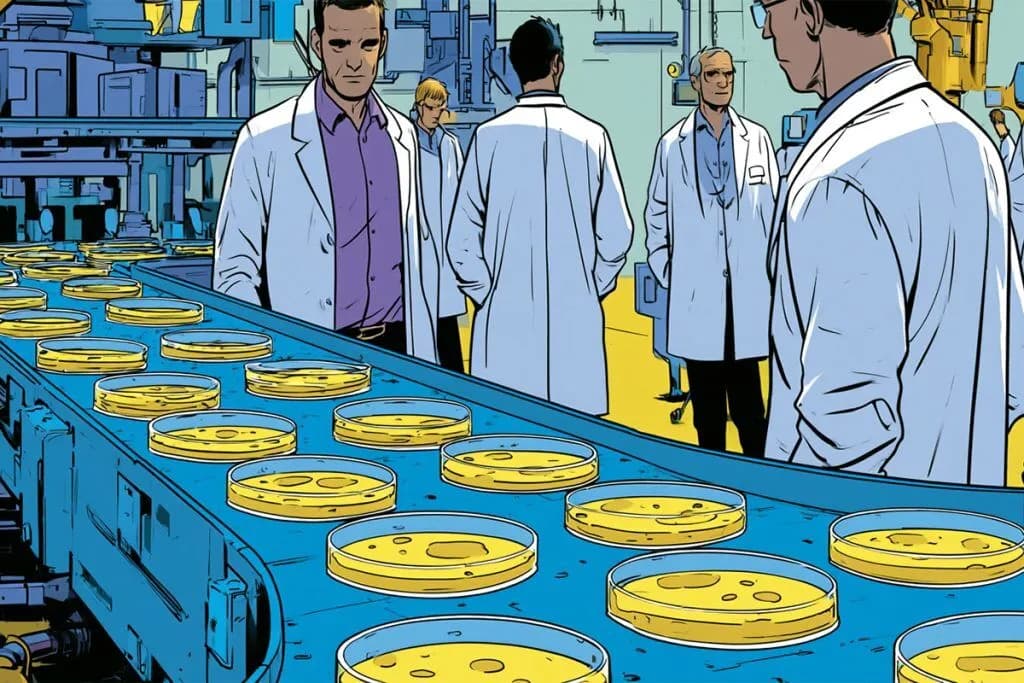
Cell therapies are particularly vulnerable to this problem. Unlike conventional medicines, which can be manufactured in enormous batches, many cell therapies are personalized. Each treatment often requires a patient’s cells to be collected, engineered, tested and returned – a process that can resemble custom craftsmanship more than industrial production.
Imagine if every car rolling off an assembly line had to be built specifically for one customer from start to finish. That’s closer to how many cell therapies are manufactured today.
“The science behind cell therapy is proven. The challenge now is manufacturing these life-saving treatments at the scale and cost required to meet patient demand,” said Cathie Wood, Founder, CEO and CIO of ARK Invest. “Cellares sits at the convergence of robotics, software, and biotechnology, bringing the automation needed to transform cell therapy manufacturing from a bespoke process into an industrial-scale platform.”
The platform is the most important part of ARK’s thesis. The investment is a bet on the infrastructure that could support many therapies.
Now, what makes this one different is that it follows a tangible milestone. In April, Cellares manufactured and delivered its first GMP-grade doses of rese-cel, Cabaletta Bio’s investigational CAR T cell therapy, using its automated Cell Shuttle platform. The therapies met release specifications and were infused into patients on schedule.
Automated cell therapy manufacturing has been discussed as the future. The industry has talked extensively about reducing manual processes, lowering costs and increasing consistency. What has often been missing is proof that these automated systems can successfully produce therapies that reach actual patients.
“We have manufactured cell therapies on the Cell Shuttle and delivered doses to patients on schedule. That is the proof the field has been waiting for,” said Fabian Gerlinghaus, co-founder and CEO of Cellares.
In many ways, this feels like the moment the conversation moves from theory to execution. The question is no longer whether automation can work. The question now is whether it can work repeatedly, reliably and at a scale large enough to change healthcare economics. If the proof-of-concept era is ending, what comes next? The industry’s next bottleneck may be scale. Not discovery, not even automation.
Many transformative technologies experience a similar journey. Building one prototype is difficult. Building one thousand identical versions that perform consistently is much harder. That challenge becomes even more important when patients’ lives are involved.
Cellares believes its network of Smart Factories can address this problem. The company already operates facilities in California and New Jersey and is expanding into Europe and Japan. Its goal is to create a global manufacturing network capable of producing cell therapies at commercial scale beginning in 2027. If successful, the model could allow drug developers to access standardized manufacturing infrastructure rather than building everything themselves.
Can automation finally bring costs down? Perhaps the most attention-grabbing claim is Cellares’ assertion that its Smart Factories can manufacture up to ten times more cell therapy batches than conventional operations with a similar physical footprint and workforce. If that proves true in real-world deployment, it could have consequences far beyond manufacturing.
Today, advanced cell therapies can cost hundreds of thousands of dollars per patient. Manufacturing is only one piece of that equation, but it is an important one. History suggests that when production becomes more efficient, costs eventually fall. We saw it with computer chips and genome sequencing. Technologies that once seemed prohibitively expensive became dramatically more accessible after manufacturing processes matured.
Healthcare is rarely that simple, of course. Lower production costs do not automatically translate into lower treatment prices. Reimbursement systems, regulatory requirements, clinical development expenses and healthcare infrastructure all influence what patients ultimately pay. Still, reducing manufacturing complexity is one of the few levers the industry can directly control. And that is why investors are paying attention.
Now, for those watching the longevity sector, this story is about far more than chronic or autoimmune diseases. Many future therapies aimed at extending healthspan – from advanced regenerative medicines to increasingly personalized biological interventions – will eventually encounter the same challenge facing cell therapy today. A breakthrough treatment cannot improve lives if it remains difficult to manufacture.
ARK Invest is backing the idea that the future of medicine will require industrial-scale infrastructure capable of turning scientific breakthroughs into accessible healthcare. As longevity science moves closer to the clinic, that distinction is becoming increasingly important.
[1] Cathie Wood's ARK Invest Joins Cellares' $277 Million Series D - Cellares
Original article: ARK Invest backs the factories behind automated cell therapies