chatGPT:
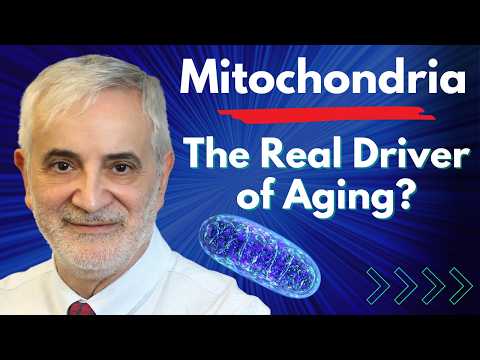
Below is a cleaned, readable transcript based on the transcript you supplied for the Modern Healthspan interview with Dr. Luigi Ferrucci, identified as “Are Mitochondria the Real Driver of Aging? | Dr Luigi Ferrucci”. The BLSA is indeed the NIH/NIA Baltimore Longitudinal Study of Aging, founded in 1958 and described by NIA as America’s longest-running scientific study of human aging. (YouTube)
Tidy transcript
Intro
Host:
Today I’m talking with Dr. Luigi Ferrucci from the NIH. He runs the Baltimore Longitudinal Study of Aging, the longest-running scientific study of human aging in the world. We discuss some of the key things his team has discovered over the past 60 years.
First, Dr. Ferrucci’s team can now track the pace of aging using advanced biomarkers. The gap between biological age and chronological age predicts things like heart disease, cognitive decline, and mortality.
Second, inflammation may not be the villain we often think it is. Dr. Ferrucci argues that chronic inflammation is often a response to accumulated cellular damage, particularly from failing mitochondria. That means if you target inflammation alone, you may be treating a symptom rather than the underlying cause.
Third, people who age successfully tend to share specific habits: daily movement, about seven hours of sleep, good nutrition, and strong social connection. These factors are associated with substantially longer healthspan.
We also talk about GDF-15, a biomarker Dr. Ferrucci thinks should already be in clinics, why mitochondrial function may be central to aging, and what people can do today to slow their aging trajectory.
Let’s get into it.
What makes the Baltimore Longitudinal Study unique
Host:
Dr. Ferrucci, you are the Scientific Director of the National Institute on Aging at the NIH and have led the Baltimore Longitudinal Study of Aging for over two decades. For people who are not familiar with it, can you explain why it is so unique?
Dr. Ferrucci:
I love talking about it. The Baltimore Longitudinal Study of Aging was conceptualized by Nathan Shock, who is really the father of aging research in the United States. He realized that the best way to study aging was not by comparing people of different ages at one moment in time, because they grew up in different environments and had very different life experiences.
For example, a person who is 100 today likely lived through World War I and World War II, while someone who is 20 or 30 did not. Comparing them directly is unfair. The only way to study aging properly is to follow the same people over time with repeated measurements. That is the essence of a longitudinal study.
The BLSA officially began in 1958. At first, it functioned more like a recruitment resource. Different researchers were collecting different kinds of data on different participants, but there was not yet a unified cohort design.
When I came to the NIA in 2002, there was already a great deal of data and many publications, but the study was fragmented. Some participants had some measures, others had different ones. That made it hard to correlate variables because sample sizes became very small.
So I introduced two main principles. First, everyone in the BLSA would receive the full set of measurements at each visit unless there was a contraindication. Second, we created a more operational definition of “healthy” for enrollment, using a protocol with 42 criteria. Only healthy individuals could enter the BLSA, though once enrolled they could remain in the study for life.
Participants are followed repeatedly. If they are under 60, they come every four years. Between 60 and 80, every two years. Beyond that, every year, because aging accelerates in later life. They stay with us for two to three days, often three, and we measure just about everything measurable. We even have dedicated MRI systems and a massive repository of biological samples.
The BLSA is really a treasure for the world. It supports many collaborations and continues to be highly productive scientifically.
Measuring the pace of aging
Host:
The BLSA is looking for ways to measure the pace of aging. Can you explain how you are doing that, and why it is important to do it longitudinally?
Dr. Ferrucci:
Originally, Nathan Shock wanted to distinguish aging from disease. But our technology has improved to the point that we now see that aging and disease are deeply continuous. The same biological mechanisms that change with aging are often the ones that eventually cross a threshold and manifest as disease. So slowing aging should also delay or prevent chronic disease.
That leads to two major questions. First: can we measure aging? Second: if we can measure it, can we slow it down?
A major breakthrough came from Steve Horvath’s work on DNA methylation clocks. He showed that patterns of methylation at specific sites in the genome can predict a person’s age with remarkable precision. That was revolutionary, because it suggested that biological aging leaves a measurable signature.
What is especially important is not just chronological age prediction, but the deviation between biological age and chronological age. That gap predicts outcomes such as myocardial infarction, disability, and mortality. It gives a proxy for biological age.
More recently, proteomics has become extremely promising. We can now measure up to 10,000 or 11,000 proteins from a small blood sample. Proteomic clocks are powerful because proteins are clinically interpretable. Unlike methylation marks, where the biological meaning can be harder to understand, proteins often tell us something about underlying mechanisms.
Why phenotypic aging matters
Host:
So Horvath developed the methylation clock, but you are also looking at phenotypes?
Dr. Ferrucci:
Yes. That is one of the special strengths of the BLSA. Most biological clocks have been developed using cross-sectional designs, where people are measured once and then followed for outcomes. But cross-sectional comparisons are limited because people of different ages had different life experiences, and a single measure might not tell you about change over time.
What we are doing instead is measuring methylation and proteomics longitudinally. In some participants, we have at least four measurements over periods spanning 15 years or more. That allows us to study trajectories rather than snapshots.
We are also very interested in outcomes beyond mortality. People may want to live longer, but many are even more concerned about disability, dependence, pain, and loss of cognitive function.
So in the BLSA we combined many aging-related characteristics into a single phenotypic aging metric. These include things like brain volume, skin elasticity, muscle mass, blood pressure, and many other features. Mathematically, we combine them into a score that reflects how quickly the phenotypic manifestations of aging are progressing in an individual.
That corresponds to the intuitive sense people already have when they say, “You’re 80 and look 60,” or “You’re 60 and look 90.” We are trying to formalize that in a rigorous scientific way.
Then we correlate biomarker changes with those phenotypic changes, so that the biomarkers are tuned not just to mortality but to the speed at which age-related decline unfolds.
Predicting disease before symptoms appear
Host:
Could this help identify people who need special attention before disease appears?
Dr. Ferrucci:
Yes, that is exactly one of the hopes. If biomarkers indicate that someone is at high risk of developing myocardial infarction, diabetes, or pulmonary disease, then we may be able to investigate and intervene before the disease becomes clinically obvious.
Imagine someone in their 40s goes to a doctor because of shoulder pain after playing tennis. The future version of medicine might not only look at the tendon or order an X-ray. It might also analyze a small blood sample and say: yes, you need treatment for the shoulder, but you also appear to be at high risk of diabetes or lung disease. We should look into that now.
That would completely change medicine. Instead of waiting for disease to emerge, we would predict it earlier and intervene while resilience is still strong.
Do participants get their results?
Host:
Do participants receive the results of the tests? And can they act on them?
Dr. Ferrucci:
If the tests are performed under clinical protocols, then yes, we provide those results. Other research-only measurements are not always returned directly. However, if there is an incidental finding, such as a tumor on an MRI, then we inform the participant and, with permission, communicate with their physician.
Being in the BLSA does confer a degree of surveillance and attention that is attractive. Participants come regularly, we know them well, we discuss their cases carefully, and we send reports. We do not pay them, but participation clearly offers value.
There is also some selection bias. People willing to join a lifelong study and agree to eventual autopsy are a special group. They are not necessarily rich, but they often have high education and a strong desire to contribute to science and help others.
What predicts successful aging?
Host:
Can you tell in midlife who is likely to age well?
Dr. Ferrucci:
At a simple level, yes. People who exercise, even modestly, about 30 minutes a day, even walking; people who sleep regularly, around seven hours a night; people who pay attention to nutrition; people who keep up with prevention; people who are socially connected; people who do not smoke; and people who avoid hypertension and high cholesterol all tend to do substantially better.
These patterns are associated with around nine more years of health expectancy before major disease appears.
What we do not fully understand yet are the biological mediators linking these behaviors to better outcomes. My own view is that mitochondrial function is one of the most important mediators.
Why mitochondria may be central
Host:
Why do you think mitochondria are so important?
Dr. Ferrucci:
Aging, as I conceptualize it, is a continuous battle between damaging forces such as entropy, stochastic events, and environmental exposures, and the repair and resilience systems that evolution has built into our biology.
Every day, each cell experiences a huge number of DNA breaks, but there are sophisticated systems that repair them. There are also systems like proteostasis that maintain protein structure and function. Aging occurs when these resilience mechanisms begin to fail.
If we want to shift medicine, we should not only treat damage after it appears. We should strengthen the resilience mechanisms that prevent damage from accumulating.
The key to repair is energy. You need energy to repair DNA, refold proteins, and maintain homeostasis. Mitochondria provide that energy through oxidative phosphorylation, which is vastly more efficient than glycolysis.
When energy availability declines, compensatory mechanisms can no longer function properly. That is why I think mitochondria are central.
Measuring mitochondrial function in humans
Host:
How do you measure mitochondrial function in the BLSA?
Dr. Ferrucci:
We are one of the only studies measuring mitochondrial function in vivo in humans longitudinally. We use magnetic resonance spectroscopy. Participants exercise inside a magnetic resonance setup, and then we measure the dynamics of phosphocreatine and inorganic phosphate recovery. From that, we can infer mitochondrial performance.
We have found that this measure predicts mobility decline and cognitive decline. It is a very powerful signal, and we are focusing strongly on how to support mitochondrial function in future work.
Mitochondrial transplantation
Host:
What about mitochondrial transplantation as a therapy?
Dr. Ferrucci:
We do not do it ourselves, but I follow the literature very closely. It is a fascinating area.
One appealing idea is that when mitochondria are too damaged, mitochondrial biogenesis may no longer work well. In that situation, introducing healthy mitochondria might provide a seed population that can repopulate and restore function.
At least conceptually, that is one of the most attractive ideas in the field. Whether it will work clinically remains to be determined, but it is a very exciting area of research.
Understanding inflammaging
Host:
Another thing that happens with aging is inflammaging, this chronic low-grade inflammation. What causes it?
Dr. Ferrucci:
There are probably several causes. One possibility is intrinsic dysregulation of immune cells. Older people may be able to launch an inflammatory response, but not shut it down efficiently. For example, the initial response to influenza may be similar in younger and older adults, but in older adults the inflammatory response often persists longer than needed.
However, I increasingly believe another theory may be even more important: accumulated molecular and organelle damage itself drives inflammation.
Damaged molecules may no longer be recognized as “self,” and can trigger immune responses. Mitochondria are especially important here. Several major inflammatory pathways are linked to mitochondrial dysfunction. If mitochondria are damaged and their contents leak out, including oxidized mitochondrial DNA or specific mitochondrial lipids, the immune system can interpret those signals as danger signals, almost like bacterial or viral material.
That activates inflammatory systems such as the inflammasome, NF-kB-related pathways, and interferon-related pathways.
There may also be other contributors, such as increased gut permeability allowing bacterial fragments into circulation.
So inflammation in aging is real and harmful, but in my current view it is often secondary. It is a response to accumulated damage. It is not usually the primary initiating event.
Why targeting inflammation alone may fail
Host:
So inflammation is harmful, but not necessarily the root cause?
Dr. Ferrucci:
Exactly. Inflammation can absolutely be damaging. But I now think it is often a secondary messenger caused by damage accumulation.
That may explain why anti-inflammatory treatment is not always enough. The CANTOS trial, for example, showed that blocking IL-1β reduced cardiovascular events, which is important. But many other anti-inflammatory interventions have not shown such strong effects.
That should make us think carefully. It may be that we are not always targeting the right level of the problem. If the underlying issue is damage accumulation driven by inadequate resilience or insufficient energy, then treating inflammation alone may be incomplete.
So we need to both reduce damage accumulation and maintain energy and resilience.
What ordinary people should track
Host:
If someone is an ordinary person getting standard blood tests, what should they look at to assess aging?
Dr. Ferrucci:
Traditional biomarkers still matter. Cholesterol, triglycerides, glucose and the standard clinical markers remain important. We should not dismiss them.
But they may miss more subtle, early states where compensation is still occurring and pathology is already accumulating. That is why we need more sophisticated tools, although many are not yet widely available.
I do think longevity clinics are beginning to emerge around the world, and over time, as evidence strengthens and medicine accepts these methods, more advanced aging-related biomarker panels will probably become part of practice.
GDF-15 as a key biomarker
Host:
If you had to pick one or two advanced biomarkers that should be used clinically, what would they be?
Dr. Ferrucci:
One of the strongest predictors across many health outcomes is GDF-15, growth differentiation factor 15. It rises with age and is strongly associated with chronic disease, mortality, and cognitive decline.
What is still unclear is whether GDF-15 is causal or whether it is acting more like a stress thermometer, a helpful signal reflecting the body’s response to strain. Because of that uncertainty, we are not yet targeting it therapeutically.
But if I had to choose one biomarker that should move into the clinic quickly, GDF-15 would be at the top of the list.
Another promising direction involves composite biomarker sets, especially proteins related to the senescence-associated secretory phenotype, or SASP. These may help estimate the burden of cellular senescence in the body and are associated with multiple adverse outcomes.
Closing
Host:
Thank you so much for joining us today, Dr. Ferrucci.
Dr. Ferrucci:
Thank you so much. That was a great conversation.
Summary
This interview presents Ferrucci’s view that the future of aging medicine lies in measuring the rate of aging directly, rather than waiting for diseases to emerge. He frames the BLSA as uniquely valuable because it follows the same individuals repeatedly over many years, which avoids many of the limitations of cross-sectional comparisons. That basic logic is aligned with the BLSA’s stated mission and with published BLSA work on longitudinal phenotypic aging metrics. (National Institute on Aging)
His central scientific argument has four parts.
First, aging and disease are continuous rather than sharply separate. Ferrucci argues that the same biological processes that change with aging eventually cross thresholds into recognizable disease states. That is broadly consistent with the BLSA longitudinal phenotypic aging paper, which linked accelerated aging trajectories to faster physical decline, cognitive decline, multimorbidity, and shorter survival. (Nature)
Second, longitudinal biomarkers are more informative than one-off measurements. He contrasts cross-sectional epigenetic and proteomic clocks with repeated measurements over 15+ years, arguing that trajectories matter more than snapshots. This is consistent with the published BLSA finding that longitudinal phenotypic metrics were more robustly associated with decline than cross-sectional measures. (Nature)
Third, mitochondrial function may be a core mediator of aging because repair and resilience require energy. Ferrucci’s position is that DNA repair, proteostasis, and other maintenance systems fail when mitochondrial energy production declines. That is a mechanistic interpretation rather than a settled conclusion, but it fits with the established literature linking mitochondrial dysfunction to inflammaging and age-related decline. (PMC)
Fourth, inflammaging is increasingly viewed by him as secondary to accumulated damage, not the prime mover. In the interview he emphasizes mitochondrial damage, leaked mitochondrial components, misfolded proteins, and gut leakiness as upstream drivers. That view is directionally consistent with Ferrucci’s own review work, which describes inflammaging as multifactorial and tied to mitochondrial dysfunction, senescence, gut permeability, and immune dysregulation. (PMC)
On the practical side, he gives a conservative but important lifestyle message: modest daily exercise, regular sleep, decent nutrition, social connection, avoidance of smoking, and control of blood pressure and cholesterol remain powerful predictors of healthier aging. He also highlights GDF-15 as an especially promising clinical biomarker because it is repeatedly associated with multiple adverse outcomes, although he is careful to note that causality remains uncertain. Independent studies from BLSA-related work also identify GDF-15 as strongly associated with mortality, multimorbidity, and physical decline. (eLife)
Critique
This is a strong interview overall: Ferrucci is thoughtful, mechanistic, and unusually careful about uncertainty. But there are still several limitations and tensions worth noting.
What is strong
1. The longitudinal argument is persuasive.
This is probably the strongest part of the interview. Ferrucci is right that aging measured over time is conceptually more powerful than a one-time comparison of different people from different cohorts. The BLSA longitudinal phenotypic work supports that claim well. (Nature)
2. He avoids overclaiming on biomarkers.
He does not present GDF-15 as a magic bullet. He explicitly says it is unclear whether it is causal or just a marker of stress. That caution is scientifically appropriate, especially for a biomarker with broad associations across disease states. (eLife)
3. He offers a coherent systems-level model.
The interview hangs together around a clear framework: damage accumulates, resilience fades, mitochondria fail to supply enough energy, inflammation follows, and disease emerges downstream. Even where evidence is incomplete, the framework is internally consistent.
Where the interview is weaker
1. It sometimes blurs evidence levels.
Some parts are grounded in published human longitudinal data, especially the phenotypic aging score. Other parts, like mitochondrial transplantation as a practical intervention, are far more speculative. Ferrucci usually signals this, but the conversational format can still make these areas sound more mature than they are.
2. The “mitochondria are central to everything” framing may be too strong.
Mitochondria are clearly important, but aging is unlikely to reduce to one hub alone. Senescence, stem-cell exhaustion, extracellular matrix changes, immune remodeling, proteostasis failure, endocrine change, and epigenetic drift may each be partly upstream or parallel depending on tissue and context. Ferrucci acknowledges complexity, but the interview still leans heavily toward mitochondrial primacy.
3. Inflammation may be both cause and consequence.
Ferrucci’s updated view is that inflammation is mostly secondary. That is a valuable correction to simplistic anti-inflammatory thinking. But the biology may be more circular than strictly hierarchical. Chronic inflammation can itself generate more damage, worsening mitochondrial dysfunction and proteostatic stress. His own older review work presents inflammaging in a more bidirectional way. (PMC)
4. The participant population is selective.
He openly acknowledges that BLSA volunteers are unusual. They are motivated, engaged, relatively healthy at entry, and willing to participate for years. That means findings may not translate perfectly to the general population, especially more socioeconomically disadvantaged groups or people with earlier-life disease burdens.
5. The lifestyle section is sound but not very novel.
The advice is correct, but familiar: move daily, sleep, eat sensibly, stay socially engaged, do not smoke, control cardiometabolic risk. The novelty of the interview is really in the mechanistic framing and biomarker discussion, not in the practical recommendations.
Bottom line
Ferrucci’s most convincing message is not that one biomarker or one intervention will solve aging. It is that aging should be studied as a dynamic longitudinal process, and that healthspan-focused metrics may be more useful than disease endpoints alone. That message is well supported by BLSA work. His mitochondrial emphasis is plausible and intellectually attractive, but still partly interpretive rather than definitively established. His discussion of GDF-15 is one of the most clinically interesting parts of the interview, precisely because he combines enthusiasm with restraint. (Nature)
If you want, I can also turn this into a three-column format: tidy transcript / key claims / my fact-check notes.