Post

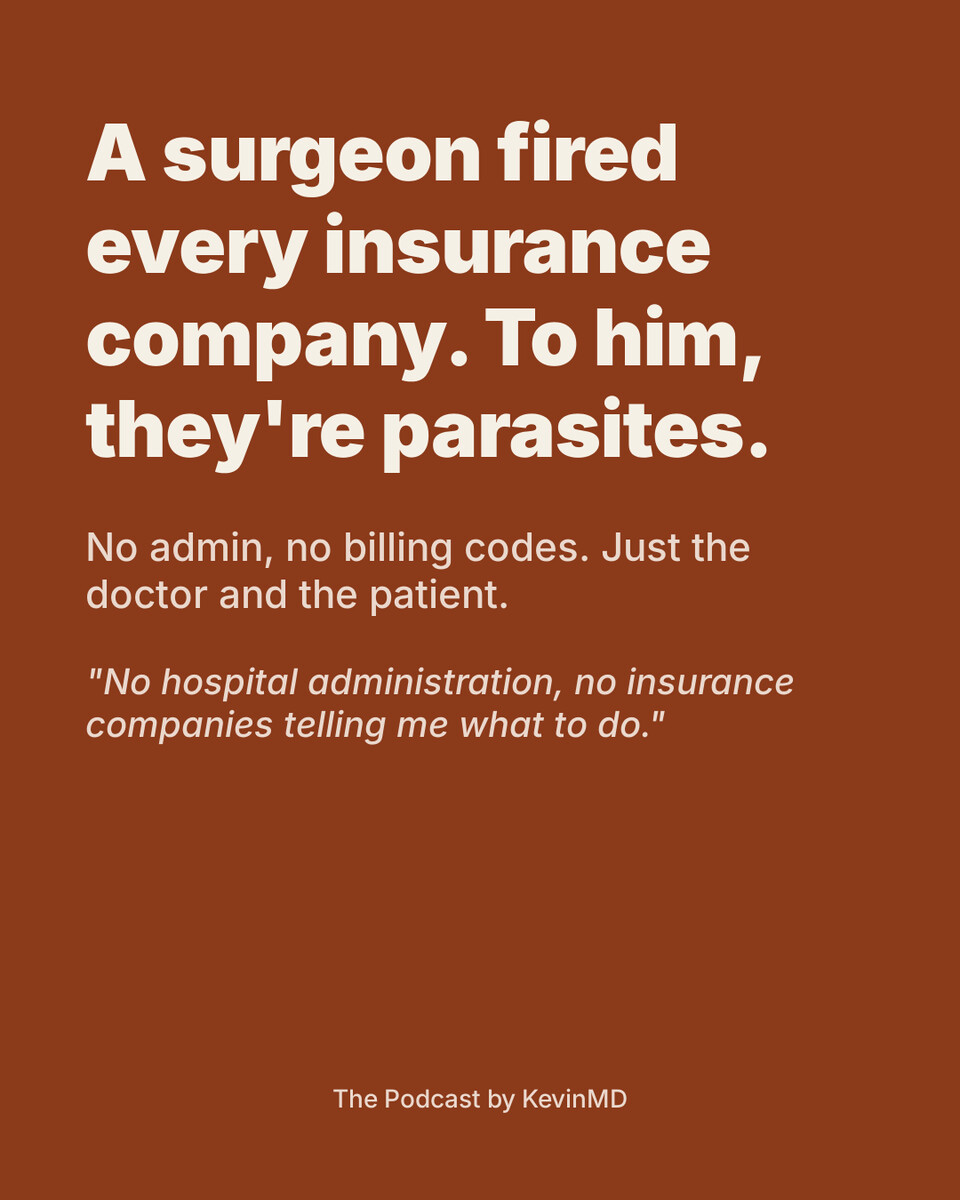
An orthopedic surgeon calls insurance companies “parasites” and says the records system every doctor uses “isn’t meant for note-taking, it’s meant for billing.” So he cut all of it. Daniel Paull spent nine years training to do exactly what everyone else does: take a hospital job or join a large group, accept insurance, see a high volume of patients, run the standard machine. He looked at the machine and refused to build it. His reasoning is the part worth sitting with, because it is structural, not sentimental. To accept insurance, he says, he would have to hire roughly five full-time people and rent more office space. That overhead does not appear from nowhere. It has to be earned back, and the only way to earn it back is volume: more patients, less time with each one, shorter visits, less of the relationship he thinks is the actual core of medicine. Then there is the software. When he says the electronic records system “isn’t meant for note-taking, it’s meant for billing,” he is naming a design incentive most patients never think about. The technology in the exam room is optimized for the payer, not for the encounter. It exists to justify a claim, not to help a doctor think. So he removed the whole apparatus. No hospital administration. No insurance company deciding how long he is allowed to spend with a patient. Just the doctor and the person in front of him. What that buys on the patient side is not abstract. Same-day or next-day appointments instead of a two-month wait. The doctor’s actual phone number, texts answered directly. If he is running late to you, he texts you himself. Compare that to the standard version everyone has learned to accept: wait two months, sit for two hours, and often be seen by the PA anyway. His verdict on the layers he cut out is one line. They are parasites, and they are gone. Here is the uncomfortable reframe worth bookmarking: much of what a patient waits through is not clinical necessity. It is the operational cost of the payment layer, passed down the line as delay. Two years in, he runs an office, does surgeries, makes roughly fifty house calls, and says he says he is happier than he ever was inside the system. Listen to the full conversation on The Podcast by KevinMD. Link in the replies. What is the single layer between you and your doctor that you have never understood the purpose of? #DirectCare #ThePodcastbyKevinMD
10:27 AM · Jul 4, 20262.4KViews
From posting;