The findings of the study, in the Journal of Studies on Alcohol and Drugs, were in line with years of research, saying that health risks go up with just one drink a day and no level of alcohol has a protective effect on mortality. Even levels considered “moderate” raise the risk of premature death and more than 200 diseases, including heart disease and cancer, researchers found.
The new study was one of two government reviews meant to help inform the new dietary guidelines. Released earlier this year, the guidelines advised consuming “less alcohol for better overall health.” The authors of the independently released study say that didn’t provide detailed practical advice about the risks of drinking.
The July 2026 study:
The Myth of the Healthy Drink: Modeling Study Erases the “Moderate Drinking” Safe Zone
A large modeling study commissioned to inform US dietary policy concludes that there is no level of alcohol consumption that produces a net health benefit. Using US-specific mortality, census, and survey data combined with the best available meta-analytic risk estimates, the authors calculate the lifetime risk of an alcohol-caused death across drinking levels. Risk rises from roughly 1 in 1,000 at about 7 drinks per week to 1 in 100 above 8.5 drinks per week, reaching about 1 in 25 for men who drink 14 drinks per week, which was the old federal upper limit. The paper argues the US should tighten its guidance to no more than 1 drink per day.
For decades the comforting idea of a nightly glass of wine as a longevity tool has held cultural authority, supported by observational studies that appeared to show moderate drinkers outliving abstainers. This study, produced by a large multi-institution panel to help inform the next round of US Dietary Guidelines, sets out to test how much of that protective story survives once you use rigorous US data and count only the diseases and injuries that alcohol actually causes.
The big idea is a shift in how risk is framed. Rather than asking whether drinkers live slightly longer or shorter on average, the authors build lifetime absolute risk curves. They combine relative risks for more than a dozen alcohol-linked conditions with real US death records, then ask a concrete question: out of 1,000 people who drink at a given level for life, how many will die from a cause that alcohol brought about. This reframes an abstract debate into a number a person can actually feel.
The answer is that the protective net effect disappears. At up to about 3 drinks per week the model shows tiny apparent benefits, but they are statistically indistinguishable from zero. Above that, harm accumulates steadily. Men crossing roughly 6.5 drinks per week and women crossing about 7 reach a lifetime alcohol-attributable death risk above 1 in 1,000. At 8.5 drinks per week both sexes pass 1 in 100. For a man drinking 2 drinks a day, which totals 14 per week and was permitted under the 2020 to 2025 guidelines, the lifetime risk of an alcohol-caused death is about 1 in 25.
The study also stresses that pattern matters as much as volume. Concentrating the same weekly alcohol into heavy sessions sharply raises the odds of injury, heart attack, stroke, and self-harm, and can cancel any theoretical benefit of light steady drinking. Younger adults carry disproportionate risk because their alcohol deaths come mostly from crashes and injuries rather than slow disease.
The authors are careful to flag that these are population estimates, not personal forecasts, and that they likely understate true risk because of how abstainers and former drinkers are defined in the source literature. The policy conclusion is direct: current evidence supports recommending no more than 1 drink per day. This preliminary but methodologically careful work strongly suggests the “healthy drinking” era is closing.
Actionable Insights
The single practical takeaway is that alcohol has no dose that improves your long-term health, so the goal is harm reduction, not finding an optimal amount. If you drink, less is genuinely better at every step, and zero carries the least risk.
To make the magnitude concrete, the study uses absolute risk, which is the right effect size here because this is a population risk model rather than a before-and-after experiment. Cohen’s d does not apply, since there are no treatment-group means and standard deviations to compare. Instead, think in terms of “number needed to harm,” meaning how many lifelong drinkers at a given level produce one extra alcohol-caused death.
At about 7 drinks per week the lifetime alcohol-attributable death risk is roughly 1 in 1,000, so the number needed to harm is about 1,000. At 8.5 drinks per week it becomes 1 in 100, a tenfold jump, so the number needed to harm falls to 100. At 14 drinks per week for men it is about 1 in 25, or 4 percent, meaning 1 in 25 lifelong drinkers at that level dies of an alcohol-caused death that would not otherwise have occurred. Going from 7 to 14 drinks a week roughly multiplies your lifetime risk about fortyfold.
Two behavior levers matter most. First, lower your weekly total, because risk climbs continuously. Second, avoid heavy single sessions, since binge episodes multiply injury and cardiovascular risk far more than the same alcohol spread out. Drinking with food and more slowly lowers peak blood alcohol and measurably reduces acute risk.
Context and Source
- Open Access Paper: Alcohol Intake and Health Study: No Protective Effect at Low Levels, With Mortality Increasing to 1 in 25 at 14 Drinks Per Week.
- Authors and lead institution: George, Naimi, Keyes, and colleagues, with the corresponding author at the Institute for Mental Health Policy Research, Centre for Addiction and Mental Health, and the Dalla Lana School of Public Health, University of Toronto. The author list spans a large US and Canadian multi-institution panel convened to inform US guidance.
- Country: United States focus, produced by a Canada and US collaboration.
- Journal: Journal of Studies on Alcohol and Drugs, Volume 87, Number 4, 2026.
- Impact evaluation: The impact score of this journal is a Journal Impact Factor of 2.2 (2024) and a CiteScore of 4.3 (2024), evaluated against a typical high-end range of 0 to 60+ for top general science and clinical journals, therefore this is a Low to Medium impact journal. Note that impact factor reflects the journal, not the validity of a specific paper. This is a specialist addiction journal where a JIF near 2 is normal, and the journal sits in the Q1 quartile for its subject category, so it is well regarded within its niche.
3 Likes
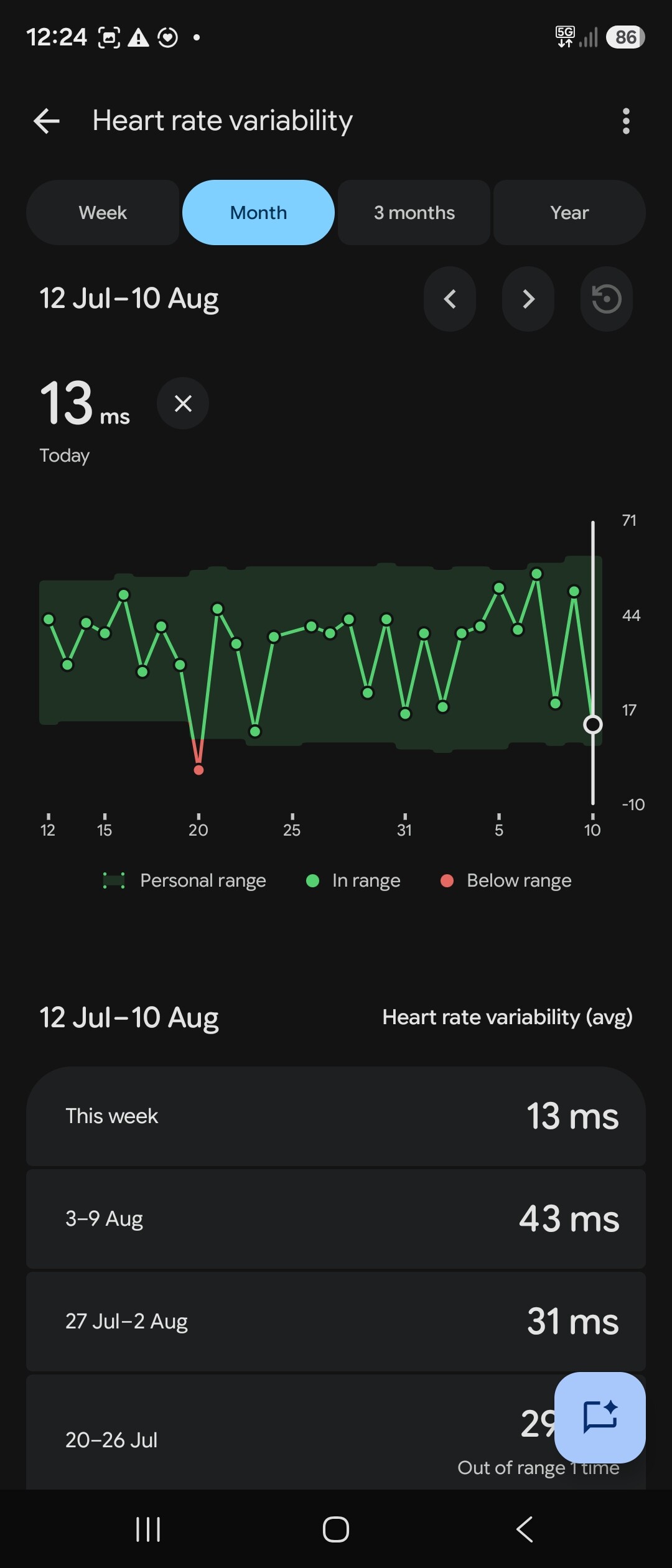
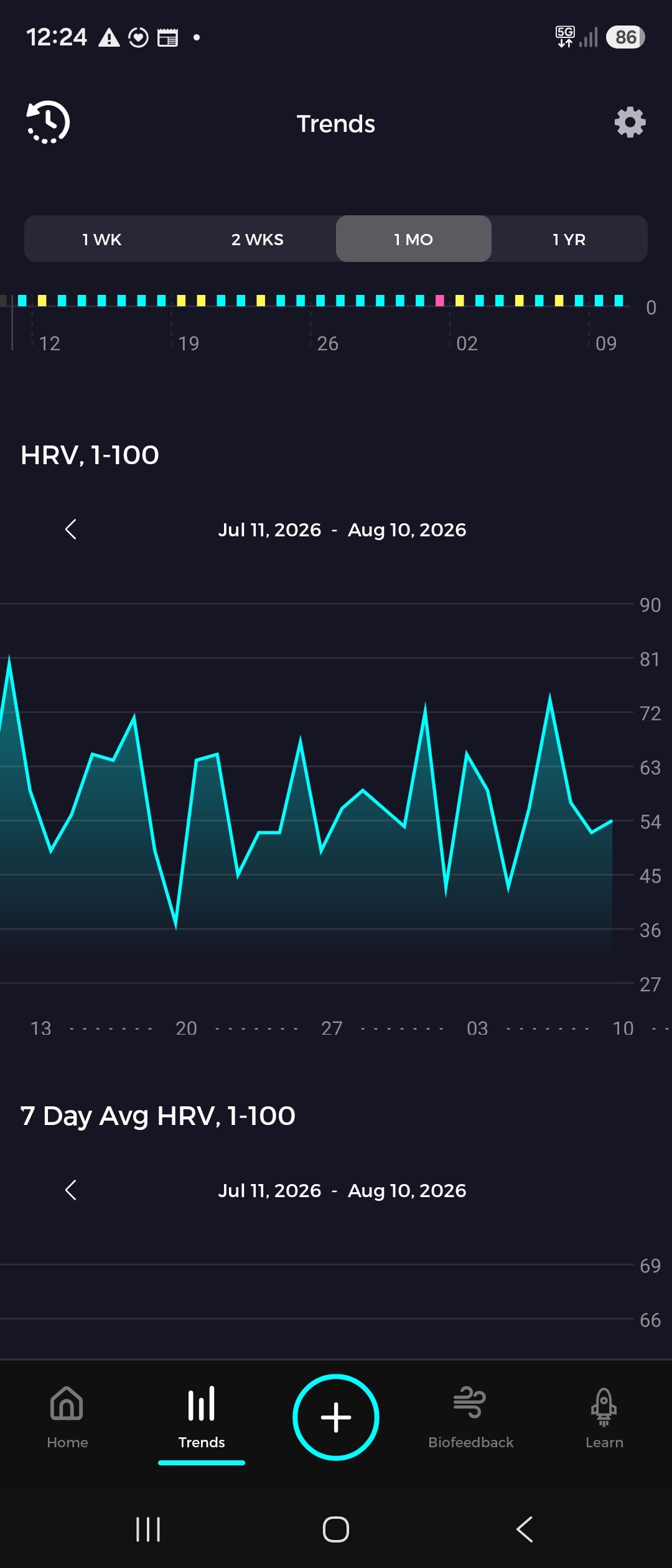
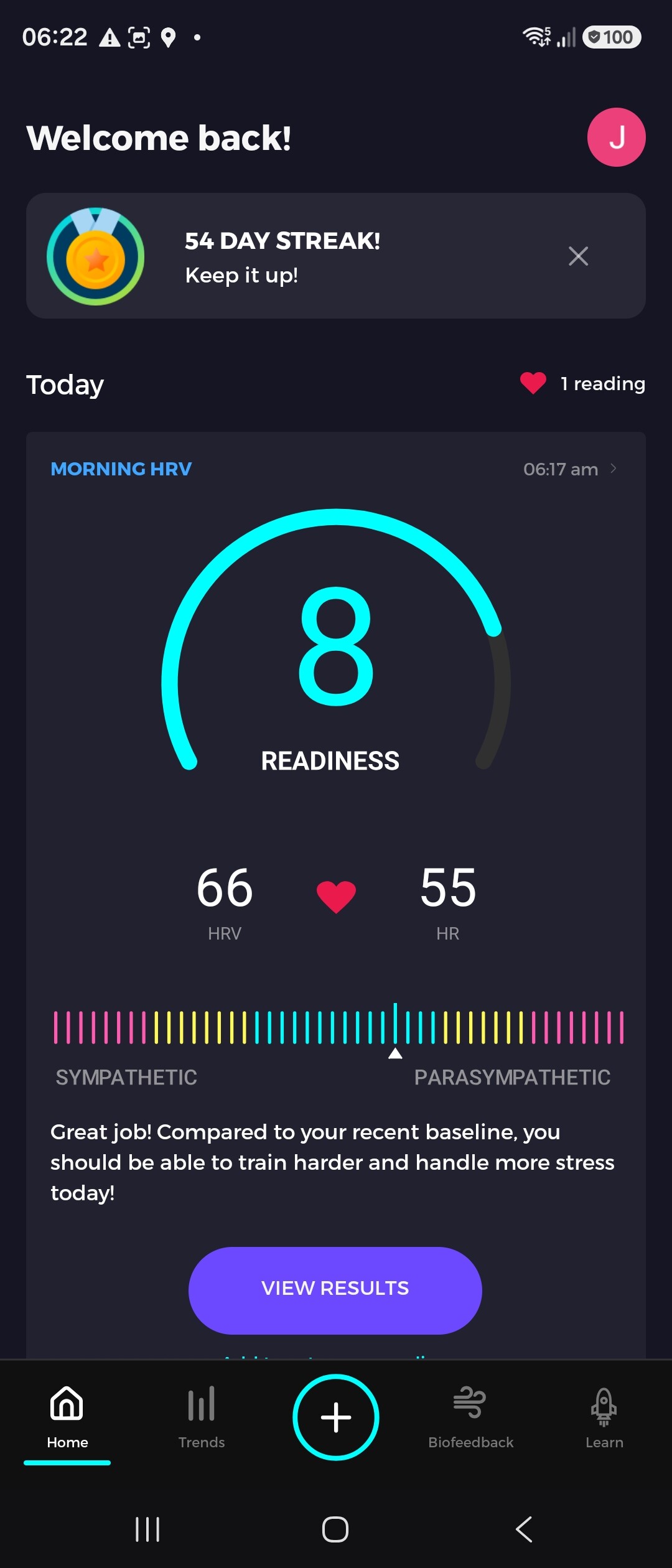
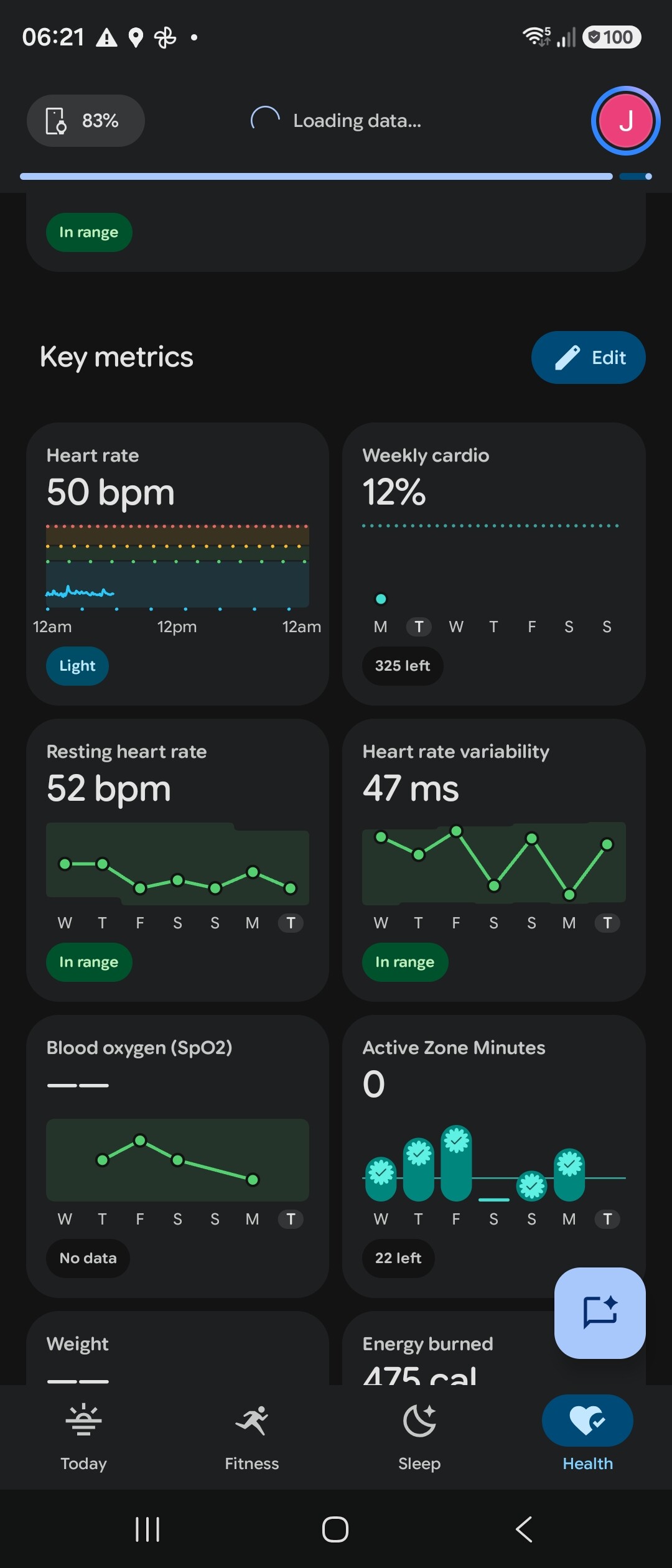
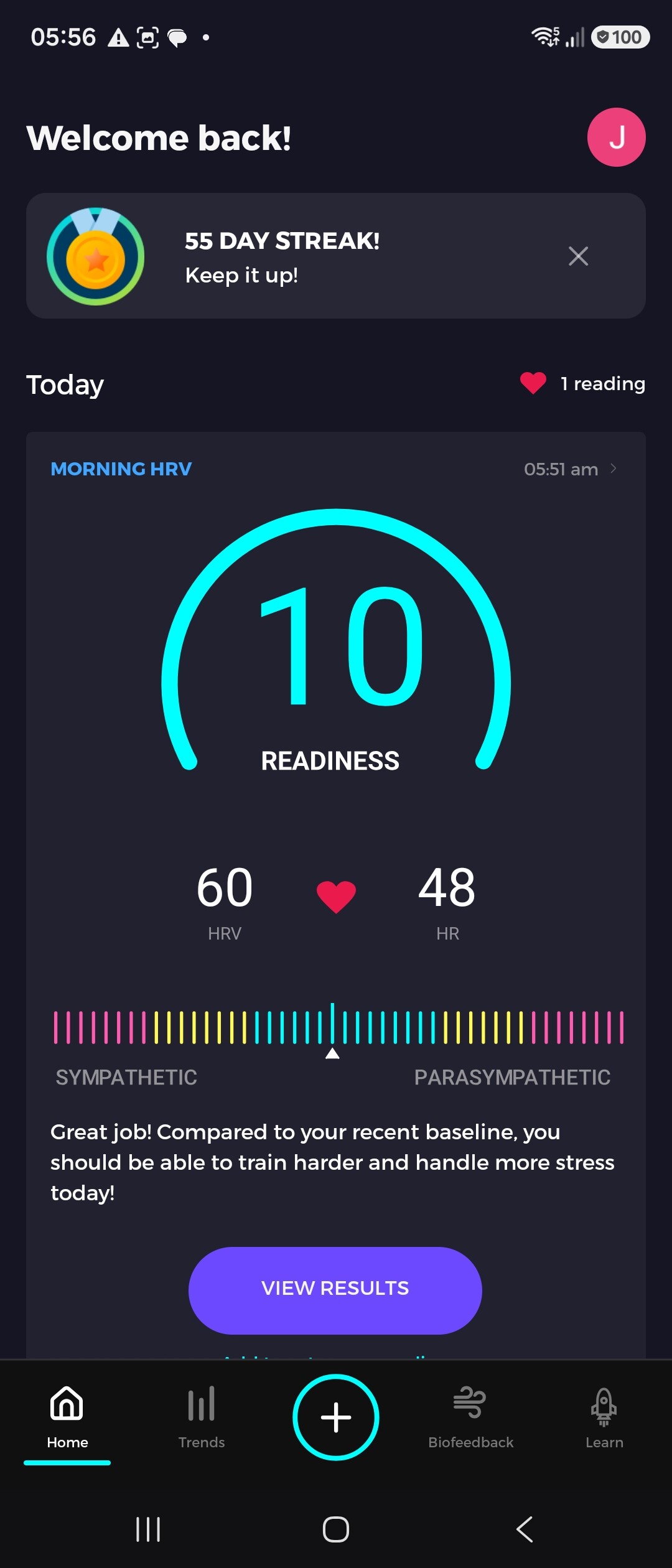
I thought people might like to see the effects of alcohol on HRV. I track HRV both on fitbit and in the morning using elite and Polar. I tend to either drink or not drink at all on any one day and alcohol tanks HRV.
Edit: Top is fitbit, sleep tracker, bottom is elite/Polar H10 ECG band.
3 Likes
Bottom one is the fitbit? It’s mostly above 45 and the other one (elite) is mostly below 45. This is a tough one to get standard on and everybody uses a different system.
The top is the fitbit. HRV when asleep is generally lower than when awake and I am not sure the sleep trackers are that accurate. Polar H10 is an ECG strap.
Also alcohol wears off during the night and hence the morning HRV does not tank as much as I am taking the measurement between just after waking.
The peak HRV values are all after days where I have not had any alcohol. I know, however, that it takes a couple of days for its effects to be insignificant. (mainly on continued, but reduced vasodilation).
The key thing with HRV is to know you are most likely to have a lower value with a sleep tracker.
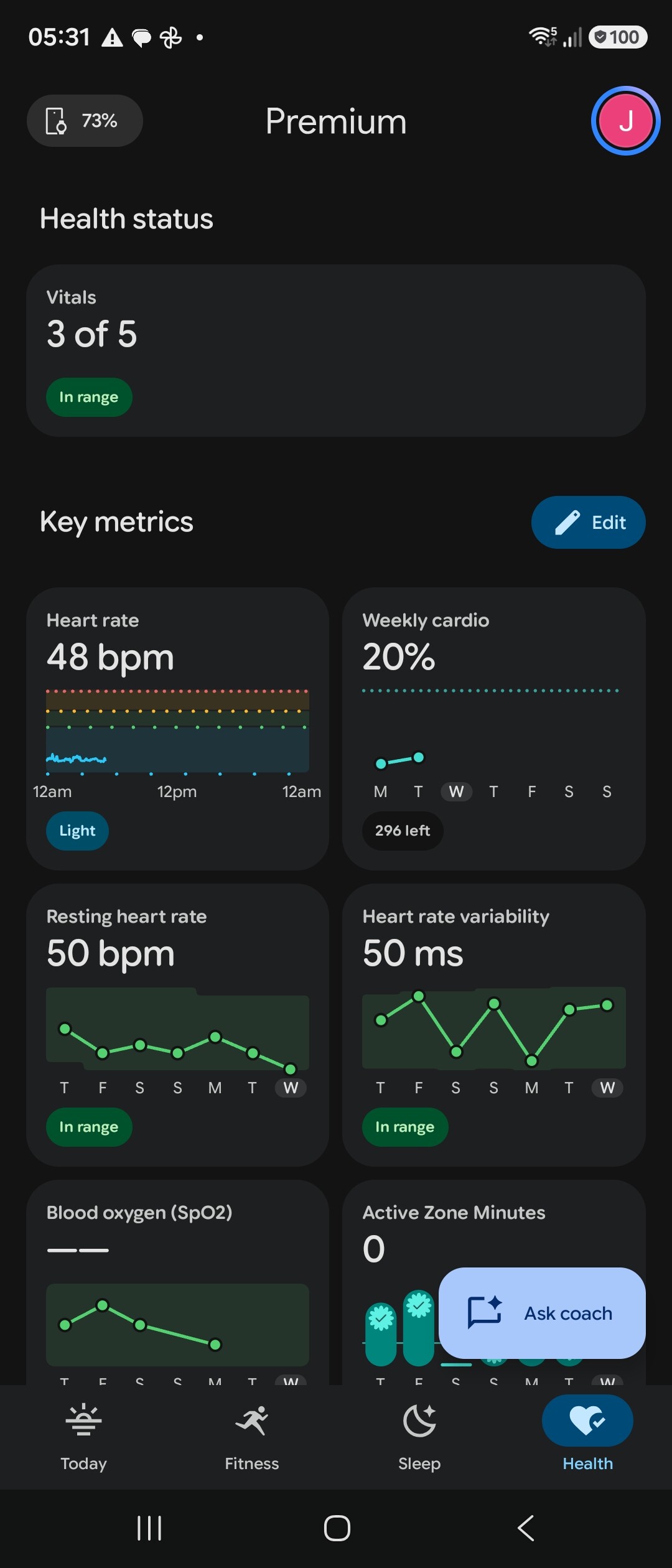
John, what version of Fitbit are you using? Is it the new Google one that just came out a few months ago - the Fitbit Air? The Everything Technology and Longevity Thread - #314 by RapAdmin
Just wondering how comparable your numbers are to mine (I have the new Fitbit air). Your HRV of 43 on the high side, is great for your age.
Fitbit is Charge 6 using now Google Health. Google health has a LLM coach which often tells me to slow down.
There is I think a lot of confusion about HRV values between trackers and ECG values.
That is just silly. The pleasure people get from moderate drinking is surely a benefit to them. I no longer drink, but I do remember the pleasure of a couple of beers after mowing the lawn on a hot summer’s day. If we stop all of the things that give us pleasure, such as the occasional drink or eating food we like, just to add a couple of years to our old age when it doesn’t really matter, what’s the point?
6 Likes
I’m surprised nobody has mentioned BHT (Butylated Hydroxy Toluene); it’s an antioxidant food additive. It seems to be the most effective acetaldehyde clearance system.
NOTE: I am NOT recommending this behaviour: I’ve drunk shedloads of alcohol while using BHT (plus B & C Vits, Milk Thistle and NAC).
Afterwards it clears the hangovers in a couple of hours.
I have very much moderated my drinking and continue to see benefits in BHT.
2 Likes
Agreed. I agree that alcohol can be very harmful and so I limit my consumption to no more than about 3 per week, but I always work a 12 hour day on Saturday (at a bar) and I am not ashamed to admit that at the end of the day, I often have 12 oz or a pint after all the guests have been cleared out, and I don’t really plan to stop that. Apart from that, I might have 1 more drink throughout the week, so I don’t consider it very harmful at that level
There are a number of ethanal clearing systems. I like pantethine.
Even though NAC helps a lot in making feeling not-OK less likely on the next day after having one beer, even this amount has detrimental effects on my HRV and sleep quality.
Alcohol in moderation and dosed properly is a beneficial drug:
- Lowers mTOR
- Anti-inflammatory
- Lowers blood sugar when eating carbs (significantly)
- Boosts HDL
I would offer sources for the above but it has become common knowledge and factual.
Warning - it can be addictive and people with certain genetic profiles should avoid.
Alcohol seems to me, without the fear mongering and virtue signaling, like any other drug. Use with caution and reevaluate usage as you age.
4 Likes
In more ways than that. People who have a vulnerability to cancer (e.g. BRCA, Lynch Syndrome etc.) or are cancer survivors or have certain other medical conditions would be advised to be careful with alcohol. And watch out for interactions. FWIW, I too enjoy a drink now and then, and don’t feel guilty in the least - our bodies have some tolerance to occasional adversity, though I’m not sure if alcohol qualifies as a hormetic.
4 Likes
I fasted yesterday so things improved a little, but i expect to drink again today (partial solar eclipse picnic) so I expect HRV to tank again and RHR to increase
This may seem an unscientific observation, but I lived in Italy for seven years and in that time, I never saw adults at a restaurant for dinner drinking only water. Usually it was a carafe of house wine with their meal. Of course, there are people there who overdo it, just as in other countries, all you have to do is stand at a bar in a cafe and count the number of people ordering a “caffe corretto” – espresso with a shot of grappa at 8 am. But if you check the longevity statistics, Italians on average live eight years longer than Americans. I’m not trying to suggest causation, but if drinking alcohol really damaged health, as these studies suggest, I think that would be reflected in the statistics. Of course, Italians have a much better diet than Americans in terms of food and portion sizes – you rarely see obese italians – and they end to be less sedentary, with going for a walk, or “fare un passegiata,” an entrenched tradition, especially after meals. Maybe Sinclair was right – it’s the resveratrol.
4 Likes
Alcohol is only a tiny slice among other factors that all together influence longevity. Italians drink less overall than Americans, drink with meals, and binge-drink far less. Their diet is also healthier. They move more than Americans, they have less overweight children and obese population in general. Italians are more social and cherish family connections.
1 Like
Well, when I was in Italy a while back, I sow people eating like pigs. The person eating the least in a restaurant was me LOL, yet I was the fattest in that restaurant, and by US standards I’m in pretty good shape. Actually, the first thing that I noticed when I arrived there was the fact how tinny people were. You would walk miles and couldn’t find a fat person, unless they were American tourists LOL.
So, there’s got to be something else (other than family connections and brothers calling each other ciao bello, true story btw which at first I thought it was weird LOL) why it is so. My hunch is that our food supply is actually poison, not really food. Heard somewhere that there are over 100 chemicals that are freely applied to our food supply, yet they are all banned in Europe. I could even recognize the taste as being better for staple foods, like milk, meat, bread etc…
2 Likes
Absolutely NOT true about portion sizes at least my experience there. Everywhere I went in restaurant, in bars, and even couple of Italian families (home cooked meals) they ate a lot. I’m not exaggerating saying I ate the least at any table and I love food. They have a different menu all together. They’d start with pasta (couple sometimes three different versions of it), while always having some meat and cheese snacks i.e. prosciutto, salami and/or caprese salad (fresh unsalted cheese, and couple other cheeses) then soup and then main meal, then the desert and at the very end salad (no dressing other than oil and vinegar btw). And yes, always house wine served with food. I was told wine was cheaper than water over there. You could buy a decent bottle of wine for 5 euros (that was 10 years ago though, haven’t been lately) equivalent of what would probably cost $15-$20 here in USA at the time.
I really think the main culprit is the quality of food and the second main one they move a lot. Every evening after meals they walk their piazzas like crazy.
The next thing that caught my attention was how well-dressed people were. On their evening walks they looked more like they were going to a weeding or something LOL.
Oh, yet another thing that was different there were literally no junk food places, with a McDonalds maybe every 150 miles or so. I think in the whole of Milan was only one MCd’ when I was there. Also, another thing that was different there it was the fact that they rarely go out to eat, but they do go almost daily in late afternoons for what they call aperitivo (drinks and light snacks) which bars served at very cheap discounted prices during such time.
1 Like