chatGPT:
Tidy transcript (cleaned from what you provided)
[Music]
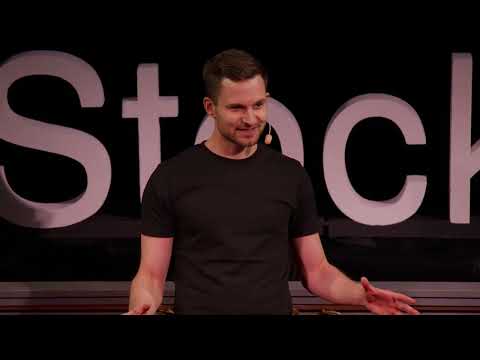
Speaker: What if you could stay young for as long as you’d like? What if you could meet your great-great-grandchild? What if you didn’t have to worry about cancer or dementia? What if we could stop aging?
As a teenager, I had an existential crisis. I asked myself: “How does the universe work? What’s the meaning of life? Why do my loved ones eventually have to die and leave me? Why can’t we all just stay young?”
To get answers, I started reading. I read everything—philosophy, physics, chemistry, and biology.
Two things became clear to me. First: there are no laws of nature that make it impossible to extend the human lifespan indefinitely. That was the good news. And then secondly—the bad news—the aging process is a super-complex biological phenomenon. And back then, we didn’t have a very good scientific description of what it was.
But still, at this time I also did a judgment call. I thought: I don’t think we can do this within my lifetime. And yet I decided there and then to dedicate my life to stopping aging—to achieve longevity.
This is now over 20 years ago. Time flies. And the picture now is completely changed. We’ve had scientific breakthroughs like the hallmarks of aging. The hallmarks of aging are a description of what happens in our cells when we age. They’re far from perfect, but they’re good enough to start developing drugs.
We’ve had the emergence of a longevity industry with over 200 companies, and we’ve had the birth of a global longevity movement of scientists and entrepreneurs.
Today, many scientists are convinced that stopping aging is a practical possibility. Over 2,500 have signed the Dublin Longevity Declaration. (Dublin Longevity Declaration)
Why is this? Well, let’s start from the beginning. When we observe the natural kingdom, we can make the obvious yet fundamental observation that lifespan between different species differs—from minutes to millennia. This indicates that lifespan is a malleable trait. It’s something that can be changed.
Particularly interesting are species that don’t seem to age at all. And we have discovered over two dozen of these species so far.
My favorite example is the giant Galápagos tortoise. These large turtles can become over 170 years old. In 1835, Charles Darwin took one of these turtles with him on his ship back to Britain. And this turtle was eventually named Harriet. Now Harriet long outlived Darwin, becoming 175 years old, and she died in 2006.
Now Harriet—being a member of a non-aging species—simply became an adult and then stayed healthy. She was just as vibrant and fast when she was 20 as when she was 150. (Admittedly, not super fast—being a turtle—but you get the idea.)
So from this, we can conclude that nature has already solved the problem of aging, in a way. All we have to do is replicate this in humans.
Here’s a mind twister for you. Think about how old your parents were when you were born. In my case, they were about 32 years old. Now here’s a fundamental question: how come I wasn’t born 32 years old? How come you weren’t born the same biological age as your parents?
The answer is called cellular reprogramming. This is a fundamental biological mechanism that can reset a cell, making it young again.
And the discovery that any type of cell in our body can be reset like this resulted in the Nobel Prize in 2012. (NobelPrize.org)
This is obviously important if you want to stop aging, but we don’t want to go all the way back. Traditionally, it was thought that cellular development was one-directional—going from an undifferentiated state like a stem cell to a differentiated state like a heart cell or a liver cell. But we don’t want to go all the way back. We only want to go halfway back: partial reprogramming.
The area of partial reprogramming is super hot within the longevity industry. Jeff Bezos has invested $3 billion US in a company called Altos Labs, and Sam Altman $180 million in Retro Biosciences.
Now partial reprogramming—while cool—is but one part of many within the longevity industry, and taken together they hold the potential to fix everything that goes wrong in our cells, making us humans young indefinitely.
So much has happened since I dedicated my life to longevity those 20-plus years ago. The question today is not if we will stop aging, but when. And the timing here is of utmost importance. Doesn’t it matter if we do this before rather than after our loved ones perish—before you yourself perish?
Luckily, there are things we can do to make this go faster. If we want to accelerate the end of aging, three things are needed: talent, funding, and the will to do it.
In terms of talent: today there are maybe only a few hundred people in the whole world really working on the problem of aging—scientists and entrepreneurs. So if you happen to be in such a position, please consider joining or supporting a longevity company, or doing aging research.
In terms of financing: today only 0.5% of the US federal science budget goes to aging research. And the same basic story is true when it comes to startup capital within biotech. So if you happen to be an investor, please consider investing in the longevity industry. (PMC)
And finally, the most important thing: the will to do it. It all starts here. Technical problems can be solved; scientific discoveries can be made—but only if the public demands it. So when you go home tonight, and if you think about this and reach the same conclusion as I have, please tell your friends and family that you think aging should be stopped. You could even multiply your impact by supporting or joining a longevity organization.
There’s not a single government agency anywhere in the world tasked with stopping aging. It’s just us. So you can really have an outsized effect here.
In short, I invite you to join the longevity movement. Together, we really can solve humanity’s oldest problem.
Thank you.
[Applause]
Summary (what the talk is doing)
- Motivation + framing: Personal “why I care” story, then a bold claim: indefinite lifespan extension is not forbidden by physics, it’s “just” a biology/engineering problem.
- Progress narrative: The field now has usable conceptual scaffolding (hallmarks of aging), many companies, and a growing movement (cites the Dublin Longevity Declaration). (Dublin Longevity Declaration)
- Core scientific hook: Cellular reprogramming (iPSCs; 2012 Nobel) implies biology can “reset age,” so maybe partial reprogramming can rejuvenate tissues without wiping identity. (NobelPrize.org)
- Social/political ask: Three accelerants—talent, funding, will—ending with an invitation to join/advocate.
Critique (strengths, weaknesses, and fact-checks)
What lands well
- Clear narrative arc: existential → science → “we have levers” → call to action. It’s persuasive and accessible.
- Correctly spotlights reprogramming as a paradigm shift: The Nobel citation is the right rhetorical anchor for “cells aren’t fate-locked.” (NobelPrize.org)
- Emphasizes healthspan-relevant endpoints (cancer/dementia/frailty): This aligns with how serious policy documents pitch the field (extend healthy lifespan, reduce disease burden). (Dublin Longevity Declaration)
Where it overreaches (and how I’d tighten it)
-
“Two dozen non-aging species” is… shaky as stated.
“Negligible senescence” is a real term, but catalogues of “non-aging” species are much smaller (and the classification is contentious because it depends on what data exist and what endpoints you measure). For example, the Human Ageing Genomic Resources’ “species that appear not to age” list is in the single digits. (genomics.senescence.info)
Fix: say “some species show negligible senescence or extremely slow actuarial aging” and give a few well-studied examples. -
Harriet/Darwin anecdote: memorable, but disputed.
Multiple places repeat “collected by Darwin,” including zoo/biographical retellings, but there’s credible pushback that this is likely myth-making rather than hard provenance. (australiazoo.com.au)
Fix: keep Harriet as a longevity example, drop the Darwin certainty (“often claimed to have been collected by Darwin, though that’s debated”). -
“Nature solved aging; we just replicate it” is rhetorically neat, scientifically nontrivial.
Even if some species show negligible senescence, translating that to humans is not “copy/paste”—it’s a whole-body, cancer-risk, immune, repair, and trade-off problem across decades. -
Partial reprogramming: promising, but the talk skips the hard parts.
Reviews and primary literature emphasize both exciting phenotypes and the persistent concerns—delivery, control, off-target effects, and especially tumorigenicity/identity loss if you overshoot. (PMC)
Fix: one sentence acknowledging the main failure mode (“too much reprogramming risks dysplasia/teratomas; the game is controllability”) would increase credibility a lot. -
“Not if, but when” is motivational—and epistemically overconfident.
It blurs two different goals:- Major healthspan extension (plausible, and the Dublin Declaration explicitly pushes this framing) (Dublin Longevity Declaration)
- “Stop aging / indefinitely young” (far more speculative; might be possible in principle, but timelines and feasibility are unknown)
-
The “0.5% of US federal science budget” claim needs a source.
Federal R&D accounting is messy (no single centralized source; depends what you count as “aging research” vs age-related disease, NIA vs NIH, etc.). (Congress.gov)
Fix: cite a specific budget analysis (NIH/NIA + cross-institute geroscience spending estimates) or present it as an estimate with methodology.
Funding name-drops: mostly accurate, but should be framed carefully
- Altos Labs and ~$3B at launch is widely reported. (Fierce Biotech)
-
Retro Biosciences and $180M seed from Sam Altman is also widely reported. (TechCrunch)
But: money ≠ inevitability. It’s a signal of interest, not proof of tractability.
If you want, I can also do a “claims audit” table (claim → confidence → best citation → what would falsify it) for this talk, which is a nice format for separating inspiration from evidence.