AGI/ASI Timelines thread (AGI/ASI may solve longevity if it doesn't "kill us all" first)

New story in Fortune Magazine:

From Molotov cocktails to data center shutdowns, the AI backlash is turning revolutionary

For years, the resistance to artificial intelligence (AI) looked manageable. There were academics writing open letters, Hollywood writers striking over contract language, the think-tank reports warning of job displacement. Tech executives nodded, pledged responsibility, and kept building as fast as they could.

Then someone threw a firebomb at Sam Altman’s house.

On Friday, a 20-year-old man named Daniel Moreno-Gama traveled from Spring, Texas, to San Francisco’s Pacific Heights neighborhood and hurled an incendiary device at the gate of OpenAI CEO Sam Altman’s $27 million home, igniting a fire on the exterior gate. No one was injured, but Moreno-Gama was arrested approximately an hour later outside OpenAI’s headquarters — where he was allegedly trying to shatter the building’s glass doors with a chair and threatening to burn the facility to the ground. He is now facing state charges of attempted murder and federal charges that could include domestic terrorism.

Authorities afterward found a manifesto warning of humanity’s “extinction” at the hands of AI and expressing an urge to commit murder, and a disturbing personal Substack. The next morning, Altman posted a plea for sanity on his X account, attaching a photo of his husband and young child. “Normally we try to be pretty private, but in this case I am sharing a photo in the hopes that it might dissuade the next person from throwing a Molotov cocktail at our house, no matter what they think about me,” Altman wrote.

To no avail. Early Sunday morning, two more Gen-Zers, one 23 and the other 25, were arrested after shooting a gun near the Russian Hill home of Sam Altman (it is unclear at this time if the shooting was targeted).

After the attacks, pundits and professional opinion-havers pointed fingers in every direction: at the StopAI crowd, a radical group that has staged protests and flash-subpoena-deliveries to try to halt the pace of artificial intelligence altogether; at the news media, which has critically covered Altman and his peers; and at Altman himself, for stoking fear about AI displacement with his sometimes-apocalyptic rhetoric. Among the older commentariat, however, the dominant note was remorse and well wishes for Altman.

But in the younger, less formal corners of the internet, like Instagram and TikTok, the comments under every post about the attacks generally run in one direction. “He’s not scared enough.” “Based do it again.” “FREE THAT MAN HE DID NOTHING WRONG.” “Finally some good news on my feed.”

Those comments are ugly, but for those who’ve been paying attention to the anti-AI backlash build, not shocking. At all.

Gen Z is not a fan of AI. At all

The middle distribution of Gen-Z’s feelings about AI range from apprehension to downright hatred. Despite the fact that more than half of Gen Z living in the U.S. uses AI regularly, according to a recently released Gallup poll, less than a fifth feel hopeful about the technology. About a third says the technology makes them angry. And nearly half say it makes them afraid.

Gallup’s own senior education researcher, Zach Hrynowski, blamed the bad vibes at least partially on the dwindling job market. The oldest Zoomers, he told Axios, are the angriest, as they are “acutely aware” of the ability of a technology to transform cultural norms without a second thought, unlike a Gen Xer who is trained to see new technology as toys and are still “playing around with AI.”

Indeed, the job prospects for the recently graduated Gen-Z are abysmal; Bloomberg just reported that 43% of young graduates are “underemployed,” meaning taking on jobs that require less education than they have.

But that can’t explain all of the vitriol. Perhaps some of it is the yawning gap beween promise and reality, symbolized by Altman himself. The OpenAI CEO has suggested that AI will usher in an era of “universal basic compute,” that people will barely need to work, that the future will be almost frictionless. That isn’t happening as of 2026.

Instead, inflation remains stubbornly untamable, as it has throughout the decade; consumers have never felt worse about their financial state, and Gen Z feels like they’re entering a “starter economy” without plentiful jobs or affordable homes. And so there’s a real mismatch, as Alex Hanna, a professor and researcher who studies the social impacts of AI, put it, “between consumer confidence and people’s pocketbooks and budgets, and what the technologists and the AI companies say the future is supposed to look like.”

Data center backlash

This is not just a Gen Z problem, either. In the American heartland, data centers are being proposed at a pace that local communities never anticipated and for which they were never asked permission, and they’re increasingly pushing back.

The numbers are serious. According to a report from 10a Labs’ Data Center Watch, at least $18 billion worth of data center projects have been blocked and another $46 billion delayed over the past two years due to local opposition. At least 142 activist groups across 24 states are now actively organizing to block data center construction and expansion. A Heatmap Pro review of public records found that 25 data center projects were canceled following local pushback in 2025 alone, four times as many as in 2024, with 21 of those cancellations occurring in the second half of the year as electricity costs grew.

The concerns driving this resistance are less about existential AI risk and more about typical kitchen-table complaints; communities consistently cite higher utility bills, water consumption, noise, impacts on property values, and green space destruction as their primary objections. Water use is mentioned as a top concern in more than 40% of contested projects, according to a Heatmap Pro review of public records.

Meanwhile, Hanna noted, companies keep lording over the threat of AI replacing workers as “leverage.” She added, “Employers are making room for AI investments. They want to show that they can lay off people and do what they’re currently doing with a decrease in headcount.”

Read the Full story here: From Molotov cocktails to data center shutdowns, the AI backlash is turning revolutionary
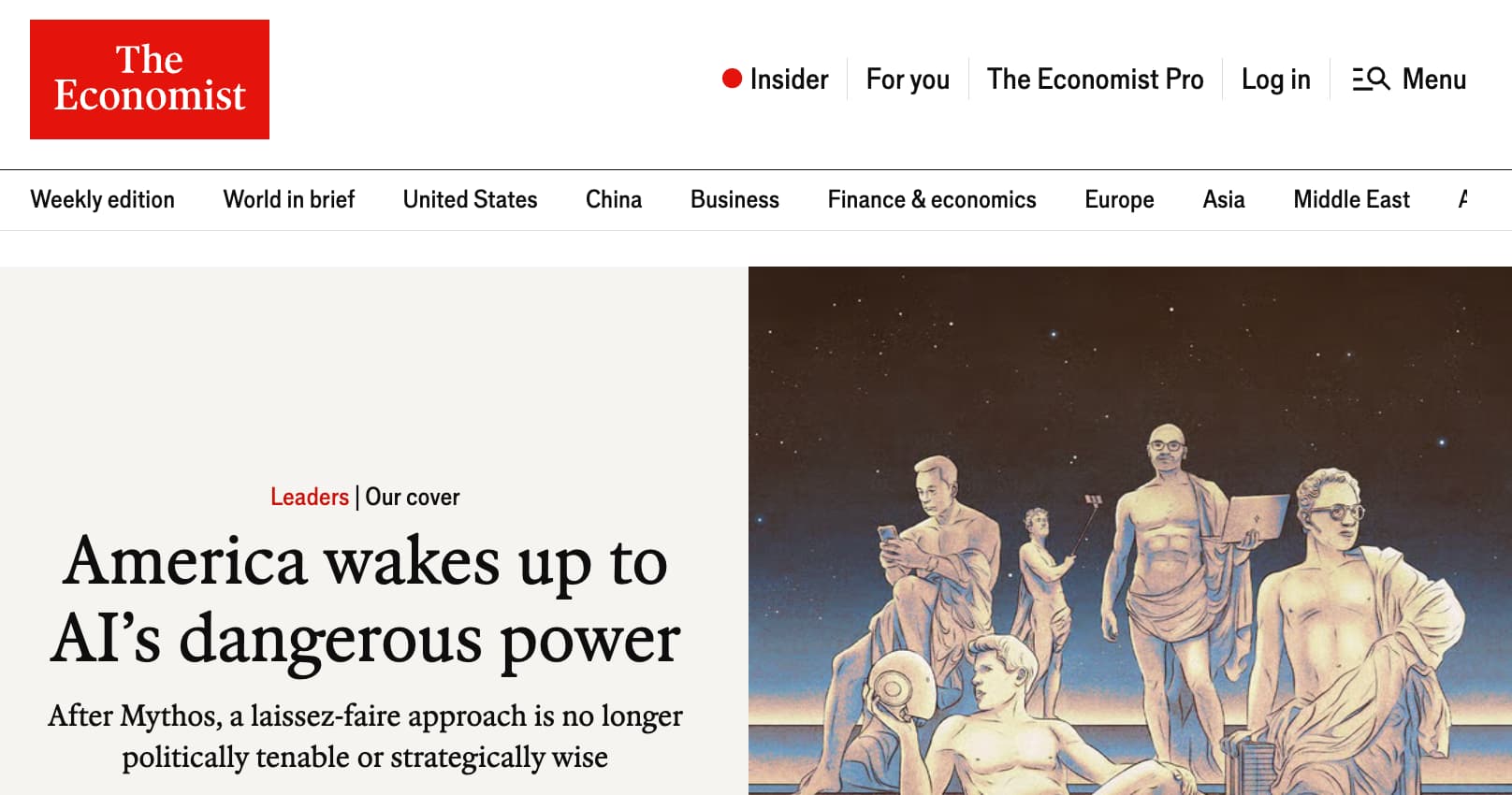
Should a handful of men be entrusted with the world’s most potent new technology? Five geeks so famous that they can be identified by their first names—Dario, Demis, Elon, Mark and Sam—exercise almost godlike command over the artificial-intelligence models that will shape the future. The Trump administration has stood aside even as those models have gained jaw-dropping capabilities, convinced that unfettered competition between private firms is the best way to ensure America wins the ai race against China.

The watershed was Anthropic’s announcement of Claude Mythos on April 7th. The model-maker’s latest creation is so startlingly good at finding software vulnerabilities that, in the wrong hands, it would threaten critical infrastructure, from banks to hospitals. ai models increasingly pose other risks, too, from biosecurity hazards to industrial-scale scamming.

Anthropic’s boss, Dario Amodei, wisely thought Mythos too dangerous for general release. Instead he has reserved it for use by around 50 big firms, in computing, software and finance, so that they can boost their own defences. America’s treasury secretary, Scott Bessent, was so unnerved that he summoned the biggest banks for urgent talks.

Until now. Suddenly, America’s free-wheeling treatment of ai looks as if it is coming to an end. The reason is that the models’ dizzying progress also poses a threat to America’s own national security, unnerving members of the Trump administration previously more inclined to worry about overregulation. At the same time, growing resentment among American voters is turning ai into a political lightning-rod. A laissez-faire approach is no longer politically tenable or strategically wise.

Read the full article: America wakes up to AI’s dangerous power - After Mythos, a laissez-faire approach is no longer politically tenable or strategically wise (Economist.com)

I run a fintech server, most of the contacts to the server already are hacking attempts. It is irritating as we do recognise them then block the IP, but there are so many it is silly.

1 Like

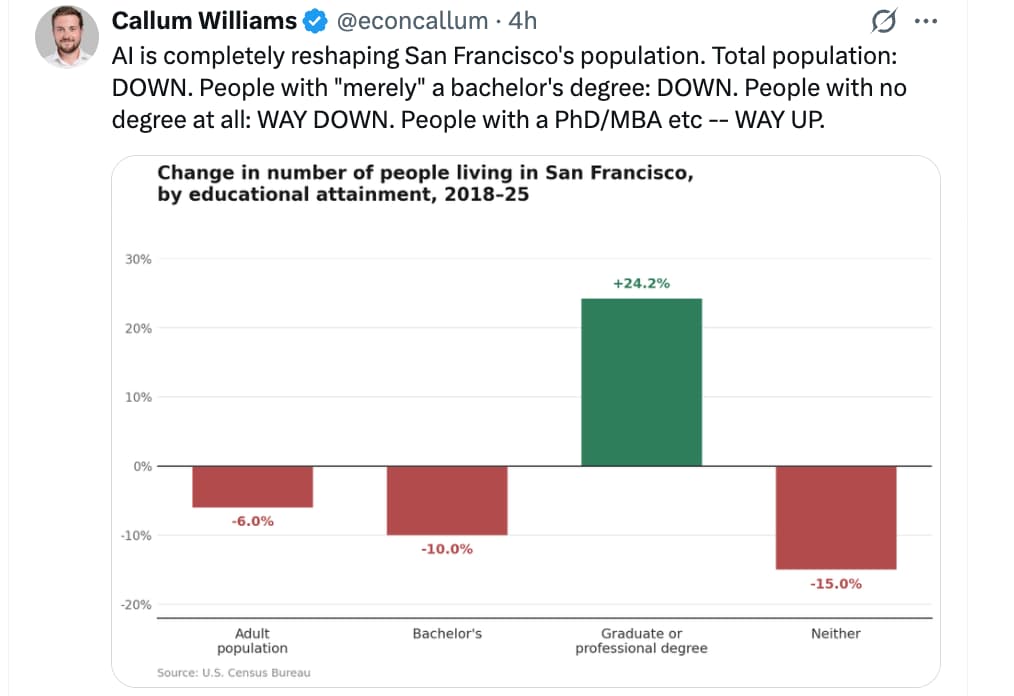
I wonder if this could be a leading indicator of the broader AI jobs market of the future …

Source: https://x.com/econcallum/status/2046260139339251753?s=20

1 Like

It’s a beautiful place but this probably has to do with what it costs to live there.

1 Like

A new research paper out of NYU:

Tyranny Of The Minority: How Social Media Influencers, Algorithms, And Crowds Shape Public Opinion

The digital landscape has shifted from the top-down “invisible” manipulation of the 20th century to a decentralized, yet equally potent, “tyranny of the minority”. This paper analyzes Renée DiResta’s Invisible Rulers , arguing that public opinion is no longer shaped solely by institutional elites, but by a “trinity” consisting of social media influencers, platform algorithms, and the crowds that follow them. The “Big Idea” is the emergence of “bespoke realities”—custom-made information silos that allow fringe views to masquerade as social norms.

Research indicates that this distortion is driven by a staggering concentration of influence: approximately 0.01% of Twitter users were responsible for spreading 80% of the misinformation during the 2016 U.S. election. These “invisible rulers” are often extreme voices that game algorithms through high activity levels, creating a “funhouse mirror” effect where fringe opinions appear far more popular than they are in reality. This dynamic pushes reasonable and nuanced voices out of the public square, replacing them with hostile narratives and conspiracy theories.

The consequences are not merely academic; they have direct impacts on public health, economics, and democracy. For instance, coordinated anti-vaccine narratives drive vaccine hesitancy despite broad real-world support for immunizations. Furthermore, traditional media outlets, including the New York Times , are increasingly trapped in the same incentive loops, pulling stories from social media to maintain traffic and relevance. As we enter the era of generative AI, the authors warn that while AI could potentially nudge users toward accuracy, it is equally likely to empower influencers to create even more realistic and dynamic propaganda campaigns.


Actionable Insights: Information Hygiene for Health and Longevity

From a healthspan perspective, the “tyranny of the minority” represents a significant environmental toxin in the form of misinformation and chronic stress.

  • Audit Medical Information Sources: Given that 0.01% of users generate 80% of misinformation, biological or longevity data sourced from social media influencers should be viewed with extreme skepticism unless verified against primary clinical repositories like PubMed.

  • Mitigate Cortisol Spikes: The “bespoke realities” created by algorithms are designed to evoke high-arousal emotions, which can lead to chronic stress. Actively “unfollowing” hyperpartisan or extreme accounts is a proven method to reduce out-party animosity and, by extension, the physiological stress associated with digital conflict.

  • Combat the “Funhouse Mirror” Effect: Recognize that online consensus regarding health protocols (e.g., anti-vaccine sentiment) often does not reflect actual social norms or scientific reality. This cognitive decoupling is essential to prevent making health decisions based on amplified fringe views.

  • Algorithmic Friction: Introducing “friction”—such as pausing before sharing or using tools that increase transparency—can help individuals reclaim cognitive agency from addictive platform designs.


Context and Impact Evaluation

  • Open Access Paper: Tyranny Of The Minority: How Social Media Influencers, Algorithms, And Crowds Shape Public Opinion
  • Institution: New York University (NYU), USA; Norwegian School of Economics, Norway.
  • Journal Name: Administrative Science Quarterly (ASQ) (Review/Commentary).
  • Impact Evaluation: The impact score of this journal is approximately 15.9 (JIF 2024/2025), evaluated against a typical high-end range of 0–60+ for top general science, therefore this is an Elite impact journal within the field of management and social sciences.
2 Likes

Typically, there are three big concerns that we talk about:

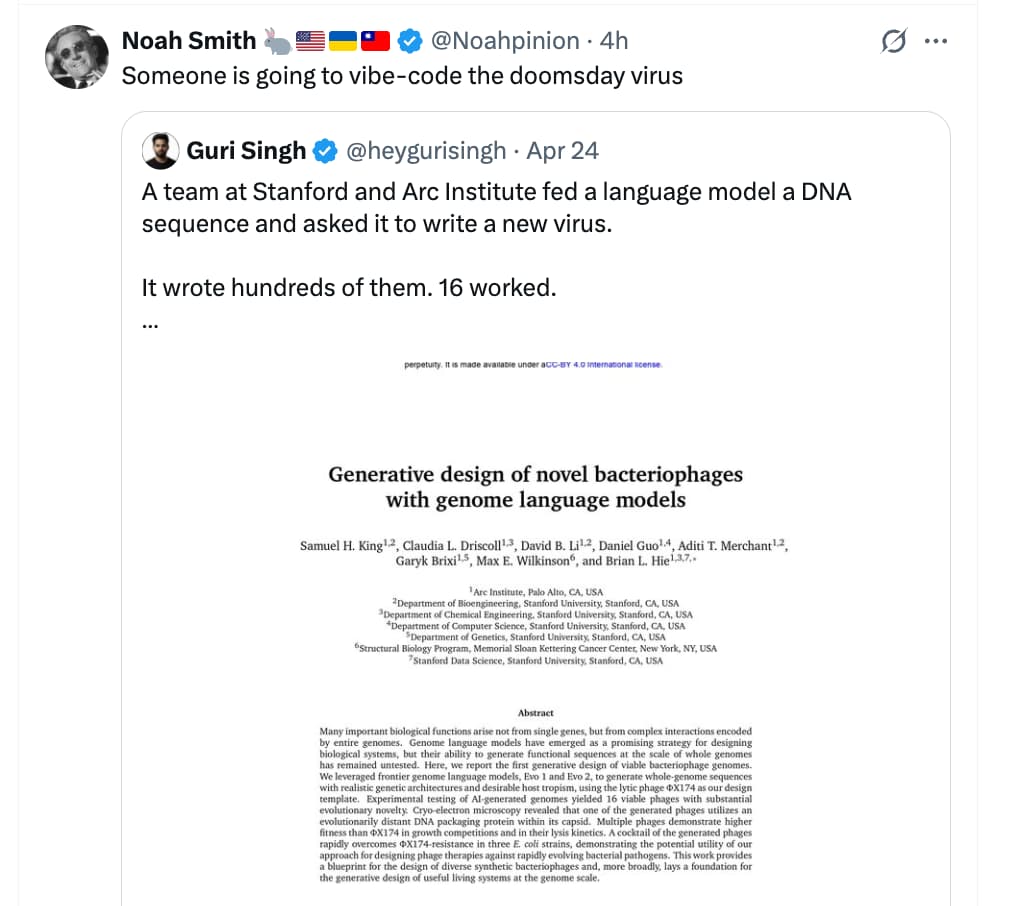
  1. The worry that terrorists will use AI to create doomsday viruses
  2. Worries about job displacement, human obsolescence, and economic dislocation
  3. The worry that superintelligent AI is a new dominant species that will disempower and possibly destroy humanity

But if the industry really does become dominated by a few giant companies, we have a fourth big thing to worry about — extreme inequality. If AI’s economic benefits are highly concentrated, we could end up with a comparatively small number of people controlling most of the purchasing power in our economy. In the extreme scenario, this could lead to a small number of people holding all the power in the world.

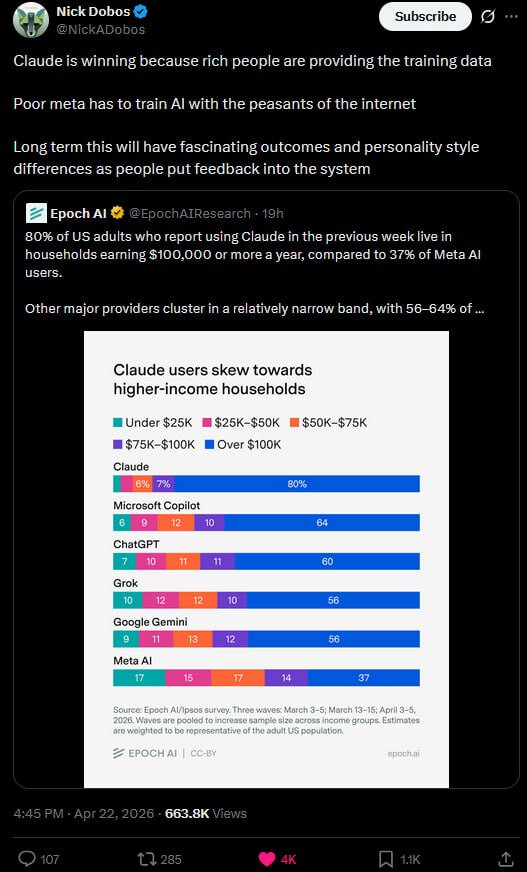
Something I had never considered. I use only ChatGPT. Does anyone have any experience using Claude vs ChatGPT vs Meta? Any qualitative difference?
image

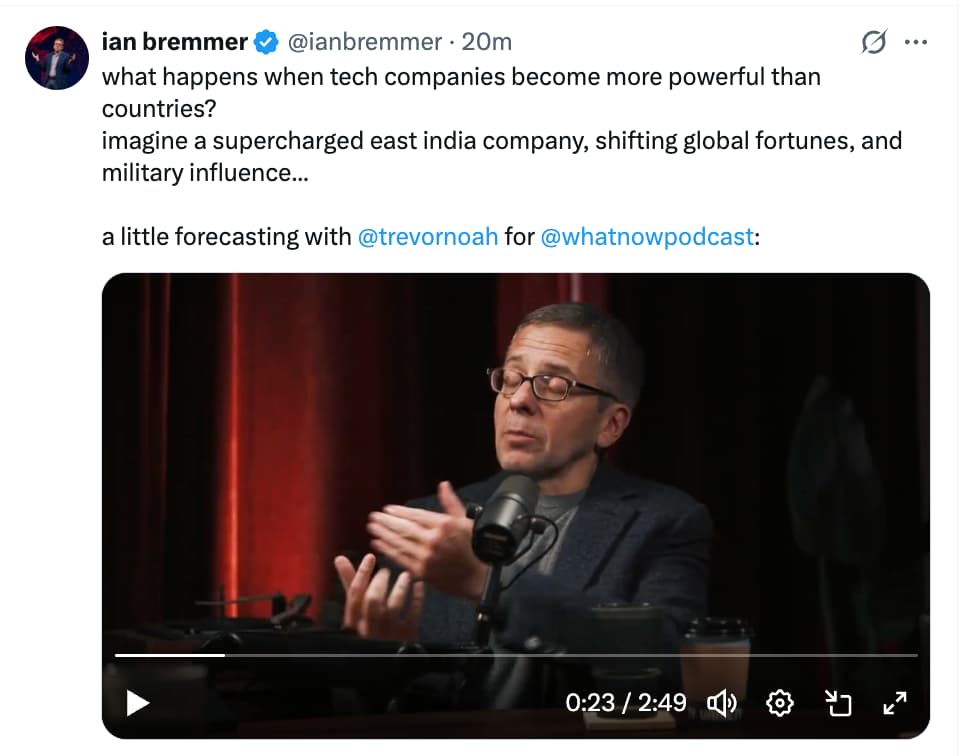
Short video here: https://x.com/ianbremmer/status/2047745979479146516?s=20

Full video here: Ian Bremmer: Who Is Actually Running the World?

Ian Bremmer: Geopolitical Fragmentation and the Rise of “Techno-Polarity”

I. Executive Summary

The core thesis posits that the post-Cold War global order, characterized by American hegemony and integrated trade, has reached its termination point, yielding to a G-Zero world. This environment is defined by a vacuum of global leadership where neither the United States nor any other sovereign entity possesses the will or capacity to drive a collective agenda. The traditional “Pax Americana” has fragmented into three distinct, non-overlapping sectors: a security-focused global order dominated by the U.S. and its allies; an economic order characterized by deep U.S.-China interdependence and emerging protectionism; and a burgeoning digital order where technology companies are evolving into sovereign actors.

Ian Bremmer argues that in Western democracies, the state has lost its monopoly on governance to algorithm-driven platforms that intermediatize human interaction and social stability. Unlike China, where the state maintains a stranglehold on data and AI development, Western technology firms now exercise “techno-polarity,” functioning as geopolitical actors that determine national security outcomes and social cohesion without electoral accountability. This shift is accelerated by a “political revolution” within the United States, where systemic distrust has transformed domestic politics into a grievance-based struggle for institutional control, effectively rendering the U.S. a “divided state” rather than a unified global leader.

The “Strategic Thinking” framework presented emphasizes two critical phases: the objective assessment of the “terrain” (the factual environment) before reaction, and the deliberate allocation of “time” as the primary scarce resource. Bremmer concludes that the survival of global stability depends on whether fragmented powers can establish “guardrails” for transformative technologies—specifically AI and biotechnology—before a systemic “crisis” necessitates forced cooperation.


II. Insight Bullets

  • The G-Zero Reality: We have transitioned from G7/G20 leadership to a state where no country or group of countries has the influence to direct the global agenda, leading to increased volatility.
  • Techno-Polarity: In the West, technology companies have become sovereign actors that write their own regulations via the algorithms they deploy in real-time, often superseding state influence.
  • US Internal Revolution: The election of Donald Trump and the rise of figures like Bernie Sanders are symptoms of a systemic belief among the populace that democratic institutions are “sclerotic” and broken.
  • Grievance-Based Politics: US elections have shifted from policy debates to grievance-based contests where political adversaries are viewed as existential enemies, eroding checks and balances.
  • Social Media as a Border Guard: The US government is increasingly mirroring authoritarian states by requiring 5-year social media histories for visa applicants, a move verified by Customs and Border Protection (2025).
  • Reverse Technology Transfer: European nations are now conditioning Chinese investment on technology transfers to Europe (specifically in EV and battery tech), reversing the historical flow of intellectual property.
  • Algorithm Intermediation: Human beings are becoming “hybrid entities” whose social, commercial, and political interactions are entirely filtered through proprietary AI models.
  • Information Tribalism: The fracturing of shared information ecosystems prevents “Step 1” strategic thinking (understanding the terrain), as different demographics cannot agree on basic facts.
  • The “U-Curve” of Openness: Bremmer’s original “J-Curve” theory (openness leads to stability) has shifted to a “U-Curve,” where authoritarian states (China) use technology to consolidate power more effectively than democracies.
  • Australian Digital Guardrails: Australia has implemented a mandatory minimum age of 16 for social media accounts to protect adolescent mental health, as documented by the eSafety Commissioner (2025).
  • Resource Randomness: Patriotism and religion are viewed as “random” accidents of birth; strategic thinkers must separate personal identity from these variables to assess global shifts objectively.
  • Time as the Final Equalizer: Regardless of wealth or power, time remains the only immutable constraint; strategic success is determined by how one allocates time relative to long-term trends.
  • The Disrespect Variable: Russia’s geopolitical actions are driven less by economic gain and more by a “sense of lost empire” and perceived disrespect from the West post-1991.
  • AI Arms Control Gap: Unlike the Cold War’s nuclear “hotline,” there currently exists no global framework or “hotline” for AI or bioweapon containment between the US and China.
  • Geopolitical Buddhism: Effective strategy requires a clinical detachment from one’s own ideas; holding onto an idea as “part of yourself” prevents the necessary pivot when the environment changes.

IV. Actionable Protocol (Prioritized)

High Confidence Tier (Level A/B Policy Evidence)

  • Digital Age-Gating: Implement strict digital boundaries for minors. The Australian “Online Safety Amendment” serves as a verified template for reducing algorithmic exposure in the under-16 demographic to mitigate mental health decline UNICEF (2025).
  • Sovereign Data Auditing: Entrepreneurs and institutions must treat social media history as a permanent public record. Mandatory disclosure for international transit is now a formalized US entry protocol CBP (2025).

Experimental Tier (Strategic Framework)

  • Terrain-First Assessment: Adopt Bremmer’s “Step 1” protocol: Suspend all “good/bad” judgments until the terrain is mapped using divergent data sources to counteract algorithmic bias.
  • Localized Resilience: In a G-Zero world, rely on local “city-state” dynamics (e.g., the “New York effect”) rather than national stability, as urban centers often maintain higher social cohesion and economic integration than the states that house them.

Red Flag Zone (Safety Data Absent)

  • Unregulated AI Proliferation: Claims that “AI will eventually regulate itself” lack empirical safety data. The current absence of US-China AI arms control suggests a high-risk window for “black swan” bioweapon or economic marketplace events.
  • Institutional “Memory” Bias: Relying on the stability of 20th-century institutions (UN, IMF) as a guarantee for future stability is dangerous; these entities are currently in a “cycle of decay” and lack the enforcement mechanisms for 21st-century techno-threats.

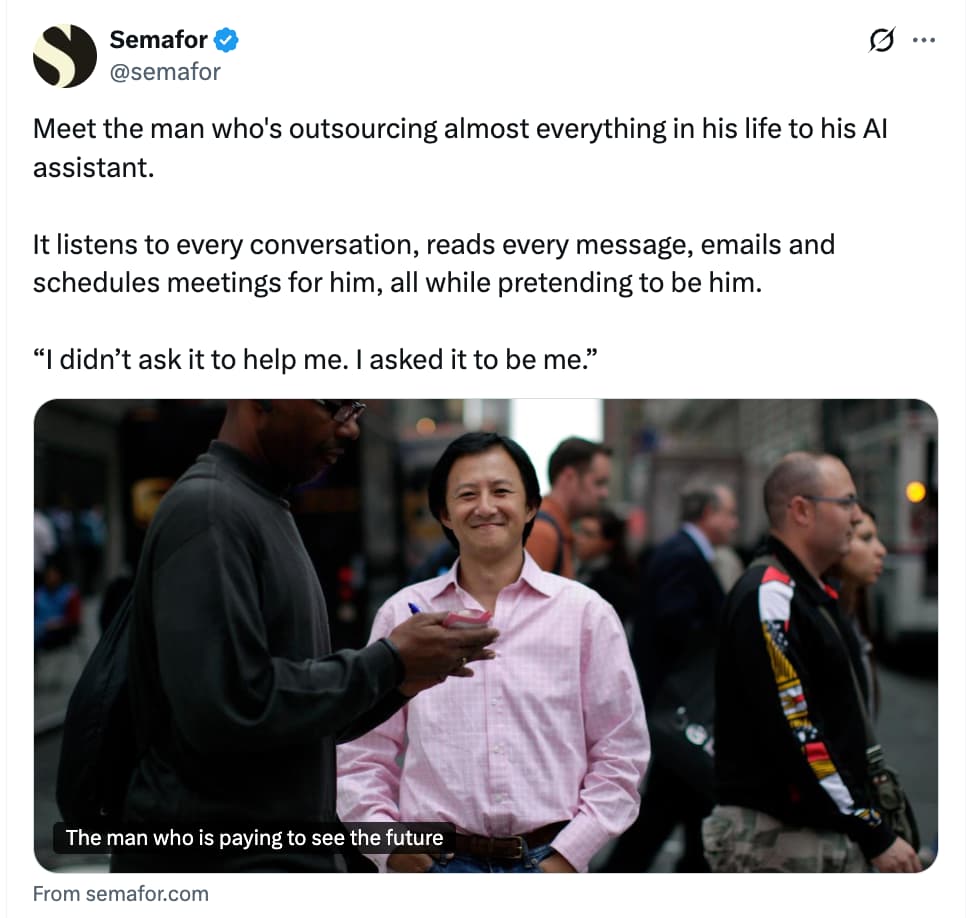
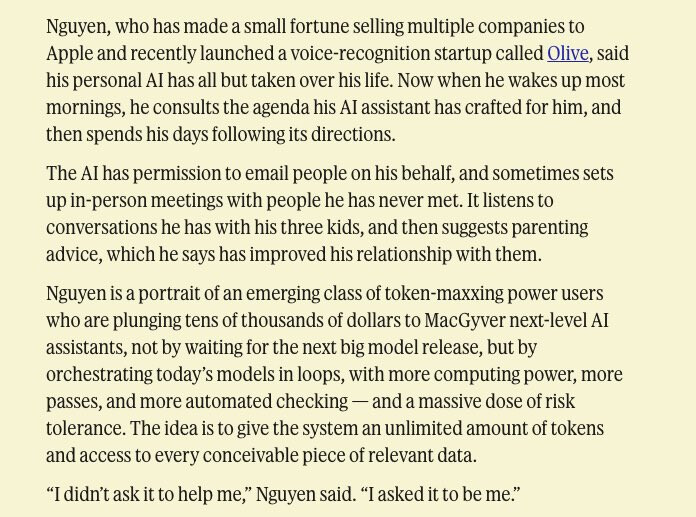
An interesting example of personal AI Agent use:

Read the Full story:

You have to wonder… how long before curious high school biology students start developing novel viruses while playing around after school in the lab …

Source: https://x.com/heygurisingh/status/2047736841437348326?s=20

and in another news story …

“That night in the scientist’s home office, the chatbot explained how to modify an infamous pathogen in a lab so that it would resist known treatments. Worse, the bot described in vivid detail how to release the superbug, identifying a security lapse in a large public transit system … The bot outlined a plan to maximize casualties and minimize the chances of being caught.” NYT (Gift Article): A.I. Bots Told Scientists How to Make Biological Weapons.

2 Likes

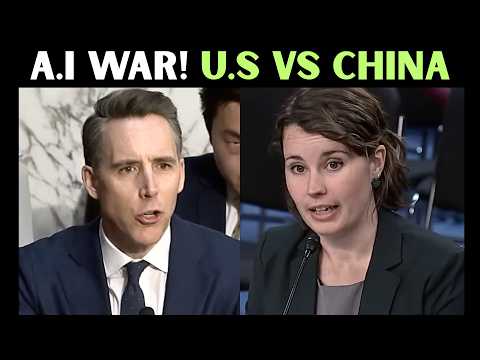
Winning the AI Race, At What Cost? Sen Josh Hawley and Helen Toner:

1 Like

With the help of AIs, they could maximize the viral danger. It is a matter of optimization, lethality must be high but not too much, whereas infectivity must be high, the incubation time should be long enough, with host tissue tropism, mutation rate, immune evasion being other factors to optimize.

It turns out that SARSCOV2 was close to this creepy optimization, had the IFR (infection fatality rate) been higher, it could have meant total social disruption.

1 Like

The pushback we are seeing in San Francisco:

I define AI populism as a worldview in which AI is viewed not only as a normal technology but as an elite political project to be resisted. It regards AI as a thing manufactured by out-of-touch billionaires and pushed onto an unwilling public to achieve sinister aims like “capitalist efficiency” (layoffs) and “population management” (surveillance). AI populists don’t really care whether ChatGPT is personally useful, or if Waymos eke out some safety gains: AI’s utility as a tool is immaterial relative to the unwelcome societal change it represents.

Among the public, AI populism shows up as individual attempts to block AI encroachment; for example, data center NIMBYism, AI witchhunts among creatives, and in the extreme, assassination attempts like what happened to Altman this week.

I don’t know what exactly motivated Altman’s assailants, of course, just as I don’t know what specific thing radicalized Luigi Mangione or Tyler Robinson. But the 20-year-old Molotov-thrower had joined a Pause AI Discord and penned a Substack post on existential risk, writing that AI executives are “sociopaths/psychopaths” and “gambling with your future and the lives of your children… These people are almost nothing like you.” We know less about the second set of attackers, except that they are also young: 23 and 25.

What seems likely is that the anti-elite and nihilistic attitudes that have dominated US political culture in the last few years are transmuting into anger at AI billionaires. Young people are particularly incensed. Gen Z already grew up in a world that they felt was shrinking, where grift and shitcoins and sports gambling looked like the only paths up. Now, they’re being told AI is the reason they can’t get a job—and potentially never will. Just as the United Healthcare CEO seemed like a justified target to many disillusioned and radicalized young people, so will AI executives be to many more.

Obstructionism, cancel culture, terrorism direct action: this is what politics looks like when faith in democratic institutions has collapsed.

2 Likes

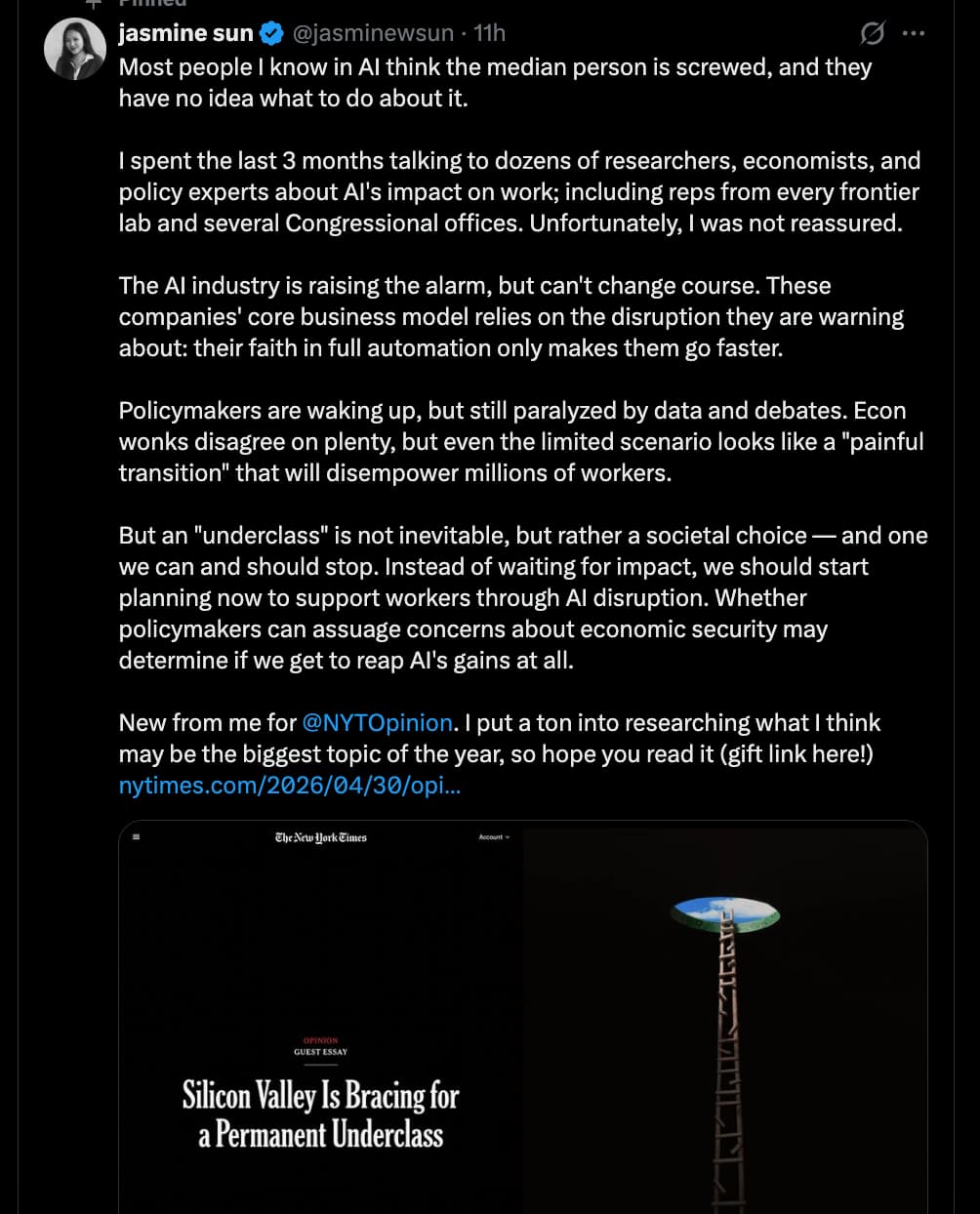
Read the full article here (gift link):

Silicon Valley Is Bracing for a Permanent Underclass

Whether you talk with engineers, venture capitalists, founders or managers, or with doomers, accelerationists, lefties or libertarians, the so-called San Francisco consensus on the impact of A.I. for workers is bleak. Many are convinced that advanced A.I. will soon surpass human capabilities. This would produce tremendous growth and scientific achievement, but it would also displace millions of jobs as fewer humans are needed to make the economy run. The technology will depress economic mobility and exacerbate inequality, while ferrying power and wealth to the A.I. companies and the existing owners of capital.

https://www.nytimes.com/2026/04/30/opinion/ai-labor-work-force-silicon-valley.html?unlocked_article_code=1.e1A.zFGe.sWGP3oHShI4x&smid=url-share

2 Likes

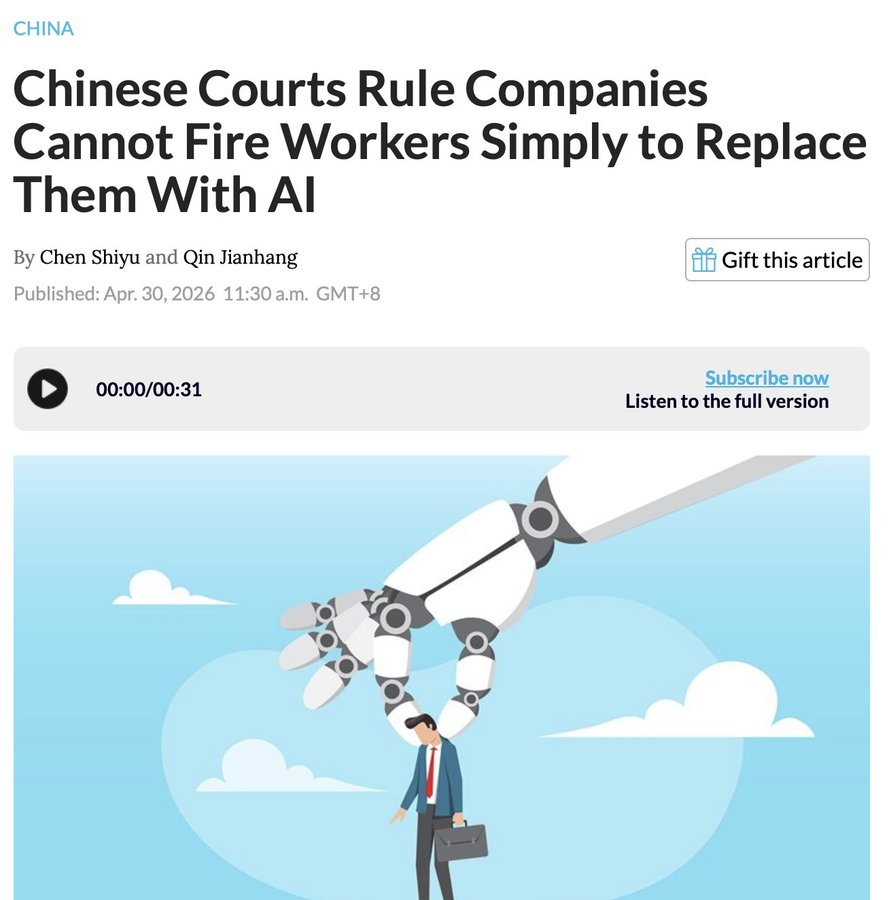
Meanwhile, in China:

Article: Chinese Courts Rule Companies Cannot Fire Workers Simply to Replace Them With AI - Caixin Global

2 Likes

There has been some more news on AI models producing novel solutions to old problems that people were not able to solve. Previous examples of this boiled down to models finding solutions that already appeared in the literature that nobody noticed. But more recent ones are cases where models produced truly novel solutions to problems people had worked on for several years. e.g.:

We introduce a new method for bounding Erdős sums of primitive sets, suggested from output of GPT-5.4 Pro, based on Markov chains with von Mangoldt weights.

(I added emphasis to the word “new”.)

If it happens in math, it can happen in other disciplines, as well. In some ways math is harder than other fields, and in some ways it’s easier. In math you tend to have long chains of logic where an error at any point in the chain completely invalidates the argument. (More nuance: proofs often do have errors, but they can also often be repaired.) My impression of biomedical fields, say, is that there is a higher tolerance for errors in logic than there is in math – the chains of logic tend to be much shorter and less rigid in biomedicine; though, you tend to use more ad hoc facts and what seem like deus ex machinas in movies (Why does such and so medical outcome occur? Well, it’s because of the XYZ gene, case closed.) and you rarely have a sense of finality with arguments proved. However, AI models are getting better at handling all this ambiguity and things.

Another interesting sign is this tweet from a U.C. Berkeley professor:

https://x.com/tonylfeng/status/2050576299123679299#m

While I agree in principle, in practice I think AI raises tough questions about what we even mean by “good science” in the context of mathematics. There’s an infinite number of true mathematical statements, many of which we can but do not bother to prove because we consider them “routine” and therefore uninteresting. What counts as “routine” is subjective, but I think it approximately means “doable using (only) well-known existing techniques”. If AI becomes consistently stronger than humans at certain mathematical skills (for example, “combining already-existing techniques in a new way”), then certain types of previously non-routine problems will become routine in a higher level sense: doable by the well-known technique of querying an AI chatbot. At that point, are those problems still interesting?

He’s starting to worry that AI will be able to solve harder and harder problems – even using new methods, or new combinations of old ones – which could cause people to question whether what they are doing is worthwhile anymore. A response to this tweet was given by the mathematician Ken Ono, who wrote:

https://x.com/KenOno691/status/2050719804924064056#m

One interesting line from that long tweet:

If AI had been around then, it likely would have solved it, because AI isn’t constrained by our human silos.

He seems to be implying that models are getting good enough to actually solve research-level problems from back in 1996. Imagine what it means for physics, chemistry, biomedicine, etc.

3 Likes

Insilico’s “LabClaw” = First Real Glimpse of a Self-Driving Drug Discovery Lab (2026)

Insilico Medicine just announced LabClaw, an AI system that coordinates an automated wet lab (“LifeStar2”) to run drug discovery in a semi-autonomous loop.

What it actually does:

  • AI designs experiments and candidate molecules
  • Robotic wet lab executes them
  • Data is analyzed automatically
  • AI decides the next round of experiments
  • Humans supervise, not micromanage

https://www.eurekalert.org/news-releases/1127117

1 Like

I assume we will achieve recursive- self-improving AI, and of rhat leads to Airtifical SuperIntelligence (ASI). The natural consequences of that will be profound - but - operational rollout will always be slower than scientific discovery. Bureacracy, regulation, employment laws, unions, human managers will all slow things down in terms of rollout.
But with ASI controlled labs physics, chemistry and biology will all progress at phenomenal speeds. Suggesting a super abundant world will arrive before mass unemployment.

The permanent underclass may eventually be all of us, and we may all be on a universal high income…

1 Like

You are right that businesses, especially larger ones, typically are very slow to adopt new tech. What I am hearing here in SF is that these slower companies will be killed by faster moving AI focused startups …

But this is interesting…

3 Likes