What two decades of trials can teach us about translating rapamycin to human aging.
Introduction
The mechanistic target of rapamycin (mTOR) pathway is central to cell growth and aging, integrating signals from nutrients and stress to regulate metabolism, protein synthesis, and autophagy. Decades of research across various species have identified mTOR inhibition as a powerful strategy for extending lifespan and healthspan. In particular, the mTORC1 inhibitor rapamycin has repeatedly been shown to delay aging in yeast, worms, flies, and mice even when treatment is started late in life [1,2]. These findings position mTOR as one of the most validated targets for translating longevity interventions to humans. Yet turning this laboratory success into clinical practice has proven challenging.
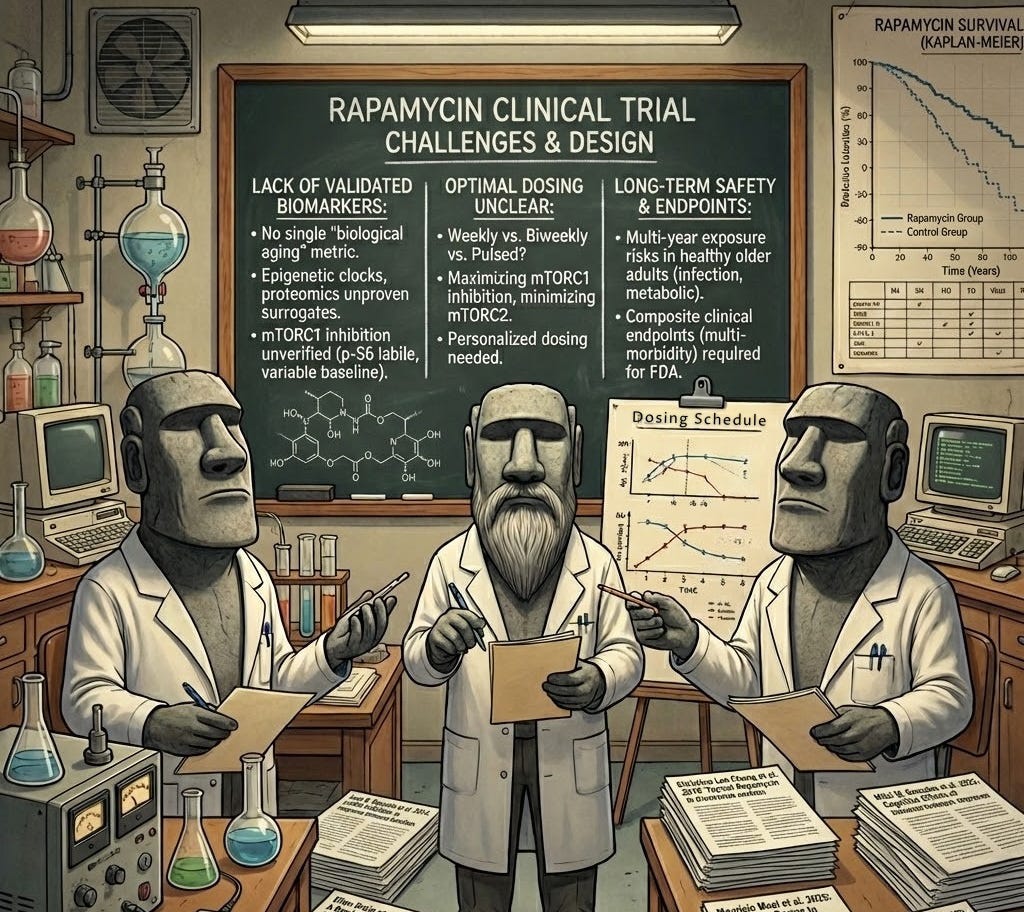
Early human trials of mTOR inhibitors hint at improved immune function, cardiovascular markers, and skin health with little side effects [3]. However, they also expose critical gaps: how to measure “aging” in trials, how to balance efficacy with safety in otherwise healthy people, and how to design studies that regulators and industry can get behind.
This report reviews the clinical translation of mTORC1-targeting interventions for aging and age-related disease, with a focus on rapamycin and related strategies outside of traditional immunosuppressive use. It begins with a brief biological background on mTOR and rapamycin, then outlines why mTORC1 remains one of the most compelling pathways for geroscience translation across major domains of age-related pathology. The report next examines past human clinical trials, followed by a review of ongoing and emerging studies, enriched by exclusive insights from the principal investigators leading these programs. It then synthesizes the main translational gaps that continue to limit progress, including endpoint selection, biomarker validation, safety monitoring, and indication prioritization, and discusses practical directions for improving future trial design. The overall aim is to provide a structured, evidence-based assessment of where the field stands, what has been learned from prior efforts, and what is needed to make mTORC1-targeting therapies more interpretable, testable, and clinically actionable in geroscience and longevity medicine.
Read the full article: