https://www.twitter.com/aubreydegrey/status/2075092347025789133
chatGPT(5.5paid)
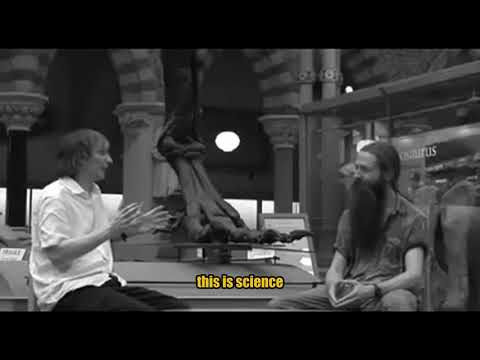
The video appears to be “On Ending Aging | Aubrey de Grey & David Deutsch (Improved Audio)”. I’ve based the content below mainly on the pasted transcript you supplied, correcting obvious speech-to-text errors where the meaning is clear. (YouTube)
Summary
This is a discussion between David Deutsch and Aubrey de Grey about the scientific, philosophical, and social case for ending or radically postponing biological ageing.
The core argument is de Grey’s damage-repair view of ageing: ageing is caused by accumulating molecular and cellular damage, and medicine should aim not merely to treat late-stage age-related diseases one by one, but to repair the underlying damage periodically. He frames this as a route to negligible senescence and eventually life-extension escape velocity, where therapies improve faster than remaining damage catches up with us.
The most difficult technical challenge, in de Grey’s view, is cancer, because cancer evolves. Unlike most age-related damage, cancer cells are subject to natural selection: when a therapy blocks one route, cancer can mutate or select for escape mechanisms. He argues that truly robust anti-cancer therapy must therefore be far more ambitious than conventional cancer treatments.
Deutsch presses him on whether, even if the known categories of ageing damage are fixed, unknown new forms of damage might emerge. De Grey concedes they almost certainly will, but argues that demographic variation suggests they are unlikely to become life-limiting immediately. In his view, fixing known damage should buy perhaps 30–40 years, during which further technologies can be developed.
A recurring theme is the difference between modest postponement and deep repair. De Grey argues that much conventional medicine aims to postpone disease by 10–20 years, but that such interventions are often not naturally extensible into 50-year postponements. His programme aims at more fundamental interventions.
They also discuss the psychology of resistance to radical life extension. De Grey argues that many objections are rationalisations built around fatalism: if people believe ageing is inevitable, they protect themselves psychologically by deciding that curing ageing would be undesirable. He distinguishes this from purely religious objections and says resistance is common across both religious and secular culture.
Deutsch raises the danger of false hope. De Grey responds that silence creates the opposite error: unwarranted pessimism. If the public assumes nothing can be done about ageing, there will be less pressure to fund the work, which could delay therapies and cost lives.
The conversation then turns to cryonics. De Grey says cryonics is not a separate solution but an “add-on” to rejuvenation biotechnology. If a person can be preserved soon after legal death, the additional damage may be finite and perhaps repairable by future technologies. He is optimistic that future repair technologies could eventually revive people preserved in good condition, though this depends on solving the underlying damage-repair problem.
They discuss scale and funding. De Grey suggests that before society decides how much wealth to devote to anti-ageing, a proof-of-principle in mice is needed. His proposed milestone is to take already middle-aged, naturally long-lived mice and triple their remaining healthy lifespan. He proposes that about $100 million per year for 10 years could plausibly achieve this, if properly directed.
For humans, he says the first meaningful target would be to take someone aged about 55, with roughly 30 years of remaining life expectancy, and give them an additional 30 healthy years. That may be enough to reach a point where improved next-generation therapies arrive in time. He compares this to maintaining a vintage car: with sufficiently good maintenance, breakdown need not be inevitable.
Critique
The strongest part of the discussion is the distinction between treating diseases late and repairing underlying damage early. That remains conceptually powerful. Atherosclerosis, cancer, neurodegeneration, sarcopenia, immune ageing and fibrosis are not independent accidents; they are downstream manifestations of accumulating biological change. A programme organised around damage classes is therefore a useful antidote to overly siloed medicine.
De Grey is also persuasive when he says that modest disease postponement may not scale into radical life extension. A drug that delays one pathology by five years is not necessarily the first step toward a therapy that delays it by fifty. That distinction matters, because biomedical incentives often favour incremental, disease-specific endpoints rather than broad maintenance of organismal function.
The discussion is weaker when it moves from plausibility to timelines. De Grey’s proposed timeframes depend on a large number of hard assumptions: that the damage categories are sufficiently complete; that they can be repaired independently; that interventions will combine without unacceptable interactions; that animal results will translate; and that delivery, safety, regulation and cost will not become the dominant bottlenecks. Each assumption is individually contestable.
His treatment of “unknown damage” is interesting but not fully convincing. Variation in human ageing rates does suggest that known forms of damage differ between individuals, but it does not prove that unknown ageing mechanisms will remain mild for 30–40 years after the known ones are repaired. Once known pathologies are suppressed, hidden dependencies may emerge in non-linear ways.
The cancer discussion is appropriately cautious. De Grey correctly identifies cancer as unusually hard because cancer evolves. However, his proposed answer — highly ambitious cancer-proofing through stem-cell and gene-therapy approaches — is itself one of the most technically and clinically difficult parts of the whole programme. The conversation does not fully address immune escape, tissue heterogeneity, clonal haematopoiesis, delivery constraints, or the risk that anti-cancer interventions could impair normal tissue renewal.
The cryonics section is philosophically coherent but scientifically speculative. It is reasonable to say that legal death is not a single instant and that post-mortem deterioration is a process. But whether preserved brains retain enough information for identity-relevant reconstruction remains unproven. The discussion somewhat blurs “not obviously impossible” with “realistic”.
The social argument is one of the best parts. De Grey’s point that pessimism is not neutral is important: if people wrongly assume ageing is immutable, that belief can become self-fulfilling by suppressing research. However, optimism can also distort priorities, attract weak claims, or encourage premature commercialisation. The responsible middle ground is to argue strongly for research while being careful not to imply that currently available interventions can deliver the promised future.
Overall, the conversation is valuable because it exposes the strategic logic behind de Grey’s programme: do not merely manage age-related disease; repair the damage that produces it, repeat the repairs, and improve them fast enough to outrun ageing. The weakness is that the programme’s conceptual clarity exceeds the present empirical proof.
Tidy transcript
David Deutsch: In your roadmap of things that have to be done before we can engineer negligible senescence, which of them is the most challenging scientifically — the one you are least sure we can do?
Aubrey de Grey: Definitely combating mutations in our nuclear chromosomes — mutations in the nucleus. That does not have to be done perfectly, but it has to be done well enough to stop us from dying of cancer, which is the hardest part of ageing to fix.
The reason it is hard is that, unlike everything else that goes wrong with us as we get older, cancer has natural selection on its side. The cleverer we get at throwing new treatments at it, the cleverer the cancer gets. The approach I have outlined for doing this is extremely ambitious. It is still something we ought to be able to demonstrate in the next 10 years — perhaps 15 or 20.
Deutsch: Suppose that works, and suppose the other elements of your roadmap also work. How confident are you that the net result will indeed be negligible senescence? In other words, how confident are you that there will not be another series of things killing us, so that we have to start again from scratch?
de Grey: I am not at all confident of that. In fact, I am confident of the opposite. I am confident there will be other things. But I am pretty confident they will not kill us for at least another 30 or 40 years.
The reason is that there is already about that much variation in the rates at which the things we know about accumulate in different people. Also, in the same person, some things accumulate faster and some slower. That inherent variation tells us that things we have not yet spotted, even though we have been looking quite hard, are unlikely to become prevalent until we reach maybe 30 or 40 years older than we currently are.
Of course, we still have to fix them by then, but that is quite a long time in technology. I am hopeful we will be able to do that. Furthermore, if these things coming up behind are so elusive and hard to find, probably the best way to find them is to eliminate the things we do know about and thereby unmask the others.
Even if those other things are hard to fix and we do not fix them in time, this is still the best approach.
Deutsch: So it is not a matter of one more hill. It is a matter of crossing the barriers we know about, then turning around and doing it again, except we will be living longer.
de Grey: That is right.
Deutsch: You said the most challenging thing is basically curing cancer, or curing this cause of cancer. It seems to me that curing diseases — the conventional aim of medical science — is going to be needed, and every bit of progress in conventional science will contribute to increased lifespan or to your project. So I cannot quite see the tension or conflict between your project and the general project of medical reform.
de Grey: That is a very good question. The tension is there on many levels. First, there is the psychological level. We have this deep-seated, long-standing belief that ageing is inevitable, and if you try to challenge that, people are suspicious.
But there is also a technical problem. In general, when you want to cure a disease, eventually you may come up with something that is a real cure, like a vaccine. But in the case of age-related problems, conventional approaches have usually been ways to postpone them — generally not by very much.
Even if you can postpone something by 10 or 20 years, that looks pretty good, because something else will probably kill you. That is how these calculations are often done when people ask what the effects of up-and-coming therapies are expected to be.
But it never quite happens that way, because progress happens on the other diseases as well. Life gets longer and we carry on dying of different things.
The tension is that if you want something that gives you, say, 50 years’ postponement of a particular problem, it is probably harder and more expensive to develop than something that gives you only 10 years. While the 10-year thing is attractive, it becomes difficult to make the argument for the more ambitious project.
Deutsch: Are you saying the 10-year thing is not necessarily the best way to approach the 50-year thing?
de Grey: Precisely. Most medical technologies, especially those more or less explicitly admitting that they are only modest postponements, are not inherently extensible by minor refinements. You often have to take a fundamentally different approach.
Deutsch: You mentioned philosophical issues. I have heard that in our culture death is supposed to be a great taboo. I have not actually heard of life being a great taboo. Yet the idea of science providing human beings with more life seems to cause the same kind of hostility as a taboo. What is so scary about life?
de Grey: It is completely irrational, except insofar as it can be regarded as rational from a psychological point of view.
Suppose we accept, for the moment, that ageing really is inevitable and nothing can ever be done about it. And suppose we also accept that ageing is ghastly. Then we have to find some way of putting it out of our minds so that we can get on with our lives and not be miserable all the time.
One way to do that is to come up with reasons to think that curing ageing would be bad, or that ageing is good, or at least that it is six of one and half a dozen of the other. It does not really matter how irrational the reasoning is that leads us to that conclusion.
Deutsch: It is worse than that. There is an inversion of the psychological problem. The more irrational your argument for believing something is, the more you know, at some level, that it is irrational, and the more defensive or aggressive you have to be in maintaining it.
de Grey: That is right. You need more emotion to hold it in place, the worse it is as an argument.
Deutsch: This is not just religious people thinking we owe our death to God. This is a general feature of our culture, religious and non-religious.
de Grey: Absolutely. The major religions may contain examples of this, but this pattern is much broader.
My conclusions, if correct, are extremely unpredictable for society. Politicians do not tend to like unpredictability, so that is not something that endears gerontology to politicians. People worry that I may be hurting gerontology by scaring people and perhaps endangering future funding.
There is also the scientific point that most of my colleagues genuinely disagree with me. But the reason they disagree is largely because they do not know what I am saying. As a working scientist, you know that nobody has enough time to read everything they would like, and that is certainly true for experimental biologists.
It is a catch-22. You have to be persuaded that something is worth studying in detail before you study it in detail. But if you have to study it in detail in order to establish that it is worth studying, then it never happens.
Deutsch: Let us suppose you are right. This is science; we cannot guarantee it. We do not know that these problems will be solved in time to save me, or you, or anyone alive today, even though you are quite sure that in principle it must be possible.
Is there a danger, when you promote this research philosophy, of raising false hopes?
de Grey: There certainly is, and this is a very important question. The only reason I think it is legitimate to talk about timeframes — and I always put caveats on those timeframes — is that the opposite is also fiction.
If one stays silent on something where the public has a deep predisposition to be fatalistic and to think nothing is ever going to happen, then one is engendering unwarranted pessimism. The more pessimism and fatalism there is in society, the less people will agitate to get the work done and to have public and philanthropic money spent on it. That will delay the eventual development of these therapies, which will mean lives lost.
So I feel we have to press as hard as we can to show that there is work to be done. That entails getting people’s imagination and motivation up, and that entails talking about timeframes.
Deutsch: There is a whole other approach to what you might call the problem of immortality, namely cryonics: freezing people just after they have died, or notionally died, in the hope that future technology will be able to cure whatever they died of and undo the damage done by freezing. That is a completely different approach from yours. What do you think of it?
de Grey: Actually, I think it is quite realistic, and the reason is that it is not a completely different approach. It is an add-on to my approach.
My approach is to take people who have not yet died and repair the damage that has accumulated in them as an intrinsic side-effect of metabolism throughout their lives, thereby maintaining them in a youthful condition physically and mentally.
When you become legally or clinically dead, not much has happened in one sense. The difference between being legally alive and legally dead is not the state you are in, but the rate at which that state is changing. You are gradually going downhill; then something stops and you start going downhill faster. But it is still a finite process.
That is why cryonics is reasonable. If one can be cryopreserved — taken down to liquid nitrogen temperatures or thereabouts — within a short time after the heart stops, then the amount of damage from post-death decay is relatively minor. You preserve the person in more or less the same state they were in before the heart stopped.
Damage may occur during cryopreservation, though that is probably less of a problem now than it used to be. There are cryoprotectants good enough that no crystallisation occurs during cooling, although there are still problems during warming, and with fracturing and toxicity. But progress has been rapid.
As far as I am concerned, the main challenge to resuscitating someone cryopreserved in the best possible state today is to solve the repair of the things that accumulated before they died. That is why cryonics is an add-on to what I am already doing.
The first generation of these technologies may not help people who are very frail, because the therapies may be elaborate and strenuous. But as time goes on, these technologies will improve in convenience, cost, comprehensiveness and applicability to people who are closer to death. We will be able to pull people back from progressively further beyond the legal brink.
Deutsch: Suppose you are right. If someone walked in with a gun and said, “I will kill you unless you hand over this priceless dinosaur, or all your money,” most people would say life is more important than property. They would hand over quite a lot before thinking it was not worth it.
But with natural ageing, people take the opposite view. They would rather die than hand over material goods in the form of research funds. Nevertheless, they have a germ of a point. What proportion of national or world wealth, intellectual effort and social disruption is it rational to devote to your project?
de Grey: I do not really know. The reason I am content not to know is that I see the process evolving through a first period in which only a very small amount of money is being spent by normal standards.
At the end of that period, there will be interim laboratory results in mice that will convince gerontologists as a whole, and thereby society as a whole, that this is possible. At the moment there is a general feeling that ageing is inevitable and the whole thing cannot be done. That will be overthrown by laboratory results.
Once those results occur, there will be a great debate in society about exactly your question: how much to spend on this versus other things, such as vaccines or mosquito nets in Africa. All of those things are worth doing, and many other things are worth doing too. Priorities will have to be completely rethought.
I suspect that rethinking will be driven by progress in the laboratory sufficient to persuade gerontology as a whole, rather than just me.
Deutsch: It is nice to see that you are optimistic not only about your scientific research but also about the prospects of persuading the world.
de Grey: We should be careful with the word “optimistic”. In modern society, optimism is often treated as almost synonymous with over-optimism. I would rather say that I have thought about these things hard and I think my conclusions are accurate. I do not want to convey either optimism or pessimism.
The reason I think society will follow the gerontology consensus is that, in scientific matters, society generally follows the consensus of the relevant scientific community. We have a lot of precedent for that. Similarly, based on my knowledge of gerontology, I know what it will take to persuade my colleagues that we are within striking distance of serious postponement of ageing.
Deutsch: What is the hardest milestone?
de Grey: The hardest one is cancer. That will involve sophisticated stem-cell therapy and sophisticated gene therapy. Gene therapy is important in several of these areas, for example getting bacterial genes into our cells and moving mitochondrial genes into the nucleus. But we have to make modifications in the laboratory before we can do that.
Deutsch: In all seven lines of research, can we think about translating the scientific breakthrough into therapy? What will it look like from the patient’s point of view? Would I visit the doctor every Christmas and get an injection that rejuvenates me, or would it be a serious, aggressive intervention taking up much of my time?
de Grey: At first, the therapies are bound to be quite elaborate and experimental. I would not be surprised if they involved going into hospital for a month and having all manner of different stem-cell therapies: some stem cells injected into the bloodstream, others into the brain or other tissues. There would be gene therapy by viral injections, vaccines and standard drugs as well. It will not be very nice at first.
But perhaps it will be a month in hospital, then you have 10 years before you need to come back. During those 10 years there will be pressure to improve the therapies so they are quicker. Ten years later it may be a day in hospital. Ten years after that, perhaps you do not need hospital at all and can go to your GP.
I do not want to say this will happen in a particular period, but I do think we have a good chance. I like to stick my neck out and give timeframes. Most of my colleagues refuse to do that because they say it engenders unwarranted optimism. I say we engender unwarranted pessimism if we stay silent.
With sufficient funding, we should be able to reach the first milestone — real, serious life extension in mice — within 10 years. By serious funding I mean something like $100 million a year for 10 years, which is not much by scientific research standards and certainly not by the standards of major military spending.
By serious life extension, I mean two things. First, actual length of life must improve, and specifically healthy life must improve. We are absolutely not talking about extending frail life. Second, the therapies must begin when the mice are already middle-aged, and the mice must be healthy, robust, naturally long-lived mice.
In rough numbers, take a strain of mice that normally lives about three years. Do nothing to them until they are two years old, so they have about one year left. Then triple that remaining lifespan, getting them to their fifth birthday. If we can do that — trebling the remaining lifespan of healthy mice starting in middle age — I think that will convince my colleagues that we are on the right track for humans as well.
Deutsch: Where does existing medical research fit into this? One of the things that has to be done is basically curing cancer, and there is already a lot of money going into cancer. Are you riding the wave of the cancer cure that is coming anyway, or will this project accelerate cancer cures? If so, why is it not already mainstream?
de Grey: Cancer is a good example of what I said earlier about modestly effective therapies being preferred over extremely ambitious therapies that might be more effective. I am looking at therapies that could postpone death from cancer by nearly 50 years or more. Almost nobody is looking at therapies designed to do that much.
The power of natural selection in cancer is sufficient that any therapy the cancer can in principle escape — if it can turn the right genes on or off — will eventually be escaped.
For humans, my milestone is less extreme numerically than for mice. For mice, I said take a mouse two-thirds of the way through its lifespan and triple its remaining lifespan. For humans, it may be enough to double remaining lifespan. Take someone aged 55, with about 30 years left on average, and give them an extra 30 healthy years.
The reason I aim for this less ambitious goal is that 30 years is a long time in science. If we have the public motivation, incremental improvements can transform a technology over 30 years. So if we can develop therapies that give 55-year-olds another 30 healthy years, then by the time they are biologically 55 again, perhaps at chronological age 85 or 90, the therapies available then will be much better. They may then have not just another 30 years, but perhaps 50 years or more.
It is like keeping a vintage car going. Vintage cars do not have a fixed mortality rate. They die only when their owners do not maintain them well enough. We need to develop the same degree of technology for humans.
I call this concept life-extension escape velocity. The technology improves faster than the remaining imperfections in the technology catch up with us. The amount of molecular and cellular damage in the body never rises to the level that causes loss of function and disease.
People have calculated several times that, if there were no ageing at all, we might live to about 1,000 on average. That is based on how often people in wealthy Western societies die of causes unrelated to ageing — accidents, homicide, infectious disease and so on. Of course, that calculation is naïve because we can affect risks.
I think we are likely to become more risk-averse when we know we have much more at stake. Risk aversion is increasing anyway, even without life extension. It is not just our risk of life; it is our impression of the value of life. That may also feed into other aspects of society. For example, because birth rates are declining rapidly in the West, we may have longer than people think to cope with population problems that might arise from greatly reducing death from ageing.
These are reasons for realistic optimism.
I have treated uncertain phrases conservatively rather than inventing missing wording.