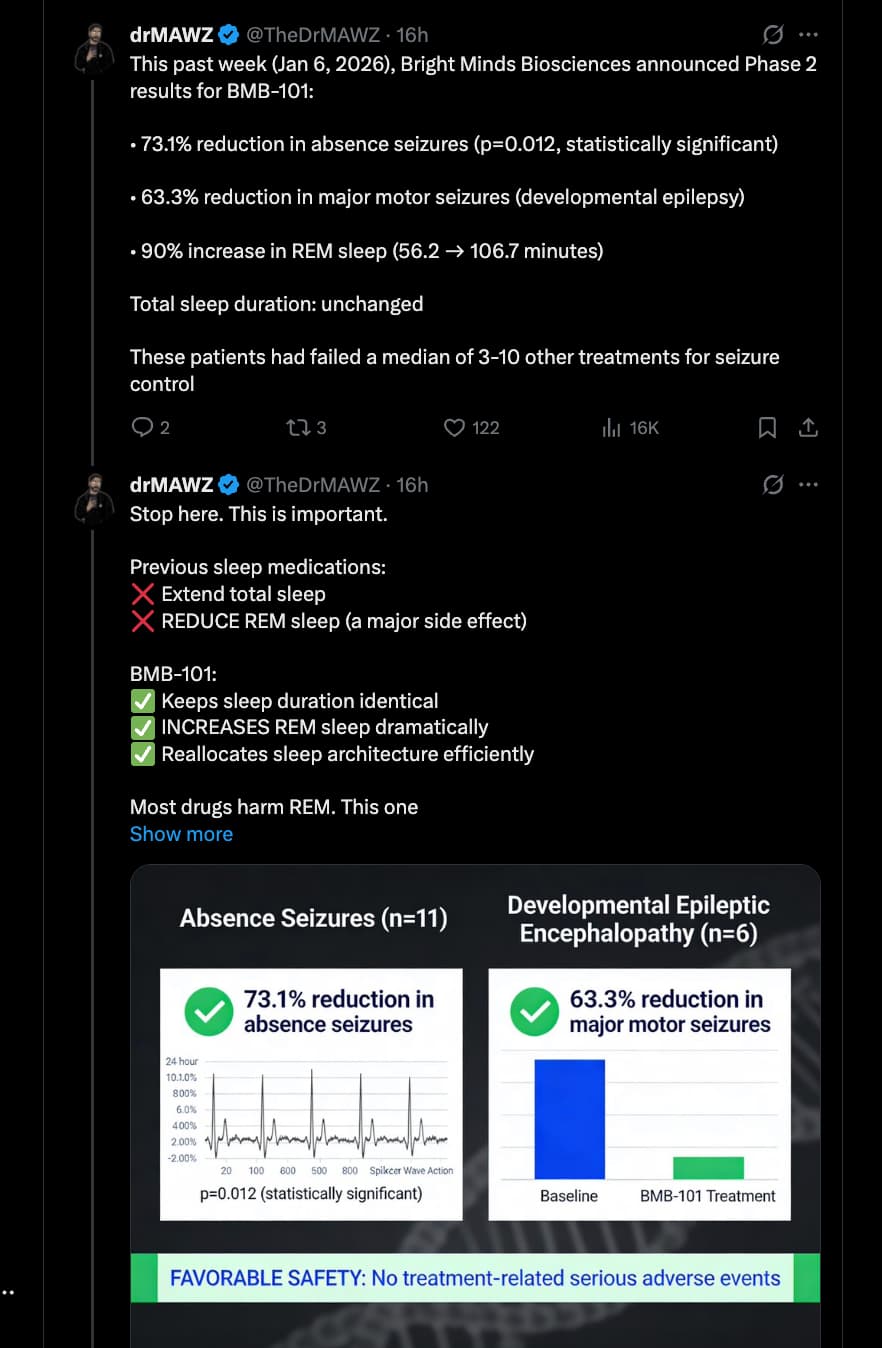
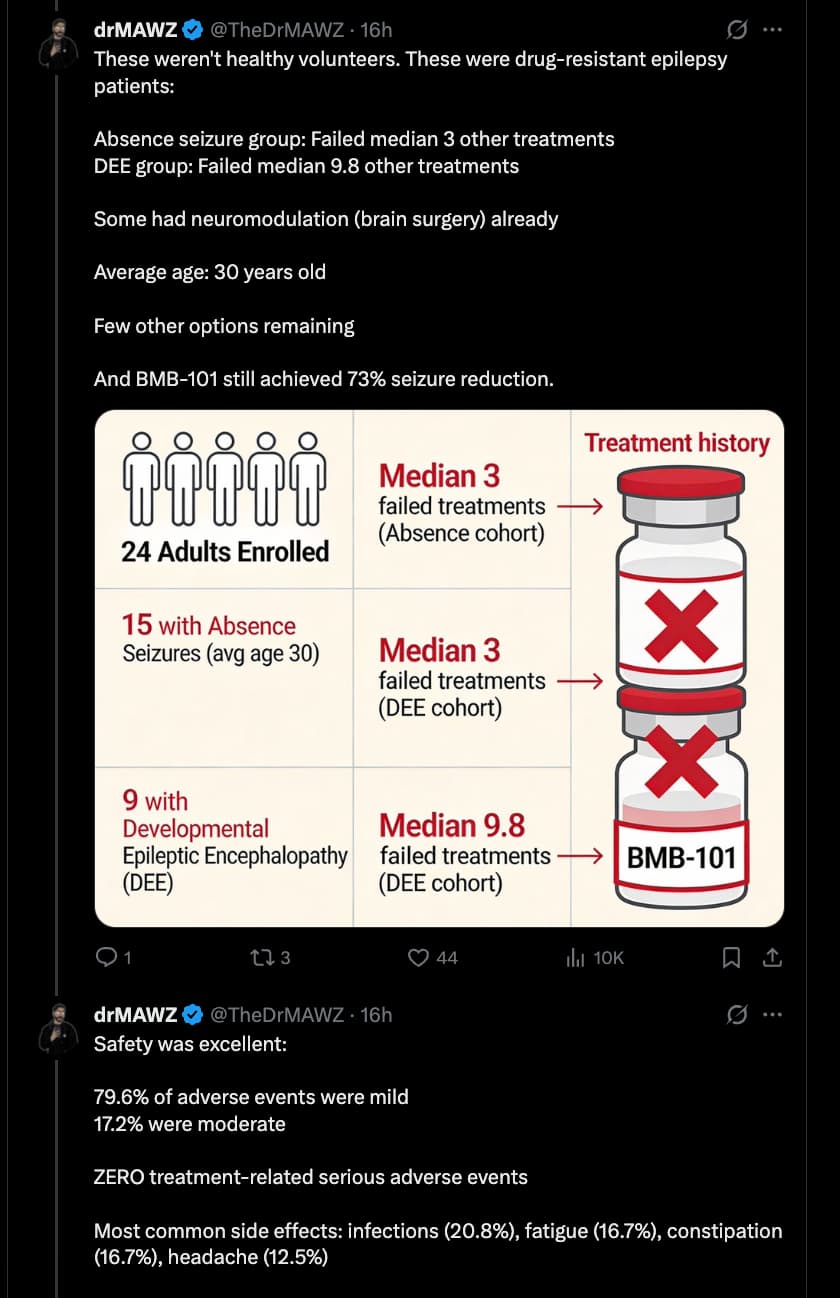
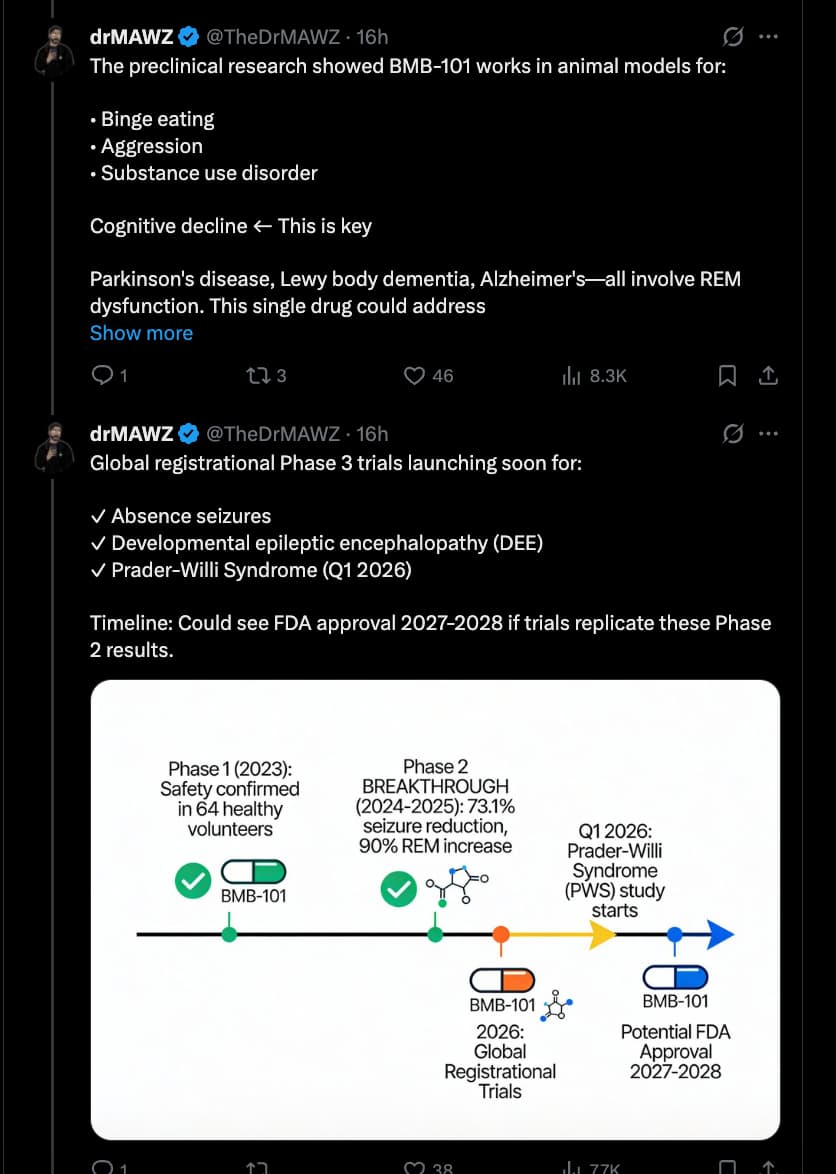
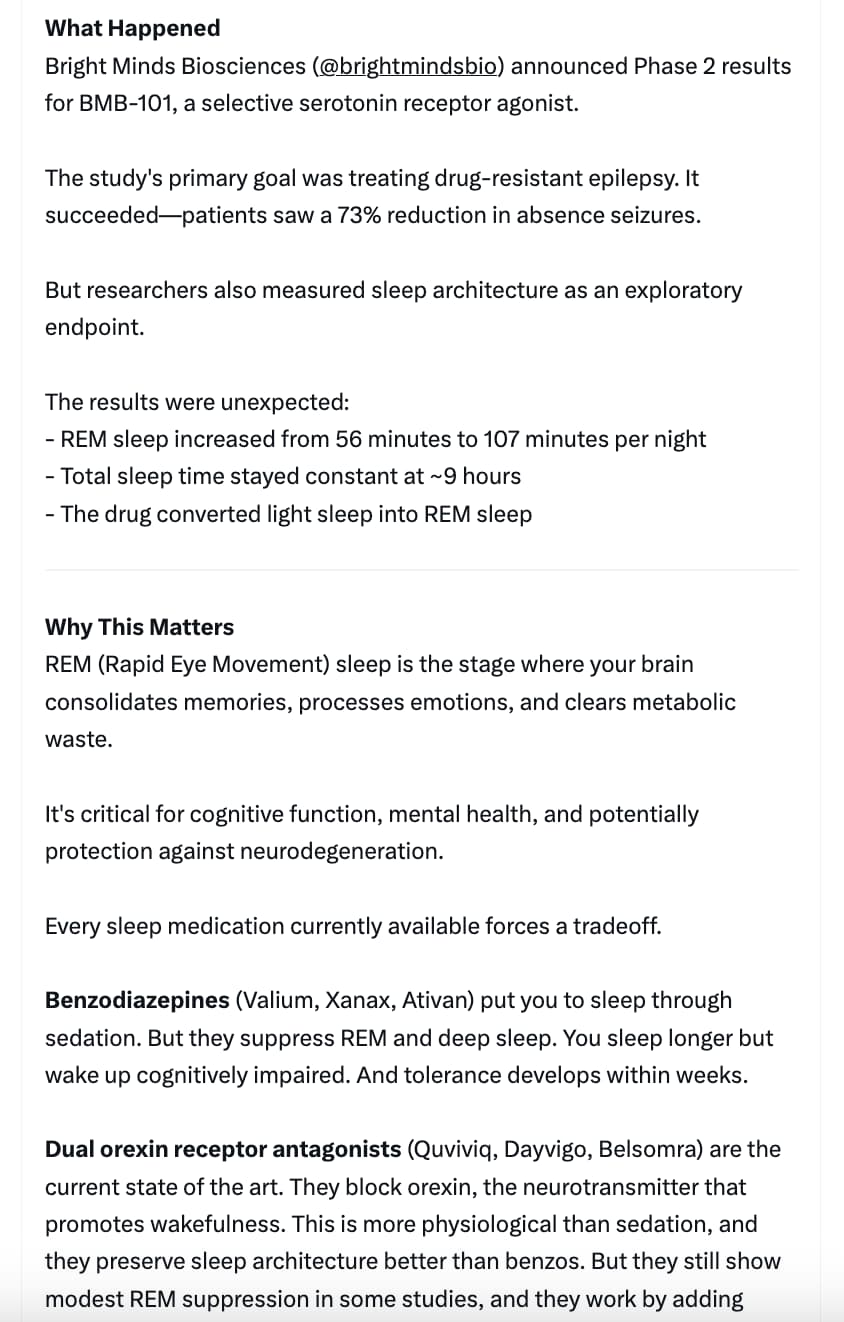
I think this might be interesting for a bunch of mental reasons like if dreams are tamed then a longer duration would increase any therapeutic benefits of dreams for longer, or maybe create new step function increase for certain effects.
There might be some really weird effects and unlike anything by such supraphysiological levels of REM throughout the night, where the effects are at a threshold no one had before.
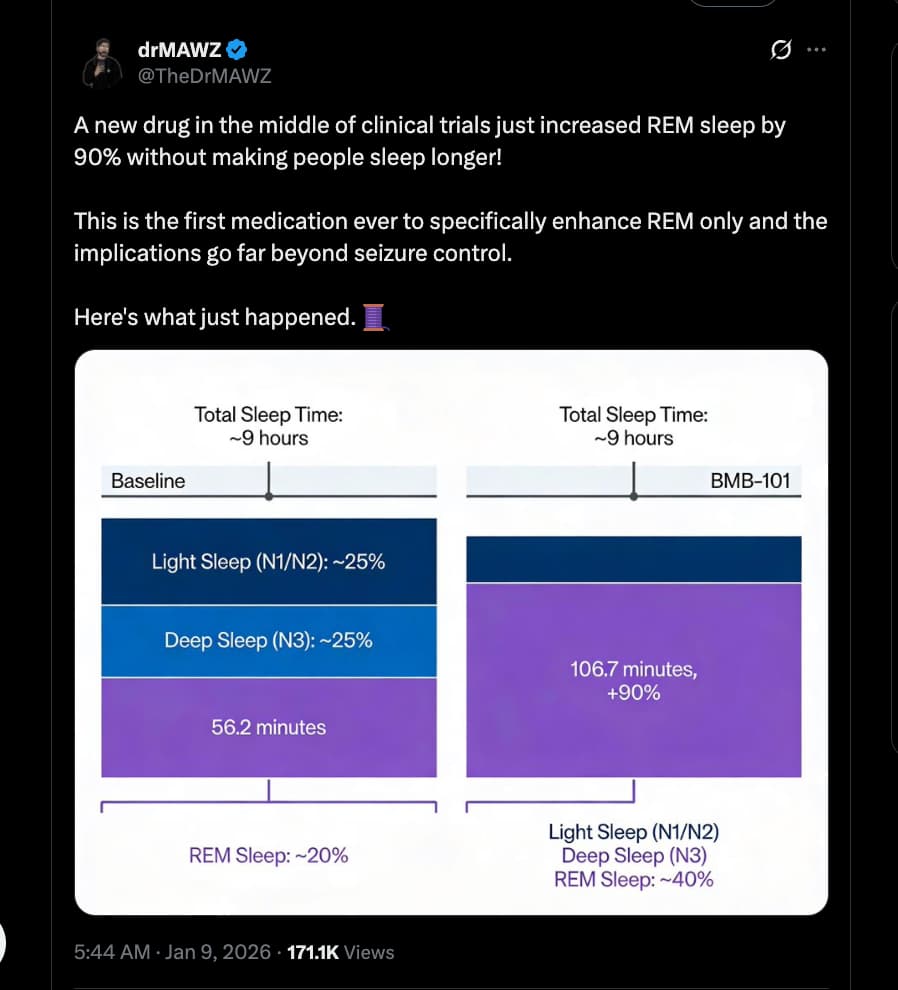
Curious that the chart in the first image doesn’t graphically differentiate between deep and REM sleep. It appears that shows more time awake during the nine hours.
Does it thereby get more REM sleep at the expense of deep sleep?
I can find no studies that indicate or prove that REM time of 40% of sleep time is of any benefit.
FWIW: ChatGPT 5.2
I’m not aware of any good human evidence showing that pushing REM up to ~40% of total sleep is “better” (health, cognition, mood, longevity) than the usual adult range of roughly ~20–25%.
What the literature supports is more nuanced:
What “normal” looks like
Large normative polysomnography datasets and reviews generally put REM at about ~20–25% of total sleep time in healthy adults (with age-related variation).
REM is important, but “more” isn’t automatically “better”
There’s solid work linking REM to emotional processing and certain aspects of memory integration.
But those findings don’t imply that maximizing REM percentage (e.g., 40%) improves outcomes.
In fact, at least one recent study found that a lower REM/NREM ratio and longer REM latency were associated with better self-reported wellbeing measures (energy, stress, restfulness). That doesn’t prove “less REM is better,” but it’s a reminder that the relationship is not monotonic.
Why 40% REM raises eyebrows
A REM fraction around 40% is unusually high for typical adult sleep and can occur in contexts that aren’t necessarily desirable, such as REM rebound (after REM suppression, sleep deprivation, withdrawal from REM-suppressing substances/meds, etc.).
Also, higher REM% has been linked with vivid dreams (which some people like, but it’s not inherently a health benefit).
Bottom line
No: I don’t see evidence that 40% REM is better than 20–25% REM for general health or function.
If a drug reliably drives REM to 40%, the more relevant questions are sleep continuity, next-day function, and whether other stages (especially deep NREM/SWS) are being displaced, plus side effects.
“Furthermore, a higher REM/NREM ratio in the first 180 min of sleep was associated with lower morning energy and worse self-reported sleep quality” Ref1 Ref2
GPT analysis on the potential longevity implications of doubling REM sleep without increasing sleep duration:
What REM amplification drugs like BMB-101 could mean for longevity
• Sleep becomes an active rejuvenation platform, not just recovery
Doubling REM without increasing sleep time means the brain gets far more neural repair, emotional detoxification, and synaptic optimization every night. This turns sleep into a nightly cognitive rejuvenation cycle rather than just downtime.
• Chronic stress and inflammation would be structurally reduced
REM sleep is where the brain shuts off norepinephrine and processes emotional memory. More REM means less baseline stress signaling, lower cortisol, and less systemic inflammation, all of which are core drivers of aging.
• Neurodegeneration risk would likely drop
REM supports synaptic pruning, network reorganization, and metabolic waste clearance in the brain. Enhancing it could slow or prevent processes involved in Alzheimer’s, Parkinson’s, and age related cognitive decline.
• Mental health and biological aging are tightly linked
Depression, anxiety, PTSD, and burnout all suppress REM and accelerate aging. By restoring REM, you attack both psychological suffering and the biological wear and tear that comes with it.
• Learning, plasticity, and skill retention would stay youthful
REM is where new memories, motor skills, and abstract patterns are consolidated. Maintaining high REM across decades means preserving the brain’s ability to adapt, which is one of the strongest predictors of long term cognitive health.
• Sleep efficiency increases instead of sleep duration
Longevity is not just about sleeping more. It is about sleeping better. Converting light, low value sleep into high value REM is like upgrading the quality of nightly cellular maintenance without increasing time spent unconscious.
• This fits perfectly into a “Sleep 2.0” model
A drug like BMB-101 would be one component of a future system that combines pharmacology, wearables, environment control, and biological feedback to turn every night into a targeted rejuvenation session.
• This is the kind of intervention that compounds for decades
One good night helps. Ten thousand optimized nights could reshape aging trajectories. REM amplification is the rare lever that could quietly produce massive gains over a lifetime.