Julie Moreno, a molecular biologist from Colorado State University, helped conduct a pilot study of the drug rapamycin with 12 dogs, all showing signs of dementia. One group of dogs, including Ralph, were fed a pill containing rapamycin. The rest were given a placebo.
As the dogs have died, Moreno has examined their brains. She found that the dogs who took rapamycin had fewer microglial cells, which produce inflammation commonly associated with dementia.
Ralph’s results were similar. Moreno shared a slide with 60 Minutes that showed noticeably fewer microglial cells in Ralph’s brain compared to the brain of a dog who was given a placebo.
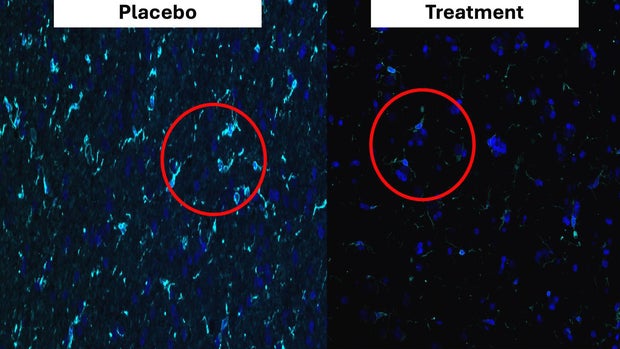
A brain image of a dog with dementia who was given a placebo (left) and an image of Ralph’s brain (right). Ralph’s brain had fewer microglia (the teal-colored strands) which produce inflammation commonly associated with dementia.