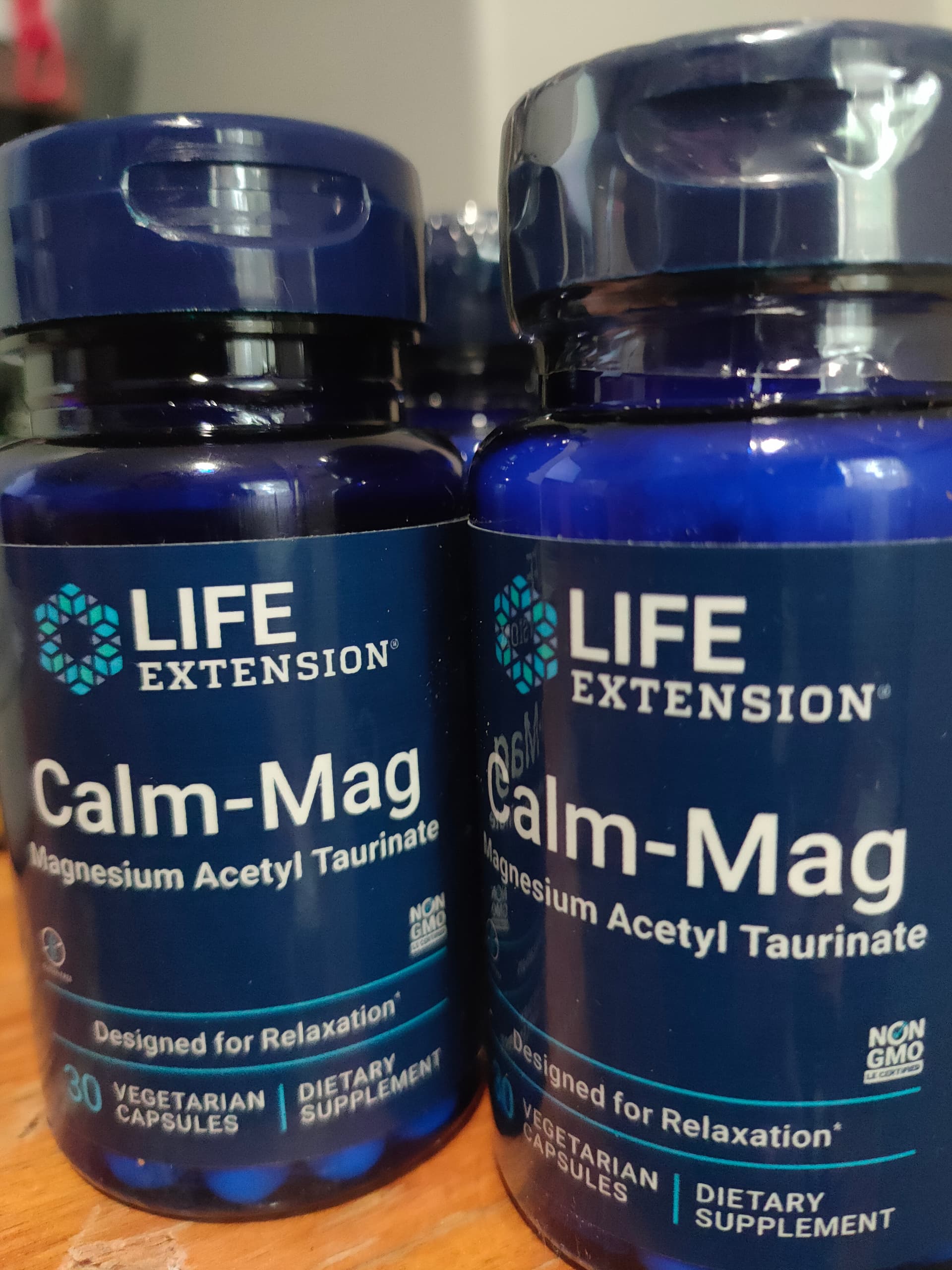
A preclinical rat study pits two “brain-targeted” magnesium salts against each other: the well-known Magnesium-L-Threonate (MLT) and a newer contender, Magnesium-Acetyl-Taurate (MAT). Over a 28-day dosing period followed by 28 days of withdrawal, MAT delivered more magnesium into brain tissue, cerebrospinal fluid, blood and muscle than MLT, and this tracked with bigger gains in memory, grip strength, coordination and a long list of molecular markers (BDNF, CREB, PSD-95, synaptophysin, antioxidant enzymes and mitochondrial complexes). Combining both salts worked best of all. The headline: the taurate carrier may be a more bioavailable route for getting magnesium into the aging brain — though the study was industry-funded, unblinded, and reports statistically perfect-looking effects that warrant heavy skepticism.
For years, Magnesium-L-Threonate has been the darling of the nootropics shelf, marketed on the strength of a 2010 MIT study showing it could raise brain magnesium and sharpen memory in rats. This new paper from ISF College of Pharmacy in Punjab, India, asks a pointed commercial question: is there something better?
The challenger is Magnesium-Acetyl-Taurate (MAT), a salt in which magnesium is bound to an acetylated form of taurine. The acetylation makes the molecule more fat-soluble, and the researchers’ central bet is that this helps it slip across cell membranes and the blood-brain barrier more efficiently. Forty-eight adult Wistar rats were split across six groups: an untreated control, two doses of MLT, two doses of MAT, and a high-dose combination of both. For four weeks the animals were dosed daily by oral gavage; for another four weeks they were left untreated to see whether any benefits stuck.
The “big idea” is bioavailability as destiny. The primary endpoint was not behaviour but tissue magnesium itself, and here MAT consistently won: higher magnesium in brain regions, spinal fluid, red blood cells and muscle. Everything downstream followed the same ranking. Rats on MAT and especially on the MAT-plus-MLT combination learned the water maze faster, spent more time in the “safe” quadrant from memory, gripped harder, balanced longer on the rotarod, and behaved less anxiously in the elevated plus maze. Under the microscope, their brains showed denser neurons and more myelin.
At the molecular level the authors paint a tidy, mechanistically coherent picture: magnesium relieves its block on NMDA receptors, calcium signalling activates CREB, which drives BDNF — the brain’s growth fertilizer — while the Nrf2/HO-1 antioxidant axis and all five mitochondrial respiratory complexes get a boost too. Synaptic scaffolding proteins PSD-95 and synaptophysin rose in lockstep.
It is a clean story, and that is exactly the problem. The study was funded by Celagenex Research, a company commercializing acetyl-taurate magnesium, and two authors are its executives. Behavioural scoring was explicitly unblinded. And the reported effects are almost cartoonishly strong — the statistics imply that treatment explains 99 to 100 percent of the variance in outcome after outcome, a pattern rarely seen in real biology. The direction of travel is plausible and interesting; the magnitude deserves independent replication before anyone rewrites their supplement stack.
Actionable Insights (approx. 200 words)
For the practically minded, the take-home is narrow and provisional. This is a rat study, not a human trial, so any dosing translation is speculative.
First, form of magnesium may matter more than dose. The authors’ framing is that lipophilic carriers (acetyl-taurate here) get more magnesium into the CNS per milligram than threonate. If real, acetyl-taurate is a candidate worth watching for cognitive and neuromuscular support.
Second, the effect sizes, taken at face value, are enormous — but almost certainly inflated (see the analysis below). The one hard, independently-measured number the paper cites (from Uysal 2019, not this study) is a 14.6 percent rise in brain magnesium after a single MAT dose versus control (216.9 vs 189.3 mg/g; Cohen’s d approximately 11.8). That is a large, real-world-meaningful bioavailability signal for the taurate form.
Third, benefits partially persisted through 28 days of washout, hinting at durable rather than purely acute effects — useful if it holds in humans.
Fourth, the combination beat either salt alone across nearly every endpoint, suggesting threonate and taurate carriers are complementary rather than redundant. None of this is a clinical recommendation; it is a signal to track human data.
Context / Source
- Paywalled Paper: Enhanced Neurophysiological Benefits of Magnesium-Acetyl-Taurate Over Magnesium-L-Threonate: A Comparative pre-clinical Study on Bioavailability, Synaptic Plasticity and Cognitive Functions.
- Authors / Institution: Aakash Kumar, Sidharth Mehan (corresponding), Sumedha Gupta, Ghanshyam Das Gupta (ISF College of Pharmacy, Moga, Punjab; IK Gujral Punjab Technical University, Jalandhar), with Rajaram Samant and Manoj Tongra of Celagenex Research, Mumbai/California — the study sponsor.
- Country: India (with US-based industry sponsor).
- Journal: NeuroMolecular Medicine (Springer), 2026; 28:25.
- Funding / Conflict: Funded by Celagenex Research (Grant ISFAL/PH/14/02/23/27), which commercializes acetyl-taurate magnesium; two co-authors are Celagenex staff (one is Chief Scientific Officer). Authors declare “no competing interests,” which is difficult to reconcile with the sponsorship and authorship.
- Impact Evaluation: JIF 3.9 (2024); CiteScore 6.3 (2024); Q2. The impact score of this journal is 3.9 (JIF) / 6.3 (CiteScore), evaluated against a typical high-end range of 0 to 60+ for top general-science and flagship neuroscience journals; therefore this is a Low-to-Medium impact journal