104 years old, and a competitive archer, in amazind shape not just physically, but mentally (see interview).
Regarding reaching such an old age: “I have no secret. I don’t know” - refreshing.

104 years old, and a competitive archer, in amazind shape not just physically, but mentally (see interview).
Regarding reaching such an old age: “I have no secret. I don’t know” - refreshing.
Of course, its a Norwegian guy… He’s probably average for his peer group there.
Ah - sorry this is a repeat, Siim is posting on X some of his older videos…
The Mick Jagger guide to longevity
Mel Brooks Turns 100. His No. 1 Tip for Long and Happy Life
Regardless of who you identify as, longevity is accessible to all.
101-Year-Old Goes Viral at Pride, Shares Simple Tips for a Long Life: ‘Be Yourself’
" Clement follows a pescatarian diet, which is a vegetarian eating plan that incorporates seafood. Dietitians call it one of the best diets for overall health. It’s also particularly healthy for the heart when combined with the Mediterranean diet, studies have found.
He eats vegetables and fish, plus dairy and eggs, but avoids red meat. “It’s one less poor animal killed,” he recalls thinking as a young man. “I was not enamored of meat.”
The inclusion of fish rich in omega-3 fatty acids supports heart health, reduces inflammation and promotes brain function, dietitians say. The plant-based part of his diet delivers lots of fiber, vitamins and other nutrients for good health.
Clement no longer drinks alcohol.
Treat Yourself Once in a While
“I’m a sucker for sweets,” Clement says.
One of his favorite desserts is vanilla ice cream with sliced and mashed strawberries.
Genes Aren’t Everything
Longevity doesn’t run in Clement’s family, other than one of his great-grandmothers who lived to be 98. His parents lived into their 70s.
When asked what has helped him live so long, Clement is stumped.
“I honestly don’t know. I just lived, and I’ve kept on living for this extra length of time, and you just live into it. There you are,” he says. “I feel very healthy, very normal.”"
The only exercise you need, is exercising your brain.
Woman, 101, Who Still Works as a Journalist and Lives Alone, Shares Her 3 Longevity Tips
Robert Clement… I honestly don’t know. I just lived, and I’ve kept on living for this extra length of time, and you just live into it. There you are,” he says. “I feel very healthy, very normal.”"
It’s the Descovy he’s been taking for years. 
How do you know he’s been taking it? or he’s said so?
That was meant as humor… him being an.outted gay senior… jokingly, he has been getting the benefit of anti-HIV virus .medication Descovy unaware of its life extension potential.
FDA-approved antiretroviral regimens—emtricitabine/tenofovir alafenamide (FTC/TAF, known as Descovy )
A PhenoAge clock showed a reduction of 6.33 years (a reduction of 22% from the mean chronological age of the participants).
have you seen videos of Dale - looks quite spry did the Appalachian trail at 90

74 is nothing - I’m nearly 74 and do much more and am better shape
I know that this thread is “70 is the new 30,” but how about “100 is the new 70.”
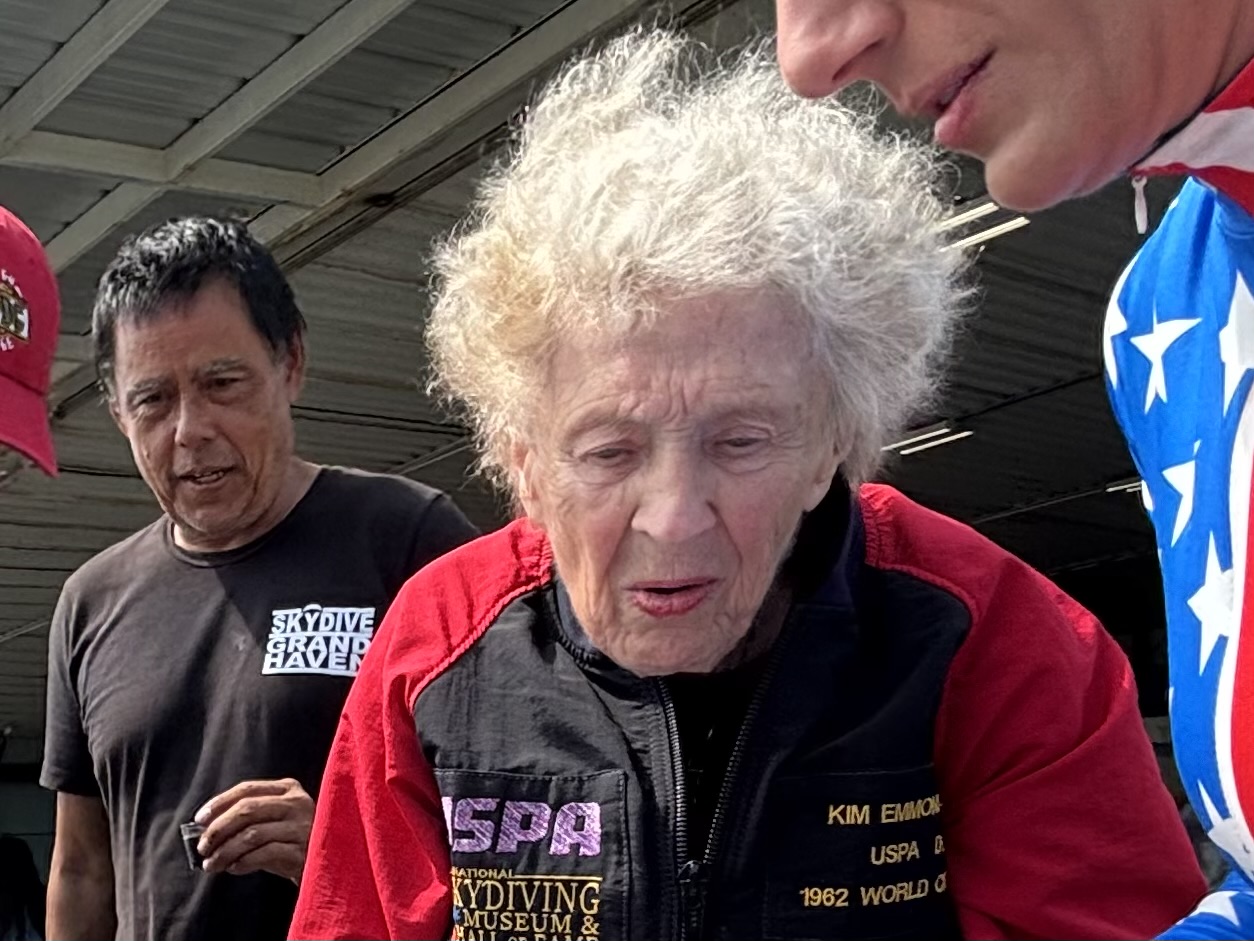
Kim Emmons has been skydiving since 1962. She is still skydiving at almost 87. The picture shows her at an event at Grand Haven, MI where she made a tandem jump.
“Worst diet on earth”, but spry and crazy at 100.
Woman, 100, Who Is Viral as ‘Gangster Granny’ Has 6 Simple Tips for a Long Life
Wow - 87 years of lifting in the gym is pretty impressive!
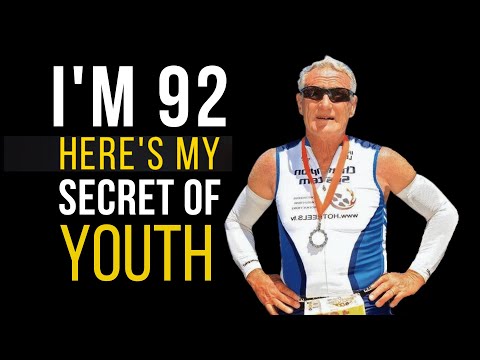
The video profiles nonagenarian triathlete and physicist Lew Hollander, detailing his training ethos, dietary habits, and personal longevity philosophy. Hollander, who completed the Kona Ironman World Championship at age 82 and sustained an ultra-endurance racing career into his 90s, frames his functional preservation through an evolutionary biology perspective. He argues that human physiology evolved to reproduce and decline around ages 35–40 due to endocrine deceleration and attenuated cellular repair—a colloquial framing of the Disposable Soma Theory (Kirkwood, 2005). Hollander asserts that individuals can override this evolutionary trajectory through deliberate, high-intensity physical stress, whole-food nutrition, and persistent mechanical loading.
Hollander’s personal longevity framework emphasizes daily anaerobic threshold training (sprinting uphill until breathless), midlife lifestyle consistency, avoidance of ultra-processed foods, and strict caloric control. While Hollander represents a remarkable case study in the compression of morbidity, his claims must be clinically separated into robustly validated physiological principles versus extreme, uncurated protocols that present substantial translational hazards.
Clinical evidence demonstrates that cardiorespiratory fitness (CRF) is an exceptionally strong, dose-dependent predictor of reduced all-cause mortality, with no observed upper threshold of benefit (Mandsager et al., 2018). Furthermore, structured High-Intensity Interval Training (HIIT) has been validated in large randomized trials of older adults to lower mortality risk and sustain peak aerobic capacity more effectively than moderate continuous exercise alone (Stensvold et al., 2020). Hollander’s dietary avoidance of ultra-processed items similarly mirrors clinical trials showing spontaneous energy regulation and reduced cardiometabolic risk (Hall et al., 2019).
However, Hollander’s specific prescription of daily unperiodized maximal anaerobic threshold exertion ignores essential recovery kinetics, cardiac remodeling considerations, and age-related declines in tissue compliance. Master athletes who accumulate extreme endurance volumes face elevated incidences of atrial fibrillation and myocardial fibrosis (Eijsvogels et al., 2016). Consequently, Hollander demonstrates the upper boundary of human functional preservation, but his regimen must be modified into a periodized, clinically screened protocol for broader application.
Can’t say this is an “inspiring” story exactly, but it certainly is instructive.
Can there really still be any doubt, that the incessant mantra of “diet and exercise” or stress avoidance is just plain inadequate? That there are far more powerful determinants of longevity, likely centered around genes?
Here we have a man who spent 70 some years in prison, was almost executed 8 times(!), was a lifelong criminal. How low stress do you think his life was? Apparently he had no family and was a petty criminal until at 25 was convicted of murder. So much for social connection and the four pillars of health. Prison chow is not exactly a model diet, he wasn’t an exerciser and sleep in prison is famously disrupted.
It’s not for no reason that research has repeatedly shown that prison massively accelerates aging by decades. All this to show that you can certainly shorten life by poor conditions, but not prolong it by “optimal lifestyle”. It’s mostly genes at some point. If you have lucky genes, you need make no effort and you’ll live beyond a century, even if your life was full of the most extreme stress like war time Jewish ghetto and subsequent concentration camp (the 112 year old man in Israel), or death row in an American max security prison, or being a severe alcoholic and smoker for decades (Dick Van Dyke) or… and so on. Diet and exercise? LOL.
Spared execution eight times, oldest inmate in US dies at 101
“Research shows that imprisonment can lead to “accelerated ageing”, and that conditions such as dementia may arrive “significantly earlier” than they would for people not in prison.
“We frequently say that a person coming from a long period of incarceration can be 60 but have the health status of a 90-year-old,” Skoczulek said.“
I wouldn’t be surprised if these people have never thought about “health”. They know about people going into the hospital.
But they’re just living life, not knowing what “protein”, “carbohydrates” is, except that protein is in meat, and that carbohydrates are like french fries.
They just eat a regular standard american diet, maybe home cooked and frozen in time (50’s-60’s), no exercise except standard living.
To first try to “optimize health”, there is a lot of requisite knowledge required, and I don’t think many of these have necessarily sought it out, they’re just average people in lifestyle that become centenarians, I guess. When there’s no difference in lifestyle by much, genetics played a role – polygenicity (thousands of genes if not more in the direction of longevity, probably).