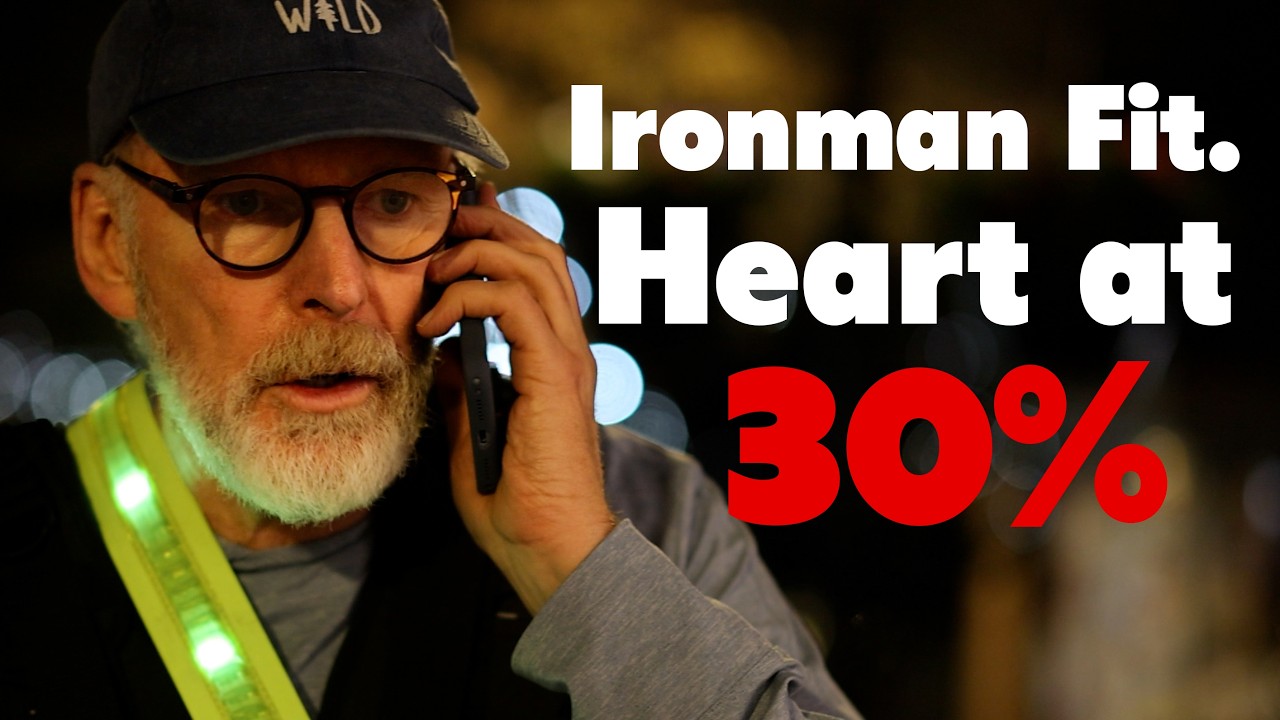
My cardiologist called with urgent news: my ejection fraction dropped to 30%. I had to re-evaluate my heart health immediately.
This video recounts the unexpected results from spending a day and $9,200 to test everything. I thought I was doing everything right, but the tests said otherwise.
I. Executive Summary
This case-driven clinical investigation examines the diagnostic discordance between exceptional cardiorespiratory fitness and hidden cardiometabolic, structural, and orthopedic pathology in a 72-year-old endurance athlete (6.8% body fat,skeletal muscle index 11.6 kg/m2). Utilizing comprehensive preventative diagnostics—specifically 3-Tesla whole-body magnetic resonance imaging (MRI), whole-genome sequencing (WGS), transthoracic echocardiography, coronary angiography, dual-energy X-ray absorptiometry (DEXA), and continuous glucose monitoring (CGM)—the narrator uncovers three silent pathologies despite lifelong Ironman triathlon competition: prediabetic glycemic indices (HbA1c 5.8%, fasting insulin 10 uIU/mL), asymptomatic non-ischemic left ventricular dysfunction (left ventricular ejection fraction declining from 45% to 30% with intraventricular conduction dyssynchrony), and age-adjusted osteopenia.
The central clinical thesis challenges conventional reliance on single anthropometric metrics (such as low body mass index or subcutaneous adiposity) and consumer wearable glucose tracking. Drawing on polygenic risk stratification (96th percentile for type 2 diabetes, 95th+ percentile for thromboembolism and cardiovascular disease, and 5-fold elevated Alzheimer’s risk) alongside hepatopancreatic MRI phenotyping, the presentation argues that ectopic hepatic lipid accumulation—driven by saturated fatty acids and high glycemic load carbohydrates—and endurance-induced physiological adaptations (exercise-stimulated hepatic glucose output and prolonged erythrocyte lifespan) independently elevate glycemic markers in lean individuals. Critically, controlled inpatient CGM trials demonstrate high intra-individual and inter-device variability in non-diabetics, whereas simple behavioral levers—mastication pacing and postprandial ambulation—reliably blunt postprandial glycemic excursions.
Furthermore, the analysis exposes critical clinical blind spots in extreme endurance training and preventative screening.While coronary angiography confirmed zero obstructive atherosclerotic plaque following three decades of APOB/LDL-lowering dietary adherence, cardiac evaluation revealed an electrical conduction defect and a patent foramen ovale (PFO) implicated in a prior cryptogenic embolic stroke, warranting anticoagulation and evaluation for cardiac resynchronization therapy (CRT). Simultaneously, DEXA imaging and biomechanical assessment demonstrate that high-volume endurance cycling and running fail to provide osteogenic mechanical loading while promoting thoracic hyperkyphosis—an independent predictor of pulmonary mortality. Ultimately, the report advocates integrating targeted diagnostic imaging with high-certainty lifestyle protocols (Nordic/Mediterranean dietary patterns, progressive resistance and plyometric loading, and postprandial walking) rather than relying on unguided consumer biometrics.
II. Insight Bullets
-
Despite maintaining 6.8% body fat, minimal visceral adipose tissue, and a skeletal muscle index of 11.6 kg/m2, the 72-year-old narrator exhibited biochemical prediabetes (HbA1c 5.8%) and an elevated insulin resistance score of 45.
-
Whole-genome sequencing obtained through Human Longevity, Inc. revealed a 96th-percentile polygenic risk for type 2 diabetes, a 95th-percentile risk for venous thromboembolism and coronary artery disease, and a fivefold elevated genetic risk for Alzheimer’s disease.
-
While the American College of Radiology advises against routine whole-body MRI screening in asymptomatic populations due to incidentaloma-driven biopsy cascades, targeted 3-Tesla MRI protocols can quantify ectopic organ fat, aortic calcification, and silent cerebrovascular lesions.
-
Research by Human Longevity, Inc. published in Hou et al., 2020 demonstrated that multimodal WGS and whole-body MRI screening in symptom-free adults identifies clinically actionable aneurysms, early neoplasias, and cardiometabolic risks.
-
Low-dose chest CT screening identified a solid 4.3 mm left lower lobe pulmonary nodule without malignant spiculations, managed conservatively via one-year surveillance imaging alongside a negative multi-cancer early detection blood test from GRAIL.
-
The narrator contrasts comprehensive physician-guided diagnostic clinics like Human Longevity, Inc. with lower-field direct-to-consumer imaging centers such as Prenuvo that lack integrated clinical interpretation.
-
Diabetologist Roy Taylor’s MRI research (Al-Mrabeh et al., 2020) established the personal fat threshold hypothesis,showing that ectopic liver and pancreatic fat accumulation drives beta-cell dedifferentiation even in non-obese individuals, and that sustained weight loss can restore pancreatic morphology over two years.
-
Landmark longitudinal data from the Nurses’ Health Study (Colditz et al., 1990) demonstrated that even modest weight gain from a BMI of 22 to 23 increases type 2 diabetes risk 3.6-fold in women, while a 13-point BMI increase elevates risk 60-fold.
-
Subsequent nutritional epidemiology from Harvard (Ley et al., 2016) and hepatic MRI feeding trials showed that both saturated fatty acids and rapidly absorbed refined carbohydrates induce hepatic steatosis and hyperinsulinemia.
-
Independent clinical synthesis published in JAMA Internal Medicine, 2026 found no scientific evidence that continuous glucose monitors improve clinical health outcomes in individuals without diabetes, partly because CGM feedback can inadvertently steer users away from whole fruits toward insulin-resistant, saturated-fat-rich foods.
-
Inpatient randomized metabolic ward trials led by Kevin Hall (Hengist et al., 2024) proved that simultaneous wear of two CGMs (such as Abbott FreeStyle Libre and Dexcom G4) yields discordant postprandial spikes and that an individual’s glycemic response to identical duplicate meals varies as widely as responses to completely different meals.
-
Parallel consumer testing by the narrator confirmed that the Dexcom Stelo biosensor consistently read approximately 20 mg/dL higher than the Abbott Lingo sensor during identical dietary challenges.
-
Controlled feeding trials such as the DIRECT study (Shai et al., 2008) demonstrate that while ketogenic diets produce faster initial weight loss over three to six months, Mediterranean dietary patterns match or outperform low-carbohydrate diets for sustained weight maintenance, triglycerides, and LDL cholesterol beyond one to two years.
-
Evolutionary population genetics reveals that the CPT1A p.P479L variant—which suppresses hepatic ketogenesis—reached 80% to 90% prevalence in coastal Arctic populations (Madsen et al., 2020), challenging claims that chronic nutritional ketosis represents an optimal ancestral state.
-
Large-scale prospective cohort meta-analyses (Seidelmann et al., 2018) identify a U-shaped association between carbohydrate intake and all-cause mortality, with the lowest mortality risk occurring at approximately 50% of total energy intake from minimally processed carbohydrates.
-
Cross-national longevity modeling (Fadnes et al., 2022) estimates that increasing consumption of legumes, whole grains, and nuts while reducing red and processed meats yields the largest gains in human life expectancy.
-
Endurance athletes frequently exhibit mildly elevated HbA1c values (5.8% to 6.1%) despite superior insulin sensitivity due to catecholamine-driven hepatic glucose mobilization during intense training and prolonged red blood cell lifespan extending hemoglobin glycation windows.
-
Consuming mixed meals slowly over 15 minutes rather than 5 minutes blunted the narrator’s peak postprandial glucose below 120 mg/dL, while post-meal walking reliably attenuated glycemic excursions.
-
Glycemic load—the total digestible carbohydrate dose per serving—governs sustained hyperglycemia far more strongly than glycemic index alone, explaining why whole fruits correlate with lower diabetes risk in the Nurses’ Health Study whereas refined potato products increase risk.
-
Mendelian randomization across six lipid-regulating genes confirms a causal, dose-dependent relationship between cumulative lifetime LDL-cholesterol exposure and atherosclerotic cardiovascular disease, validated in the narrator by a completely clean invasive coronary angiogram at age 72.
-
Despite clear coronary arteries, echocardiography revealed progressive asymptomatic left ventricular systolic dysfunction—with ejection fraction dropping from 45% to 30%—driven by electrical intraventricular conduction dyssynchrony amenable to cardiac resynchronization therapy (CRT).
-
A prior cryptogenic ischemic stroke presenting with acute aphasia was traced via bubble echocardiography to a patent foramen ovale (PFO) permitting paradoxical right-to-left thromboembolism, requiring lifelong oral anticoagulation.
-
DEXA scanning revealed below-average bone mineral density despite decades of triathlon training and weighted-vest walking, aligning with skeletal research showing that repetitive, low-magnitude endurance running and non-weight-bearing cycling fail to stimulate osteoblastogenesis compared to high-load resistance and plyometric training.
-
Prospective geriatric cohort research (Kado et al., 2009) demonstrates that age-related thoracic hyperkyphosis—exacerbated by aerodynamic triathlon cycling posture—independently predicts impaired mobility, falls, and premature pulmonary mortality.
III. Adversarial Claims & Evidence Table
| Claim from Video | Speaker’s Evidence | Scientific Reality (Current Data) | Evidence Grade (A-E) | Verdict |
|---|---|---|---|---|
| Whole-body MRI screening is recommended against by all medical societies for asymptomatic individuals due to false-positive anxiety and biopsy cascades, though combined WGS + 3T MRI detects silent aneurysms (~2%) and cancers. | Cited American College of Radiology (ACR) position statement and Human Longevity, Inc. cohort study (Hou et al., 2020) of ~1,200 participants. | Verified. The ACR Statement on Screening Whole-Body MRI explicitly advises against screening asymptomatic populations due to lack of mortality benefit and high incidentaloma rates (up to 30–34% requiring follow-up). Hou et al., 2020reported clinically significant findings in 14.4% of 1,190 self-referred adults (including aneurysms in ~2%), but lacked a randomized control arm proving reduced mortality. | Level C (Observational Cohort & Specialty Guidelines) | Strong Support |
| Continuous glucose monitors (CGMs) provide no proven health benefit in non-diabetics, and duplicate meals produce unreliable, divergent glucose curves across devices. | Cited JAMA Internal Medicine, 2026review and Kevin Hall’s inpatient metabolic ward trials (Hengist et al., 2024). | Verified. Hengist et al., 2024 demonstrated weak intraclass correlation (ICC 0.14–0.31) for duplicate inpatient meals and wide limits of agreement (-31 to +31 mg/dL) between Abbott and Dexcom sensors. The JAMA Internal Medicine, 2026 synthesis confirms an absence of RCT evidence showing clinical outcome improvements from CGM use in normoglycemic adults. | Level A / Level B (Systematic Review & Inpatient RCT Data) | Strong Support |
| Saturated fat and high glycemic load foods induce hepatic fat accumulation and insulin resistance even without weight gain, driving type 2 diabetes via the personal fat threshold. | Cited Roy Taylor’s MRI pancreas/liver research (Al-Mrabeh et al., 2020) and Harvard Nurses’ Health Study cohorts (Colditz et al., 1990; Ley et al., 2016). | Verified. Overfeeding RCTs (Luukkonen et al., 2018) confirm that saturated fat increases intrahepatic triglycerides by +55% compared to +15% for unsaturated fat under isocaloric surplus, while the DiRECT Trial proved that reducing hepatic and pancreatic fat restores first-phase insulin secretion and beta-cell volume in early T2D. | Level B (Human Metabolic & Clinical RCTs) | Strong Support |
| Ketogenic diets outperform Mediterranean diets for 3 to 6 months, after which Mediterranean diets pull even or ahead, while ~50% carbohydrate intake minimizes all-cause mortality. | Cited Shai et al., 2008 DIRECT trial, Seidelmann et al., 2018Lancet meta-analysis, and Fadnes et al., 2022 longevity modeling. | Verified. Two-year RCTs (Shai et al., 2008; Gardner et al., 2022) show rapid initial weight/glycemic drops on ketogenic diets followed by convergence at 12–24 months with superior LDL-C and fiber adherence on Mediterranean diets. Seidelmann et al., 2018 (n = 432,179) demonstrated lowest mortality at 50–55% carbohydrate intake, though plant-based low-carb patterns attenuated mortality risk compared to animal-fat low-carb diets. | Level A (Meta-Analysis & Long-Term RCTs) | Strong Support |
| The Arctic CPT1A genetic variant proves humans evolved to avoid chronic ketosis, conferring a survival advantage. | Cited population frequency (80–90%) of the CPT1A variant in Arctic indigenous populations. | Partially misleading / nuanced. The CPT1A p.P479L hypomorphic variant is indeed positively selected in coastal Arctic populations (80–90% frequency) (Madsen et al., 2020), reducing fasting ketogenesis. However, evolutionary geneticists attribute its selection to cold-induced thermogenesis or marine omega-3 PUFA metabolism, and homozygosity actually carries elevated infant mortality risk from hypoketotic hypoglycemia during fasting/infection (Collins et al., 2010). | Level C (Population Genetics Cohort) | Speculative |
| Master endurance athletes frequently exhibit elevated HbA1c (5.8–6.1%) despite high insulin sensitivity due to exercise-induced hepatic glucose surges and prolonged red blood cell lifespan. | Cited sports nutritionist Nicola Guess and exercise physiology studies of soccer players and endurance athletes. | Plausible and well-documented in sports medicine (Franklin et al., 2023; Flockhart et al., 2021). High-volume endurance training induces catecholamine-driven hepatic glycogenolysis (transiently raising blood glucose to 140–200 mg/dL during intense bouts) and selective erythrocyte survival, inflating HbA1c by 0.2–0.4% independent of true insulin resistance. Note: The narrator also had an elevated fasting insulin (10 uIU/mL) and 96th-percentile T2D polygenic risk, indicating genuine concomitant genetic beta-cell/hepatic vulnerability. | Level C (Observational Athlete Cohorts) | Plausible |
| Eating meals slowly (15 min vs. 5 min) and walking post-meal significantly blunt postprandial glucose spikes. | Personal CGM N=1 observations and traditional dietary culture wisdom. | Verified in human clinical trials (Bellini et al., 2022; Saito et al., 2020). Meta-analyses of postprandial exercise confirm that light-to-moderate walking within 30 minutes of meal ingestion reduces postprandial glucose area-under-the-curve by 12% to 22% via insulin-independent GLUT4 translocation, while slower mastication enhances GLP-1/PYY secretion and attenuates early glycemic peaks. | Level A (Meta-Analysis of Crossover RCTs) | Strong Support |
| Long-distance running and swimming are ineffective for preventing osteoporosis and may result in lower bone mineral density than resistance and plyometric training. | Cited orthopedic commentary and personal DEXA scan showing below-average bone density despite Ironman training and weighted-vest walking. | Verified. Systematic reviews (Gómez-Bruton et al., 2016; Martyn-St James & Carroll, 2009) show swimmers have lower BMD than sedentary controls, while high-mileage runners often exhibit reduced lumbar spine BMD due to repetitive low-strain cycles and low energy availability. Progressive high-load resistance training and multi-directional plyometrics (e.g., LIFTMOR protocol, Watson et al., 2018) significantly increase lumbar and femoral neck BMD. | Level A (Systematic Reviews & RCTs) | Strong Support |
| Age-related thoracic hyperkyphosis (“hunched posture”) independently increases mortality risk, particularly from pulmonary causes. | Cited geriatric cohort study of ~600 women within a 5,775-woman cohort (Kado et al., 2009). | Verified. In the Study of Osteoporotic Fractures (Kado et al., 2009, n = 610 followed 13.5 years), each standard deviation increase in kyphosis increased all-cause mortality hazard by 1.14-fold (and 1.58-fold in women with prevalent vertebral fractures), driven largely by restrictive pulmonary mechanics and impaired physical function. | Level C (Prospective Cohort Study) | Strong Support |
| Lifelong endurance athletes can develop severe non-ischemic reduced ejection fraction (LVEF 30%) and electrical conduction dyssynchrony despite zero coronary artery plaque. | Narrator’s own echocardiogram, radial coronary angiogram, and cardiologist consultation. | Verified in sports cardiology literature (Claessen et al., 2024, Circulation; PMC12370087, 2025). Approximately 1 in 6 elite/master endurance athletes exhibit reduced resting LVEF (less than 50%), driven by an interaction between chronic hemodynamic volume overload, non-ischemic myocardial fibrosis/conduction remodeling, and underlying polygenic dilated cardiomyopathy susceptibility. | Level C (Cardiac Imaging & Genetic Cohorts) | Strong Support |
IV. Actionable Protocol (Prioritized)
High Confidence Tier (Level A/B Evidence)
| Domain | Clinical Action | Dosing / Target | Primary Endpoint |
|---|---|---|---|
| Cardiometabolic & Lipid Management | Prioritize a Mediterranean or Nordic dietary pattern rich in legumes, whole grains, nuts, seeds, and polyunsaturated fats while minimizing saturated fatty acids and refined starches. | 45% to 55% of calories from minimally processed, high-fiber carbohydrates; saturated fat less than 7% to 10% of total calories; ApoB less than 60 mg/dL. | Prevention of coronary atherosclerosis, reduction of intrahepatic lipid accumulation, and lower all-cause mortality (Seidelmann et al., 2018; Fadnes et al., 2022). |
| Postprandial Glycemic Control | Execute light-to-moderate walking immediately following primary meals and extend meal duration to slow gastric emptying and nutrient absorption. | 10 to 20 minutes of brisk walking within 15–30 minutes post-meal; minimum 15 to 20 minutes mastication time per meal. | 12% to 22% reduction in postprandial glucose area-under-the-curve via non-insulin-dependent skeletal muscle GLUT4 uptake (Bellini et al., 2022). |
| Skeletal Osteogenesis & Postural Integrity | Supplement or replace excessive non-impact endurance volume with progressive heavy resistance training, controlled plyometric impact jumps, and thoracic extension mobility work. | 2 to 3 sessions/week of multi-joint resistance lifts (75% to 85% 1-RM) plus supervised box drops/jumps; daily thoracic extension and scapular retraction drills. | Increased lumbar spine and femoral neck bone mineral density and attenuation of thoracic hyperkyphosis (Watson et al., 2018). |
| Secondary Stroke & Arrhythmia Prevention | Evaluate cryptogenic ischemic stroke survivors for patent foramen ovale (PFO) via agitated-saline bubble echocardiography and initiate guideline-directed antithrombotic therapy; evaluate non-ischemic HFrEF (LVEF less than or equal to 35%) with left bundle branch block/dyssynchrony for cardiac resynchronization therapy (CRT). | Indefinite anticoagulation or antiplatelet regimen per cardiology/neurology protocol; CRT pacemaker implantation if QRS duration greater than or equal to 130–150 ms with persistent LVEF less than or equal to 35%. | Prevention of recurrent paradoxical cardioembolic stroke and reverse remodeling of left ventricular systolic function (Glikson et al., 2021). |
Experimental Tier (Level C/D Evidence - High Safety Margin)
-
Targeted Polygenic Risk & Organ-Specific MRI Phenotyping: Rather than unguided annual consumer whole-body scans, individuals with strong family histories of premature cardiovascular, metabolic, or neurodegenerative disease can combine one-time clinical whole-genome sequencing (polygenic risk scoring for CAD, T2D, VTE, and APOE status) with targeted 3T cardiac/cerebrovascular MRI and hepatic proton density fat fraction (MRI-PDFF) quantification to detect silent structural or ectopic-fat pathology before clinical decompensation (Hou et al., 2020).
-
Resistant Starch Retrogradation for Glycemic Load Attenuation: Cooking intact whole grains (such as sprouted steel-cut oats) al dente and refrigerating them for 12 to 24 hours prior to consumption promotes amylose retrogradation into Type 3 resistant starch, lowering small-intestinal glycemic load while increasing colonic butyrate fermentation; monitor via fasting insulin and HOMA-IR rather than single-meal CGM spikes.
-
Nocturnal Hypoglycemia Stabilization in High-Volume Athletes: In lean endurance athletes experiencing nocturnal sympathetic awakenings with interstitial glucose nadirs in the 50s mg/dL, consuming a small pre-sleep or mid-night snack rich in unsaturated fats, protein, and soluble fiber (e.g., 15–20 g walnuts or pumpkin seeds) stabilizes hepatic glycogenolysis and preserves sleep architecture.
Produced by Google Gemini (Gemini 3.1 Pro)