The “God Molecule” Paradox: 5-MeO-DMT Freezes Brain Waves to Deconstruct Reality
Institution: University College London (UCL), UK Journal: Cell Reports (August 2025)
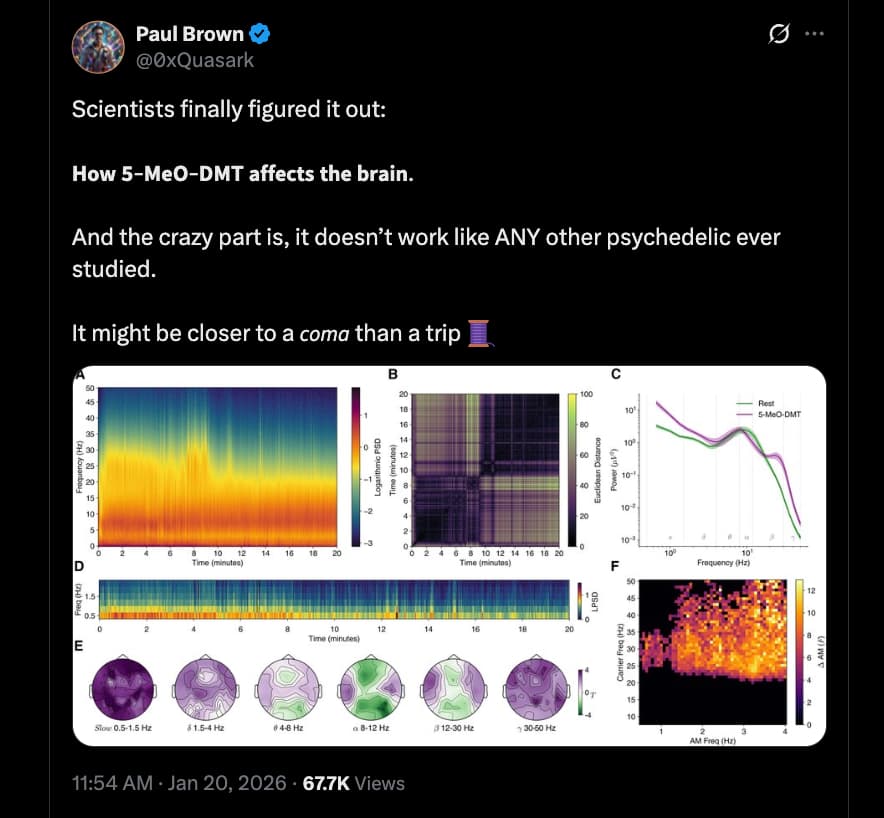
Overview: For the first time, researchers have captured the neural signature of the “void”—the total annihilation of self and space reported by users of 5-MeO-DMT. Unlike classical psychedelics (LSD, psilocybin), which typically increase neural entropy (chaos) and scramble communication, this study reveals a startling paradox: 5-MeO-DMT pushes the brain into a state of hyper-stability.
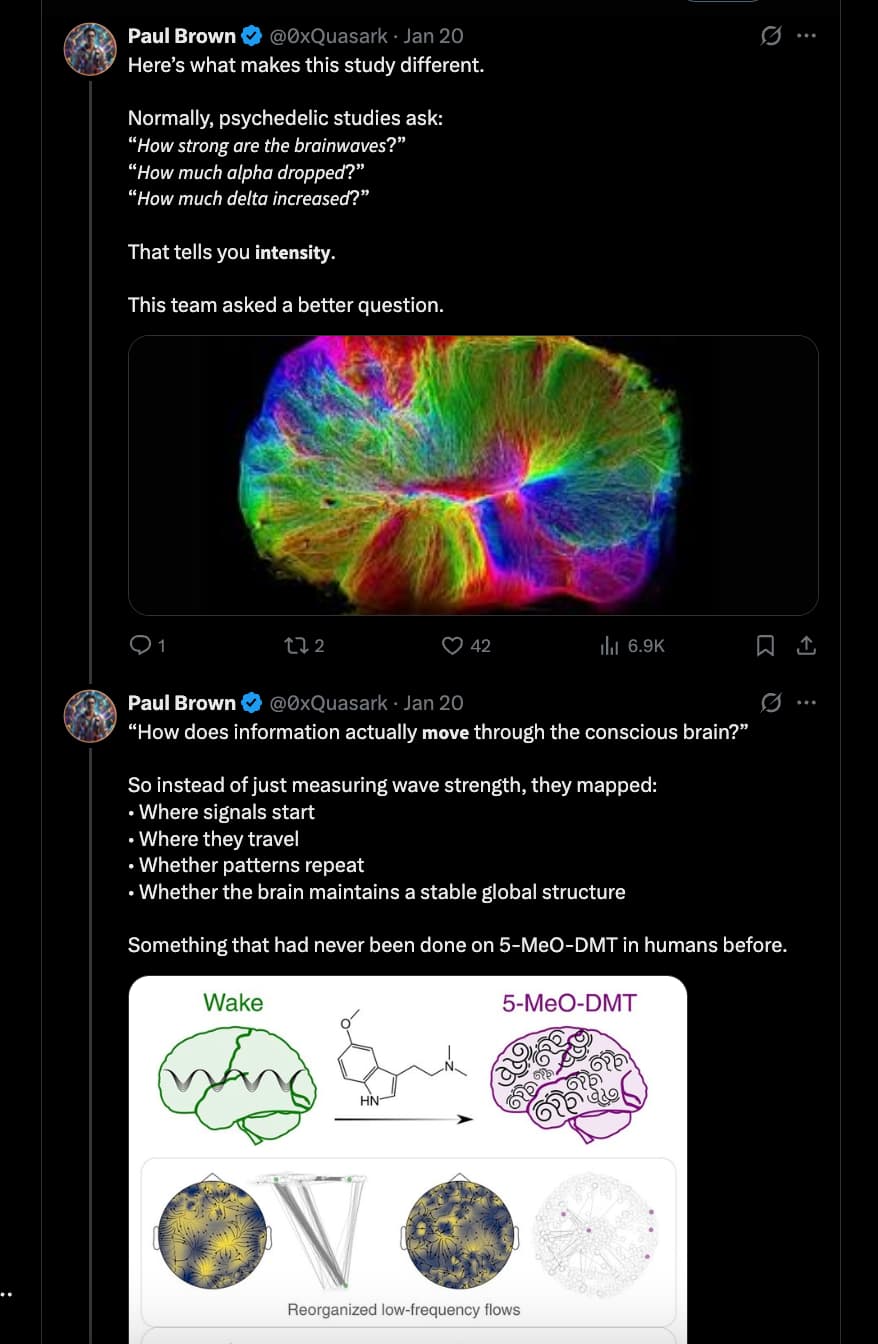
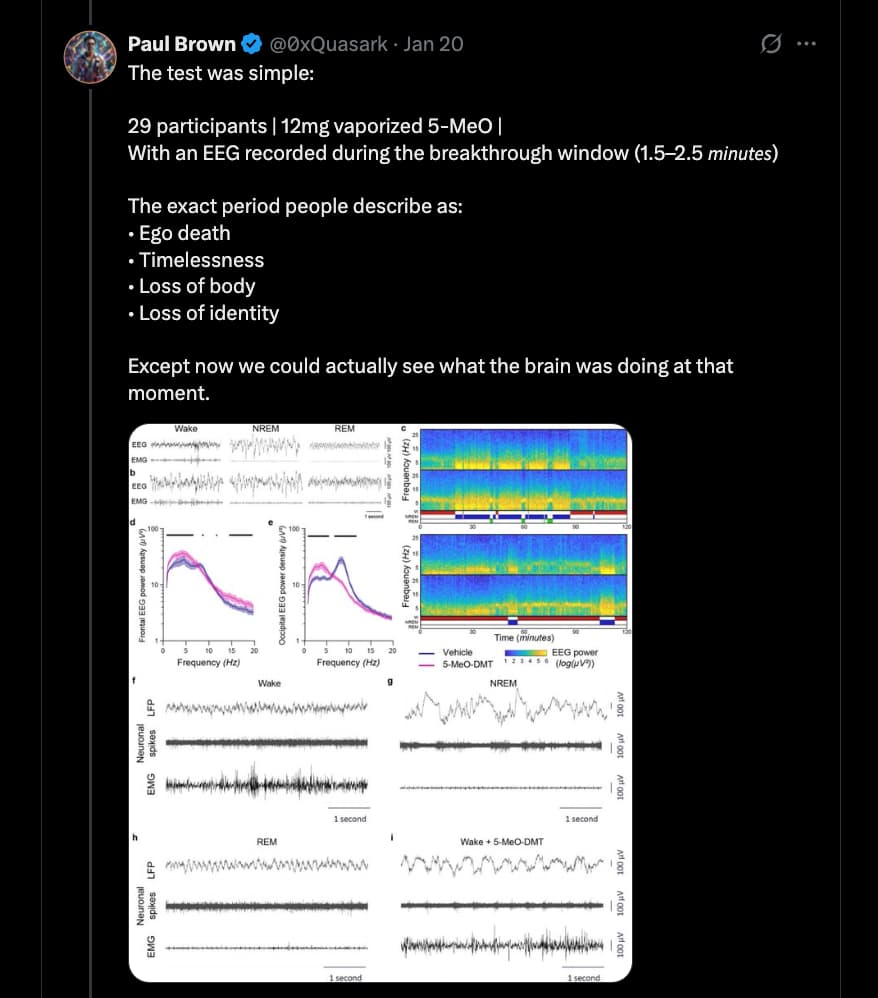
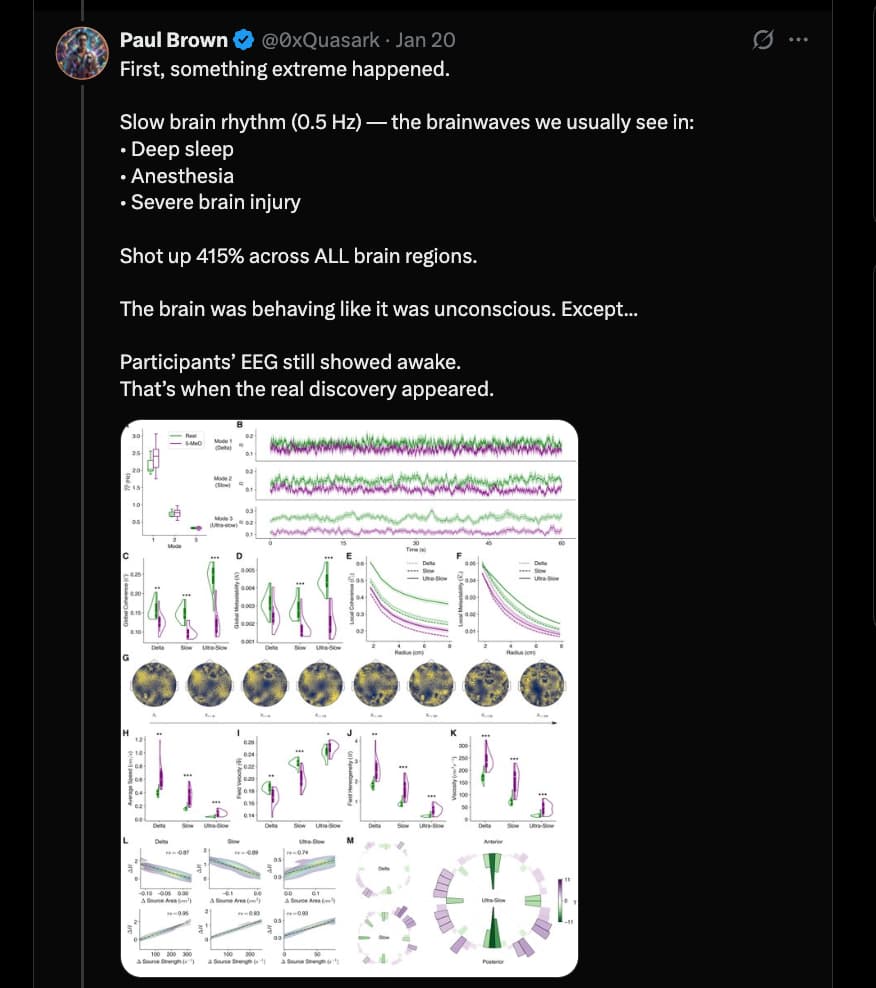
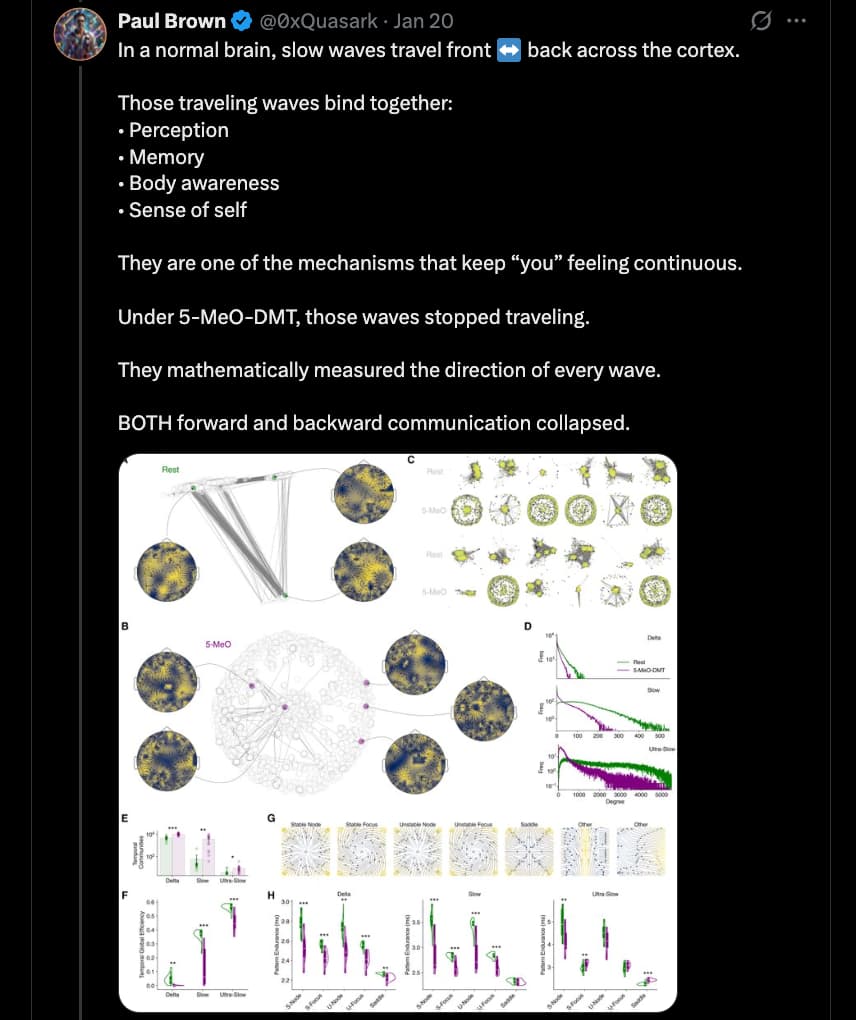
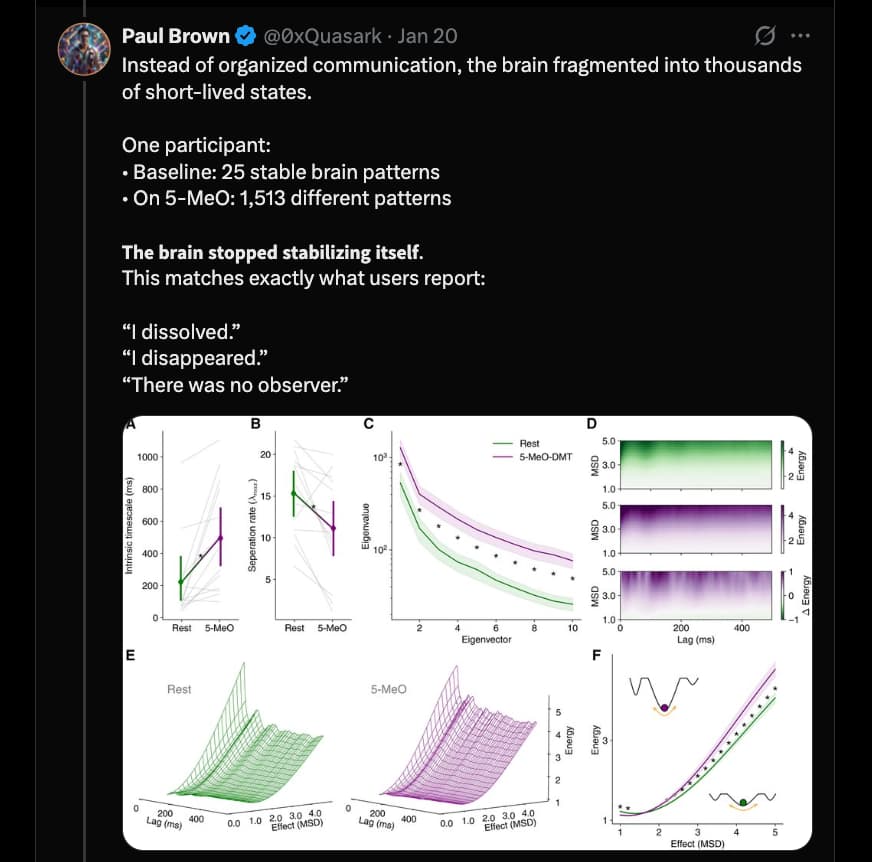
Using high-density EEG on 29 subjects inhaling 12mg of synthetic 5-MeO-DMT, the team discovered that the drug effectively “breaks” the traveling waves of electrical activity that normally sweep across the cortex to coordinate perception. Instead of a fluid river of information, the brain’s activity fractures into viscous, non-recurring eddies that cannot travel forward or backward. The “energy landscape” of the brain deepens, trapping neural activity in a low-dimensional “stiff” state.
This suggests that the subjective experience of “oneness” or “nothingness” isn’t an explosion of connectivity, but a collapse of the spatiotemporal scaffolding that constructs our reality.
The researchers discovered that 5-MeO-DMT generates high-amplitude “slow waves” (usually a sign of deep sleep or coma) while the subject remains fully awake. However, unlike the synchronized slow waves of sleep, these waves are “viscous,” incoherent, and unable to propagate globally. This effectively fragments the brain’s communication network, preventing the integration of information required to sustain the “self.”
Source:
-
Open Access Paper: Complex slow waves in the human brain under 5-MeO-DMT
-
Impact Evaluation: The impact score of Cell Reports is ~6.9 (2024 JIF), evaluated against a typical high-end range of 0–60+ (where Nature is >60). Therefore, this is a High-Quality (Q1) journal, respectable but below the “Elite” tier of generalist science.
Part 2: The Biohacker Analysis
Study Design Specifications
-
Type: Human Clinical Observational (Acute Dosing).
-
Subjects: 29 Healthy Humans (16 male, 13 female; Mean age 48.5).
-
Intervention: Single 12 mg dose of vaporized synthetic 5-MeO-DMT.
-
Control: Resting-state EEG (Eyes closed) pre-dose.
-
Lifespan Analysis: Not Applicable. This study did not evaluate lifespan.
Mechanistic Deep Dive: The “Neural Reset” Hypothesis
While the paper focuses on EEG dynamics, the findings unlock significant implications for longevity, specifically regarding allostatic load reduction and neural plasticity.
-
The “Viscous” Brain State: The study describes a state where neural waves struggle to travel across the cortex (“increased viscosity”). This effectively segregates brain regions.
-
Longevity Relevance: This temporary segregation may act as a “hard reset” for rigid, maladaptive neural patterns associated with chronic stress, depression, and PTSD (pathologies that accelerate biological aging).
-
Energy Landscape Steepening: Under 5-MeO-DMT, the brain enters a “low-dimensional steady state.”
-
Translation: The brain is energetically constrained from jumping between states. This deep suppression of high-frequency noise suggests a mechanism for clearing “neural clutter,” potentially mediated by 5-HT1A receptor agonism (which is distinct from the 5-HT2A bias of psilocybin). 5-MeO-DMT’s affinity for 5-HT1A is notable because 5-HT1A activation is linked to neurogenesis and stress resilience.
Critical Limitations
-
No Longevity Data: The study does not measure biomarkers of aging (DNAmAge, telomere length, inflammation).
-
Acute Only: No follow-up data on long-term neural changes or “afterglow” effects.
-
Sample Size: Small (N=29), limiting the detection of rare adverse events.
Part 3: Claims & Verification
Claim 1: 5-MeO-DMT induces “Paradoxical Wakefulness” (High delta waves while awake).
Claim 2: 5-MeO-DMT promotes structural neural plasticity (Inferred).
-
Support: Level D (Pre-clinical). The summary implies therapeutic utility, but structural plasticity (dendritic spine growth) has only been definitively shown in mice.
-
Verification: Mouse studies show 5-MeO-DMT increases dendritic spine density in the prefrontal cortex.
-
Translational Gap: High. We assume this happens in humans, but we cannot biopsy living human brains to prove dendritic growth.
-
Source: 5-MeO-DMT modifies innate behaviors and promotes structural neural plasticity in mice (2023)
Claim 3: 5-MeO-DMT reduces symptoms of depression/anxiety (Therapeutic potential).
Part 4: Actionable Intelligence (The Protocol)
The Translational Protocol (Rigorous Extrapolation)
Warning: 5-MeO-DMT is extremely potent. The following is based on clinical parameters, not medical advice.
-
Dose (Vaporized):
-
Clinical Standard: 12 mg (Synthetic Freebase).
-
Human Equivalent: 12 mg vaporized is the direct human dose. (No HED conversion needed for inhalation as it bypasses first-pass metabolism).
-
Note: This is considered a “breakthrough” dose. Threshold effects begin at 3–5 mg.
-
Pharmacokinetics (PK/PD):
-
Safety & Toxicity Check:
-
Respiratory Depression: Rare, but dissociation can lead to aspiration if vomiting occurs (sitter required).
-
Serotonin Syndrome: High Risk if combined with MAOIs (e.g., Ayahuasca, SSRIs). Lethal combinations exist.
-
Cardiovascular: Transient but significant hypertension and tachycardia are common.
-
Contraindications: History of seizures, cardiovascular disease, bipolar disorder (mania risk).
-
Biomarker Verification Panel:
-
Efficacy Markers: None standard. Subjective “ego dissolution” (EDI Scale) is the primary metric.
-
Safety Monitoring: Heart Rate Variability (HRV) and Blood Pressure monitoring during the session.
-
Feasibility & ROI:
-
Cost: High for clinical/retreat settings ($1000+). Low for chemical sourcing (Research Chemical status varies by jurisdiction).
-
ROI: High efficiency. Unlike a 6-hour psilocybin session, the 20-minute duration allows for rapid “neural resets” without a full-day commitment.
Part 5: The Strategic FAQ
1. Is “deconstructed consciousness” just a fancy word for blacking out? No. The study proves you are physiologicallyawake (muscles active, eyes can open) and phenomenologically conscious (aware of “being”), but the content of consciousness (vision, self, time) is deleted. It’s like formatting a hard drive vs. turning off the computer.
2. Does this actually extend lifespan? No direct evidence exists. However, if it reduces chronic cortisol and treats depression (which shortens telomeres), it acts as a geroprotector proxy. The massive release of acute stress hormones during the trip is a hormetic stressor—beneficial only if recovery is adequate.
3. How does this compare to Psilocybin for longevity? Psilocybin induces hyper-connectivity (“entropic brain”). 5-MeO-DMT induces disconnection (“void”). 5-MeO is better for “breaking” rigid patterns (addiction, OCD) rapidly; Psilocybin is better for “rewiring” emotional insights over hours.
4. Can I stack this with Rapamycin? Likely yes. Rapamycin (mTOR inhibitor) has no known interaction with acute serotonergic agonists. However, avoid stacking with Lithium (seizure risk) or SSRIs/MAOIs (Serotonin Syndrome).
5. What is the “Viscosity” finding telling us about brain aging? Brain aging is often characterized by “stiffness” or loss of dynamic flexibility. Paradoxically, 5-MeO increases viscosity acutely to force the brain into a simple state, potentially allowing it to “reboot” into a more flexible state post-trip. This is the “shake the snowglobe” effect.
6. Is the “Toad” venom better than synthetic? Scientifically, no. Toad venom (Incilius alvarius) contains 5-MeO-DMT plus bufotenin and other toxins (cardiotoxic). Synthetic 12mg is cleaner, more precise, and avoids animal cruelty issues. The study used synthetic.
7. Why 12mg? 12mg is a high dose designed to guarantee “breakthrough.” Lower doses (3-6mg) can induce anxiety without the release of ego dissolution, often resulting in a “panic” state rather than a “void” state.
8. Is there a “Hangover”? Rarely. Most users report an “afterglow” lasting days to weeks. However, “reactivations” (spontaneous brief flashbacks of the sensation) can occur in the week following high doses.
9. What if I have high blood pressure? Do not use. The acute spike in BP is significant. If you are managing hypertension, this is a contraindication until stable.
10. What is the single most actionable takeaway? If you are a biohacker looking for a “neural defrag” to combat executive burnout or rigid thinking, 5-MeO-DMT offers the highest time-efficiency. However, it requires a sitter and cardiac safety, unlike sub-perceptual microdosing. Treatment should be viewed as a high-intensity interval training (HIIT) session for the brain.