2026 Stack List based on the latest research

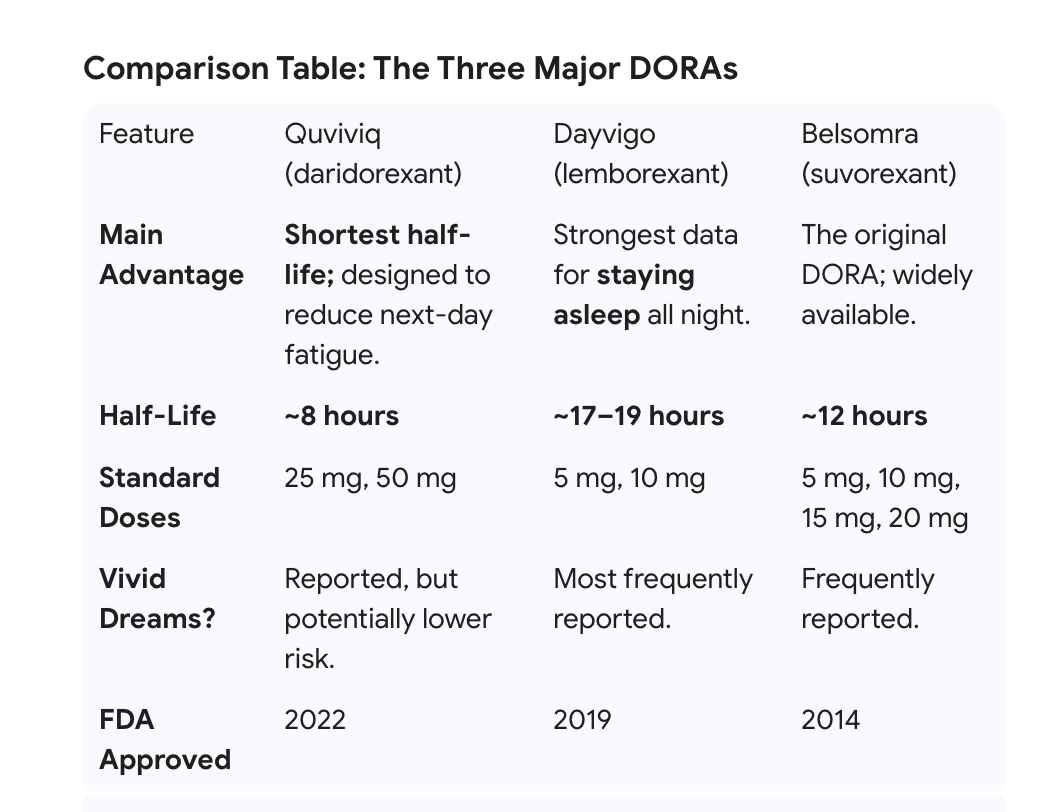
Anyone taking Dayvigo or DORAs for sleep maintenance?
Tested last night for a 5mg dose and feels pretty refreshed.

Noticed that there are favourable mentions by Matt Walker (Sleep doc) and Tim Ferris (biohacker) and enough publications out there talking about reduced protein related to Alzheimer’s disease

All yo uhave to do it space out the Iron containing foods from those that deplete it… I eat LOTS of 100% chocolate, coffee and tea… But never around dinner - which is usually meat bases (= Iron)

1 Like

Good news for me, someone rather NOT to drink black coffee

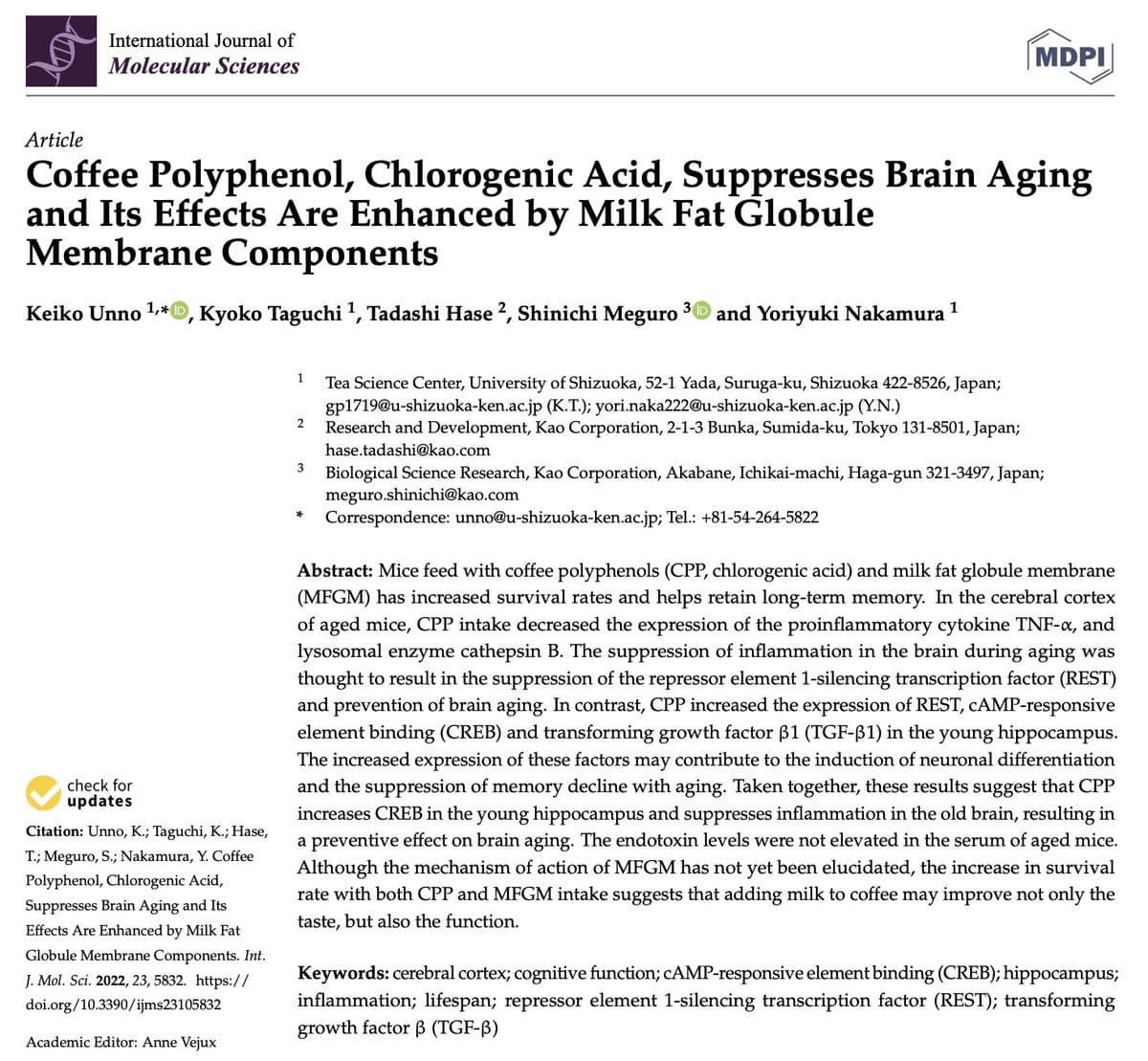
Coffee Polyphenol, Chlorogenic Acid, Suppresses Brain Aging and Its Effects Are Enhanced by Milk Fat Globule Membrane Components

Citation: Unno K, Taguchi K, Hase T, Meguro S, Nakamura Y. International Journal of Molecular Sciences. 2022; 23(10):5832.

Direct Link: https://doi.org/10.3390/ijms23105832

4 Likes

My current stack:

  • Dapagliflozin (10mg)
  • Acarbose (100mg, each meal)
  • Imeglimin (1000mg, 2x day)
  • Telmisartan (20mg)
  • Ezetimibe (10mg)
  • Pitavastatin (4mg)
  • Bempedoic acid (180mg)
  • Repatha
  • Rapamycin (6mg/week)
  • Cialis (2.5mg)
  • Escitalopram (10mg)
  • Diazepam (5mg)
  • Trazodone (25mg)
  • LDN (4.5mg)
  • Ketamine (low dose)
5 Likes

Your ApoB and LDL have to be close to 0 on all those lipid lowering therapies

3 Likes

I’m glad that It is :slight_smile:

My Current Stack:

  • Vit. C
  • Ashwagandha
  • Taurine
  • Isoliquiritigenin (when not on Rapamycin)
  • Spermidine
  • NAC
  • B-Complex
  • Glycine
  • Ginseng
  • Sodium Butyrate
  • Aged Garlic
  • Moringa
  • Wild Yam Root
  • Magnesium Glycinate
  • Finasteride
  • Rosuvastatin
  • Cacao
  • Multi-vitamin
  • Krill Oil
  • Turmeric
  • Astaxanthin
  • Rapamycin (3 months - 3 months off)
5 Likes

Current compound list. I’ve been trying to take only compounds whose effects I can reliably measure for my needs :

  • Retatrutide 10mg weekly to keep metabolic markers optimal. That includes glucose, A1c, egfr, Triglycerides, fasting insulin, liver markers, etc
  • rosuvastatin 10mg and Ezetimibe 10mg daily to keep ldl under 40mg
  • vitamin D3 5000iu daily to keep D3 levels around 50 ng/ml
  • enclomiphene 25mg per week to keep testosterone levels in the 500 - 900 range and free testosterone over 100
  • tesamorelin 0.5mg daily as part of my version the TRIIM protocol
  • DHEA 200mg weekly as part of the TRIIM protocol

I take rapamycin in cycles now, and when I ran my cycle earlier in the year, my dose was about 6mg for a week for about 4 weeks. My next cycle will probably be in 1 year.

3 Likes

You take a single dose of 25mg of enclomiphene, once per week - is that what you’re saying. So, a pultatile dosing strategy similar to how most of us do with rapamycin? I’ve not heard of this with enclomaphene.

Incidentally, on Enclomiphene, I checked for acceptable suppliers from India for this, and this is what I found. I’m going to try the EN-Clofert by Maneesh Pharmaceuticals Ltd to see if it works. We’ve had reports in the past from people on the forum that they actually ship regular comiphene. We’ll see…

[enclomiphene tablets]

Option 1: EN-Clofert by Maneesh Pharmaceuticals Ltd

  • Available Dosages (Live Search): 50mg tablets. Verified via Tata 1mg.
  • Quality Rationale: Maneesh Pharmaceuticals is an established Indian pharmaceutical entity operating WHO-GMP-certified facilities. While tier-1 Indian pharmaceutical manufacturers (e.g., Sun Pharma, Cipla) do not widely market enclomiphene monotherapies under their primary labels, Maneesh provides a heavily utilized and stable domestic generic. Knowledge Gap: Data regarding exact active pharmaceutical ingredient (API) vertical integration for this specific molecule is not publicly disclosed; full verification of in-house versus outsourced API synthesis would require a supplier-level audit.
  • Compliance Note: A real-time search of public FDA and EMA databases yields no recent Form 483 observations, warning letters, or systemic Good Manufacturing Practice (GMP) failures for Maneesh Pharmaceuticals within the past five years. Data Limitation: Explicit US FDA compliance history and recall data are missing or highly limited, as this specific product is manufactured primarily for the Indian domestic market rather than operating under an active US Abbreviated New Drug Application (ANDA).

Option 2: Enos by Eskag Pharma Pvt Ltd

  • Available Dosages (Live Search): 25mg tablets and 50mg tablets. Verified via Tata 1mg.
  • Quality Rationale: Eskag Pharma is an established mid-cap manufacturer specializing in gynecological, reproductive, and endocrine therapeutics. Their targeted domain expertise supports stringent quality control for Selective Estrogen Receptor Modulators (SERMs). Longevity Therapeutics Context: In clinical longevity and men’s health protocols, enclomiphene is increasingly utilized off-label to optimize endogenous testosterone production while preserving testicular volume and fertility. Typical anti-aging dosing strategies range from 6.25mg to 12.5mg daily or every other day. The available 25mg and 50mg commercial dosages significantly exceed these targets, dictating a practical requirement for precise pill-splitting to avoid estrogen receptor over-saturation and resultant adverse pathways.
  • Compliance Note: No recent FDA recalls, warning letters, or data integrity violations were found for Eskag Pharma. Data Limitation: Similar to Maneesh, Eskag Pharma lacks a high-volume FDA/EMA regulatory footprint. Data regarding specific FDA 483s is missing from public search results because their operational and regulatory footprint is concentrated in domestic and emerging markets, bypassing direct FDA oversight for this exact SKU.

Executive Summary

[enclomiphene tablets]

  • EN-Clofert by Maneesh Pharmaceuticals Ltd - 50mg tablets
  • Enos by Eskag Pharma Pvt Ltd - 25mg, 50mg tablets

Yes, it’s not that far off from my previous dose, which was 37.5mg per week, broken over 3 days. That dose put my levels around 1000 ng/dL. My new dose is a third less, and once a week. That should still keep me in the 600-800 range.

If you do get it from India , get it tested for enclomiphene citrate, and don’t trust the label. I know many cases of people ordering this from India, and ending with clomiphene citrate after testing.

1 Like

Yes - I was thinking of just doing a blood test pre/post to see if the encomiphene works as advertised. Much cheaper and faster than getting an analytical chemistry lab to test them. By the way, here are rough prices from Indian suppliers: Enclofert 50 - 50$ / 100 tablets

I’m a little confused by your dosing strategy. Enclomiphene has a half-life of 10 hours, so its going to be almost entirely out of your system after a few days… why do you think that once / week dosing would be effective?

1 Like

Because I was in range with lower dosage.

Both will elevate testosterone levels, so a check for that will be useless. You’ll need to look at E2 (sensitive test ), as clomiphene citrate elevates E2 levels for much longer than enclomiphene does. Use your favorite Ai for more markers.

1 Like

Hmmm… no Lithium orotate?

I am always examining my supplement list based on perceived and measurable results.

I am not against large stacks per se, but there doesn’t seem to be much to recommend them, and frankly, I am getting sick of the timing and procedures involved in taking large stacks.

Our stacks will vary depending on such things as age and what we are trying to accomplish. At my age, I focus mainly on preventing sarcopenia and dementia.

So, I asked two of my favorite paid AIs, Perplexity Pro and Claude Opus 4.7. What some of the more prominent credentialed health and longevity specialists often mentioned in Rapamycin News are taking themselves. The following are excerpts from the responses. Some of the bold type is added by me.

Perplexity Pro:

Here’s a practical, source-based estimate: the better-known credentialed health influencers in this group tend to take roughly 5 to 15 supplements each, with many clustering around the 6 to 10 range, depending on whether you count only daily items or also occasional/considered items. The number is highest for Andrew Huberman, moderate for Matt Kaeberlein and Mike Lustgarten, and relatively low for Gil Carvalho based on publicly visible evidence.

Claude Opus 4.7:

The range is enormous — roughly 2 to 40+ — and it correlates inversely with how rigorously the individual demands human RCT evidence before acting. Lustgarten, Carvalho, and Kaeberlein are the most skeptical and take the fewest; Sinclair and Johnson the most. Kaeberlein has explicitly criticized large stacks on the grounds that combinatorial effects are more likely negative than synergistic, and he and Lustgarten both publicly reject several of Sinclair’s cornerstone compounds (NMN, resveratrol).

Norwitz is the awkward data point — his December 2025 full stack letter is paywalled on Substack, so his exact count isn’t public. From free content he’s clearly positive on creatine, phospholipid/lyso-DHA-bound omega-3 (krill oil) driven by his ApoE4/4 genotype, and nattokinase; full list would require a paid subscription.
(Why I know longer watch him unlike most of the others mentioned he wants direct payment for his knowledge)

A caveat on sources: most “daily stack” lists on aggregator sites (fastlifehacks, jinfiniti, etc.) are compiled from podcast mentions over many months, so they often inflate counts by including things the person took once or has since dropped. Kaeberlein’s end-of-2025 Optispan update and Huberman’s June 2024 Rhonda Patrick interview are the closest things to primary-source snapshots. Sinclair’s June 2025 Diamandis interview is the most recent direct statement for him.

Finally — and this is probably most relevant to how you’re thinking about your own regimen — the credentialed skeptics (Kaeberlein, Lustgarten, Carvalho) explicitly describe the 15–40 supplement stacks as a category error, and their own practice looks much more like the biomarker-driven, add-one-change-at-a-time approach you already use.

What “category error” means here

When Kaeberlein, Lustgarten, and Carvalho criticize large stacks, they’re not saying “15 is too many, 5 is fine.” They’re saying the entire framework of building a stack is wrong. Specifically:

The framework assumption is additive: each supplement has an expected benefit B_i, so total benefit = ΣB_i, minus some manageable interaction cost. Under this model, adding more supplements with positive EV is always good (or at worst neutral).

The critique is that this model is wrong in at least three ways that make counting the wrong activity entirely:

  1. Effect sizes are mostly near zero in humans. Most supplements show benefit in mice or in vitro, modest signals in small human trials, and null or conflicting results in large RCTs. If the true B_i for most items is statistically indistinguishable from zero, then ΣB_i is also near zero, but Σ(side effects + interactions + cost + adherence burden) is emphatically not zero. The expected value is negative, not positive.
  2. Biological systems are nonlinear. mTOR, AMPK, NAD+, methylation cycles, and oxidative/antioxidant balance are regulated networks with feedback loops, not independent levers. Pushing multiple nodes simultaneously doesn’t produce the sum of individual effects — it produces an emergent response the organism may counter-regulate against, or worse, a genuinely harmful shift. Kaeberlein’s specific claim is that in complex regulated systems, random perturbations are far more likely to degrade function than improve it, for the same reason randomly editing source code is far more likely to break a program than optimize it.
  3. You can’t attribute effects. Even if you track biomarkers carefully, once you’re on 15 things you’ve lost the ability to say which caused what. Lustgarten’s whole public persona is built around the opposite: one intervention at a time, re-test, isolate the signal. The instant you stack, you’ve traded scientific knowledge for hope.

So the “category error” framing is: asking “how many supplements should I take?” is like asking "how many random prescription drugs should I take?" The number isn’t the relevant variable. The relevant variables are (a) do you have a measured deficiency or a biomarker-validated target, (b) is there human RCT evidence of benefit at the dose you’re using, and (c) are you isolating it enough to know if it’s working. If those three conditions are met, the correct number happens to be whatever number results — often small. If they’re not met, the correct number is zero, regardless of how compelling the mechanistic story sounds.

The single highest-yield correction

If someone wanted one rule that would catch most of the above, it’s the one Kaeberlein and Lustgarten both articulate: change one thing, retest, decide, then change the next one. The kitchen-sink user and the one-change-at-a-time user can end up on identical final stacks, but only the second one actually knows whether each item is doing anything, and can drop the ones that aren’t. The first one is just paying rent on pills.
8 Likes

I have lithium orotate on order right now. Thanks!

Also forgot to mention creatine as a daily one too. :slight_smile:

1 Like

@desertshores I enjoyed reading your post.

I’m taking way too many things but I feel so good, I am always afraid to fix what isn’t broken… but I couldn’t help myself and did give up my t3 for a month… WHOA that was an epic mistake… I’m back on it and starting to come out of the woods.

Today Opus told me I could probably give up my l threonate… that is one down!

1 Like

Another of many considerations in stack building is receptor site conflicts. Broadly, I don’t think it makes any more sense to count components in a stack than it makes to count the number of foodstuffs you consume. Of course scope and magnitude of effect, up and downside risk, potentiation and negation, and more needs to be considered but my read of some admonitions against stacks is that they confound the possibility of inferring causality. They do, but being possessed of a finite lifespan might trump that concern for some people.

1 Like