I have posted several times my skepticism regarding the utility of CT angiogram scans as they are conducted today.
From what I can see, these scans are extremely unreliable, differing as much as 600% in computing total plaque burden between platforms and they use methodologies which are very questionable insofar as they are unable to reliably measure key variables (such as size of vessels, vessel walls etc.). There is a tremendous amount of noise.
Furthermore, the AI analysis is quite flawed and lacking in nuance in comparison with qualified human analysis which uses a wider evidence base.
These are among the reasons why I never had a CT angio scan done - I would love to get one, but only once the methodology changes and there has been some validated marker matrix established.
For now, I have simply gotten an ordinary CAC scan. It tells me the calcified plaque burden in my heart arteries. Obviously, it’s quite limited - it tells me nothing about the plaque in my whole body vasculature (also a limitation of CT angio scans) or more importantly soft plaque which can be more dangerous. Here a CIMT might be useful to complement the CAC scan.
I suppose there may still be utility to CT angios - if you use the same platform (for example Cleerly), the same machine and the same settings and protocol taken at two points in time, years apart, to show if there is any progression of plaque. That’s it. But to me - that’s too little. Therefore, for now, I’m staying away from CT angio until the technology and methodology improves.
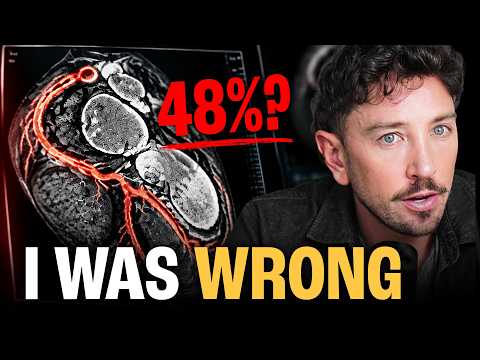
The experience of Simon Hill, who had his arteries scanned simultaneously by three different platforms - one of which is a research platform not even available commercially at this point - is illustrative of the quagmire current CT angio technology is, as can be seen in the yt video below.
I am not trying to tell anyone whether they should or should not go in for a CT angio. I am just saying that you should be aware of the limitations of the current technology and analysis and that you cannot draw far going conclusions about your plaque burden using these tools as they are configured today.
To save time, start with about minute 25:00 or so, as the time spent before is just setting it all up.
I Thought I Reversed My Artery Plaque by 48%. Here’s What Really Happened | Simon Hill | EP#439 (via The Proof with Simon Hill)